

It started the way a lot of neighborhood weirdness starts: a regular morning, a half-heard engine noise, and then that nagging feeling that something in the driveway looks… wrong. The man in the story—let’s call him Marcus, because he’s not exactly trying to be a character—walks out with his coffee and realizes the spot where his truck always sits is just empty asphalt.
Marcus doesn’t immediately jump to “repo.” His first thought is theft, because why wouldn’t it be? It’s a truck, it’s useful, it’s expensive, and it’s not like someone can “accidentally” take a whole vehicle unless they’re towing it. Then he notices the faint scrape marks near the curb and the little bits of gravel shifted in a way that screams “a flatbed was here.”
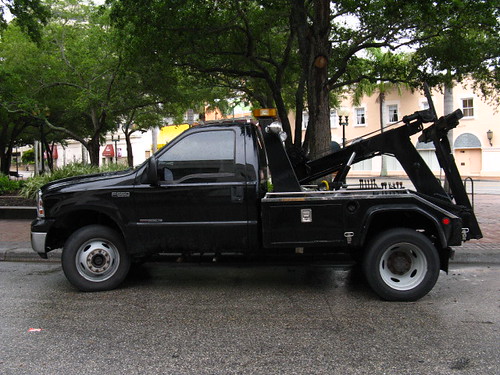
By the time he’s fully awake, his phone’s already in his hand and he’s dialing around—insurance, the non-emergency police line, a buddy who knows a buddy at a tow yard. He’s mid-call when his neighbor messages him a grainy doorbell clip: a repo-style tow truck pulling up like it owns the street, a guy in a hi-vis vest walking straight into Marcus’s driveway, and then the unmistakable sight of Marcus’s truck being hauled away with the casual speed of someone doing a grocery run.
The knock that didn’t match the crime
Marcus gets a call a couple hours later from a number he doesn’t recognize. The voice on the other end is brisk and rehearsed, the way people sound when they’ve repeated the same script all day. The guy says he’s with a repossession company and needs to “confirm some information” for Marcus because they “took possession of the vehicle.”
Marcus is so stunned he almost laughs, because the audacity lands before the logic does. He tells the guy, flatly, that he doesn’t have any loans in default and, more importantly, they took the wrong truck from the wrong house. There’s a pause—just long enough to make it clear the repo agent is annoyed at being slowed down—and then the agent asks for Marcus’s name again, like maybe the problem is pronunciation.
Marcus tries to keep it simple: he owns the truck outright, he has the title, and he can prove it in about three minutes if anyone actually wants to see documentation instead of a clipboard. The repo agent doesn’t apologize. He pivots into this defensive, bureaucratic tone, saying something like, “Well, this is the address on the order,” as if a piece of paper has the final word on physical reality.
“That’s what the paperwork says” meets “that’s my driveway”
Once Marcus realizes he’s not talking to someone who’s going to have a sudden moment of empathy, he asks where the truck is. The repo agent tells him it’s already at their lot and that if Marcus believes there’s a mistake, he can “take it up with the lender.” That’s when Marcus’s calm starts to fray, because he can hear the move the agent’s trying to make: shove the problem onto the person who didn’t cause it.
Marcus says, “There is no lender,” slowly, like he’s talking someone through a basic math problem. The agent counters with, “Then it should be easy to clear up,” in that maddening way people do when they’re refusing to acknowledge they’ve done something wrong. It’s not reassurance, it’s a challenge—like Marcus is being dared to spend his entire day untangling a mess someone else created.
So Marcus asks for the order details: the VIN, the plate, the make/model they were supposed to grab. The repo agent won’t read it out, just repeats that he followed the assignment and that Marcus needs to “contact the finance company.” It’s a weird flex—hiding information while insisting he’s correct—until you remember that the easiest way to avoid admitting a mistake is to keep the other person from seeing the mistake.
Marcus tells him he’s filing a police report for theft. That’s the first time the agent’s tone changes, not to apologetic, but sharper—like Marcus is escalating unnecessarily. The agent insists it’s not theft because he’s a “licensed agent” performing a “lawful repossession.” Marcus says, “On a truck that isn’t theirs,” and you can almost hear the repo agent deciding whether to bully, stall, or pivot.
The lot visit and the art of acting annoyed
Marcus goes to the lot because waiting for someone to be reasonable over the phone is how you lose a week of your life. He brings a folder with the title, registration, insurance, and the kind of receipts people keep when they’ve been burned before. He also brings another person with him, because showing up alone to argue with strangers in a fenced yard full of towed vehicles is a great way to end up in a “he said, he said” situation.
The lot is exactly what you’d picture: chain-link fence, a keypad gate, faded signage, and the smell of hot rubber and dust. Marcus sees his truck almost immediately, parked crooked like it was dropped into place without care. Just seeing it sitting there, intact, makes him mad in a different way—because now the whole situation feels even more unnecessary.
The repo agent meets him with the body language of someone who wants to convey, “This isn’t my fault,” before anyone even speaks. Marcus starts calmly, lays out the paperwork, and points to the VIN on his documents matching the VIN on his vehicle. The agent barely glances, then says he needs to “verify with the office,” like it’s some new revelation that paperwork matters after you take someone’s property.
Here’s where it gets surreal: instead of admitting they snatched the wrong truck, the agent shifts into nitpicking mode. He asks Marcus why the truck was “at that address” if it wasn’t the debtor’s truck, as if Marcus is responsible for being the wrong person in the wrong place. Marcus, now fully out of patience, says, “Because I live here,” and the agent looks at him like Marcus is being difficult on purpose.
How the blame tried to crawl uphill
Eventually someone in the office confirms what Marcus has been saying the entire time: their order was for a different truck. Same color, similar model year, maybe even the same brand—just not the same VIN, not the same plate, not the same owner, and not the same address. The agent doesn’t say, “We messed up.” He says, “Looks like there was some confusion,” which is what people say when they want an accident without an actor.
Marcus asks for the immediate release of the truck. The agent replies that there’s a “release process” and that Marcus will need to sign paperwork. Marcus isn’t opposed to signing that he picked up his own vehicle, but the way they frame it—like he’s checking out a library book—sets him off. He points out that the process should be “open the gate and hand me my keys,” because they’re the ones who created the situation.
Then comes the part that makes the whole thing feel like a dare: the repo agent suggests there could be a fee involved. Not a big fee, he says, just an “administrative” charge for the tow. Marcus stares at him like he’s speaking another language, and his friend has to step in with that cold, steady tone that says, “Try it and see what happens.”
Marcus tells them, clearly, that if they don’t release it immediately without any fee, he’s calling the police right now from their parking lot and letting them sort out whether “licensed agent” covers taking the wrong vehicle from the wrong property. The agent’s annoyance flares again—not fear, not shame, just irritation at the inconvenience of consequences. It’s the most infuriating kind of confidence: the belief that everyone else should just absorb your mistake.
The truck comes back, but the damage doesn’t vanish
They do release the truck. Not with an apology, not with a “we’ll make this right,” but with the clipped efficiency of people trying to shove the incident into a drawer and close it fast. Marcus walks around the vehicle before leaving, checking for new dents, scuffs, and the subtle signs of a careless tie-down job.
There’s some minor damage—scratches near the undercarriage, a trim piece that looks slightly out of place, the kind of stuff that’s hard to prove came from them unless you took photos of your truck every day like it’s an artifact. The agent treats Marcus’s inspection like another personal insult, shifting his weight and looking away as if Marcus is being dramatic. Marcus takes pictures anyway, because the only thing worse than being wronged is being wronged twice with the same shrug.
On the way home, Marcus calls the police back and updates the report from “stolen” to “wrongful tow/repo,” because even if he got the truck back, the part that sticks in his throat is how hard he had to fight for something that never should’ve been taken. The repo agent didn’t just make a mistake; he tried to make Marcus wear it. And that’s the lingering tension in the story—this feeling that if Marcus hadn’t been organized, stubborn, and willing to escalate, the truck might’ve sat behind that fence for days while everyone involved kept insisting it was somehow his job to prove he deserved his own driveway back.