


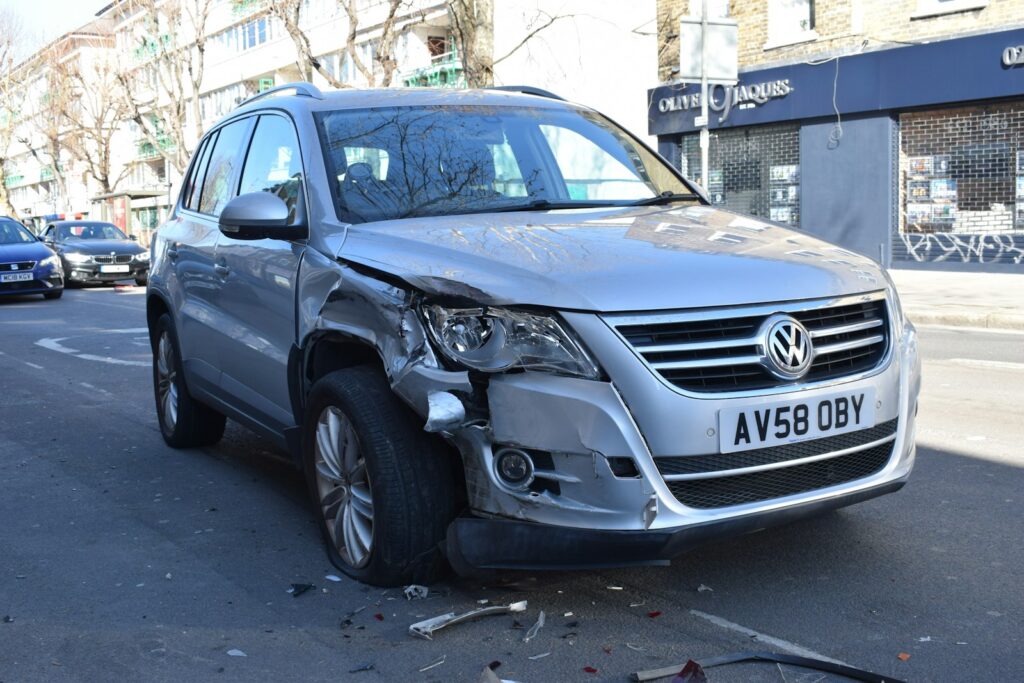
It started the way these things always start: a normal drive that turned into a not-normal drive in about two seconds. The woman was heading through an intersection she’d driven a hundred times, thinking about errands and whether she had enough time to swing by the pharmacy, when another car clipped her and shoved her front end sideways.
No ambulance, no dramatic rollovers. Just that ugly crunch, the instant tightness in your throat, and the slow-motion realization that your “reliable car” is now a problem you’re going to have to manage for months. She got the insurance stuff rolling, got a tow, got a rental, and tried to be grateful it wasn’t worse.
Then the shop called with the words everyone wants to hear: it was fixed. She picked it up expecting that familiar feeling when you get your car back—like you can finally exhale. Instead, within a mile, she was white-knuckling the wheel because the steering pulled so hard she could barely keep it in her lane.
The pickup that didn’t feel like a pickup
When she arrived at the body shop, the car looked great, at least in the way most people judge repairs: straight panels, clean paint, no obvious gaps. The service counter guy did the usual walkaround, pointing out the shiny parts they’d replaced and the list of work on the invoice. He said it was road-tested and aligned, like that should’ve ended the conversation.
She made it out of the lot and immediately felt something was off. Not a subtle drift you can blame on the road crown, but a steady, insistent yank that kept trying to drag the nose to one side. She corrected, it corrected back, and her shoulders started climbing up toward her ears in that tense, involuntary way.
At a red light she did the little sanity check people do when they don’t trust their own senses—hands barely on the wheel for a beat, eyes flicking between mirrors and lane lines. The car veered like it was being reeled in. She tightened her grip, and the realization landed hard: this wasn’t annoying, it was unsafe.
“That’s normal after an alignment,” except it wasn’t
She didn’t even go home. She turned around and drove right back, taking the slowest route possible because the idea of getting on a faster road made her stomach flip. Pulling into the lot again felt humiliating, like she was about to accuse someone of doing their job wrong and get treated like she was being dramatic.
The guy at the counter gave her the first line of defense: roads slope, tires settle, it’s probably just the alignment “breaking in.” He used that calm voice that sounds reassuring if you already trust them, but sounds dismissive if you don’t. She asked him to come ride with her because she wasn’t trying to argue physics—she wanted him to feel what she was feeling.
They did a short loop around the block, and the car kept tugging hard enough that he had to brace his arm. His body language changed fast, the way it does when someone realizes they can’t hand-wave the problem away. Back in the lot, the vibe shifted from “customer misunderstanding” to “okay, something’s wrong and we don’t want to say that out loud yet.”
They took it back in and told her to wait. After an hour, they came out with a fresh explanation: sometimes new parts “settle,” maybe it needs another alignment. She asked, carefully, what parts they’d replaced that could “settle” into pulling her toward oncoming traffic, and the counter guy got a little sharp in return.
The tug-of-war between the shop and the insurance timeline
This is where her headache stopped being mechanical and started being bureaucratic. The insurance company had already paid out based on the shop’s report that everything was repaired correctly. The rental clock was ticking, and she could feel herself getting boxed into a decision—take the car because the paperwork says it’s fixed, or keep fighting and risk being without a car while everyone points at everyone else.
The shop kept the car another day and called again: all good now. She asked what they did, and got a vague answer—alignment adjustments, checked suspension, test drive. When she picked it up, she tried to be optimistic, because optimism is cheaper than another week of phone calls.
Within minutes, the pull was still there. Maybe slightly different, like the steering wheel wasn’t centered anymore, but the same basic problem remained: the car wanted to leave its lane unless she actively fought it. She found herself doing this constant micro-correction, her hands tired like she’d been driving for hours instead of ten minutes.
She took a video at a low speed on a quiet road—just the steering wheel and the lane line in view—because she could already sense how this would go if it stayed a “feeling” instead of something she could show. The wheel was turned slightly just to go straight, and when she let it relax, the car drifted. It wasn’t theatrical, it was worse: boring, steady, undeniably wrong.
The second opinion that made everything feel worse
Instead of going back for round three of the same conversation, she drove to a separate alignment and tire place. She didn’t tell them the whole saga at first; she just said she’d been in a crash and the steering didn’t feel right, and could they check it like they would for anyone else. The tech took it for a spin and came back with the kind of face people make when they’ve seen this movie before.
The second shop said the alignment was off, but the numbers weren’t the whole story. They hinted at possible bent components—control arm, tie rod, maybe something deeper like the subframe shifted. The phrase that stuck with her was basically: “We can align it, but if something’s bent, it won’t hold.”
They showed her the printout with measurements and explained it in plain language: the car is fighting itself, which is why it feels like you’re wrestling it. They could attempt a correction, but they didn’t want to be the last hands on it if there was structural damage the original repair didn’t address. She left with that paper in her glove box feeling like she’d just been handed proof and a new problem at the same time.
Now she had something concrete, but it didn’t magically make the shop cooperative. She called the original place and told them she had a second opinion saying the alignment was off and something might be bent. The tone on the phone got colder, like she’d committed the sin of not being loyal to the first diagnosis.
“Bring it back,” and the way people say it when they’re annoyed
When she brought it back again, she didn’t come in hot. She came in tired, with documents, trying to keep her voice steady so she couldn’t be dismissed as emotional. She slid the alignment printout across the counter and asked what they were going to do to make the car safe to drive.
The manager got involved, and the story turned into tiny battles over wording. They said they “followed manufacturer specs” and their techs “did everything correctly,” which isn’t the same as saying the car is actually correct. She asked why the steering wheel wasn’t centered and why it was still pulling, and he pivoted into liability-sounding phrases about “road conditions” and “tire wear.”
She pointed out the tires were fine before the crash and the problem began the moment she picked the car up the first time. The manager suggested rotating tires as if that would explain a car that aggressively drifts. It felt like watching someone throw spaghetti at the wall until the customer gets exhausted.
The worst part was the quiet implication that she was being difficult for insisting on basic safety. Every time she said, “I can barely keep it in my lane,” they heard, “I don’t like your work.” And instead of treating that as an emergency, they treated it like a review they wanted to avoid.
She looped insurance back in, and that’s when the shop got more careful with their language but not necessarily more helpful. Insurance wanted photos, measurements, documentation; the shop wanted to keep the repair inside the original estimate; everyone wanted someone else to authorize the expensive fix. Meanwhile, she was still trying to figure out how to get to work without driving a car that behaved like a shopping cart with one bad wheel.
By the end of it, the car was sitting at the shop again, technically “in progress,” while she waited for an adjuster to decide whether this was missed damage or a new claim or just a customer complaining. The shop kept saying they’d call her back. She kept watching her phone like she was waiting on medical results.
What made it so tense wasn’t just the pulling steering—it was the feeling of being trapped between a machine that didn’t feel safe and a system designed to declare things done. The car looked repaired, the paperwork said repaired, but every time she gripped that wheel and felt it yank, it reminded her that “fixed” is sometimes just a word people use when they want the problem to move on to someone else.
More from Steel Horse Rides: