


It started the way a lot of people say their “worst day with a cop” starts: an ordinary drive, an ordinary mistake, and that sinking feeling when red-and-blue lights show up in the rearview mirror like a surprise pop quiz you didn’t study for.
The woman at the center of this story had been heading home in the early evening, still in work clothes, hair shoved into a clip, mind on dinner and an overdue load of laundry. She rolled through a stop sign a little too confidently—one of those neighborhood intersections that feels empty until it isn’t—and a patrol car that had been tucked off to the side slid out behind her like it had been waiting.
She pulled over fast, hands up on the wheel the way people do now on instinct, already rehearsing a quick apology and a promise to be more careful. She expected the usual: license, registration, maybe a ticket, maybe a warning. What she didn’t expect was the sentence that turned the whole stop sideways: the cop leaned in, sniffed the air, and told her he smelled weed.
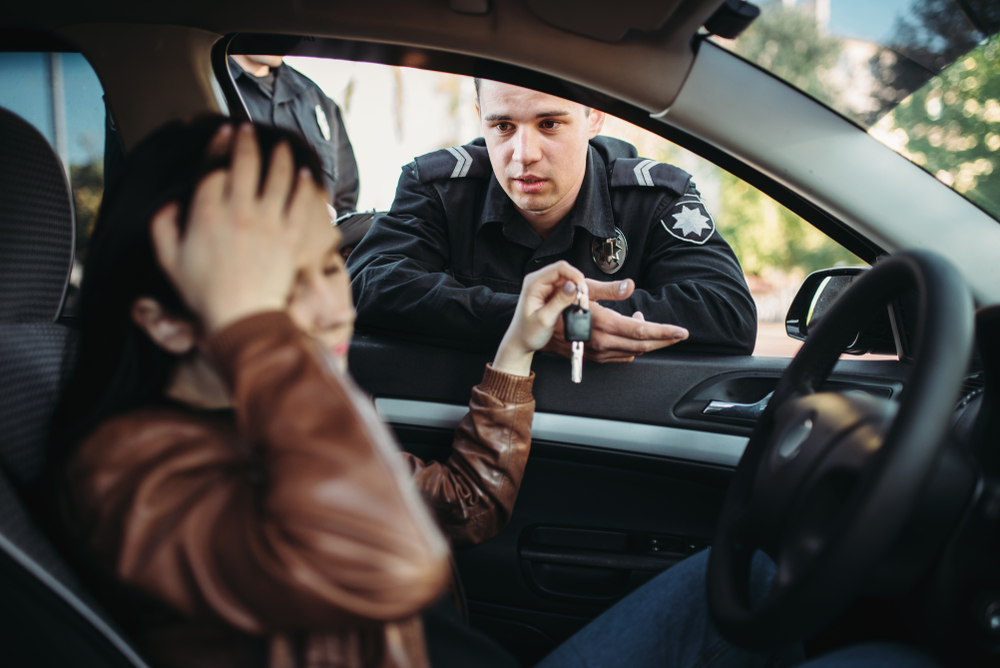
The stop sign that turned into a “drug investigation”
At first, the interaction sounded almost routine. The officer asked where she was going, where she was coming from, how long she’d lived in the area—questions that felt more like a vibe check than traffic enforcement. She tried to stay friendly, because most people do, and she figured cooperation would keep it short.
When he said, “I smell marijuana,” she blinked like he’d switched languages mid-sentence. She didn’t smoke, didn’t have anything in the car, and hadn’t even been around anyone smoking that day. She told him that, careful with her tone, like she was negotiating with someone holding a grudge.
The cop didn’t argue. He just repeated it, slower, like the smell itself was a fact on paper. Then he told her to step out of the vehicle.
“Do you mind if I take a look?” (It wasn’t really a question)
She hesitated, because that’s the moment people always talk about later: the moment where you realize you’re being offered a choice that isn’t actually a choice. She asked if she had to. He told her he had probable cause because of the odor, and he didn’t need permission.
On the shoulder of the road, she stood with her arms crossed against the breeze, trying to keep her face neutral while her heart did that frantic little flutter that makes your throat feel tight. Cars kept sliding past, drivers doing the quick rubberneck glance, then looking away. The cop opened her driver’s door like he owned the thing.
He started with the obvious spots—cupholders, center console, the little catch-all space by the gearshift where gum wrappers and receipts go to die. He kept talking while he searched, tossing out questions like bait: “You sure there’s nothing in here?” and “When’s the last time you smoked?” and “Your friends smoke?” Every answer she gave felt like it landed wrong no matter how she said it.
Then he moved on to the glove box, the back seat, and the trunk. He wasn’t tearing the car apart Hollywood-style, but he was thorough in that slow, deliberate way that makes it clear he’s not in a hurry and you are not in control of the clock anymore.
The weird part: he found something… just not what he said he was looking for
After several minutes of digging through the everyday mess of a normal person’s car—spare hoodie, half-empty water bottle, a tote bag with random work papers—the cop started focusing on smaller things. He held up a prescription bottle and asked who it belonged to. She told him it was hers and said she had a copy of the prescription in her phone and in her email, because she’d had to prove it before at a pharmacy.
He didn’t look impressed. He turned the bottle in his fingers, like he was checking whether the label was “real enough,” then asked why the pills weren’t in the original container. She said they were—he was literally holding the original container—then she realized he meant the pills she kept in her purse organizer for when she didn’t want to carry the whole bottle around.
That’s the moment her stomach dropped. She’d forgotten she had a little weekly pill case tucked into a side pocket, the kind labeled with days of the week. It wasn’t anything exotic—just medication she took regularly—but now it was suddenly framed as evidence of “improper storage” and “unmarked pills.” The weed claim had opened the door, and now he was wandering around the house.
He asked if she had any other “loose medication” in the car. She said no, then immediately second-guessed herself because when you’re panicking, you start forgetting what you own. He made a face like that confirmed something.
How a minor violation becomes a full-body humiliation
The cop told her to stand at the front of his cruiser while he ran her information. She watched him type slowly, his screen glowing against his face, and tried to keep her breathing steady. He kept glancing up at her, like she might bolt, even though she was frozen in place with her purse still inside her own car.
Then he said he was going to have to “sort out” the pills and asked if there was anything else she needed to tell him before it got “worse.” She felt that classic pressure tactic clamp down: confess to something you didn’t do just to end the discomfort. She told him again there was no weed, no drugs, nothing, and that she could show him her pharmacy record right now.
He didn’t take her phone at first. He asked if she’d been drinking. She said no. He asked if she’d taken anything that would make her “impaired.” She said she’d taken her medication as prescribed, which was apparently the wrong thing to say because he latched onto it like a handle. Now he wanted to know what it was, what it did, how it made her feel, whether it made her “drowsy,” whether she was safe to drive.
It stopped being about a stop sign a long time ago. It wasn’t even about weed anymore. It was about making her explain herself over and over in public while he searched for a reason to justify the search he’d already decided to do.
The search ends, but the stop doesn’t
Eventually, the car search hit that awkward dead end where nothing dramatic appears. No baggie, no joint, no roach in the ashtray, no hidden stash in the trunk. He had to pivot, and he did it by circling back to the pills and the “odor” like those were enough to keep control of the narrative.
He gave her a citation for the stop sign and then started lecturing her about keeping medications in their original containers, even as she kept reminding him the original container was right there. He told her she could be arrested for having unidentified pills, then backed off from that statement without acknowledging he’d said it. It was like watching someone test doors in a hallway to see which one opened.
She asked, carefully, if she was free to go. He made her ask twice. Then he handed back her documents with that little extra pause, the one that feels like punishment for not being easier.
When she got back into the driver’s seat, her hands were shaking so hard she had to sit for a second before turning the key. The inside of the car looked the same but felt different—like it had been searched not just for contraband, but for permission to treat her like a suspect. She drove away with the citation on the passenger seat, staring at it at red lights like it might change into something worse if she blinked.
The thing that stuck with her wasn’t even the ticket. It was how quickly “I smell weed” flipped a normal traffic stop into a scene where her personal stuff was handled, questioned, and held up like proof of bad character, and how there wasn’t a clean way to argue with a smell. Weeks later, she was still replaying the same moment—him leaning in, saying it like a magic phrase—and realizing the nightmare wasn’t that he found something, it was that he never had to.
More from Steel Horse Rides: