
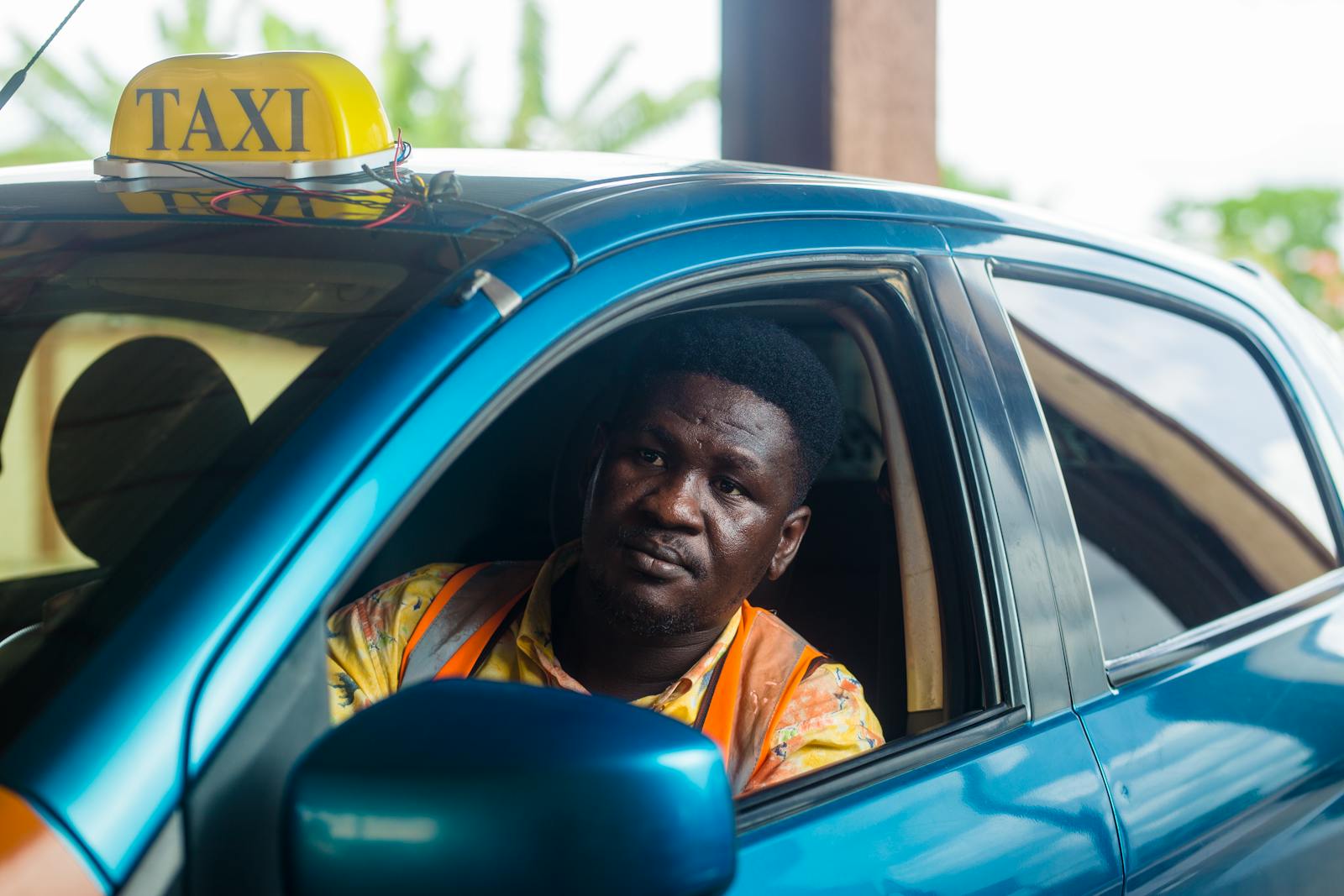

She’d ordered the taxi the same way she always did: phone in one hand, keys in the other, brain already halfway into the next day. It was late, the kind of late where streetlights make everything look flatter than it is, and she’d talked herself into “just a quick ride home” because it felt safer than walking the few blocks from where she’d been.
The driver pulled up in an older sedan that still had the company sticker on the window, slightly peeling at the corners. He didn’t say much when she got in—just a tight nod in the rearview mirror and a clipped, “Where to?” She gave him her address, buckled up, and did that familiar passenger thing of going quiet, watching the city slide by while you scroll and try not to look like you’re paying attention.
For the first couple minutes, everything read as normal: the gentle shudder at stoplights, the low radio chatter, the driver’s hands steady on the wheel. Then she noticed the route wasn’t the route. Not a dramatic wrong turn at a highway ramp, just a couple of subtle choices that didn’t match what she knew—turning earlier, cutting through darker side streets instead of staying on the main road.
The first “Wait, where are we going?”
She didn’t panic right away because people take alternate routes all the time. Construction happens, traffic backs up, drivers think they know shortcuts that apps don’t. But when she glanced at her phone and saw the map arrow drifting away from the usual line home, she felt her shoulders rise toward her ears.
She asked, casually at first, “Hey, are you taking a different way?” The driver didn’t look back, just said something like, “Yeah, this is faster,” in a tone that shut down follow-up questions. Except it wasn’t faster, at least not in any way she could see; it was emptier, darker, and it put more distance between her and the well-lit streets where other cars would be.
She tried again, more direct: “I actually need you to take me the way on the app. Can you turn back?” The driver’s jaw tightened in the mirror, and he gave her the kind of impatient exhale you hear from someone who thinks you’re being difficult for sport.
She reached for the handle, and it didn’t open
The moment that flipped her from uneasy to alarmed was small and physical. She reached for the back door handle on her side—not even to jump out, just to test her own fear—and the handle moved but nothing happened. That hollow little click, the one that says the door is locked, landed in her stomach like a dropped stone.
She hit the lock switch by the window, then tried the handle again. Still nothing. In her head she did a fast, unhelpful inventory: older cars sometimes have child locks, sometimes drivers lock doors automatically, sometimes the mechanism sticks. But none of those explanations mattered much when the car kept moving and the driver kept acting like her questions were a personal insult.
She told him, “My door won’t open. Please unlock the doors.” He didn’t answer right away. He just kept driving, eyes forward, like he could pretend he hadn’t heard her over the radio.
From awkward to terrifying in two minutes flat
When he finally responded, it wasn’t with “Oh, sorry,” or “It’s automatic,” or any normal clarification. It was something closer to, “Relax, you’ll get out when we get there,” like she was a child being shushed in a grocery store. The words were bad, but the certainty in his voice was worse—the idea that he got to decide when she’d be allowed to leave.
She repeated herself, louder: “Unlock the doors. I’m getting out now.” Her voice changed in that way you can’t fake, where it stops sounding polite and starts sounding like survival. That was when he glanced up at the mirror, not fully turning around, just enough to let her see his eyes flick to her and back.
He said something along the lines of, “You’re overreacting,” and then he kept going, rolling through a yellow like it was nothing. The car wasn’t speeding wildly, but it had that steady, committed momentum of someone ignoring a request on purpose. She could feel her pulse in her throat and the weird heat in her face that comes with realizing you might be trapped in a situation you can’t physically exit.
She started bargaining the way people do when their brains are trying to find the lever that will make another human cooperate. “I’ll still pay, just let me out here,” she said, pointing toward a lit corner store up ahead. “Please. Right there. Pull over right there.”
The begging, the phone, and the driver’s refusal
He didn’t pull over. He didn’t even slow down, and that’s the part that stayed with her afterward—the deliberate non-response, the choice to keep moving while someone in the back seat was asking to be released. She tried the other door handle across the seat, stretching awkwardly, and got the same dead resistance.
She grabbed her phone and started calling someone—friend, partner, anyone—because doing nothing felt impossible. The driver noticed the phone immediately. His shoulders shifted, and he snapped something like, “Don’t start that,” as if her trying to contact help was an inconvenience.
That was when she told him she was calling the police. It wasn’t a threat delivered with confidence; it came out shaky, like she was hoping the words alone could build a fence between her and whatever he thought he was doing. The driver’s response was a short laugh or scoff, the kind that makes your skin crawl because it suggests he doesn’t take consequences seriously.
She said, “I’m not joking. Let me out. I don’t feel safe.” She emphasized the last part the way people do when they realize they’re trying to make a point that should be obvious. He answered with something infuriatingly circular: “You’re fine. I’m taking you to your address,” as if that erased the fact that she was explicitly withdrawing consent to keep being in the car.
How she got free (and why it still didn’t feel like “over”)
What finally changed the dynamic wasn’t a sudden confession or an apology; it was the environment forcing a pause. They hit a stretch with more traffic and a red light, cars boxing them in. The driver couldn’t just keep drifting away into empty streets without stopping for long enough that other people might notice a scene.
She leaned forward between the seats and raised her voice so it would carry outside if a window cracked or someone was nearby. “Unlock the doors right now,” she said, and she made it sound like a command, even if she didn’t feel like she had authority. She was also fumbling on her phone, either dialing emergency services or pulling up the ride details—anything that could create a record in real time.
At the light, he finally hit something—maybe the central lock switch, maybe a manual unlock—and she heard the click that made her breath catch. She didn’t wait for him to “pull over.” The instant the car slowed enough that she could gamble on it, she shoved the door and got out onto the curb with that clumsy, desperate scramble people do when their legs are shaking.
He shouted after her through the open window, angry now, accusing her of making a big deal out of nothing, of trying to get a “free ride.” She didn’t answer. She backed away with her phone up, eyes locked on the car like it might lurch toward her, and she moved toward the nearest place with lights and people.
And that’s the part that lingered: even after she was out, her body didn’t accept it as finished. The door had opened, sure, but the feeling didn’t unlock as easily—the sense that a normal errand had turned into a situation where she’d had to beg for something as basic as being allowed to leave. She could still hear the click in her head, and she couldn’t stop thinking about how long he’d kept driving while she asked, over and over, to be let out.
Later, when she tried to reconstruct the timeline, the scariest detail wasn’t a single dramatic moment. It was how quickly the ride shifted from mildly off to unmistakably wrong, and how the driver treated her fear like a nuisance he could outlast. Even with the street back under her feet, the unresolved part sat heavy: the fact that for several minutes, her safety depended entirely on whether a stranger felt like unlocking a door.
More from Steel Horse Rides: