
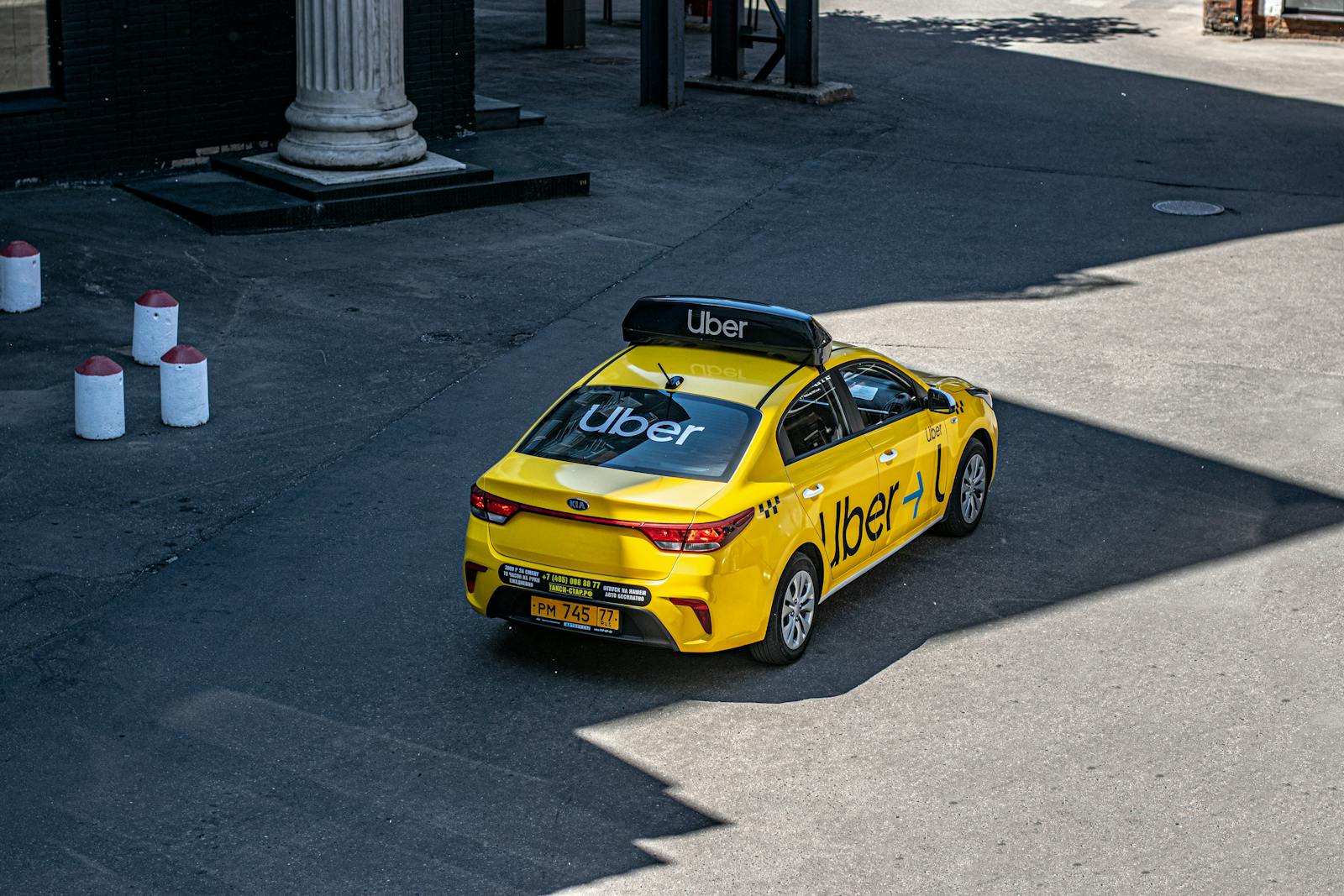

She’d been driving long enough that night to know the difference between “just one more ride” and “this is how you end up regretting your whole shift.” But the request that popped up looked normal: a short pickup, a nearby drop-off, decent rating. The passenger name was common, the little route line on the map was clean, and she was already in motion before the doubt could really settle.
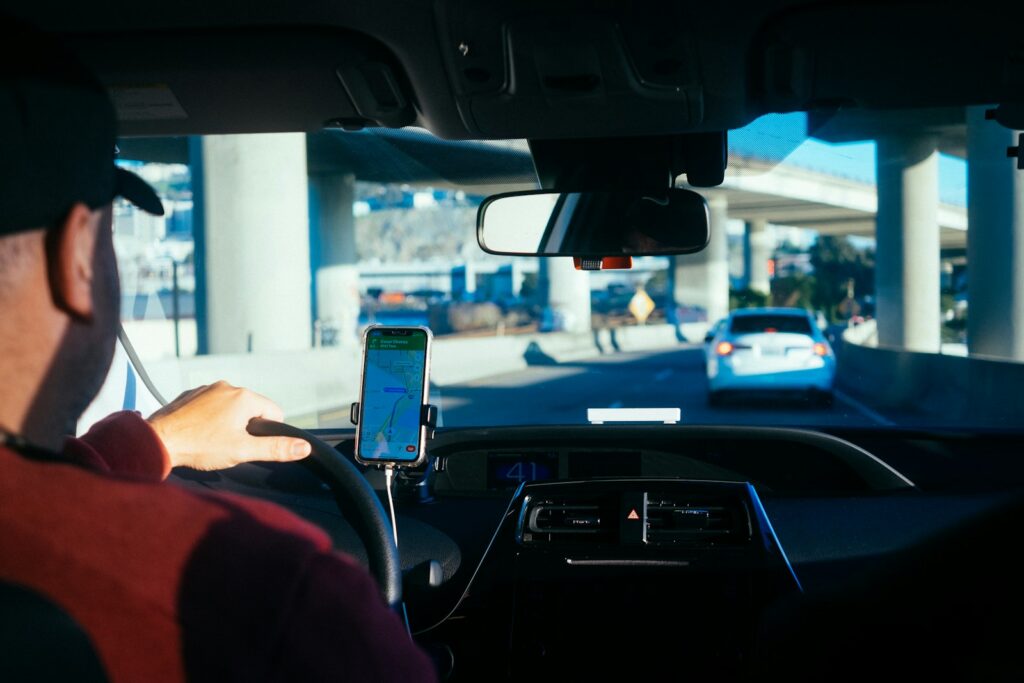
The driver had her usual setup—phone mounted, water bottles in the back, and her own bag tucked within reach up front. It wasn’t flashy, but it was her whole life in there: wallet, spare charger, cash tips, keys, the kind of stuff you don’t think about until it’s missing. She’d been telling herself she needed to be better about keeping it out of sight, but like most habits, that thought always came a little too late.
When she pulled up, the passenger slid into the back seat like he’d done this a hundred times. Hoodie, cap pulled low, face half-lit by the glow of his phone. He didn’t say much beyond a clipped “hey,” and he didn’t make eye contact in the mirror the way chatty riders do when they’re trying to read your mood.
The pickup felt normal… until it didn’t
The first few minutes were quiet in that specific way rideshare quiet can be: not tense, exactly, but not relaxed either. The driver asked the standard question—confirming the name, confirming the destination—and he gave answers that sounded right without sounding interested. He kept tapping at his phone, then went still, then tapped again, like he was waiting for something to line up.
She noticed the first odd detail at a stoplight when he leaned forward slightly, not enough to be obvious, but enough to put his shoulder closer to the front console. Most passengers stay planted unless they’re asking to change the music or they’re drunk and looking for a vomit bag. He wasn’t either—he was quiet, focused, and he kept glancing past her toward the front passenger seat.
Her bag was down low near the center area, the kind of placement that feels safe because it’s “right there.” He couldn’t have grabbed it without her noticing… at least that’s what she told herself. But when the light changed and she accelerated, she caught a small movement in her peripheral vision, like someone pulling something toward their lap.
“Can you pull up a little closer?”
As they got near the destination, the passenger’s voice changed—suddenly polite, suddenly specific. He asked if she could pull up closer to the house because “the entrance is weird” and “the GPS is always off.” She’d heard that line before, and sometimes it’s true, especially in neighborhoods where mailboxes don’t match the apps.
The street was one of those dim residential stretches that look perfectly harmless in daylight and strangely theatrical at night. Porches half-lit, a couple of cars parked curbside, no one outside. The pin on the map landed at a house with the lights off and a lawn that looked too neat for a place that was supposedly expecting someone.
He didn’t try to end the ride from his phone. He didn’t say “thanks,” either. He just repeated, “Right there, right there,” and when she eased to the curb, she felt the shift—his hand moving quickly, the seat creaking as he leaned forward, the little rush of air when the door latch clicked.
She turned her head halfway, ready to do the automatic “Have a good night,” and that’s when she saw it: her bag, no longer where it had been, tucked against his side like it belonged to him. The driver’s stomach dropped so hard she said his name without thinking, sharp and loud, like a teacher catching a kid mid-cheat.
The moment she realized the bag was gone
He didn’t freeze or apologize or pretend it was an accident. He moved like he’d already practiced the sequence—door open, foot out, bag close to his body, head down. She snapped her seatbelt off and grabbed for the bag’s strap through the gap between the seats, but he yanked back and slipped away from her reach.
For a second, she considered getting out and chasing him, because adrenaline convinces you you’re faster and braver than you are. But she was alone, on a dark street, and the passenger wasn’t acting like a panicked thief—he was acting like someone who knew exactly where he was going. She stayed in the driver’s seat, hands shaking on the wheel, watching him step toward the house like he lived there.
He walked up the path without hesitation, which almost convinced her she was wrong. Then he didn’t go to the door. He cut across the side yard, moving fast, disappearing between two houses like he’d done it before, like that gap was an exit route.
The driver sat there for a beat, staring at the empty spot where her bag had been, trying to inventory what she’d just lost. Cards, cash, keys, maybe her spare phone battery, and the one thing that made her feel sick: anything with her name and address on it. She fumbled for her phone and hit 911 with her thumb, the screen smearing under sweat.
The “pickup house” that wasn’t his
While she waited for the dispatcher, she did what people do when they’re trying to anchor themselves—she looked at the house. No movement inside, no porch light flicking on, no silhouette at the window. The place didn’t look abandoned, but it didn’t look like it had anything to do with him.
She told the dispatcher she’d been robbed, gave the street name, gave the nearest cross street, and tried to describe him through that fog where details feel slippery. Hoodie, cap, medium build, moved quick. The dispatcher asked if he had a weapon, and she had to admit she didn’t know—she hadn’t seen one, but the whole point was that she hadn’t seen half of what he was doing.
On impulse, she tapped her rideshare app, hoping it would give her something—maybe a full name, maybe a clearer photo, maybe anything that wasn’t just a first name and a vague circle on a map. The trip was still open for a moment, then ended, and the location pin stuck at that dark house like that was the truth. She screenshotted everything she could, hands clumsy, heart pounding.
She rolled forward slightly, not chasing, just repositioning to see down the side street where he’d vanished. Nothing. No footsteps, no door slam, no car starting up. It felt worse than him sprinting away because it suggested he’d planned for there to be no sound, no scene, nothing for neighbors to look out at and remember.
Police arrived to a quiet street and a disappearing act
The police showed up fast enough to make her briefly hopeful, but the street was already back to normal by the time the lights turned the houses blue. Two officers stepped out, calm in the way people are when they’ve walked into chaos before. They asked her to start from the beginning, and she heard her own voice wobble when she described how casual it all had seemed.
They walked to the house where the drop-off pin sat, knocked, waited, knocked again. No answer. One officer tried the side gate, shined a flashlight down the narrow space between the houses, and came back with that expression that says there’s nothing to see but also nothing to rule out.
She told them the guy had cut through the yard, and one officer asked if she’d seen him actually enter a specific property. She hadn’t. That was the problem—he’d used the house like a stage prop, something to make her stop cleanly at a curb and look away for half a second.
The officers took her information and asked for what she had from the app. They nodded at the screenshots like they’d seen worse and also like they knew how little it sometimes leads to. One of them pointed out that even if the rideshare profile was “real,” it could be somebody else’s account or a burner phone, and the driver felt that heavy frustration of hearing the truth when you’re still clinging to the idea that there’s a simple fix.
They canvassed a bit—flashlights sweeping lawns, a brief conversation with someone who opened a door in pajamas and looked annoyed to be involved. No one had seen anything. No one heard shouting. The driver kept replaying that moment she’d reached for the strap, thinking if she’d grabbed harder, if she’d reacted faster, if she’d kept the doors locked somehow, even though she knew how ridiculous that sounded.
The aftermath: canceling cards, changing locks, and waiting
When it was clear the guy wasn’t coming back, the practical panic set in. She sat in her car with the officers’ card in her hand and started locking down her life—freezing cards, changing passwords, calling her bank while staring at the dark mouth of the side yard like it might spit him back out. Every automated menu felt like an insult, every “your call is important” message a reminder that her night had just been rearranged.
The bag itself wasn’t the heartbreak. It was the violation of how close he’d been, how easily he’d reached into her space and taken something that wasn’t his, and how quickly the street swallowed him. She kept thinking about the fake destination, the unlit house, the way he’d walked up like he belonged there and then slid off to the side like smoke.
She reported everything through the app too, because that’s what you do when you’re trying to create a paper trail. She sent the screenshots, the time stamps, the pickup and drop-off, the description. But there’s a particular loneliness in realizing that the company behind the app is miles away from the curb where you’re sitting, and their system can feel like a wall of forms when you’re still shaking.
By the time she finally drove home, she wasn’t even tired anymore—just wired and angry, the kind of awake that comes with checking mirrors and replaying steps. She kept thinking about what it meant that he’d chosen a random house as a decoy, like he’d done this before, like he knew exactly how long it takes police to arrive and exactly how quickly a person can disappear between two fences. And the worst part was the unfinished feeling of it: her bag gone, his route unknown, and that quiet house still sitting there on the map, pretending it was ever part of his life at all.
More from Steel Horse Rides: