
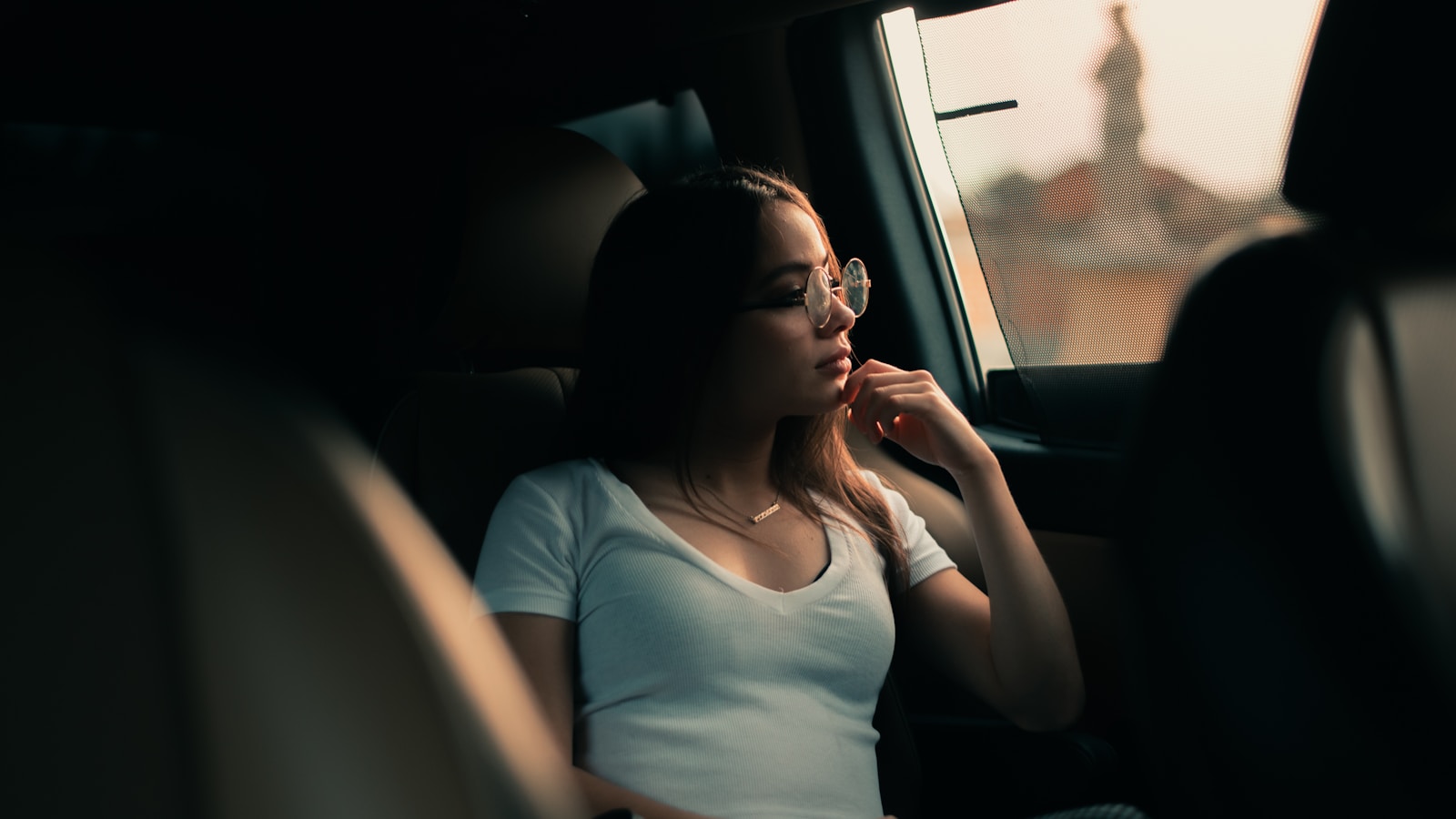

She’d ordered the Uber the way people order Uber rides every day: half-distracted, phone in one hand, keys in the other, already mentally stepping through the rest of her evening. It was a short trip across town—nothing scenic, nothing dramatic—just a clean, simple ride that would let her avoid parking and show up on time. The app pinged, the car rolled up, she slid into the backseat, and her biggest concern was whether she’d get there before the meeting started.
The driver was friendly in that practiced, low-effort way—quick “How’s your day?” and a glance in the rearview mirror, then quiet. The car smelled faintly like air freshener trying to cover coffee, and the radio was tuned to something soft and inoffensive. She buckled in, checked the route on her phone, and figured she’d spend the next fifteen minutes answering a couple texts.
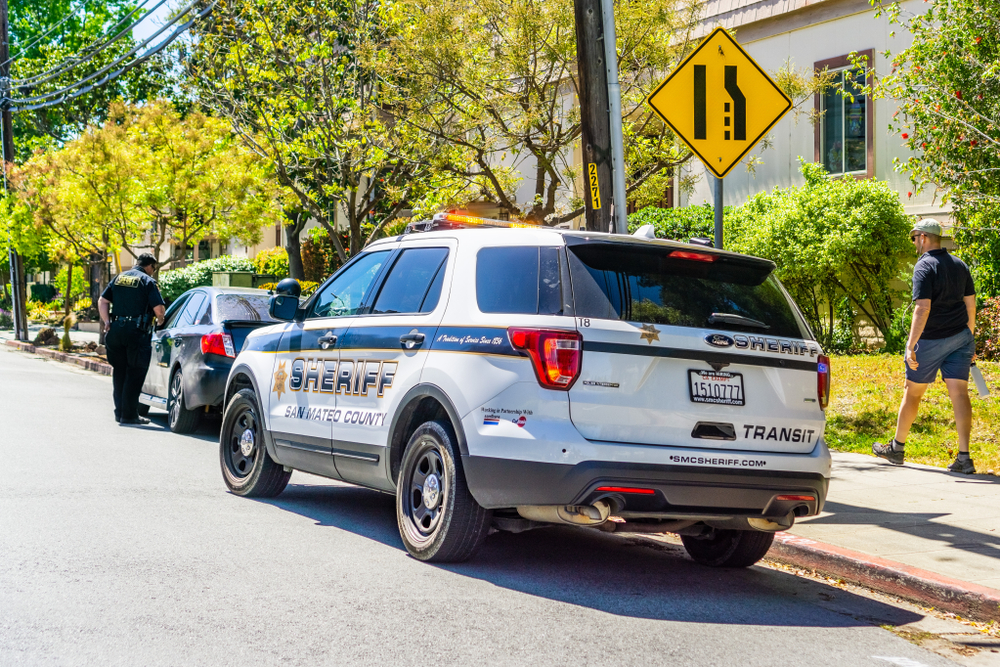
Then, five minutes into the ride, red-and-blue lights flicked across the interior like someone turned on a strobe. The driver’s shoulders tightened, his hands adjusted on the wheel, and he eased the car to the curb with the sort of slow, careful obedience that instantly tells you this isn’t his first traffic stop. In the backseat, she did that automatic thing where you sit up straighter and suddenly become very aware of where your hands are.
The pull-over that didn’t feel routine
At first, she assumed it was something small—maybe a taillight out, maybe he’d rolled through a stop sign. The driver didn’t say “Sorry about this” or “I’ll be right back,” which would’ve been reassuring; he just muttered, more to himself than to her, “Okay… okay,” like he was talking his brain down from a ledge. She watched his eyes dart to the side mirror and then to the glove compartment, and the air in the car thickened in a way she couldn’t quite name.
The officer approached on the driver’s side, flashlight sweeping the interior in that quick, practiced scan. The driver kept both hands on the wheel, and the woman sat back, trying to look invisible without looking suspicious. The officer asked for license, registration, and proof of insurance, the usual script—except the driver’s reply came out slightly too fast, like he’d rehearsed it.
He started patting his pockets and shifting in his seat, buying time. “Yeah, I—hang on—my license is…” he said, voice sliding into a weird polite tone. The officer didn’t mirror his nervousness; he just waited, still and patient, which somehow made it worse.
“It’s in the system” and the sound of a problem
The driver finally handed over what he had: some paperwork, maybe registration, maybe insurance, but not the one thing the officer asked for first. He tried to smooth it over with a breezy explanation—something about having recently moved, something about not carrying his wallet, something about it being “in the system anyway.” The officer took the papers, leaned in slightly, and asked again for the physical license.
From the backseat, she could hear the driver’s breathing change. He wasn’t panicking exactly, but he was close enough that it was contagious. The woman’s brain went straight to the practical questions: If he doesn’t have a license on him, does that mean the ride ends right here? If the car gets towed, what happens to her? And then, the bigger, uncomfortable thought: If he’s not licensed, why is he driving strangers around for money?
The officer stepped back to his cruiser with the paperwork. The driver stared forward, jaw clenched, tapping one finger on the steering wheel in a tight rhythm. The woman considered texting someone her location, then worried that doing anything sudden would make the driver more anxious, and then hated that she was even managing his feelings in a situation where she didn’t know what she was dealing with.
When the officer came back, he didn’t come back with “Here’s your warning.” He came back with a different posture—more squared, more procedural. And his first words weren’t to the passenger at all; they were to the driver: “Step out of the vehicle for me.”
The moment she realized it wasn’t a missing wallet
The driver complied, but he moved like someone walking into bad news. Through the rear window, she watched them stand near the curb, the officer speaking low, the driver nodding too quickly. She couldn’t hear everything, but she caught fragments—“suspended,” “system,” “can’t be driving,” the kind of words that land like stones even when you only hear part of the sentence.
That was the moment her stomach dropped. Suspended wasn’t “forgot my wallet.” Suspended was “you’re not supposed to be behind the wheel,” full stop. She looked at her phone and then at the front seat, suddenly aware that she was in someone else’s vehicle, on the side of the road, while a traffic stop escalated into something that could strand her.
The officer eventually glanced toward the backseat and noticed her more directly, like he’d remembered there was an audience. He walked over and asked her, calmly, if she was a passenger in a rideshare. She said yes, and the officer’s face tightened in that way that isn’t anger so much as “you’ve got to be kidding me.”
He told her she was free to go, but he also didn’t pretend it was normal. He asked if she had someone she could call or if she wanted him to wait while she arranged another ride. She stepped out onto the sidewalk, phone already in her hand, and the driver—still outside the car—didn’t look at her once.
Awkward logistics on the side of the road
The driver’s car sat there with the hazards on, still logged into a ride he clearly couldn’t legally complete. The woman tried to cancel in the app without getting hit with a fee, and that tiny, petty worry made her furious at herself. She wasn’t mad about the money, not really; she was mad that the situation was so absurd her brain was grabbing for something measurable, like a cancellation charge, to make it make sense.
She messaged support while standing a few feet away, close enough to hear the officer explain the next steps. The driver’s license was suspended—no wiggle room, no “I didn’t know.” The officer asked him why he was driving at all, and the driver gave the kind of answer that’s common and still infuriating: he needed to work, he was trying to get by, he thought it wouldn’t be a big deal.
There was a moment where the driver’s frustration bubbled up—not at himself, not at the situation, but at the inconvenience of being caught. He gestured toward the woman like she was part of the evidence against him, like her presence made it worse. She stood there, biting her tongue, feeling that weird mix of anger and vulnerability that comes from realizing you’ve been relying on a stranger’s judgment and that judgment was… nonexistent.
The officer didn’t yell, didn’t grandstand, just stayed firm. The driver wasn’t allowed to continue driving, and someone else would need to retrieve the vehicle. The woman ordered another ride, watching the map with a kind of forced patience, while the driver made a phone call that sounded tense and urgent.
Fallout that doesn’t resolve neatly
When her second ride arrived, she got in and immediately felt herself scanning for small signs of normalcy: the driver’s calm demeanor, the way they merged into traffic without hesitation, the boring comfort of everything being uneventful. She still had adrenaline humming under her skin, and she realized her hands were slightly shaky when she tried to type. The new driver asked if she was okay, and she gave a careful, polite version of the truth: “Yeah, my last ride got pulled over.”
Later, she got a response from support that was polite and corporate—refund language, apologies, assurance that safety is a priority. It didn’t quite touch the part that bothered her most, which wasn’t the delay or the inconvenience. It was the casualness of how close she’d been to real risk without any warning, because the system is built on a thin layer of trust and a background check that obviously didn’t prevent someone with a suspended license from picking up passengers.
In her telling, the detail that stuck wasn’t the flashing lights or even the officer’s tone. It was the driver’s refusal to acknowledge her as a person caught in his mess—the way he treated her like an obstacle to his problem rather than someone he’d put in a potentially dangerous situation. She didn’t get a dramatic confrontation, and she didn’t get closure about what happened after she left.
What she got was that lingering, unsettled feeling: for a few minutes, her safety depended entirely on someone who wasn’t legally allowed to be driving at all, and she only found out because a cop happened to notice. The ride ended, the app refunded, life moved on—but it left behind that uncomfortable question hanging in the air, the kind that doesn’t go away just because your destination finally does.
More from Steel Horse Rides: