
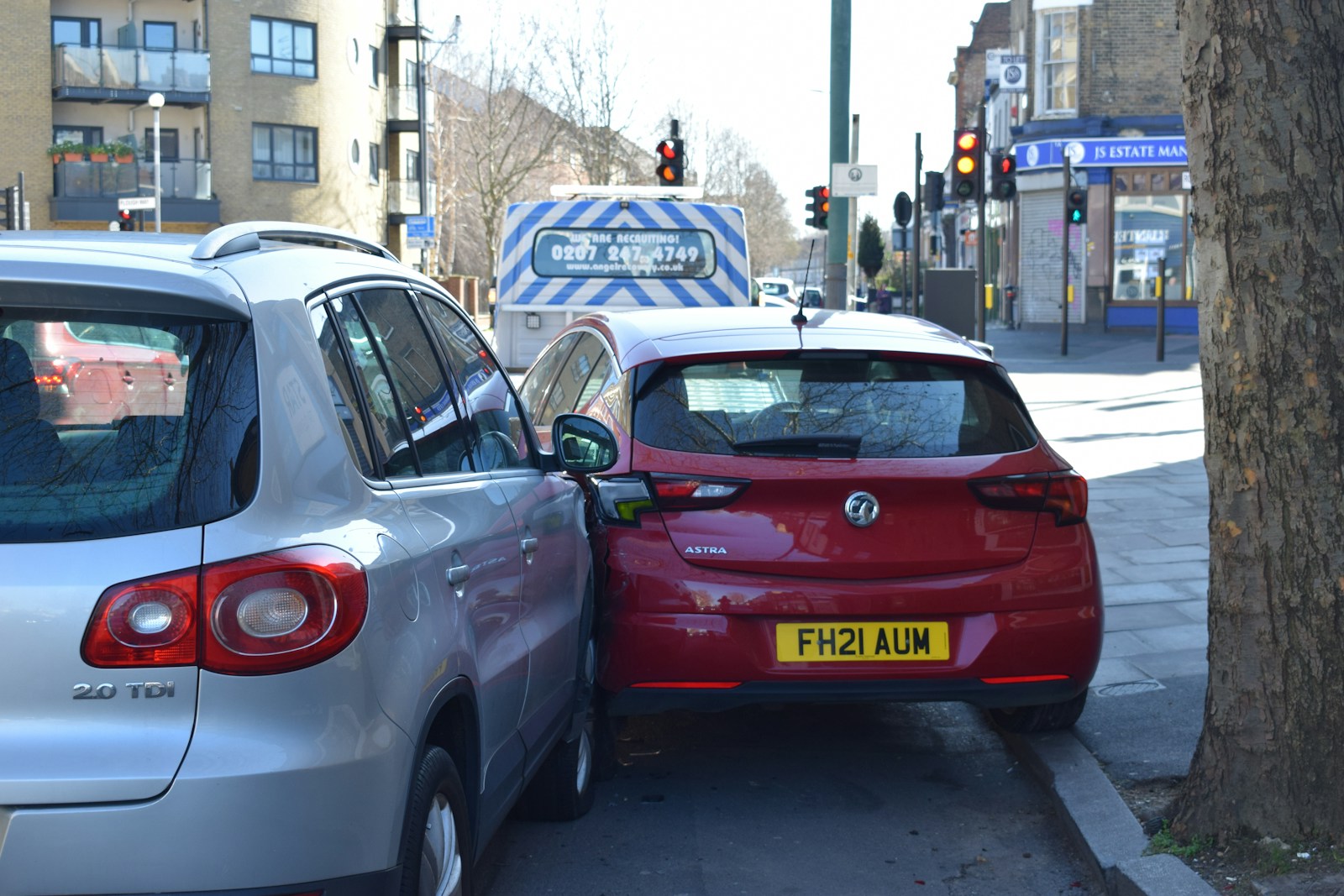

It started the way a thousand minor fender-benders start: a slow crawl through late-afternoon traffic, a split-second of distraction, and that dull plastic-on-plastic crunch that makes your stomach drop even before you’ve fully stopped moving.
The driver at the center of the story—let’s call him Marcus—had been inching forward at a busy intersection when the car ahead of him braked harder than he expected. He tapped the bumper. Not a slam, not airbags, not even the kind of impact that makes you spill coffee. Just enough to leave a scuff and give both cars that sad, slightly misaligned look for the rest of the day.
Marcus did what most people do when they’re trying to be decent: hazards on, pull over, exchange info, keep it calm. He got out already rehearsing the “Hey, sorry about that, you okay?” line, thinking the whole thing would be an annoying 15-minute detour before everyone went home and complained to their partners about traffic.
The polite routine… until it wasn’t
The other driver, a guy in his late 30s or early 40s, climbed out slow like he was stepping onto a stage. He didn’t look at the bumpers first, didn’t glance at the skid marks, didn’t do the normal “let’s see the damage” shuffle. He went straight to his own body—hand on his neck, a long exhale, and then a wince that seemed timed for maximum visibility.
Marcus asked if he wanted an ambulance, and the guy waved it off with this odd confidence, like he didn’t want medical help so much as he wanted the fact that he’d been offered medical help. He pivoted instantly into a speech: he’d had “previous issues,” he “could already feel it,” and this was going to “mess him up for weeks.” The weird part was how quickly he got specific about consequences without being specific about pain.
Marcus tried to keep it practical. He offered to call the police for a report since it was rush hour and the intersection was a mess, and he didn’t want any “he said, she said” later. The guy’s face tightened for half a second—almost annoyance—before he forced another wince and agreed, adding that a report would “protect both of them.”
When the story starts changing in real time
While they waited, Marcus took pictures: both cars, both license plates, the little scuff on the other car’s bumper, the lack of debris, the lane markings. He noticed the other driver angled his own phone in a way that didn’t seem aimed at the damage so much as aimed at Marcus, like he wanted Marcus in the frame looking guilty.
Then the details began to drift. First the guy said Marcus had “come flying” into him, which was hilarious given that they’d been crawling forward at maybe eight miles per hour. When Marcus gently corrected him—“Man, we were barely moving”—the guy stared like he was deciding whether to argue or upgrade his claim.
He upgraded it. Now it wasn’t “flying,” it was “distracted driving,” and he announced he’d seen Marcus “on his phone.” Marcus hadn’t been. He’d had both hands on the wheel because he’d been trying not to spill the takeout he’d just picked up, which at this point was getting cold on the passenger seat like an unnoticed insult.
The new claim changed the temperature immediately. It’s one thing to admit you misjudged a brake and tapped someone. It’s another to be accused, right there on the shoulder, of texting and driving like you’re a cartoon villain. Marcus said he felt that pinch of panic people get when they realize the other person isn’t interested in a fair version of events.
The “witnesses” appear out of nowhere
The guy wandered a few steps away, phone to his ear, and suddenly he wasn’t alone in his narrative. He came back talking about how “two people saw everything,” how they’d “already offered” to tell the police Marcus was speeding, and how Marcus should “just accept responsibility now.”
Marcus looked around. They were on a busy road, sure, but nobody was standing there waiting to give a statement. No helpful stranger hovering with a concerned face. No one leaning out of a window to say, “I saw it!” The only people nearby were drivers streaming past, doing that rubberneck glance that lasts half a second.
Marcus asked, carefully, who the witnesses were. The guy said one was “a lady in the SUV behind” and the other was “a delivery driver.” Marcus pointed out that the SUV behind them had already turned onto a side street and the nearest delivery driver was a guy in a van three cars up who hadn’t even gotten out.
That’s when the other driver did something subtle and alarming: he didn’t double down with proof, he doubled down with pressure. He told Marcus not to “make it ugly,” warned him that he’d “talk to his lawyer,” and said it like the lawyer was already warmed up and ready. Marcus remembered thinking, in that moment, that this wasn’t a person trying to sort out a problem—this was a person shopping for leverage.
The police report turns into a performance
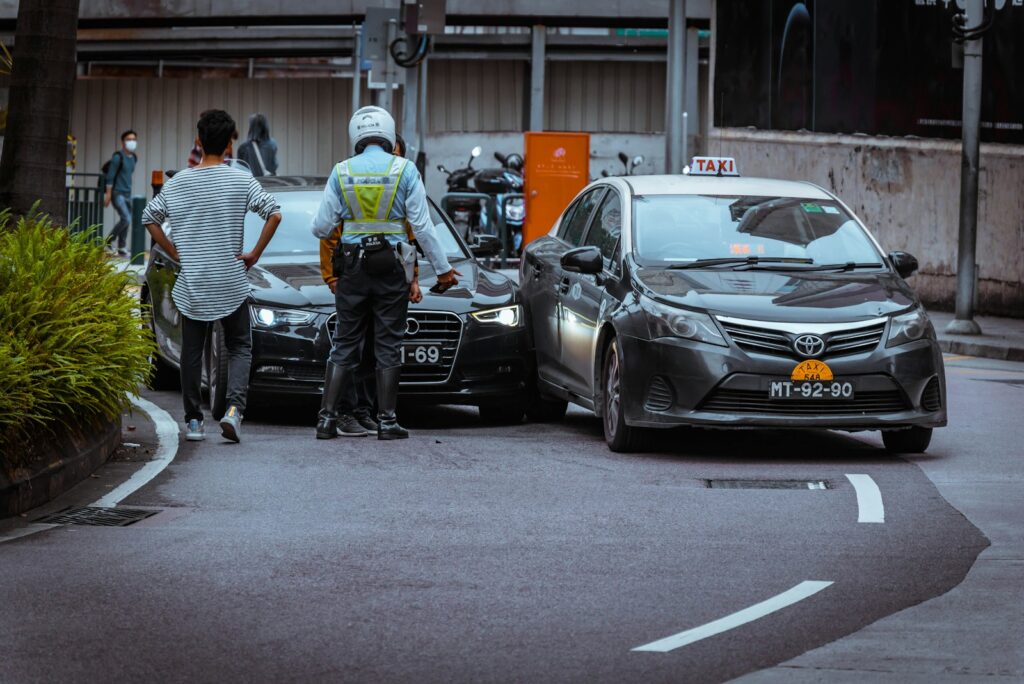
When the officer finally arrived, the other driver transformed. The limp got more pronounced. The neck rub became a full-body stiffness. He answered questions with rehearsed phrases—“immediate pain,” “dizzy,” “disoriented”—and he made sure to mention his “witnesses” again, even though they were apparently so committed to justice that they’d vanished into the afternoon.
Marcus tried to be respectful, but he also didn’t want to get steamrolled. He explained the low speed, the traffic, the minor damage, and he offered the photos without being pushy about it. The officer listened in that neutral, tired way officers listen when they can already smell drama but still have to write down something coherent.
The other driver kept interrupting, correcting little things that didn’t matter, like the exact distance between cars or whether Marcus “accelerated” before braking. He repeatedly said Marcus was on his phone, then paused as if waiting for the officer to leap at Marcus and confiscate an imaginary device. The officer just asked if he’d actually seen it, and the guy said, “I know what I saw,” which is a sentence people say when they don’t have anything else.
Then came the part Marcus couldn’t stop replaying afterward: the other driver asked the officer if he should “go to the hospital,” but he asked it like someone asking whether they should add fries. The officer, unsurprisingly, said if he felt injured he should seek medical attention. The guy nodded like he’d just been handed a coupon.
Insurance calls, sudden symptoms, and the long shadow
Over the next few days, Marcus thought it was over until it wasn’t. The insurance company called with that cautious tone that means “we’re not accusing you, but someone is accusing you.” The other driver had filed a claim that now included medical treatment, missed work, and a list of injuries that sounded less like “minor accident soreness” and more like a movie courtroom monologue.
The witness story also evolved. Now there weren’t just two witnesses—there were “multiple.” Some were described as people who “stayed on scene” even though Marcus hadn’t seen anyone do that, and the police report didn’t mention any names. Marcus asked the adjuster if any witness statements were actually submitted, and the adjuster said they were “waiting on documentation,” which is corporate for “we’ve heard a claim but haven’t seen receipts.”
Meanwhile, the other driver’s communication got aggressive. Marcus received a text saying this could be “handled privately” if Marcus paid “what’s fair” for pain and suffering. The number attached to “fair” was so high it didn’t feel like negotiation; it felt like a test to see if Marcus would panic and write a check to make the anxiety stop.
Marcus didn’t pay. He forwarded everything to his insurer, saved screenshots, and tried to keep his own emotions from turning into a second accident. But even with the practical stuff handled, the situation stuck under his skin, because it wasn’t just about money—it was the feeling of being watched and rewritten in someone else’s story.
What made it a nightmare wasn’t the scuffed bumper or the insurance paperwork. It was the way a tiny, mundane mistake turned into a stage where the other driver seemed to improvise injuries and witnesses the same way some people improvise excuses—fast, confident, and completely unbothered by reality. Marcus kept thinking about that moment on the roadside, the half-second where the guy’s expression shifted before the performance returned, and how unsettling it is to realize someone can decide you’re their payday while you’re still standing there with your hazard lights blinking.
More from Steel Horse Rides: