
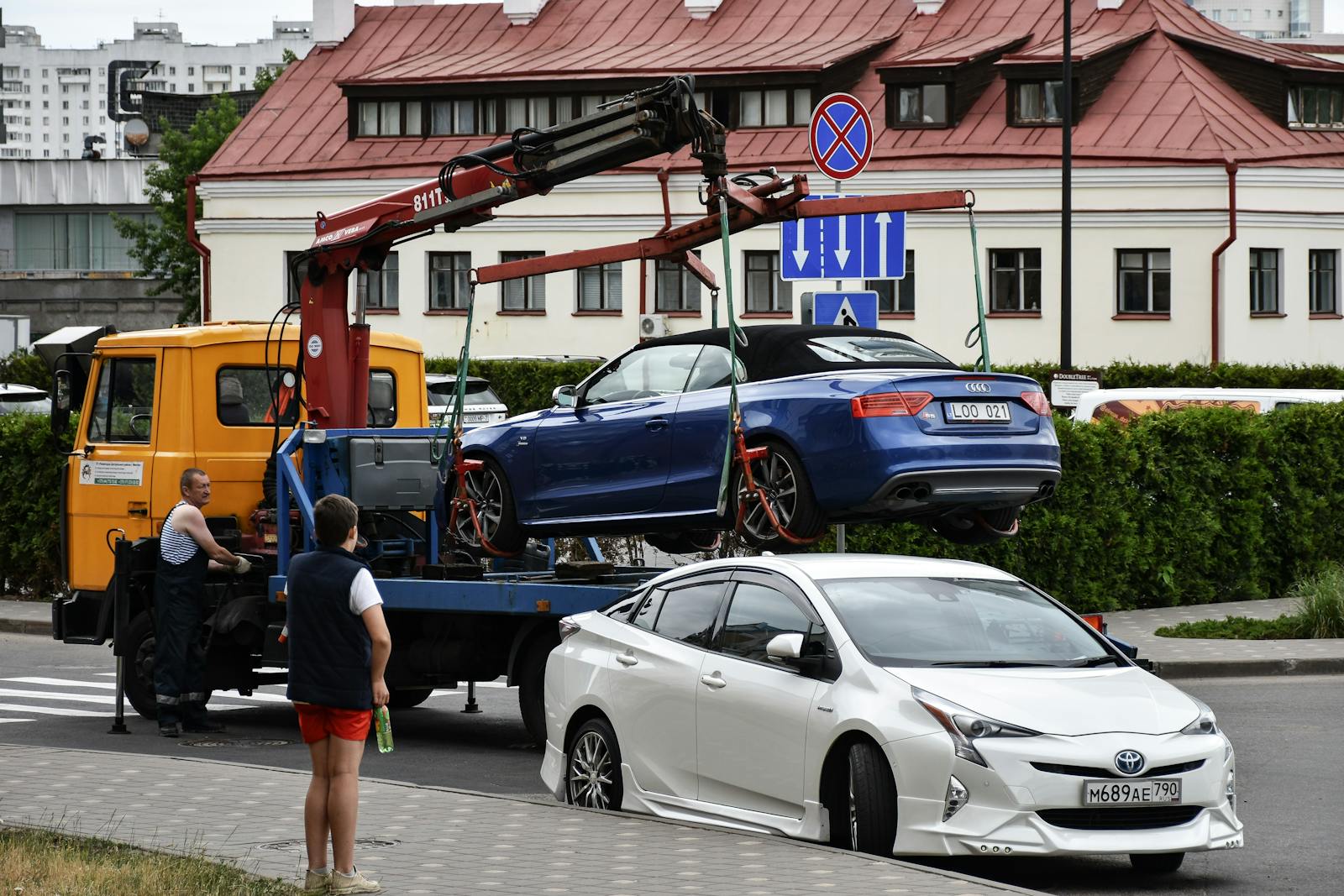

He was only gone for an hour, maybe two. The kind of errand run where you don’t even bother taking anything out of the car because you’ll be right back. When he turned into the lot again, he did the little mental math everyone does—same building, same row, same corner—and then the math didn’t add up because the car wasn’t there.
At first he did the standard denial loop. He walked farther than he needed to, clicked the key fob like that would summon the thing out of thin air, and checked the neighboring rows as if the car might’ve wandered off. Then he saw it: a couple of fresh tire streaks cutting across the dusty pavement where his wheels had been, like someone had yanked the car out sideways and left the evidence behind.
He wasn’t parked in a fire lane. He wasn’t blocking a gate. He wasn’t half-in, half-out of some reserved space. According to him, he’d done the boring, responsible adult thing and parked neatly inside the lines in a spot that had no signage, no paint marking it as reserved, nothing that would’ve made a reasonable person think, “Yep, this one’s a trap.” And yet, his car was gone.
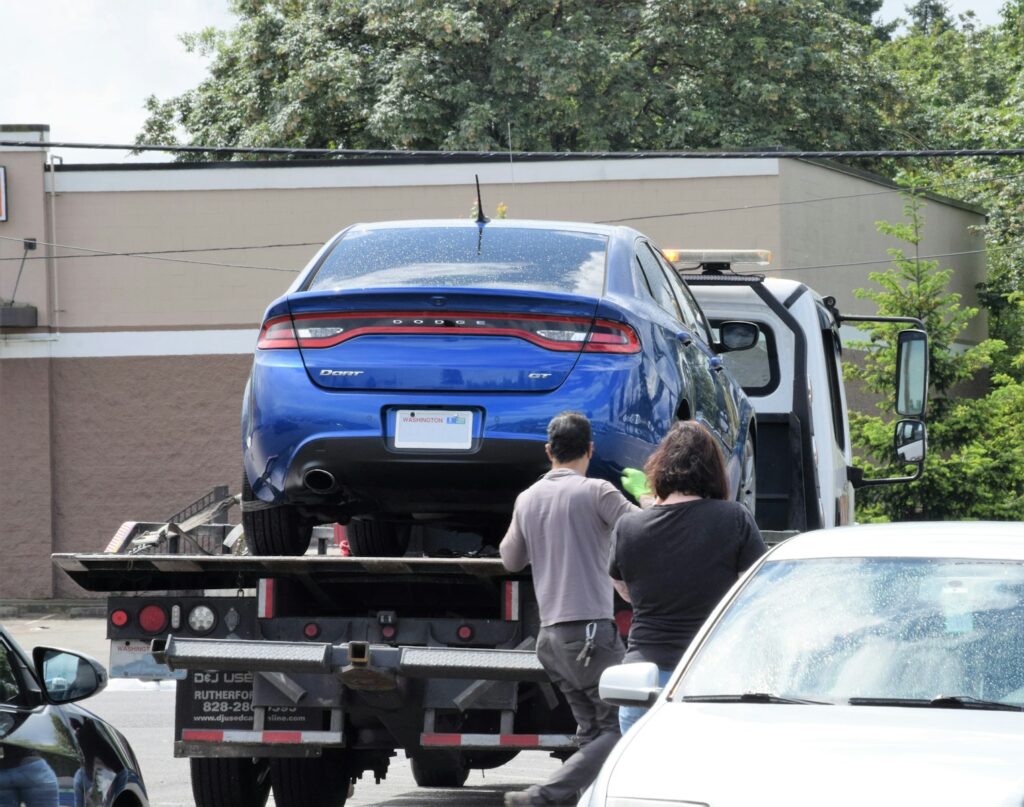
“Are you sure it wasn’t repossessed?”
His first calls were the ones you make when your brain is sprinting ahead of your logic. Police non-emergency, because if it’s stolen, he wants a report number. The leasing office, because maybe it’s one of those complexes that loves towing more than it loves tenants. A couple friends, because once you start saying “my car is gone” out loud, it stops feeling like you’re imagining it.
The police dispatcher didn’t sound alarmed, which somehow made it worse. They ran the plate and came back with the kind of info that makes your stomach sink: it wasn’t stolen, it was “in tow.” No dramatic chase, no grand theft auto. Just a private tow company entry, logged like a routine administrative event, as if a car had simply been moved from one file folder to another.
He called the number they gave him, already rehearsing how he was going to say, calmly, “There must be a mistake.” A guy picked up with that brisk, bored tone that suggests he fields angry calls all day and has developed an emotional firewall. Yes, they had the car. Yes, it was towed from that property. No, he couldn’t come get it “right now” without bringing money.
When he asked what he’d done wrong—what rule he broke, what sign he missed—the tow guy didn’t offer a clean answer. He kept circling back to “unauthorized parking,” like that’s a magic phrase that replaces details. The man started feeling that sick mix of panic and indignation, the one where you’re trying not to explode because you still need information from the person making you furious.
The “right spot” that suddenly wasn’t
He drove to the property office first, because he still had this hopeful idea that someone would admit it was an error. The staff member he spoke to didn’t sound surprised; more like tired. They asked for his unit number, asked what building he parked by, and then said something vague about enforcement and “assigned spaces,” even though he swore the spot wasn’t marked and he’d used it before without issue.
He asked the obvious question: where is it written down that this particular rectangle of pavement belongs to someone else? He wanted a map, a policy, a sign, a piece of paper that would make the tow make sense. The answer he got wasn’t a satisfying “here’s the rule,” it was more like a shrug wrapped in corporate language—something about the lot being monitored and vehicles needing to be in “approved areas.”
It turned into that weird conversation where both sides keep using words that sound like they should connect but don’t. He kept saying, “There’s no sign.” They kept saying, “It’s enforced.” He asked if anyone called him before towing. They said they don’t call, they just authorize.
By the time he left the office, he wasn’t convinced he’d done anything wrong, but he was convinced of something else: nobody was going to help him in a way that got his car back today. The tow company had it, and the only path forward ran straight through their gate and their payment window.
The lot that felt like a hostage exchange
The tow yard was on the edge of town, the kind of place you don’t visit unless something’s already gone sideways. Chain-link fence, faded signage, and an office window with a little metal drawer like you’re buying tickets at a stadium that hates you. He showed up with his documents, his ID, and the tight, controlled anger of someone trying to stay “reasonable” so he doesn’t get stonewalled.
They slid him paperwork that looked pre-printed for speed: tow fee, “storage,” and an “admin” charge that somehow exists in every industry that wants money without explaining why. The total was already in the hundreds, and it had been less than a day. He asked again for the reason, and again got the same answer: unauthorized.
Then came the part that made his voice go sharp. He asked to see the car before paying, because he wasn’t about to hand over a pile of cash and discover later that it was wrecked. The person at the window acted like he’d asked to test-drive the tow truck; they said company policy doesn’t allow access until payment is made.
He pushed back, insisting on at least a visual. Eventually, someone escorted him around the side like he was being granted a favor. And there it was, tucked in among other cars, looking wrong in a way you can spot from ten feet away if you know your own vehicle.
The damage nobody wanted to own
He swears it wasn’t damaged when he parked it. Now, he said, it had fresh scrapes along the bumper and a dent that looked like it had kissed a concrete barrier or the corner of a metal post. One of the wheels looked scuffed up too, the kind of scrape you get when something drags or clamps where it shouldn’t.
He pointed it out immediately, expecting the normal human reaction—someone checking, someone taking notes, someone at least pretending to care. Instead, he got the shrug response. “It was like that when it came in,” the employee said, or some version of it that conveniently solved their problem by making it his.
That’s when he started doing what everyone does now: taking photos of everything from every angle. The fence in the background, the ground under the car, the close-ups of paint transfer and the shape of the dent. He asked to file a damage claim and got handed another form with tiny print and the vibe of “good luck with that.”
The worst part was the timing. The longer he argued, the more “storage” fees could accumulate. It felt like being punished for wanting basic accountability, like the system was designed to make him choose between paying quickly and accepting the damage, or fighting and watching the bill climb.
He paid, because he needed the car. He paid while telling them he was paying under protest, the way people say “I’m not agreeing, I’m just trying to survive this interaction.” They didn’t react like it mattered.
Paperwork ping-pong and the bill that wouldn’t stop growing
Once the car was released, the confusion didn’t clear up, it just changed shape. The property management said towing is handled by the tow company and they don’t get involved in disputes. The tow company said they tow based on authorization and any issue with whether the spot was valid is between him and the property.
He asked for the tow authorization details—who called it in, what time, what reason code, what proof they had that the car was “unauthorized.” The answers came slowly or not at all, and when something did show up, it sounded more like a checkbox than a real explanation. No one seemed eager to produce a clean chain of responsibility, which only made him more convinced he’d been scooped up because it was easy.
And then there was the damage claim, which turned into its own grind. He reported it, sent pictures, and got the kind of responses that feel like someone trying to out-wait you: “We’ll review,” “We’ll get back to you,” “You’ll need to prove it wasn’t pre-existing.” He couldn’t shake how backwards it felt—his car was in their custody, and yet he was the one being treated like he needed to justify reality.
Meanwhile, the money was already gone. The tow fee was non-refundable unless he could somehow force someone to admit fault, and the storage fee was framed like a natural consequence of his car being there at all, even though he never asked for it to be there. It was the kind of situation where every step toward resolution seemed to require more time, more paperwork, and more patience than any normal person has after work.
He kept circling back to the simplest part: the spot. If it really was restricted, why wasn’t it marked like one? Why didn’t the property have a clear map posted? Why did it feel like the only people who fully understood the rules were the ones making money from enforcing them?
What stuck with him wasn’t just the cost, or even the dent. It was the helplessness of standing at that fenced lot, looking at his own car like it belonged to someone else until he paid a ransom—and realizing that the argument he wanted to have, about fairness and proof and basic responsibility, wasn’t the argument anyone on the other side was required to participate in.
More from Steel Horse Rides: