


He wasn’t trying to score some sketchy deal off a gravel lot with hand-painted prices. He wanted the boring kind of purchase: a used SUV with a clean title, decent miles, and the kind of reliability you can forget about while you’re busy living your life.
The seller had the right vibe for it, too. Polite, responsive, not pushy. The SUV looked straight in the photos and even better in person—no obvious body damage, interior that smelled like someone actually cleaned it, and an engine bay that didn’t look like it had been pressure-washed five minutes before the showing.
So the buyer did what a lot of people do when they think they’re being responsible: he checked the VIN, ran a report, took it for a test drive, listened for clunks, and tried to convince himself that the slight hesitation in the transmission was “just how these drive.” He handed over the money, did the paperwork, and drove home feeling like he’d just avoided the whole “used car nightmare” genre.
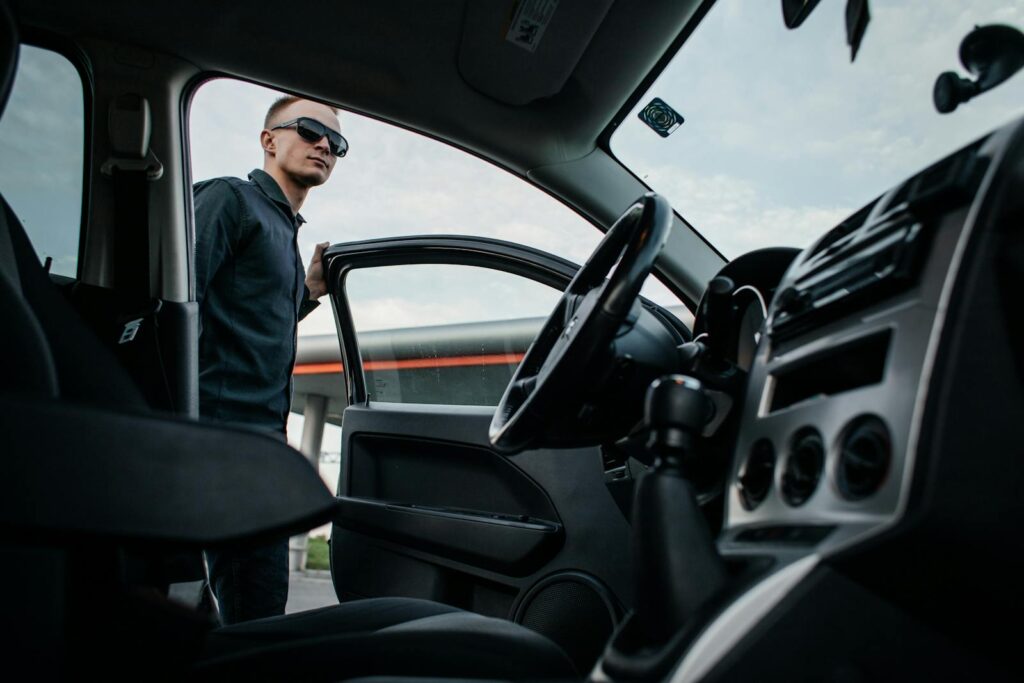
The first week felt normal—until he tried to be extra responsible
For the first few days, nothing jumped out as wrong. The SUV started up every time, the steering felt tight enough, and the brakes didn’t grind. He used it for errands, took a longer drive on the highway, and started doing that thing where you justify the purchase to yourself by noticing all the small conveniences—cup holders where you want them, decent visibility, the way it sits high enough that potholes feel less personal.
Then he scheduled a visit with his mechanic. Not because anything was actively failing, but because he’d promised himself he’d stop buying vehicles on vibes alone. He told the mechanic to do a thorough once-over: fluids, suspension, brakes, and “anything that looks weird.”
The mechanic didn’t call right away. That alone threw him off, because usually a routine inspection turns into a quick text: “Looks fine, here’s what I’d plan for in the next year.” Instead, the shop called and asked when he could come by, like it was easier to show him than explain it over the phone.
The mechanic started pointing at things that didn’t match
When he got to the shop, the SUV was up on a lift. The mechanic didn’t do the usual friendly small talk; he just started walking under it, tapping with a flashlight like a professor about to ruin someone’s day. The first comment was about parts that looked “off”—not worn, not aged, but mismatched.
The mechanic pointed out a control arm that looked newer than the one on the other side. Then a fender liner that didn’t sit quite right, like it was borrowed from a slightly different trim. There were fasteners that looked like they’d been removed and replaced too many times, and paint markings that didn’t match what the mechanic usually saw on factory-installed components.
None of that, on its own, meant the SUV was a scam. Repairs happen. People hit curbs, scrape parking blocks, replace parts after minor accidents. But the mechanic kept circling the same idea: this wasn’t “a car that got fixed,” it was “a car that got assembled.”
Then came the phrase that made the buyer’s stomach drop: “These look like junkyard parts.” The mechanic wasn’t saying it as an insult, either—more like a diagnosis. Used parts can be totally fine, but they also tell a story, and this story was starting to sound like the kind that ends with a DMV clerk shaking their head.
The door VIN didn’t match, and the air got weird fast
The mechanic walked over to the driver-side door, opened it, and pointed at the VIN sticker. He didn’t dramatize it. He just looked at the buyer and said, “Have you checked this one?”
The buyer had checked the VIN—on the dash, like everyone does. That VIN matched the paperwork and the report he ran before buying. He’d taken photos of it, even, because he’d learned that trick from people who’ve been burned before.
But the VIN sticker on the door didn’t match the dash VIN. Not a typo, not one digit off. It was a different VIN entirely, like the door had come from another SUV.
At first, the buyer tried to do mental gymnastics. Maybe doors get replaced all the time after a sideswipe, and the replacement came from a donor vehicle. Maybe the dash VIN is the “real” one and the door sticker is just… along for the ride. The mechanic didn’t argue, but he gave the kind of look that says, “Sure, it could be innocent. But you’re not going to like the list of possibilities.”
The mechanic asked if the buyer could step inside and pop the hood, then pointed to other places VINs can show up: stamped sections, labels, hidden markings. The more they checked, the more it seemed like the SUV was a patchwork—some identifiers consistent, others not, and a handful of things that looked like they’d been messed with by someone who didn’t want a casual inspection to be too easy.
The seller’s story started changing in real time
The buyer called the seller from the parking lot outside the shop. He didn’t start with accusations; he started with a question, the way you do when you want to give someone a chance to explain themselves. “Hey, quick thing—my mechanic noticed the VIN sticker on the driver door doesn’t match the dash. Do you know why?”
The seller didn’t immediately go defensive. He sounded confused, then paused a little too long. He said something like, “Huh, that’s weird,” and told the buyer he’d never noticed that before.
So the buyer got more specific. He mentioned the mechanic thinking the door might have been swapped, and that several parts underneath looked like they came from a salvage yard. He wasn’t yelling, but he wasn’t casual anymore either. He was trying to keep his voice level while his brain ran through every scenario that ended with him stuck with a vehicle he couldn’t register or insure properly.
That’s when the seller’s tone shifted. Suddenly it was “the previous owner must’ve replaced it” and “I bought it like that.” Then it was “doors get replaced all the time,” said with the kind of certainty that shows up when someone’s trying to end a conversation. When the buyer asked for paperwork—any repair receipts, any documentation—the seller got short and said he didn’t have any.
The buyer asked for a return. Not a partial refund, not a negotiation—just a simple unwind of the deal while it was still fresh. The seller didn’t say no immediately, but he didn’t say yes either. He said he’d “think about it” and asked why the buyer was making a big deal out of “a sticker.”
Paperwork, police reports, and the sinking feeling of being stuck
After that call, the buyer did what people do when they’re trying not to panic: he started gathering proof. Photos of the dash VIN. Photos of the door VIN. Screenshots of the listing. Copies of messages. Anything that would help if this turned into a “he said, he said” mess.
He also called the DMV to ask, in the most hypothetical language possible, what it means when a vehicle’s VIN identifiers don’t line up. The DMV person didn’t offer comfort. They told him mismatched VINs can trigger investigations, extra inspections, delays in registration, and in the worst cases, the vehicle being flagged as stolen or reconstructed in a way that wasn’t disclosed.
The mechanic, trying not to scare him further, still gave him the practical advice: don’t put more money into this SUV until he knows what it legally is. A swapped door after an accident is one thing; a vehicle built out of multiple donors with questionable paperwork is another. The buyer left the shop feeling like he’d paid thousands of dollars for a problem that technically still ran and drove, which is the most infuriating kind of problem.
He contacted the seller again with a calmer, more formal message: he wanted to reverse the sale, and he wanted to do it immediately. This time, the seller responded slower. The replies got colder. The seller started acting like the buyer was trying to scam him instead, asking why he took it to a mechanic after buying it and suggesting maybe the buyer “swapped something.”
That accusation hit like a slap, because it flipped the whole thing around. The buyer realized the seller wasn’t just refusing to help—he was laying groundwork to make the buyer look like the liar. And once that clicks, the whole purchase starts feeling less like a mistake and more like a trap.
By the end of it, the buyer was stuck in that brutal limbo: he had an SUV in his driveway that looked normal to neighbors and friends, but every time he glanced at it he saw two VINs and a pile of questions. The seller was still out there acting like it was no big deal, the paperwork was technically “done,” and the mechanic’s flashlight had turned one ordinary used-car purchase into a slow-motion legal headache that hadn’t even reached its most expensive chapter yet.
More from Steel Horse Rides: