

It starts the way a lot of annoying car stories start: a normal drive, a normal day, and then that ugly, sudden jolt that makes your stomach drop before your brain even catches up. She’s sitting at a light in the right lane, half watching the crosswalk timer, half thinking about whatever she’s late for, when the car behind her doesn’t stop in time. Not a tap, either—enough of a hit that her head snaps and she immediately knows this isn’t going to be a “swap numbers and move on” situation.
She does the responsible thing. Pulls over safely, hazards on, gets out and checks the damage while her hands still feel shaky. The back of her car is scuffed and pushed in at the corner, and the other guy’s front bumper looks like it folded in on itself. He’s already talking fast, like he’s trying to get to the ending before anyone can ask questions.
Before she can even fully gather herself, he’s telling her he “didn’t hit her,” he “barely touched her,” she “stopped short,” it was “weird,” like he’s tossing out phrases and hoping one of them sticks. She’s staring at the very obvious line where his paint transferred onto her bumper, thinking, okay, cool, so we’re doing this. She calls the police because she knows exactly how this goes when someone starts rewriting reality in real time.
The Scene Turns Into a Negotiation
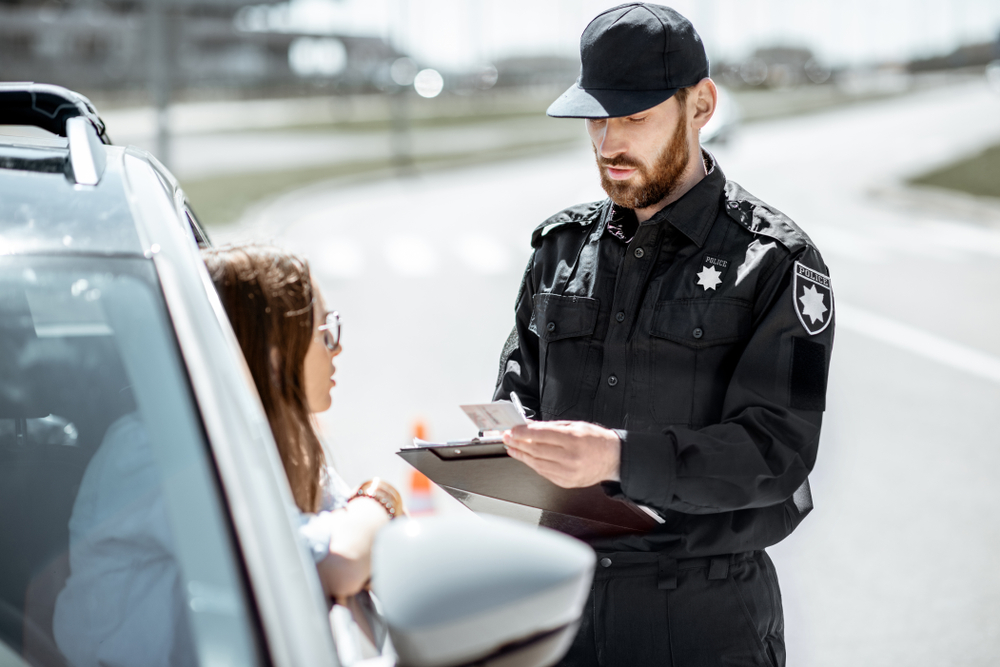
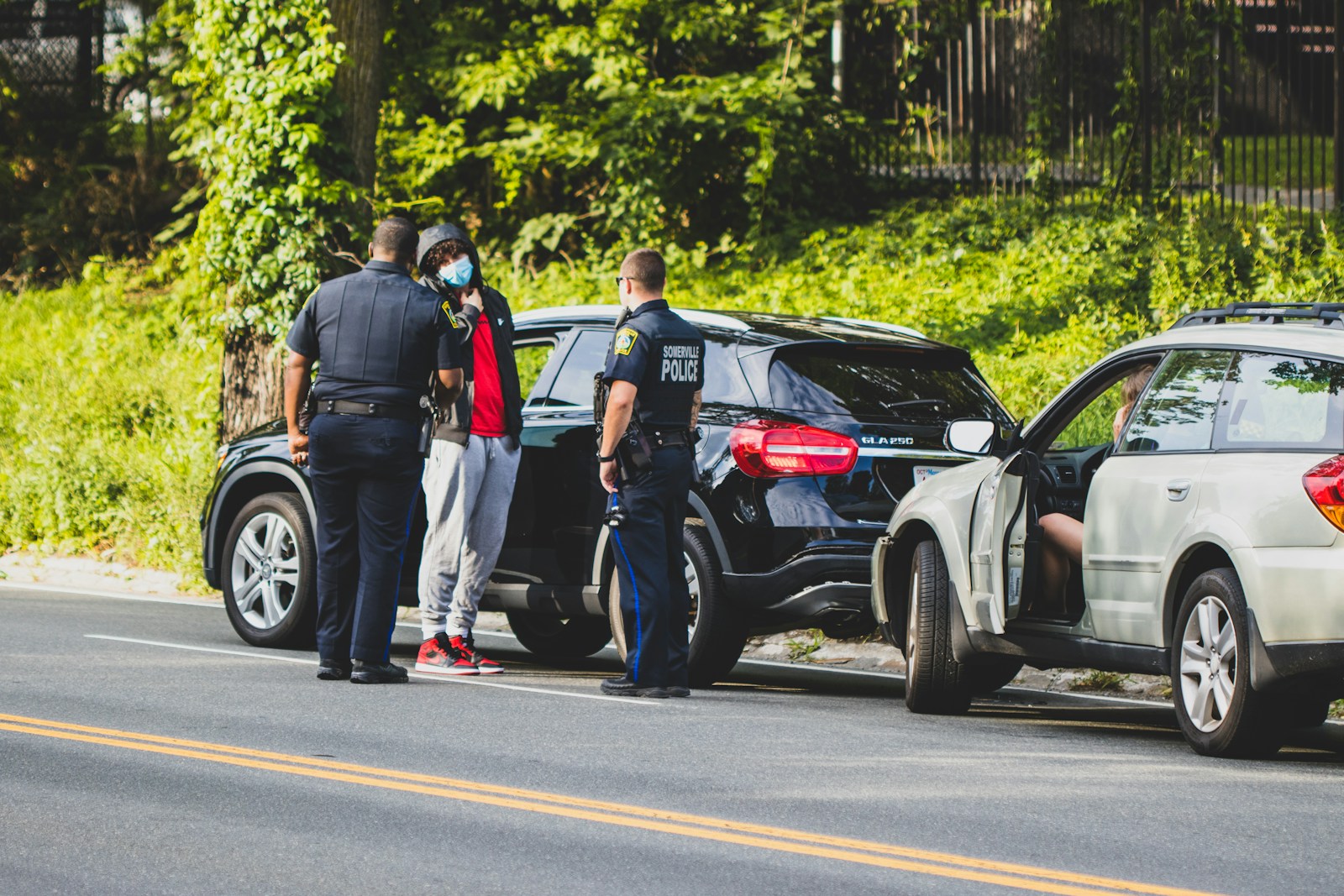
When the officer shows up, she expects the usual: take statements, check licenses, maybe do a quick diagram. Instead, the vibe shifts into something weirdly casual, like the collision is a minor misunderstanding everyone should just talk through. The officer listens to her version for maybe a minute, then spends three times as long chatting with the other driver.
And it’s not just “listening.” It’s the kind of listening where the officer feeds him prompts—“So you were already stopping?” “And she braked suddenly?”—like they’re building the story together, piece by piece. She’s standing there watching it happen, realizing the whole thing is turning into a group project where she’s not invited to contribute.
At one point she tries to interject, because the guy is now describing a scenario where she somehow backed into him. She says, out loud, that she was fully stopped at a red light, that her dashcam is running, that this is a rear-end collision. The officer doesn’t snap at her, but he gives her this tired look, like she’s being difficult for wanting the report to match the physics of the crash.
Then comes the part that makes her blood run cold: the officer doesn’t actually write what she said, not in any way that resembles what she said. He writes something vague and flexible, the kind of language that can be interpreted fifteen different ways depending on who’s reading it and who’s paying. She asks if she can review it, and the officer basically brushes her off with “You can request it later,” like she’s being pushy for wanting accuracy.
The Other Driver Finds His Confidence
The longer the officer talks to him, the calmer the other driver gets. He starts acting like he’s been validated, like he’s been told he’s doing great and just needs to keep the story straight. He’s not yelling, not aggressive, just smug in a quiet, infuriating way—standing a little closer, talking a little louder, answering her questions with non-answers.
He keeps repeating variations of the same theme: she “stopped unexpectedly,” she “came out of nowhere,” he “had no time.” The words are polished now, less panicky, like he’s rehearsed them. She notices the officer nodding along, not because the story makes sense, but because it’s being told confidently.
She tries again with the dashcam. She even offers to show the footage right there, on her phone, because it’s literally the simplest way to end the argument. The officer says something that lands like a slap: he doesn’t need to see it, that’s for insurance, and the report is just “for documentation.”
That’s when she realizes what’s happening. The report isn’t going to be a neutral record; it’s going to be a launching pad for whatever the other guy decides to claim later. And the officer, whether he means to or not, is handing him the pen.
The Report Lands and Everything Gets Worse
A few days later she gets the crash report, and it reads like someone took her real-life experience and ran it through a blender. It doesn’t clearly assign fault, doesn’t clearly state she was stopped, and includes phrasing that makes it sound like she contributed to the collision. It’s full of those maddening little ambiguities—“Vehicle 1 slowed,” “Vehicle 2 unable to avoid,” “contributing factors unknown”—that don’t sound terrible until you realize how insurance companies translate them.
She calls the police department to ask how to amend it, because in her head there’s no way they can just write a mushy, noncommittal report when one car hit another car from behind at a red light. She gets bounced around: records division, then someone else, then voicemail. When she finally talks to a person, the message is basically that the report is the report, and if she wants to contest it, she can “submit a request,” which feels like being invited to scream into a paper shredder.
Meanwhile she’s dealing with the physical aftermath—soreness in her neck, that dull headache that comes and goes, the kind of pain that’s easy for strangers to dismiss but hard to ignore when you’re trying to sleep. The shop estimate comes back higher than she expected, because damage behind a bumper can hide until someone pulls panels off. She tells herself, fine, at least insurance will handle it once they see the dashcam.
Then insurance calls, and the tone is… off. Not sympathetic, not neutral, but lightly suspicious, like they’re talking to someone who’s already on thin ice. They ask questions that make it clear they’re using the report as their starting point, not her footage, not the basic logic of a rear-end collision, and definitely not her word.
Insurance Starts Treating Her Like a Liability
Her adjuster asks her to “walk through” what happened again, slowly, and she can hear the keyboard clicking on the other end. She mentions the dashcam, again, and it’s like she’s introduced a complication instead of evidence. The adjuster says they’ll “take a look,” but also asks why she didn’t provide it sooner, as if she wasn’t offering it at the scene and then again in the initial claim.
Then come the little accusations dressed up as questions. Why didn’t she move forward sooner when the light changed? Was she distracted? Did she brake abruptly? Was there something in the road? She answers everything, because she’s trapped in that bureaucratic game where refusing to play makes you look guilty, but playing still doesn’t guarantee you’ll win.
And then the real gut punch: they tell her the other driver is claiming she reversed into him. Full stop. Not “we disagree about the details,” but a total inversion of reality, the kind that makes your brain short-circuit because it’s so bold. She says she has dashcam footage proving she never reversed, that she was stopped, that the light was red, and the adjuster responds with something like, “We’ll need to review all evidence,” in the same tone you’d use to tell someone you’ll look into their missing package.
She sends the footage. She labels the files carefully, includes the date and time, and even points out the moment the impact happens and how her car doesn’t move backward at all. Days go by with no update, and when she follows up, she gets told the claim is “still under review.” Meanwhile the shop wants authorization, she needs a rental, and every day the car sits there turns into another day she’s rearranging her life around someone else’s lie.
The Fight Becomes About “Credibility” Instead of Damage
What really eats at her isn’t just the delay—it’s the way the whole situation morphs from “a guy hit my car” into “prove you’re not a scammer.” She feels it in every phone call where someone asks the same question a different way, like they’re hoping her story changes. She feels it when she mentions the officer’s report and the adjuster treats it like gospel, even though it’s full of soft language that doesn’t match what happened.
She tries to do the calm, organized thing. She writes a timeline. She saves every email. She requests the officer’s bodycam footage and dispatch notes, because now she’s wondering what else got misrecorded. She even considers paying out of pocket just to get her car back sooner, until she realizes that would be its own kind of trap—fix the damage now and you lose leverage later.
And the other driver? He’s basically vanished, except for his claim, which keeps evolving in ways that make him look less responsible. It’s the kind of story that gets more elaborate the more it’s challenged, because it has to cover the holes. She can almost picture him at home, rehearsing with someone, tweaking the language, figuring out what sounds plausible to an adjuster who never saw the scene and doesn’t feel her whiplash when she turns her head.
By the time she’s back on the phone with insurance again, she’s not even arguing about the accident anymore. She’s arguing about whether she deserves to be believed. And the maddening part is that she has the one thing people always say to get—video evidence—and it still doesn’t immediately solve it, because the machine that’s supposed to process “proof” is busy processing “risk.”
The whole mess ends up sitting in this ugly limbo: a police report that reads like a compromise between truth and convenience, an insurance company treating “rear-ended at a red light” like a complex mystery, and a driver who walked away from the scene with enough confidence to claim the exact opposite of what happened. She’s left with a damaged car, a stiff neck, and that specific kind of frustration that doesn’t burn out quickly—the feeling of being calmly, officially told that reality is negotiable, and she’s the only one in the negotiation who didn’t agree to play.
More from Steel Horse Rides: