
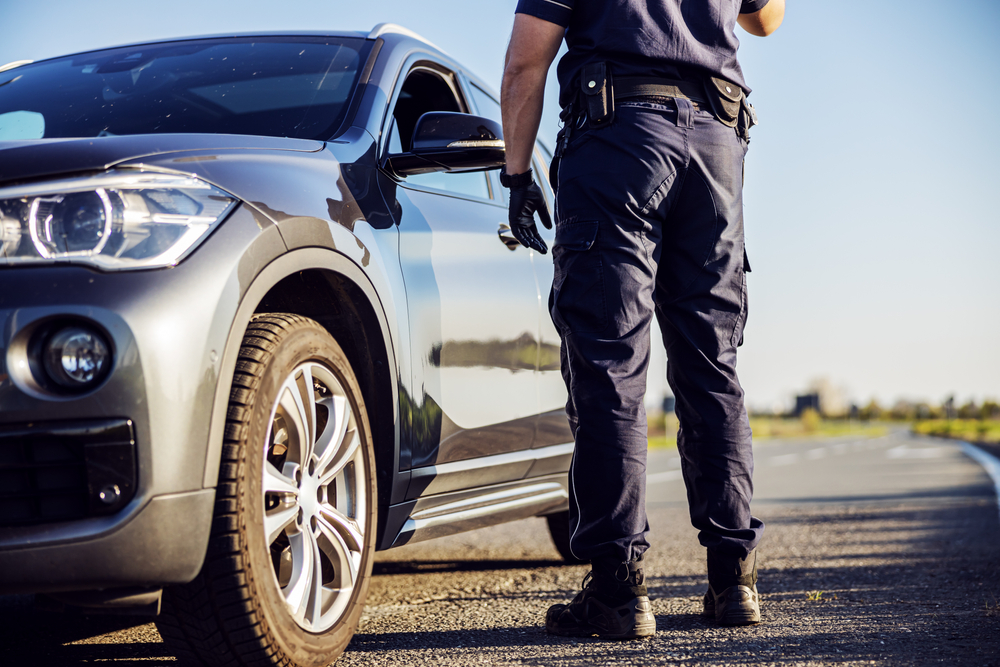

It starts the way a lot of traffic-stop horror stories start: a normal drive, a normal car, and a guy who’s not doing anything particularly interesting. He’s just trying to get from point A to point B, music low, hands on the wheel, thinking about whatever people think about when the road’s empty and the day feels routine.
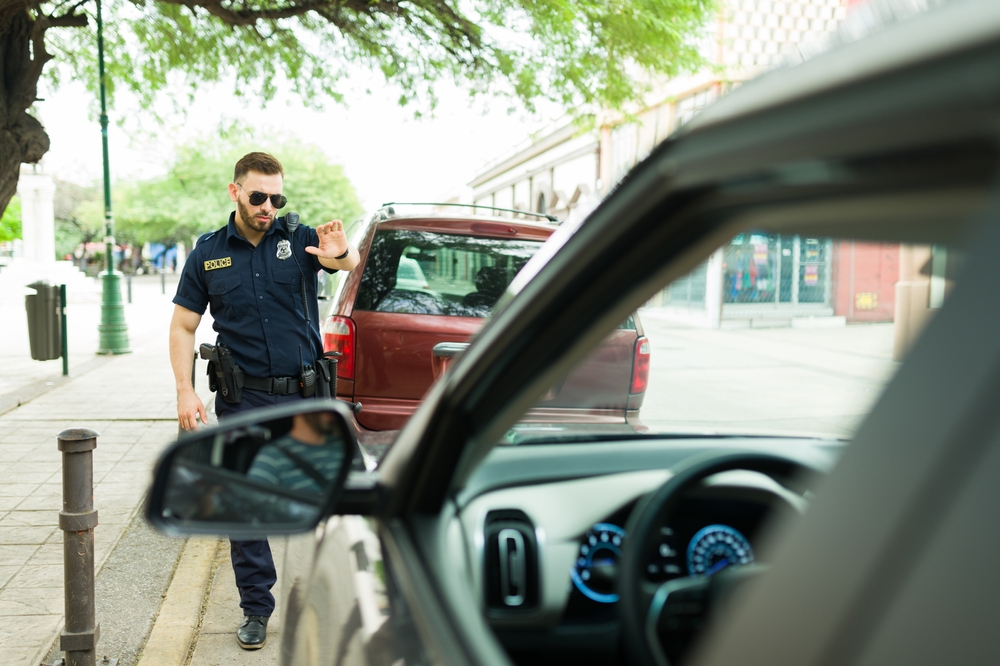
Then the lights hit his rearview mirror. Not the “you were doing 10 over, here’s a ticket” kind of stop either—more like the kind where the officer walks up already wearing a conclusion on his face. The driver pulls over, rolls the window down, and does the whole polite-and-calm routine, because that’s what you do when someone with a badge and a gun wants a chat.
Within minutes, this turns into one of those encounters where you can feel the rails being laid in real time. The driver later says the officer kept circling the car, peering through the glass like he was scanning for a hidden compartment that would justify whatever was brewing in his head. And when the words “probable cause” finally come out, it’s less like a legal standard and more like a spell the cop expects to work automatically.
The stop that wouldn’t stay a stop
The driver says the officer didn’t start with a clear explanation of what he was pulled over for. It was vague—something about the way he was driving, something about a “traffic infraction,” the kind of non-specific opener that leaves you guessing whether you missed a sign or whether they just wanted a reason to talk to you. He answers questions, keeps his voice even, and watches the officer’s attention bounce between his face and the interior of the car.
What makes it tense isn’t just the questions; it’s the way they’re delivered. The officer keeps asking where he’s coming from, where he’s going, how long he’ll be in town—stuff that feels more like fishing than documenting. The driver tries to stay neutral, but he can tell the officer is treating every ordinary answer like it’s a contradiction waiting to happen.
Then comes the pivot: the officer says he smells something. The driver says that’s impossible—no weed, no alcohol, no smoke, nothing. But “I smell it” is one of those phrases that, in practice, can turn into a trapdoor under your rights, because you can’t disprove a nose.
“Probable cause” as a magic word
The driver says he tries to clarify: is he being detained? is he free to go? The officer doesn’t give him the clean yes-or-no that would make anything easier. Instead, he leans on that authoritative, practiced cadence that signals the decision has already been made, and says something along the lines of, “I have probable cause to search the vehicle.”
There’s a moment the driver describes where it becomes obvious the officer isn’t asking for consent. He’s announcing an outcome. The driver is told to step out and stand off to the side, and the officer positions him where he can be watched—close enough to keep him in check, far enough that he can’t see every detail of what’s happening inside the car.
The driver says he tries to keep his phone visible and record without making it a confrontation. He’s careful about it, because every movement suddenly feels like it could be interpreted as “noncompliance.” The cop, meanwhile, is no longer doing the traffic-stop thing; he’s doing the rummage thing, the “let’s see what falls out when I shake the whole situation” thing.
The search turns into a teardown
At first, it’s the predictable stuff. Glove compartment. Center console. Under the seats. But then it escalates, and that’s where the story stops being annoying and starts being infuriating. The driver says the officer begins pulling at panels, tugging at trim, digging into spaces that don’t look like they were designed to be opened on the side of the road.
The car starts to look less like a vehicle being searched and more like a living room after a bad breakup. Papers scattered. Contents of the trunk dumped out. A jacket flung onto the shoulder like it’s evidence. The driver says he watched the officer go through personal items with this casual roughness—like the point wasn’t to find something specific, but to assert that he could.
And the officer isn’t alone forever. The driver says another unit shows up, which changes the whole vibe. Now it’s not one person making a decision; it’s a small audience of uniforms watching the performance, and the search gets bolder instead of more careful.
The driver describes one especially galling detail: the officer allegedly starts prying at interior pieces hard enough that clips snap, leaving panels loose and misaligned. It’s the kind of damage that isn’t catastrophic, but it’s expensive in the most annoying way—broken fasteners, torn lining, stuff that rattles forever after because someone wanted to play detective for ten minutes.
Nothing turns up, and somehow that doesn’t matter
After all that, the result is… nothing. No drugs. No weapons. No contraband. Not even the kind of “well technically” item that can be turned into a citation. The driver says the officer’s tone shifts slightly—less prowling confidence, more clipped annoyance—like the car wasted his time by not containing the story he’d already written.
But there’s no apology, no acknowledgement that he just turned someone’s vehicle inside out based on a hunch dressed up as “probable cause.” The driver says the officer basically tells him he can go, while the car sits there looking violated. And the most surreal part is the expectation that the driver should be grateful it’s over, as if the absence of an arrest is supposed to cancel out the mess.
He starts putting his stuff back, which is harder than it sounds when you’re doing it on the shoulder with adrenaline still in your system. Things don’t go back the way they came out. A panel won’t sit right. A rubber seal is half-hanging. And he’s trying to reassemble his life while the officer stands nearby, projecting that bored, “wrap it up” energy like this is just paperwork for him.
The aftermath: damage, receipts, and the awkward problem of proof
Once he’s back on the road, the driver says the anger doesn’t hit all at once—it comes in waves. First it’s the disbelief: did that really happen? Then it’s the inventory of what’s now broken or missing. Then it’s the quiet panic of realizing how hard it is to challenge something like this after the fact.
Because what’s he supposed to do—submit a claim that says, “A cop tore apart my car and found nothing”? The officer can write “odor of narcotics” in a report and it becomes this nearly unassailable foundation for everything that followed. The driver can say, “There was no odor, and I don’t even use,” and it becomes his word against a badge.
He takes photos, he says. Close-ups of popped trim, scuffed plastic, the way the trunk lining sits wrong now. He documents the state of the car as best he can, because if you’re going to argue this later, you need something that looks like more than frustration. But even with photos, the story is slippery: damage can be dismissed as “pre-existing,” and the whole search can be framed as “reasonable given the circumstances.”
The driver also has to deal with the personal side of it—how violating it feels when someone in authority goes through your things like you’re already guilty. It’s not just the car; it’s the way the search turns your everyday objects into suspicious props. A backpack becomes “possible concealment.” A toiletry bag becomes “could contain narcotics.” Your privacy gets translated into probable cause vocabulary, and you’re expected to stand there quietly while it happens.
What sticks with him, he says, isn’t even the fear of getting arrested for something he didn’t do. It’s the casual certainty that the officer could do all that, find nothing, and still walk away like he’d been right to try. The car can be put back together, mostly. The clips can be replaced, the panels can be re-seated, the scuffs can be ignored if you’re good at swallowing irritation. But the lingering tension is harder to fix: the sense that “probable cause” can sometimes mean “because I felt like it,” and that the cost of proving otherwise lands on the person standing on the shoulder, holding a phone, watching their belongings get tossed into the dirt.
More from Steel Horse Rides: