
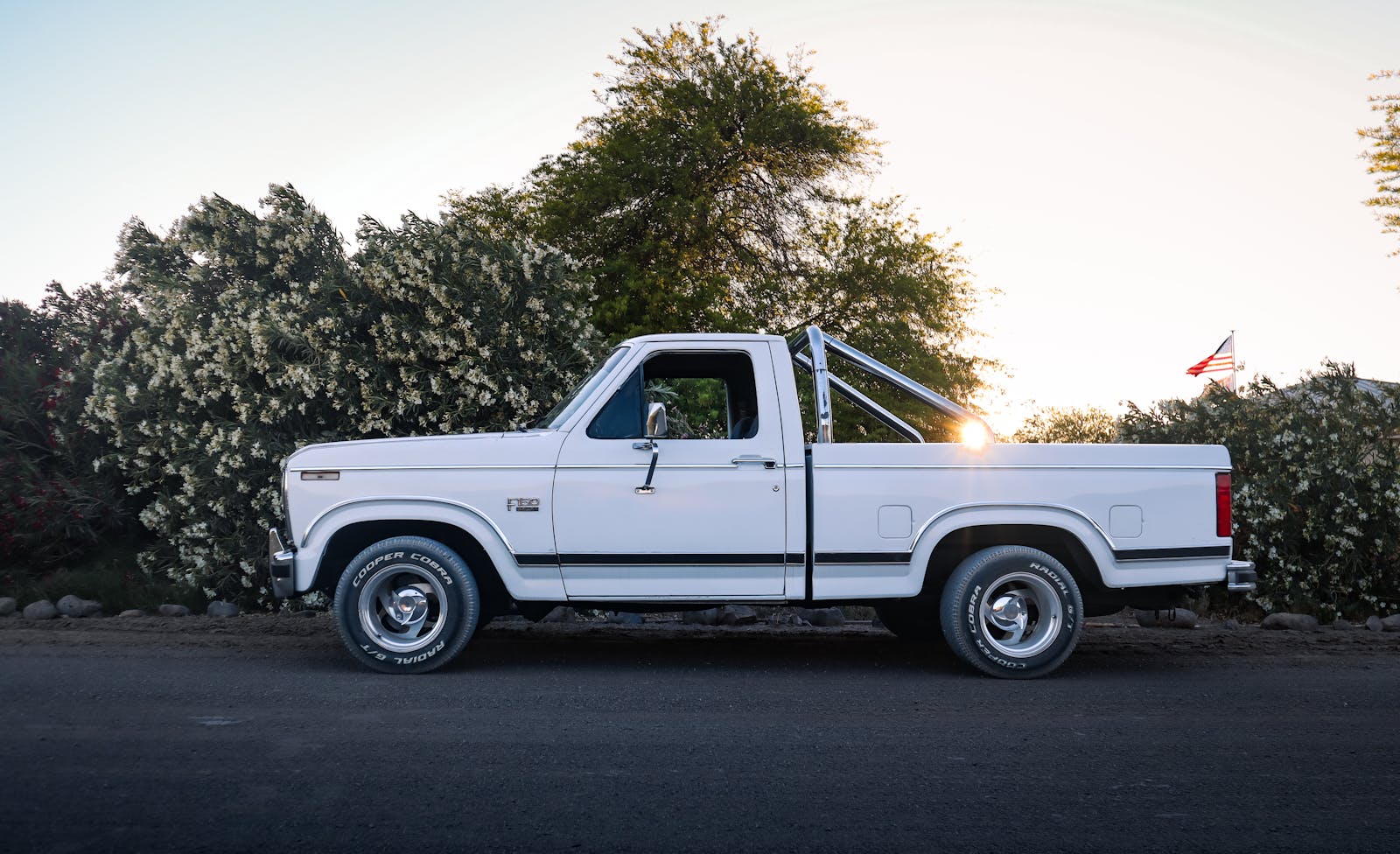

He’d lent the truck out before. Not often, and not to just anyone, but his brother-in-law had always been the kind of family-adjacent guy who asked with a grin and a “I’ll bring it back cleaner than I got it.” A couch pickup didn’t sound like a big deal—an hour across town, two guys lifting, done.
The truck in question wasn’t some fragile antique, either. It was an older full-size pickup with enough miles to have a few quirks, but it had always been reliable in that stubborn, blue-collar way—turn the key, it starts, haul what you need, no drama. He’d replaced the fluids on schedule, fixed things before they became problems, and treated the rear end like the expensive, important component it is.
So when the brother-in-law rolled into the driveway later that evening and parked crooked, the owner’s first thought wasn’t “something’s broken.” It was “why does he look like he’s been through something?” The second thought came when he heard it: a crunchy, dragging, metal-on-metal complaint from the back of the truck as it settled into park.
The couch errand that somehow turned into a mystery
The brother-in-law climbed out slowly, like he didn’t want to disturb the scene. He did the usual patting of pockets, the casual “Hey man,” and then immediately started explaining without being asked. According to him, the couch pickup went fine, but on the way back there was “this huge bang” and then a “kinda grinding thing,” and then he “barely made it.”
The owner stared at him for a second, because the story was already doing that weird thing where it tried to preempt every question. The brother-in-law kept talking, piling on details that didn’t quite connect: a pothole, a sudden swerve, some guy in a sedan cutting him off. Somewhere in there he mentioned the couch “slid a little” and he had to brake hard.
They walked around to the back together, and the smell hit first—hot gear oil has a very specific stink, sharp and burned and wrong. There was fresh wetness around the differential and streaking along the underside like something had been slung outward. The owner crouched down and saw glitter in the oil, that silvery sparkle that makes your stomach sink before you even know why.
A blown rear end doesn’t happen from “one pothole”
He asked the simplest question in the calmest voice he could manage: “How fast were you going?” The brother-in-law laughed too quickly and said, “Not fast-fast. Like, normal.” He didn’t give a number, just kept repeating “normal” like it was a magic word that erased consequences.
The owner slid into the driver’s seat and tried rolling it forward a few feet. The truck protested immediately—thunking, binding, refusing to move smoothly—like the gears were chewing themselves. He shut it down right away, because whatever was happening back there was expensive and getting more expensive by the second.
When he got out, the brother-in-law had taken two steps away and was staring at the couch in the bed like it might offer him a script. The couch looked fine, annoyingly fine, sitting there like the only part of the day that went according to plan. And it didn’t escape the owner’s notice that the tie-downs were a mess—one strap loose, one hooked in a way that made no sense, like someone had tied it down in a hurry after something went sideways.
He asked again, different angle: “Did you tow anything? Did you put it in four-wheel drive? Did you take it somewhere you shouldn’t?” The brother-in-law’s face did this subtle tightening, and then he said no to all of it. Too fast, too clean, as if he’d practiced the denials on the drive back.
The story starts changing in the garage light
The owner called a buddy who knew trucks, the kind of person who shows up with a flashlight and doesn’t mind getting dirty. The buddy took one look under the rear and made that low “oof” sound mechanics do when they’re about to ruin your week. He pointed out fresh scrapes on the rear diff cover and a dent near the axle area that didn’t match the brother-in-law’s “pothole” story.
Now the owner had something concrete to ask about: “How’d it get hit?” The brother-in-law blinked and said maybe it happened when they loaded the couch, like the dolly clipped it. That didn’t make sense—loading a couch doesn’t dent a differential housing unless you’re using a forklift and you hate the truck.
Pressed again, the brother-in-law pivoted to another explanation. Maybe the previous owner had done something, maybe it was “already weak,” maybe it “just went.” He said it with that defensive shrug people use when they’re trying to make an accident sound like fate, not something they did.
And that’s when the owner remembered something small but irritating: the brother-in-law had asked earlier in the week if the truck could “pull a little trailer.” Not a big one, just “a little one,” he’d said, like the size made it harmless. The owner had told him no, not this week, because he didn’t want anyone towing with it and putting stress on the drivetrain.
Receipts, gaps, and the weird missing hour
Once the suspicion landed, everything else started standing out. The brother-in-law had been gone longer than a couch run should’ve taken, and he’d brushed it off as traffic. But when the owner checked his phone, he realized the brother-in-law had stopped sharing his location earlier that afternoon—something he’d enabled months ago for coordinating family stuff and then never turned off.
He asked where exactly the couch came from. The brother-in-law gave a neighborhood, then corrected it, then said it was “near” that neighborhood, as if proximity counted as accuracy. The owner asked if there was a receipt, a text thread, anything that showed the address, because he wanted to know the route.
The brother-in-law produced a screenshot of a message that looked oddly cropped, like the top half had been carefully removed. It showed “Thanks for the couch” and nothing else. The owner asked to see the full conversation, and suddenly the brother-in-law got protective of his phone, turning the screen away and saying it was “personal.”
In the middle of this, the owner’s spouse came outside, drawn by the tone more than the noise. She looked from her brother to her husband to the puddle under the truck and immediately went tense, like she’d seen this kind of family mess before. The brother-in-law brightened like backup had arrived and started repeating the “pothole” story to her with extra emphasis, as if she was the judge and he was entering a plea.
The money conversation everyone hates having
There’s a particular kind of silence that happens when somebody finally says what everyone’s avoiding. The owner asked, plain and direct, “Are you paying to fix this?” The brother-in-law didn’t say no exactly—he said, “Let’s not get ahead of ourselves,” and then started talking about getting “a guy” to look at it.
The owner didn’t want “a guy.” He wanted a real shop and a real diagnosis, because a blown rear end isn’t a rattle you ignore; it’s a rebuild or a replacement, and it’s not cheap. The brother-in-law’s eyes flicked to the house, to his sister, and then away, like he was calculating how much sympathy could be converted into a discount.
When the owner insisted on a reputable shop, the brother-in-law went on the offensive. He said the truck was old, he said things break, he said maybe the owner should’ve told him about “any issues.” The owner heard that and felt something snap—not the truck, but the last bit of goodwill that makes lending family your stuff feel normal.
He pointed out that the truck didn’t limp home by itself. Someone drove it home while it was grinding, while gear oil was leaking, while metal was presumably turning into shavings. The brother-in-law acted offended by the accusation, but he couldn’t answer the obvious question: if it was making that noise right after the “bang,” why didn’t he stop and call?
What’s left is a broken truck and a broken trust
By the next morning, the truck was towed to a shop, and the preliminary verdict was exactly as grim as it sounded. The rear differential had failed catastrophically, and there were signs of impact damage that didn’t line up with “hit a pothole at normal speed.” The shop guy didn’t accuse anyone of anything, but his tone said plenty: this wasn’t random bad luck.
The brother-in-law’s story kept shrinking as facts showed up. He stopped mentioning the sedan that cut him off. He stopped mentioning the hard braking. He started saying maybe he “tapped something” pulling into a driveway, like that could explain a destroyed rear end. Every revision made the owner angrier, not because accidents are unforgivable, but because the lying felt deliberate and lazy.
The spouse was stuck in the worst position—watching her husband tally up costs while her brother tried to dodge responsibility with word games. She wanted peace, but the owner wanted honesty, and those weren’t the same thing anymore. The brother-in-law began texting her privately instead of talking in the open, which only made it feel more like a negotiation than an apology.
And that’s where it sat: a truck on a lift, a repair estimate that looked like a punishment, and a family dinner schedule that suddenly felt like a minefield. The owner couldn’t prove exactly what the brother-in-law did in that missing hour, but he didn’t need a confession to understand the core of it. The couch was delivered, the truck was wrecked, and the only thing the brother-in-law returned intact was his ability to look someone in the eye and insist it was “just a pothole.”
More from Steel Horse Rides: