

She ordered the rideshare the way you do when you’re trying to be responsible: no driving, no drama, just a quiet ride across town and maybe ten minutes to decompress before she had to walk into her appointment. It was late afternoon, that weird window where traffic’s thick but everyone’s still pretending they’re not in a rush.
The driver pulled up in a dark sedan that looked clean enough, the kind of car that’s seen a lot of passengers but still smells faintly like air freshener and coffee. She slid into the back, buckled up, and gave the usual polite greeting. He answered, a little too loudly, and started the trip before she’d even fully settled her bag against her leg.
At first it was normal small talk. He asked if she’d had a busy day, she gave a vague “yeah, kinda,” and angled her gaze out the window like a universal signal for “I’m done talking now.” That’s when he took a deep breath, like he’d been holding something in all day, and turned the car into a confessional on wheels.

It Starts as “Small Talk” and Turns Into a Monologue
He didn’t ease into it with a harmless complaint about gas prices or road construction. He went straight for the throat: divorce. Not in a “life’s been tough” way, but in a detailed, you-can-tell-he’s-rehearsed-this kind of way, like he’d been waiting for a captive audience who couldn’t politely walk away.
He started with, “You know how women are,” which immediately put her on edge, and then kept going without waiting for her response. His wife was “turning the kids against him,” his lawyer was “bleeding him dry,” and apparently everyone in his life had joined a coordinated effort to ruin him. She made a small noise that could’ve been interpreted as sympathy, or just a human trying to keep things from escalating in a moving vehicle.
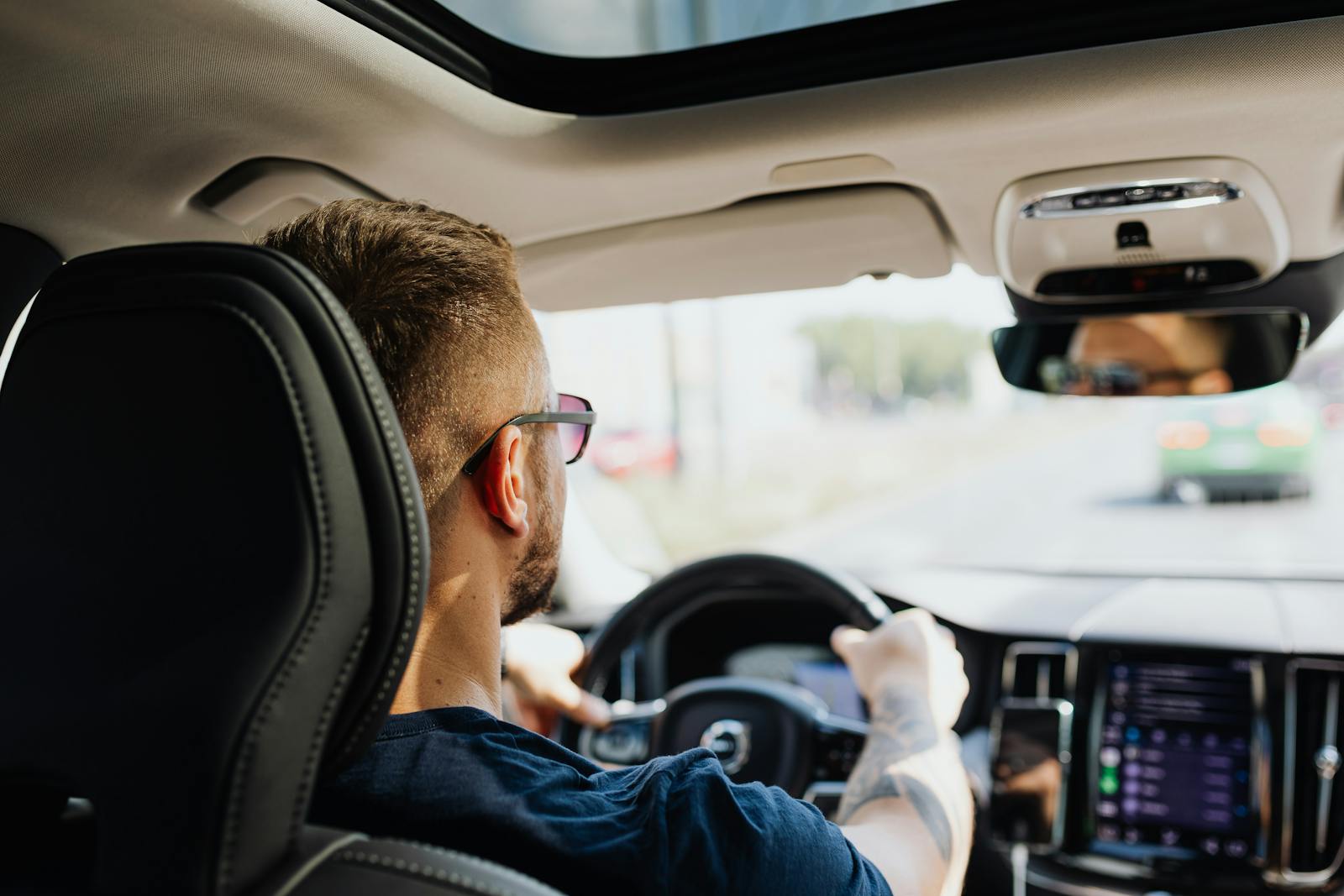
From the back seat, she watched him in the rearview mirror: eyes bright, jaw tense, gesturing with one hand while the other held the steering wheel just a little too loosely. The route on his phone was clearly visible from where she sat, the blue line telling him exactly where to go. It didn’t seem to matter.
The First Missed Turn Feels Like an Accident
He approached the first turn and kept talking, voice rising and falling like he was giving a TED Talk called “My Ex Ruined My Life.” She noticed the street name go by, glanced at the phone, then back up. He didn’t signal, didn’t slow down—just sailed past like the intersection didn’t exist.
She waited a beat, because people miss turns sometimes, especially in traffic. The app recalculated with that cheerful inevitability, and he reacted like it was a personal insult. “See?” he said, tapping the screen hard enough that the phone shifted in its cradle. “Even this thing doesn’t know what it’s doing. Just like my wife.”
She tried to keep her voice light and neutral, the way you do when you’re managing someone’s mood. “Hey, it happens. We can just follow the new route.” He hummed like he hadn’t heard her, then launched into a story about a couples therapist who “sided with her from day one,” as if therapy is a referee and not, you know, therapy.
The Second and Third Missed Turns Make It Feel Like She’s Stuck
When he missed the second turn, it stopped feeling like ordinary distraction and started feeling like negligence. He wasn’t looking at the map anymore; he was looking at the road like it was something he needed to conquer, while replaying arguments in his head out loud. The car drifted slightly within the lane when he gestured, and her shoulders went tight against the seat.
She tried again, more direct this time. “I think it wanted us to turn back there.” He let out a sharp laugh and said, “Yeah, well, everybody wants me to turn back, don’t they?” like her sentence was somehow part of the divorce narrative too.
By the third missed turn, she wasn’t even trying to hide her frustration. Her appointment time was getting closer, and the ETA on the app had quietly ballooned, adding minutes like a slow leak. When she told him, “I’m on a schedule—can we please just follow the GPS?” he sighed dramatically and said, “You have no idea what it’s like,” and then kept talking.
That’s when she realized the worst part: she couldn’t really disengage. In a restaurant you can go to the bathroom. On the phone you can hang up. In the back of a rideshare, you’re physically present for every second of someone else’s spiral, and the only exit is either arriving or making a scene on the side of the road.
Awkward Attempts to Redirect, and the Driver Keeps Dragging Her Back In
She tried the classic tactics. She checked her phone with exaggerated focus. She gave noncommittal “mm” sounds that were meant to be conversation-ending. She even put in earbuds and didn’t play anything, just to create a barrier.
It didn’t work. The driver talked right through the earbuds like he was determined to be heard, raising his voice whenever he sensed her pulling away. At one point he asked, “Do you think a man should have to pay alimony when the woman is the one who broke the vows?”
That question hung in the air like a trap. If she agreed with him, she’d be validating a rant she didn’t want to be part of. If she disagreed, she had no idea how he’d react, and she was still stuck behind him in a moving vehicle.
She gave the safest answer she could manage: vague and bland. “I don’t know, I think it depends on the situation.” He snorted like she’d said something naive and then started listing details that were absolutely not her business—what her job was, what he suspected her of doing, what his friends “finally admitted” about her.
The Moment She Pushes Back, the Ride Gets Even Tenser
Eventually she stopped trying to be polite and started trying to be in control of her own ride. She sat forward slightly and said, clearly, “I’m sorry you’re going through that, but I really need to get to my destination. Can you just follow the app?”
For a second, he went quiet, and the silence felt charged. Then he said, “I am following it,” in that tone people use when they’re aware they’re not, but they want you to back off anyway. The phone map, meanwhile, showed them looping around a cluster of streets that made no sense unless you were actively avoiding the route.
She watched his hands tighten on the steering wheel and wondered if she should request to end the ride early. Her mind did that fast calculus people do when they’re weighing safety against inconvenience: is he just venting, or is he unstable? If she gets out here, is it a safe spot? If she stays, will he keep missing turns because he’s too busy auditioning for the role of Wronged Husband?
He missed another opportunity to get back on track and muttered something about how “women always think they can control the narrative.” That phrase, paired with the driving, was the point where her annoyance tipped into something colder. She stopped responding entirely, opened the app, and hovered over the option to contact support, thumb shaking in that small way that’s half adrenaline, half rage.
He eventually got her there, but not before the trip stretched long enough to feel like he’d stolen something from her besides time. The drop-off was weirdly abrupt—he pulled up, stopped talking mid-thought, and said “We’re here” like he’d done her a favor. She got out without slamming the door, because she didn’t want to provoke him, and walked away with that tight, buzzing feeling of being forced into someone else’s emotional mess.
What stuck with her later wasn’t just that he’d missed turns or talked too much. It was the specific helplessness of realizing that a stranger’s personal grievance had become the dominant force in a situation where she couldn’t easily opt out, and that he’d treated her presence like permission. By the time she went to rate the ride, she wasn’t deciding between four stars and one—she was trying to decide whether she was overreacting, or whether she’d just been trapped in a moving car with someone who thought his divorce was more important than her basic right to get where she was going.
More from Steel Horse Rides: