
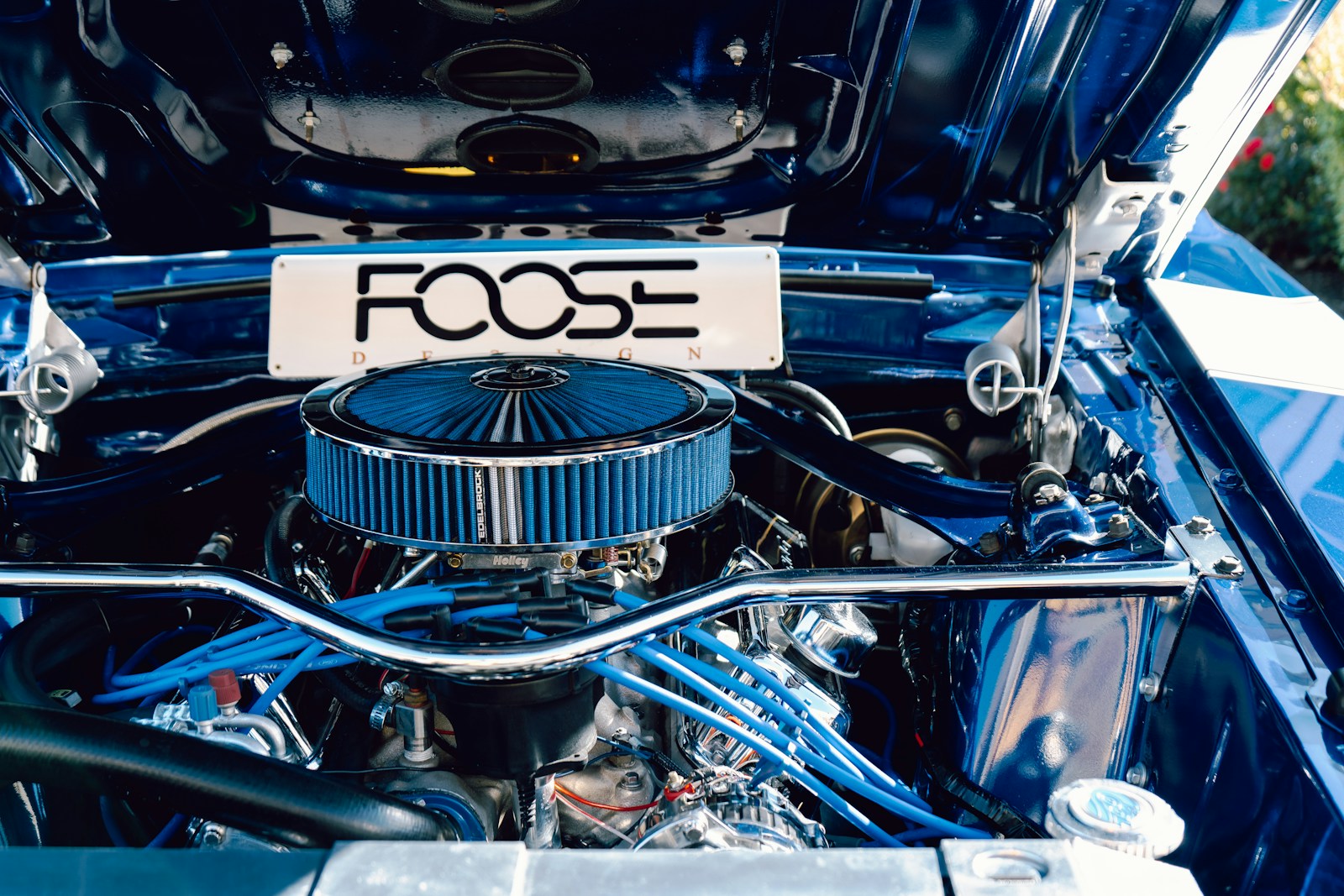

He thought he was getting a small win: a clean, older car with decent miles, a stack of service receipts, and an engine bay that looked like it belonged in a showroom. The seller had the hood popped when he arrived, as if to say, “Look, nothing to hide.” Everything under there was uniformly black and silver, no grime, no wet spots, no suspicious crusty buildup around the usual seals.
The buyer wasn’t naïve. He brought a flashlight, looked for obvious coolant stains, checked the oil cap, ran his fingers along the underside of the valve cover as much as he could reach. The seller stood close, answering questions quickly, talking a little too much about how “some people just don’t maintain their stuff,” and how this one had been “babied.” The engine bay smelled faintly like soap and citrus, but the buyer filed that under “detailer stuff” and kept moving.
On the test drive the car felt solid, no misfires, no weird noises, no burning smell at stops. The buyer did the quick mental math everyone does—price, condition, how hard it is to find anything decent anymore—and handed over the cash. The only thing that stuck in his head was how unusually clean everything looked for a car that wasn’t new, like someone had spent real time making it look presentable.

The “Clean” Engine Bay That Felt Like a Sales Pitch
The seller’s whole vibe that day was efficiency. He had the title ready, the bill of sale printed, and a pen that magically appeared the second they sat down. When the buyer hesitated for a second—just long enough to ask if the engine bay had been steam-cleaned—the seller said he’d “just detailed it” and laughed like it was a silly question.
The buyer noticed the little tells anyway. The plastic covers looked freshly conditioned, the rubber hoses had that dark, slick sheen like someone wiped them down, and the metal bits looked almost polished. Even the underside of the hood was spotless, no dust, no streaking, nothing that usually survives daily driving.
Still, the buyer didn’t have a lift, didn’t have a driveway full of tools, and wasn’t trying to act like a master tech in a stranger’s driveway. He checked the dipstick; the oil level was right. He looked on the ground for drips; there weren’t any. And in that moment, “clean” read as “cared for,” not “freshly staged.”
A Week of Normal Driving, Then the Smell
The first few days were uneventful, which is exactly what you want after buying a used car. He drove it to work, to the grocery store, ran errands, and enjoyed the quiet satisfaction of not having to keep shopping. The engine temperature stayed normal, the oil light stayed off, and it started every time.
Then, about a week in, he noticed a smell after parking—something hot and sharp, not quite burning rubber but in the same family. It was faint, and it went away fast, so he chalked it up to the car settling into its new routine. Old cars do little weird things, he told himself, and he wasn’t in the mood to spiral.
A day later, the smell came back, stronger, and this time he caught it while he was standing in the driveway with the hood open. He expected to find a leaf on the exhaust manifold or a plastic bag stuck somewhere. Instead, he found nothing… because everything still looked spotless, like the engine bay had been vacuum-sealed in a detailing studio.
The First Drip and the Slow Reveal
The real clue didn’t arrive as a dramatic puddle. It was a dark dot on the driveway that he only noticed because it didn’t match the usual water spots from AC condensation. He put a piece of cardboard under the engine overnight, and the next morning there were a few more dots, not a flood, just enough to say: this isn’t nothing.
He checked the oil again. It was down a little, not catastrophic, but enough to make his stomach drop because he hadn’t driven that much. He wiped around the oil filter housing, the valve cover edge, the accessible spots that typically leak, and his rag came back with that slick, unmistakable sheen.
The buyer went back under the hood with a flashlight, but now the cleanliness started to feel less comforting. It wasn’t “well-maintained clean.” It was “someone aggressively erased the evidence” clean. The engine bay didn’t just look washed; it looked like it had been scrubbed, dried, and dressed up—like it had been prepared to pass a quick driveway inspection.
Mechanic Visit: The Cleanliness Becomes the Suspect
He took it to a local mechanic and described the smell, the small drips, and the suspiciously pristine engine compartment. The mechanic didn’t laugh, didn’t tell him he was paranoid. He just nodded in that way people do when they already know where a story is headed.
They put it up on a lift, and the underside told a different story than the top. There was oil residue along the lower engine area, streaked in a way that suggested it had been leaking for a while, then recently disturbed—like it had been wiped down or sprayed off, and now it was slowly reappearing. The mechanic pointed out a wet area near a seal and a trail that had clearly been creeping back since the cleaning.
It wasn’t a tiny seep, either. It was the kind of leak that starts as “just keep an eye on it” and turns into “why is the oil level dropping between fill-ups.” The mechanic explained that a heavy degreasing can make it take longer to find the source, because you lose the old patterns and baked-on grime that act like a roadmap. The buyer sat there realizing the seller hadn’t just made it look nice—he’d bought the leak a little time.
The estimate wasn’t pocket change. Even if the repair itself wasn’t the worst-case scenario, it was enough to change the entire vibe of the purchase. The buyer had paid “clean car, no drama” money and was now staring at “immediate repair” reality.
The Confrontation: “I Just Cleaned It” vs. “You Hid It”
When the buyer contacted the seller, he kept it straightforward at first: he’d found a major oil leak, and it didn’t look new. He mentioned the mechanic’s notes and the fact that the engine bay had been cleaned so thoroughly it delayed the discovery. He didn’t open with threats—just a request to talk it out, because sometimes people will surprise you and try to make it right.
The seller’s response was instantly defensive. He said he didn’t know anything about a leak, that the car never left spots in his driveway, and that cleaning the engine bay was normal. He leaned hard on the idea that the buyer had inspected it, driven it, and bought it “as-is,” like those two words were a force field against any accusation of dishonesty.
The buyer pressed, pointing out how leaks don’t just appear a week after purchase with a perfectly timed return of oil residue. He asked why the engine bay was so unnaturally spotless if it was truly just routine care. The seller pivoted to indignation—how dare someone accuse him when he’d “been honest,” when he’d “taken care of it,” when he’d “even knocked a little off the price.”
And that’s where it got messy in a very specific way: the seller didn’t sound confused, he sounded insulted. Not like someone discovering a problem along with you, but like someone annoyed the trick hadn’t lasted longer. The buyer couldn’t prove intent in a legal sense, but the timeline felt too perfect, the cleanliness too strategic, and the leak too established underneath.
The buyer floated splitting the repair cost, not because he thought it was fair, but because he wanted some kind of acknowledgment that this wasn’t an innocent surprise. The seller refused, saying the buyer could “do whatever” but the deal was done. Then came the final little twist of the knife: the seller suggested the buyer must’ve “driven it wrong” or “hit something,” as if an internal seal failure was something you could cause with a bad week of commuting.
By the end, the buyer was left with a car that ran fine but carried a secret he only found because time and gravity are stubborn. He could fix it and swallow the cost, or he could chase the seller through small-claims arguments and screenshots and the exhausting question of what he could actually prove. The worst part wasn’t even the leak—it was the lingering feeling that the engine bay wasn’t cleaned to be cared for, but cleaned to buy just enough days for the responsibility to become someone else’s problem.
More from Steel Horse Rides: