
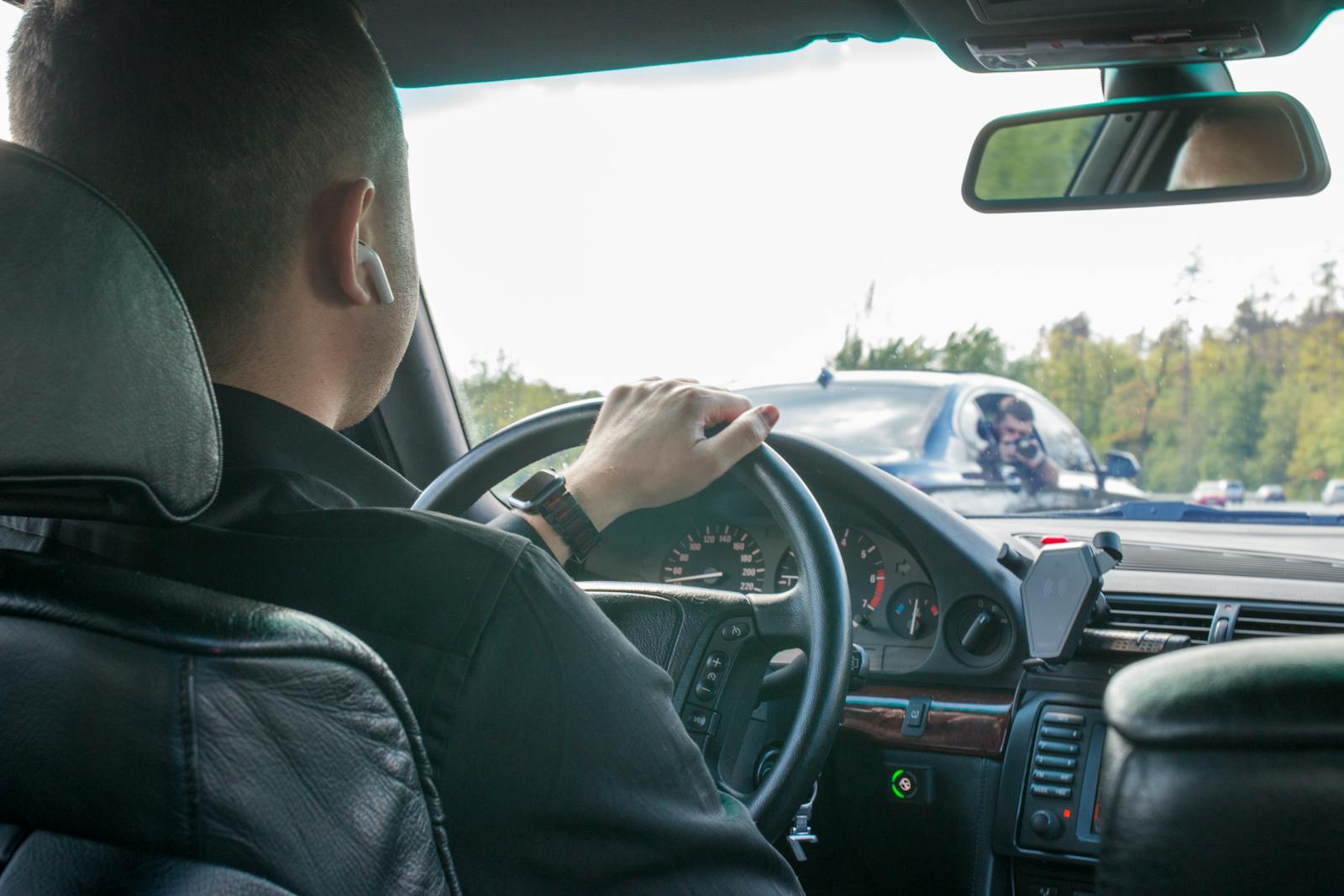

It started the way a lot of road-rage stories start: with nothing, basically. A normal afternoon drive, a line of cars inching through a busy stretch of road, and one guy behind the wheel trying to get home without turning it into a whole production.
The driver—let’s call him Matt, because that’s how he wrote it—said he’d been in the right lane coming up on a fast food place and a cluster of entrances. People were doing that thing where they half-commit to turning and then bail, so traffic kept bunching up and releasing in little waves. Matt was moving with the flow, leaving what he thought was a normal gap, not cutting anyone off, not brake-checking, not doing anything that should’ve made him memorable.
Except apparently he was memorable to the guy in the dark SUV who decided Matt had personally ruined his entire day.
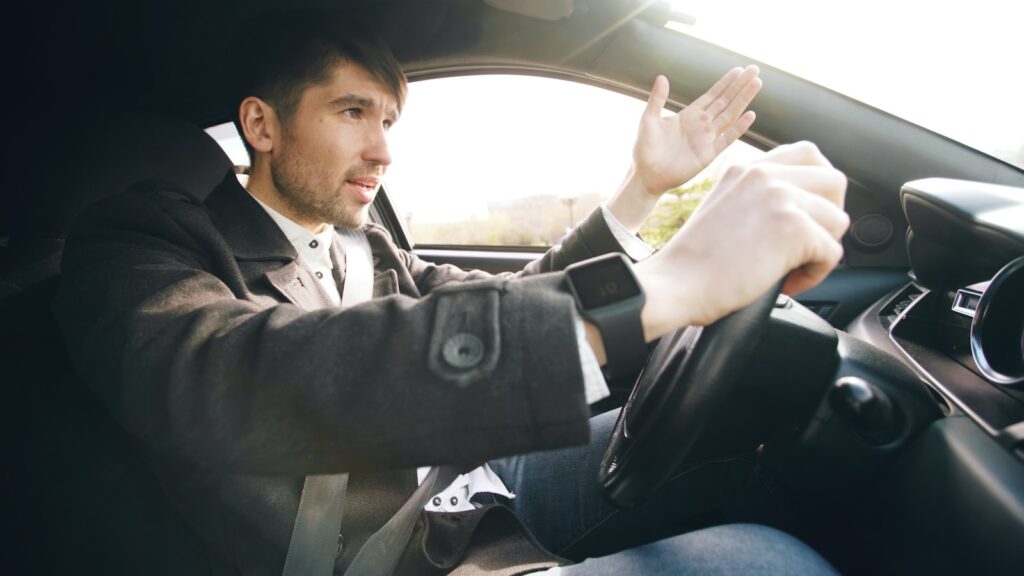
The little “almost nothing” that set him off
Matt said the first sign something was weird was the SUV edging up on his bumper so close he couldn’t see the front grill anymore. Not just “following a little close,” but the kind of tailgating where you start wondering if the other person is trying to read the expiration date on your license plate. Matt tapped his brakes once—not a slam, just a warning pulse—and watched the SUV jerk back like the driver had been startled.
At the next light, Matt noticed the SUV creeping up beside him in the left lane, matching speed in that slow, deliberate way that’s never an accident. The driver was angled toward him, face tight, jaw working like he was chewing on something bitter. Matt kept his eyes forward because he’s not new to the game; you don’t feed it, you just get away from it.
When the light changed, Matt moved with traffic and the SUV surged forward like it was trying to claim dominance over the concept of asphalt. That’s when Matt realized this guy wasn’t just annoyed—he was committed. Committed like he’d been waiting all week for an excuse.
The fast food cup incident
A few blocks later, traffic slowed again near another entrance, and the SUV’s driver got his opening. He pulled up alongside Matt’s car, close enough that Matt could see his hands on the wheel, knuckles pale. The guy started yelling, but with the windows up and the road noise, it came through as a muffled, furious pantomime.
Then the guy’s arm came out the window holding a fast food cup—one of those big paper ones with a plastic lid, the kind that’s supposed to be harmless. He cocked it back like it was a baseball, aimed directly at Matt’s windshield, and launched it. It hit with a loud, wet slap and exploded across the glass in a sheet of soda and ice, the lid skittering off to somewhere under the wipers.
Matt said for a split second his brain did the stupid thing where it tries to treat it like a prank. Like, “Did that just happen?” Then the wipers smeared sticky brown liquid across the windshield and it stopped being funny. His hands tightened, his heart climbed into his throat, and he did the only thing he trusted himself to do: he didn’t chase, didn’t swerve, didn’t slam the brakes—he just got space and tried to focus on seeing the road through the mess.
The SUV driver, meanwhile, peeled ahead like he’d made his point. But he didn’t leave. He slowed down again, hovering in front of Matt like he wanted to keep the show going.
Followed for miles, like it was personal
Once Matt had cleared enough of his windshield to see properly, he made a quick decision: he wasn’t going straight home. He didn’t want this guy knowing where he lived, and he didn’t want to pull into a random parking lot and have the situation turn into something physical. So he took a turn he normally wouldn’t, aiming for a more populated route where there were other cars, businesses, and—if it came down to it—cameras.
The SUV followed immediately, turn signal flicking on late like an afterthought. Matt tried another turn, then another, each one increasingly obvious in how little sense it made if you were just “coincidentally” driving the same way. The SUV stayed glued to him, sometimes riding his bumper, sometimes dropping back and then catching up like the driver was playing with him.
At one point, Matt said, the SUV pulled up close again and drifted toward his lane as if to crowd him. Not a full-on swerve, but a threat, the kind that makes you glance at your side mirror and imagine your car getting shoved into a curb. Matt kept both hands on the wheel and forced himself not to react, because reacting was clearly the oxygen this guy wanted.
After several miles of this, Matt called the non-emergency line first—then, when the SUV started honking and flashing headlights like it was trying to trigger a panic mistake, he switched to 911. He gave the dispatcher the location, the description, and the part that sounded insane even as he said it: “He threw a drink at my windshield and he’s been following me.”
The moment he tried to flip the script
Dispatch told Matt to keep driving and not to engage, and to head toward a well-lit area if possible. Matt aimed for a busier intersection near a shopping plaza, somewhere with a steady stream of cars and a couple of restaurants. He figured if the guy wanted an audience, he could have one.
That’s when the SUV did something that felt like a tantrum hitting its peak: it zipped around Matt, cut in front of him, and then slammed on the brakes. Matt managed to stop without hitting him, but it was close enough that his chest went hot with adrenaline. And for a second, the SUV just sat there, blocking him like a barricade.
The driver got out.
Matt said the guy was big, red-faced, and moving with that stiff, righteous energy of someone who’s already decided how the story is going to be told. He marched back toward Matt’s car, gesturing wildly, pointing at Matt like he was presenting evidence to an invisible jury. Matt stayed in the car with the doors locked, phone up, telling the dispatcher what was happening and watching the man’s hands like he’d been taught to do in every “what to do in a road rage situation” conversation people have and then promptly ignore.
The SUV driver leaned down toward Matt’s window and shouted that Matt had “almost hit him,” that Matt was “driving like a maniac,” that Matt needed to “get out and talk like a man.” Matt didn’t crack the window. He didn’t answer. He just stared ahead and kept repeating into the phone that he didn’t feel safe.
And then—like a switch—when the SUV driver noticed other people looking, his tone changed. He stepped back, threw his hands up, and started acting like Matt was the aggressor who’d been chasing him. Matt said it was the most unsettling part: watching someone rewrite reality in real time because it suited them.
When authority entered the scene, the “victim” showed up
A patrol car rolled in a few minutes later, lights on but not blaring, and the SUV driver immediately pivoted into performance mode. He approached the officer first, talking fast, pointing at Matt’s car, chopping the air with his hands. Matt could see the posture shift: the guy was now the concerned citizen, the wronged party, the one who’d been “forced” into a confrontation.
When the officer walked over to Matt, Matt explained the cup, the following, the brake-checking, and the moment the guy got out of the SUV to approach his car. He mentioned the sticky soda still smeared across the windshield and the lid wedged near the wiper, like a gross little prop that hadn’t gotten the memo about the guy’s revised storyline. The officer looked at the windshield, then back at Matt, and Matt said he could practically see the officer doing the math.
The SUV driver, from a few yards away, kept insisting Matt had been “tailgating” and “trying to run him off the road.” He said he’d felt “threatened,” that he “had to defend himself,” and that Matt was the one who wouldn’t “let it go.” The problem was that none of his claims explained why a fast food cup had detonated on someone else’s windshield, or why he’d stayed with Matt through multiple turns like a bloodhound with an ego.
Matt didn’t pretend he knew exactly what the officer did with the other guy—he didn’t stick around long enough to watch every detail, and he wasn’t trying to turn the situation into a spectacle. He gave his statement, offered to share the call log and his location history, and told the officer he’d be willing to provide dash cam footage if needed. The SUV driver, still fuming, kept trying to talk over everyone like volume could replace evidence.
By the time Matt drove away, his windshield was still tacky, his hands still jittery on the wheel, and the most unsettling part wasn’t even the thrown drink. It was the way the SUV driver had been so comfortable doing something aggressive in public—and then, without missing a beat, stepping into the role of victim the second it might matter.
More from Steel Horse Rides: