
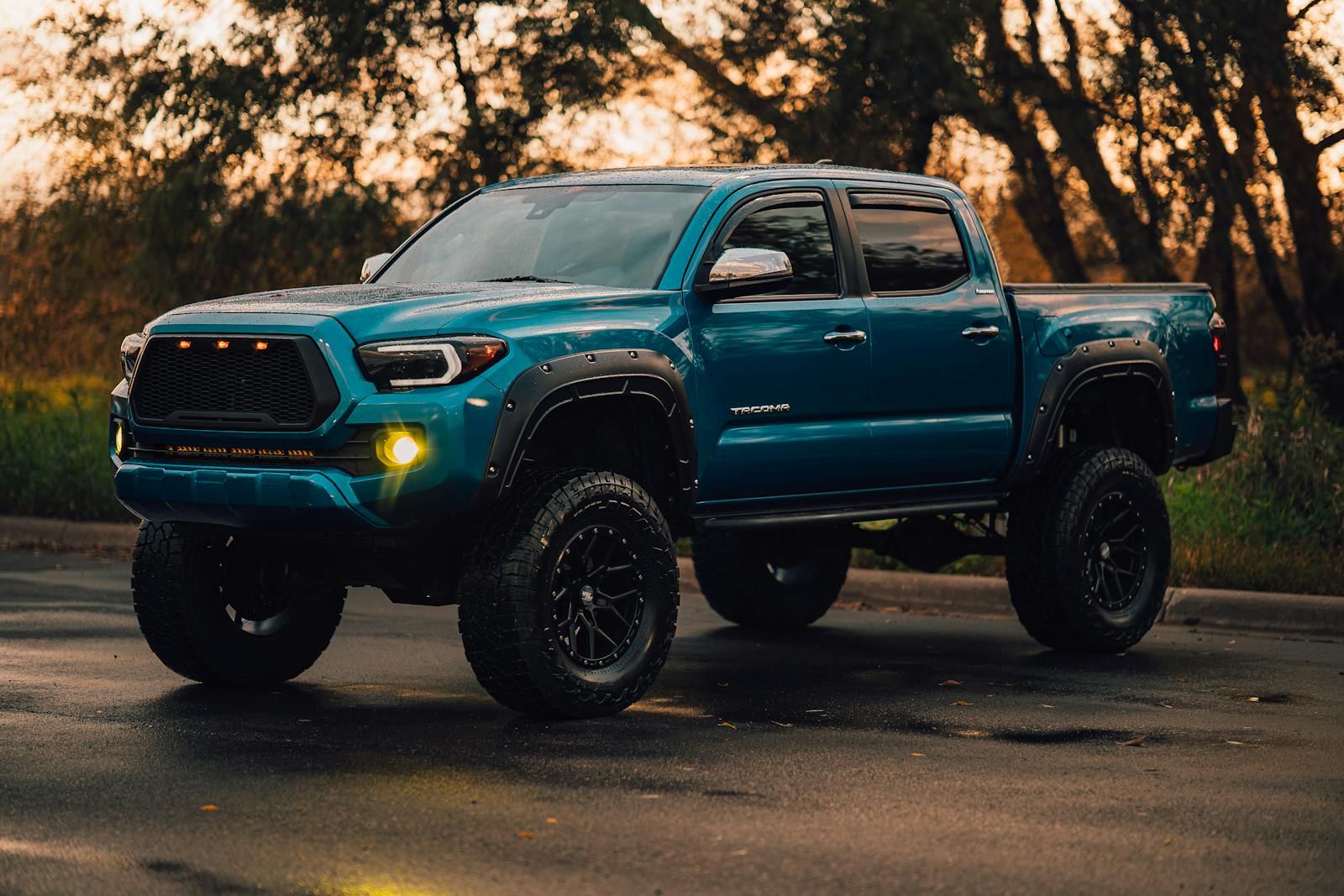

He’d been talking about the lift kit for weeks, the way truck guys do when a cardboard box shows up and suddenly it’s all they can think about. New stance, bigger tires, a little more clearance—nothing outrageous, just enough to make his daily driver feel like his own. The only problem was he didn’t have a garage, didn’t have air tools, and didn’t have the confidence to do a full suspension job solo in a sloped driveway.
That’s where his friend came in: the one who always acted like the unofficial shop foreman of the group. He’d installed “a bunch” of kits before, he said. He had the jacks, the stands, the breaker bar, the whole deal. He even picked the date—Saturday morning—then texted like it was a fun little hangout: “We’ll knock it out by lunch.”
By noon, the truck was up on stands with its front end half-disassembled, the driveway looked like a junkyard buffet of bolts and brackets, and the friend was gone. Not “ran to the store” gone. Not “be back in twenty” gone. Just… stopped replying. And the guy with the half-lifted truck was standing there in greasy hands and a creeping feeling that he’d been left holding the worst kind of bag: a vehicle that couldn’t be driven and a friendship that suddenly felt a lot less solid.
The confident pitch that made it feel safe
The guy didn’t even ask for help in some desperate way; it came up casually, like most of these things do. He mentioned he was thinking of paying a shop to install the kit, and the friend immediately jumped in with the offended pride of someone who sees that as an insult. Why pay labor when you’ve got a buddy who “knows what he’s doing” and “has done this exact thing”?
It wasn’t just talk, either. The friend had that tone—specific enough to be reassuring, vague enough that you couldn’t pin him down later. He talked about how the instructions always overcomplicate it, how you just need patience and leverage, how the trick is getting the bolts loose without rounding them. He asked what kit it was, what year the truck was, and told him to spray everything with penetrating oil for a couple days beforehand like it was a little ritual.
So the guy did. He prepped, laid out tools, even cleared his driveway so they’d have room to work. He canceled a family thing because “we’re finally doing the lift,” and he stocked a cooler like it was a mini work party. The plan felt solid because the friend was the one who pushed for it, the one who kept saying, “Don’t worry, I got you.”
Saturday morning: vibes, bolts, and the first bad sign
The friend showed up late, but not late enough to set off alarms. Coffee in hand, casually scrolling his phone, talking about how he’d been up late and how traffic was brutal. The guy swallowed the mild annoyance because, fine, whatever—he’s here now, and the job’s the job.
They got the truck up on jack stands and started pulling the wheels. At first it was exactly what you’d expect: the friend calling shots, the guy handing tools, both of them joking about how “this is why shops charge what they charge.” They loosened hardware, pulled the sway bar links, started breaking down the front suspension. The driveway filled up with the clink of sockets and that gritty smell of old metal.
Then the first real snag hit: a stubborn bolt that didn’t want to move. The friend leaned into it with a breaker bar, cursed, tried again, then suggested heat like it was no big deal. Except there was no torch. The guy offered to run to the store, but the friend waved him off and said they’d muscle it. It was the first moment where the friend’s “I’ve done this a bunch” started sounding more like “I’ve watched this a bunch.”
Still, they made progress—enough progress to be committed. Once the old parts were off, it wasn’t a choice anymore; it was a point of no return. The truck sat there with its front suspension half-torn down, like a patient on a table mid-surgery.
The moment it stopped being “a quick job”
By late morning, things got messy in a way that wasn’t just mechanical. The friend started checking his phone constantly, stepping back from the work to answer texts with his back turned. The guy would ask, “You good?” and the friend would respond with these distracted “Yeah, yeah” noises while staring at the screen.
They tried fitting the new components, and that’s when the confidence really cracked. Something wasn’t lining up the way it was supposed to, and the friend’s solution kept changing every five minutes. First it was “we need to loosen this,” then “we need to tighten that first,” then “hold on, I think you installed it backwards,” even though it was the friend who told him how to orient it.
The guy could feel that specific kind of irritation that comes from being talked over while also being the one whose stuff is at risk. It wasn’t like he could take the keys and leave; his truck was literally immobile. So he kept following instructions, kept handing over tools, kept trying not to show how worried he was becoming.
At some point, the friend said he had to “take a quick call” and walked down the driveway. He stayed on that call long enough that the guy started just cleaning bolts and re-reading the instructions himself. When the friend came back, his mood had shifted—quiet, tense, like he’d just been told bad news or had made some decision.
“I’ll be right back” and then the silence
The friend said he needed to run out for something. Not a big explanation, just a vague, breezy “I’ll be right back” like it was a five-minute errand. The guy asked what he needed, because obviously they were in the middle of a job, and the friend said something like, “It’s fine, just keep doing what we were doing.” Which was… what, exactly? Stare at a disassembled truck and guess?
Minutes passed, then an hour. The guy sent a text: “Hey, how long you think?” No response. He called, got rings, then voicemail. He tried to stay calm and rational—maybe the friend’s phone died, maybe his car broke down, maybe it was a family emergency.
But there’s a point where “maybe something happened” starts getting edged out by “he’s not coming back.” It wasn’t just the lack of response, it was the way the friend left: no apology, no urgency, no clear plan. Just a man disappearing while his buddy’s truck sat in pieces like a trust exercise gone wrong.
The guy did what most people do in a panic: he started trying to reverse what he could. Except he couldn’t. The old parts were off, the new parts weren’t on, and the bolts were arranged in little piles that were starting to look less like organization and more like denial.
Damage control in a driveway that suddenly felt very small
He ended up calling another friend, the kind who doesn’t brag about being handy but shows up anyway. That friend arrived, took one look at the front end, and asked the question that stung the most: “Why’d you start this without a plan?” The guy had a plan. His plan had a name and a toolbox and had promised “by lunch.”
They spent the afternoon doing the least satisfying kind of work: trying to get the truck back to “safe enough to tow.” The second friend didn’t want to gamble on finishing the lift without the right tools, and the guy didn’t want to gamble on driving it anywhere half-done. So they rigged it for a tow, called around for shops, and found out the fun surprise of being the guy who drops off a vehicle in a box-of-parts state: the price goes up, and the timeline gets fuzzy.
Meanwhile, the original friend stayed silent. No “sorry,” no “had an emergency,” no “I’ll pay for the tow.” Just nothing. The guy oscillated between rage and embarrassment—rage at the disrespect, embarrassment that he’d trusted the loudest person in the room.
When the friend finally did send something later—hours later—it wasn’t the kind of message that made anything better. It was short, almost annoyed, like the guy was being dramatic for expecting follow-through. The guy read it, stared at his truck’s empty wheel wells, and realized he wasn’t just dealing with a botched install. He was dealing with someone who wanted all the credit for being helpful and none of the responsibility when it got hard.
By the time the truck was headed to a shop, the driveway was clean again, but the day had left a mark. The lift kit still existed, technically, but now it came packaged with towing fees, shop labor, and that sickening mental replay of the moment his friend walked away. The worst part wasn’t even the money—it was that the guy couldn’t decide which felt more insulting: being abandoned mid-job, or being treated afterward like he was unreasonable for not laughing it off.
More from Steel Horse Rides: