

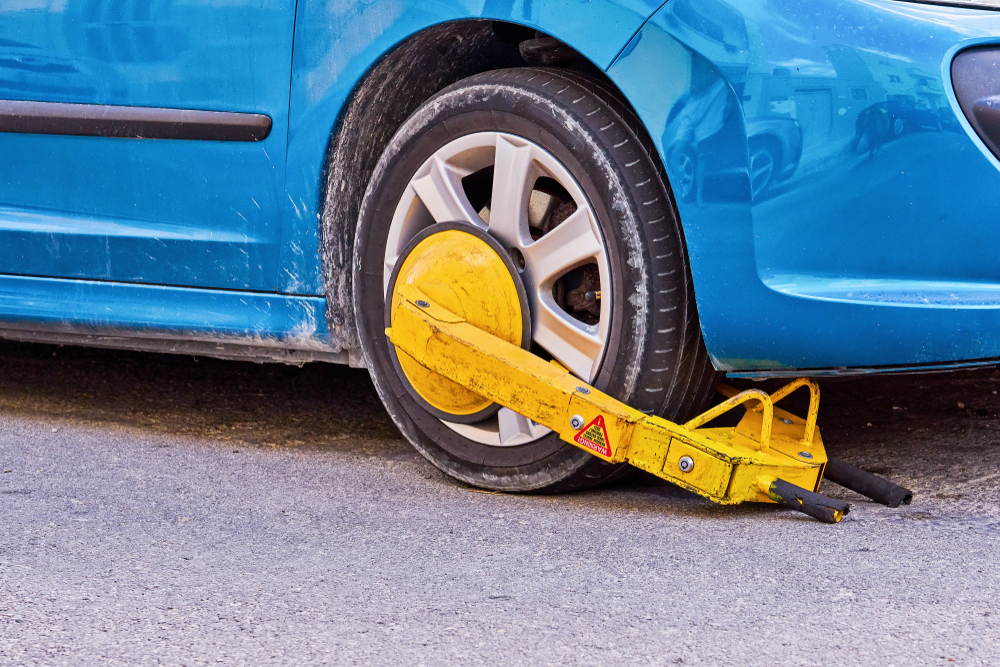
She knew something was wrong the second she turned into her apartment lot and saw the bright yellow clamp glinting off her front wheel. Not the “someone parked in my spot” wrong, but the stomach-drop kind of wrong that makes you slow down even though you’re already looking right at it. Her car was sitting exactly where it always sat, under the same flickering lot light, in the same row of residents’ vehicles that all looked slightly dusty and tired from being parked outside.
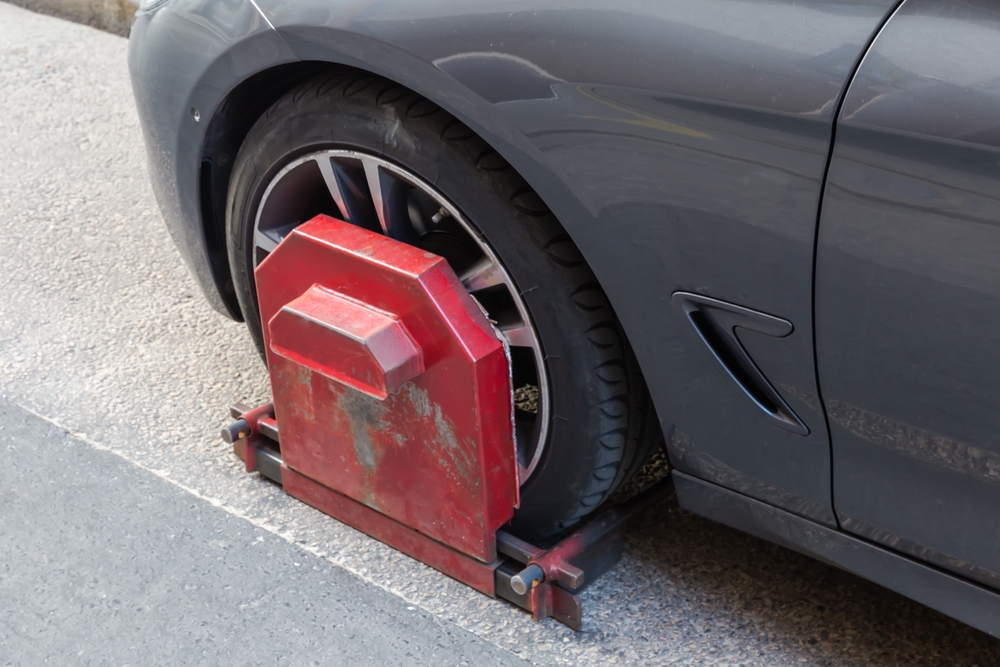
The boot wasn’t subtle. It had a sticker with a phone number, a warning about tampering, and a fee amount that made her blink twice like her eyes were buffering. She stood there with her keys still in her hand, trying to make her brain accept the reality: she was effectively locked out of her own car in her own apartment complex, the place she paid to live, because somebody decided she wasn’t allowed to be there.
Her first thought was the obvious one: maybe her permit fell off the mirror. Maybe she forgot to renew something. But she didn’t even use a hanging tag anymore—management had moved everyone to a license-plate system months ago. She’d walked into the office, gave them her plate number, watched them type it in, and left with the usual “you’re all set.” So why was there a boot on her wheel like she’d abandoned the car for a month?
The parking “upgrade” nobody asked for
The complex had recently switched to a digital parking database—one of those systems where your plate is your permit and the towing company has a handheld scanner. Management sold it to residents as smoother and more secure: no more paper passes, no more replacements, no more “my roommate borrowed my car” headaches. The catch, of course, was that it put residents at the mercy of whoever typed their information into the system on a busy Monday.
She’d done everything by the book when the change happened. She went to the leasing office during business hours, gave them her driver’s license, her lease information, and her full plate number. The employee on duty repeated it back to her, tapped away at the keyboard, and told her it would be active immediately.
For a while, it seemed fine. Weeks passed without any issue, and her car stayed exactly where she parked it every night. That’s why the boot felt so insulting—like the system worked just long enough for her to stop worrying about it before it decided to humiliate her in public.
Meeting the boot guy at her own car
She called the number on the sticker while standing next to her car, because what else do you do? The dispatcher asked for her plate and location, then told her a technician could come out in about thirty minutes. Not “we’ll look into it,” not “call your management,” just a calm, transactional timeline, like being booted at your own apartment was a normal Tuesday.
When the technician arrived, he didn’t act like a villain. He acted like a man who’d done this a hundred times already that day and didn’t have room in his schedule for anyone’s disbelief. He pulled up the system on his phone, asked for her plate again, and then gave her the first clue that something was deeply stupid: her plate “wasn’t in the authorized list.”
She offered to show her lease, her ID, the email from the complex about the new parking rules—anything that proved she wasn’t some random person squatting in a resident lot. He barely looked. His job wasn’t to arbitrate; his job was to remove the boot when the system said it was paid or when management directly told him it was an error. He suggested she call the leasing office to get them to confirm her registration, and he waited, leaning against his truck like he was at a drive-thru window.
The leasing office finger-pointing marathon
The office line went straight to voicemail. She tried again. Same result. It was the kind of moment that makes your blood pressure spike—not because you can’t solve the problem, but because you can see how much time it’s about to steal from you.
She went inside the building and walked to the leasing office anyway, half hoping someone would be there and half dreading that nobody would. The door was locked, even though the posted hours said they should’ve been open. Through the glass, she could see lights on and a chair pushed back like someone had just gotten up, which somehow made it more irritating.
She called again from the hallway, got voicemail again, and then tried the emergency maintenance number because it was the only other number she had saved. Maintenance picked up, listened for a beat, and told her parking enforcement wasn’t their department. He sounded sympathetic but powerless, like he’d heard similar stories but didn’t want to become part of one.
Back outside, the boot tech was still there. She told him the office wasn’t answering, and he shrugged in a way that said, “Then you’re paying or you’re walking.” It wasn’t said out loud, but it didn’t need to be. She asked if he could show her what the system had for her plate, and when he did, it was almost comical: the number was one digit off.
One wrong digit, one very real fee
She stared at the screen and then at her own plate like she was comparing two versions of reality. Everything matched except one character—an 8 where there should’ve been a 3, or a 0 where there should’ve been a D. The kind of mistake anyone can make in half a second, and the kind of mistake that turns into a full-blown crisis when software and towing contracts get involved.
She tried to keep her voice steady while explaining that she’d given the correct plate and that management must’ve entered it wrong. The technician didn’t argue. He didn’t apologize either; he just pointed out that the system didn’t care whose fault it was, and until someone with authority corrected it, her car was still flagged as unauthorized.
At that point she had two options, neither of them fair. She could pay the fee to get the boot removed and then fight with management later, or she could refuse on principle and risk the boot staying on, possibly leading to a tow. She had work the next day and errands she couldn’t exactly do on foot, so the principle route started feeling like a luxury.
She paid. Watching someone unlock your car from a mistake you didn’t make is its own kind of rage, the quiet kind that doesn’t burn off quickly. The technician printed a receipt, handed it over like it was a normal purchase, and drove away. Her car was free again, but now she had a very expensive piece of paper and no guarantee anyone at the office would care.
Trying to get management to admit it
The next morning she went to the leasing office in person, determined to talk to an actual human before she went to work. This time the door was open, and the front desk person gave her that polite, preloaded smile people use when they can sense you’re about to become a problem. She laid the receipt on the counter and explained, slowly, what happened.
The employee pulled up the parking system and, sure enough, there it was: her car listed under a plate number that was almost hers. The employee acted surprised for about a second, then switched into “well, that’s unfortunate” mode, as if the mistake had happened in nature, like a storm, not on their keyboard. They corrected the digit with a couple taps and told her she should be good now.
She asked about reimbursement, because that’s what this was really about. The boot fee wasn’t a mild inconvenience; it was a chunk of money gone because of one wrong entry. The employee said they didn’t handle towing payments and suggested she email the property manager, maybe attach documentation, and “they’ll look into it.”
She pushed—calmly at first, then with more edge when it became clear there wasn’t going to be an instant fix. The desk person kept the tone smooth and slightly detached, repeating the same lines about policy, third-party enforcement, and needing approval. It was the kind of conversation where you can feel the system protecting itself, each step designed to move the problem away from the person who can actually solve it.
The part that still doesn’t sit right
Even with her plate corrected in the database, she didn’t feel relieved. The boot had already happened once, and now she’d learned how quickly the complex could make her life difficult without meaning to. It wasn’t just the money; it was the realization that her access to her own transportation depended on data being typed correctly and a leasing office deciding to answer the phone.
She started documenting everything—screenshots of emails, photos of the boot, the receipt, the time stamps of unanswered calls. Not because she suddenly loved paperwork, but because she could already see how this would go if she didn’t treat it like a case file. The office had fixed the digit, sure, but fixing the digit didn’t undo the fact that she’d paid for their error.
The most maddening part was how small the original mistake was compared to the fallout. One wrong character turned her into a rule-breaker overnight, and the burden of proof landed entirely on her. Management’s system didn’t just punish unauthorized parking; it punished typos, and she was the one who got clamped.
She left the office with no refund, no timeline, and a “we’ll see” that didn’t sound like it was going anywhere fast. Her car was sitting in the lot again that night, same spot, same light overhead, but now she kept glancing at the wheels like the boot might come back. And that’s the thing that lingered—the sense that even after paying rent, following the rules, and doing the registration exactly how they asked, she was still one bored contractor and one unreturned voicemail away from being trapped in her own parking lot again.
More from Steel Horse Rides: