
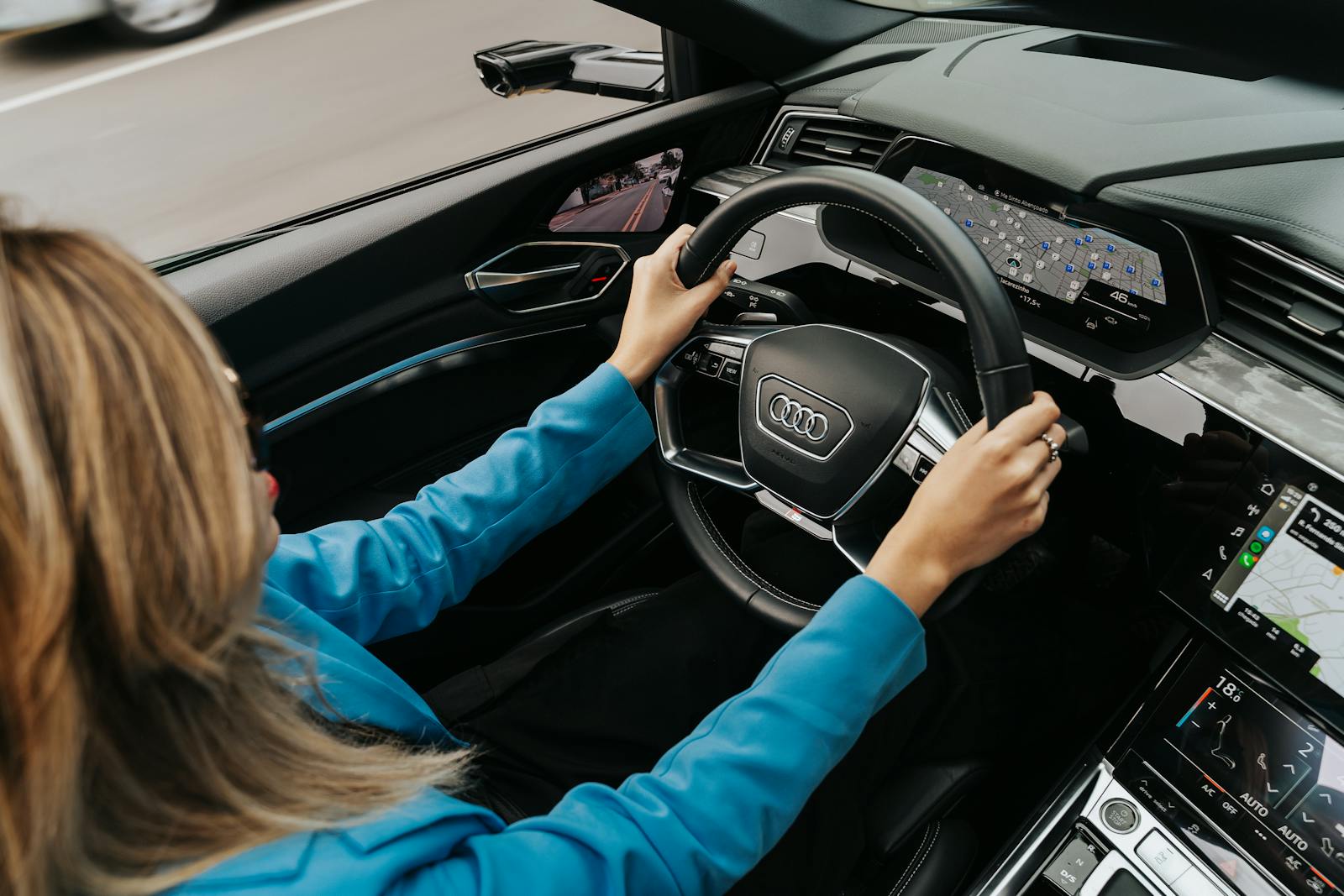

She’d had that sedan long enough that the cupholders were permanently shaped to her coffee tumblers and the trunk still had a faint ghost-smell of beach towels. It wasn’t glamorous, but it started every morning, didn’t complain in the cold, and had never once left her stranded in a parking lot with a grocery cart full of melting food. In their household, it was the dependable thing—the one object that didn’t require a group text and a spreadsheet to keep running.
Her husband, though, had been on an “upgrade the family” kick. Not in a quiet, sit-down-and-crunch-numbers way, but in the way that looks like browsing luxury listings at midnight and dropping comments like, “You know what would be safer? An SUV,” while casually ignoring that they already owned a car that had been safely hauling their kid around for years. She figured it was just talk until one Saturday he announced he had “taken care of it” and handed her a single key fob that looked like it belonged in a glass case.
The sedan, her sedan, was gone. He’d sold it while she was at her sister’s, like it was a couch he’d decided didn’t match the room anymore. In the driveway sat a luxury SUV—leather seats, huge touchscreen, the kind of grille that looks like it’s trying to intimidate traffic into moving aside—and he was grinning like he’d surprised her with a vacation instead of a new monthly obligation.

The “upgrade” that wasn’t a conversation
When she asked where her car was, he didn’t flinch. He said he’d gotten a “great deal,” that her sedan was “starting to get up there in miles,” and that this was “better for the family.” He talked fast, like if he kept moving she wouldn’t have time to find the part where she was supposed to agree.
She pointed out that the sedan had been paid off and had never given them trouble, and that selling it without asking her was… insane. He countered with safety buzzwords, cargo space, and the classic line that he was “thinking long-term.” The real kicker was his tone—like she should be grateful he’d taken the mental load of choosing a vehicle off her plate.
She didn’t even get to do the normal stuff people do when they switch cars, like cleaning out the center console or grabbing the emergency cash tucked in the sun visor. The first time she climbed into the SUV, she was still discovering her own missing items in her memory, like, Wait, my kid’s favorite little blanket was in the backseat. Her husband treated it like a minor inconvenience, promising he’d “text the guy” who bought it.
The honey-moon phase lasts exactly one week
At first, she tried to give the SUV a fair chance. The seats were heated, the ride felt like floating, and the backup camera made parking weirdly easy. She even admitted—quietly, to herself—that it was kind of nice to have more space for the stroller and groceries without playing trunk-Tetris.
Then the dashboard lit up like a Christmas tree on the way to daycare drop-off. “Drive system malfunction,” “engine service required,” and something about a sensor she’d never heard of. She pulled into a lot, shut it off, restarted it, and watched the warnings blink back like they were offended she thought that would work.
Her husband told her it was probably a glitch. He said modern cars throw codes for “everything,” and that the dealership would handle it under whatever warranty came with the purchase. He sounded relaxed in a way that suggested he’d never once had to juggle a tow truck call and a work meeting.
Repairs become the new family hobby
The dealership kept the SUV for three days and handed it back with a paper that listed a series of “updates,” as if the car needed a software patch the way a phone does. She drove it home, trying to ignore the sinking feeling that comes with being handed keys back too quickly. The next morning, the warning lights came back, now joined by a stiff, unhappy lurch whenever she accelerated.
That’s when the pattern formed: the SUV would act fine for just long enough to get her to trust it, then pick the worst possible moment to malfunction. Grocery runs. Pediatrician appointments. Picking her mom up from the airport. Each time, she ended up stranded somewhere fluorescent and awkward, watching the minutes bleed away while she waited for help.
It wasn’t just the time, either. The tow company needed payment up front. The dealership’s “loaner program” always seemed to be “out of vehicles.” Ubers with a car seat were a special kind of headache. Her husband kept saying, “We’ll figure it out,” but he kept saying it from places where the problem wasn’t happening.
When she started keeping a folder of receipts—tows, diagnostics, ride shares, missed-work fees for late daycare pickups—he called it “dramatic.” She wasn’t being dramatic; she was trying to make the situation visible. In their household, if something didn’t produce a crisp number, he could pretend it didn’t exist.
The money part gets ugly fast
Once the dealership stopped shrugging and started hinting at “bigger issues,” the costs got real. A suspension component here, a sensor there, some leak that shouldn’t be leaking in a vehicle that was supposed to be a premium “upgrade.” A service advisor used the phrase “these models can be finicky,” which is the polite version of telling someone they bought an expensive problem.
Her husband still insisted it was the right move, but his confidence started to wobble. He’d stare at the service estimates like he was trying to solve a riddle, then default to, “Well, we already have it.” It turned into this weird sunk-cost standoff, where admitting the SUV was a mistake meant admitting he’d taken her car and traded it for chaos.
Meanwhile, she was the one planning routes around “just in case it dies” parking lots, keeping jumper cables she shouldn’t even need, and refusing to go anywhere without her phone fully charged. She started borrowing friends’ cars for important days, which felt humiliating in a way she couldn’t quite explain. The SUV sat in their driveway like a status symbol that only symbolized stress.
The sedan kept coming up in arguments, not because she was nostalgic, but because it was the perfect, obvious comparison. Her old car had been boring in the best way—oil changes, tires, done. This luxury SUV came with leather, a payment, and a calendar full of appointments that made her life smaller.
The fight stops being about the car
The breaking point wasn’t even a major breakdown. It was a weekday evening when the SUV wouldn’t start, and she had already told her husband she needed him home by a certain time because she had a work call. He got stuck at the office, she got stuck in the driveway, and the kid got stuck inside asking why they weren’t going to the park.
When he finally got home and tried to soothe it with “we’ll deal with it tomorrow,” she snapped. She asked him if “upgrade the family” meant making her the family’s unpaid logistics manager. She asked him why her opinion didn’t count when it was her commute, her errands, her daily life being disrupted, and why he thought he could sell something she relied on without even a text.
He didn’t apologize the way she needed him to. He apologized like someone sorry a plan didn’t work, not like someone sorry they overstepped. He kept framing it as good intentions, as if intentions were supposed to replace consent.
And now they were stuck with this weird stalemate: a vehicle that cost too much to keep fixing and too much to dump without taking a hit, and a marriage argument that had stopped being about transportation. She didn’t just want her old sedan back; she wanted the part where her life wasn’t treated like an accessory to his decisions.
The SUV still sat there, clean and shiny on days it happened to start, looking like success from a distance. Up close, it was tow hooks and warning lights and her husband insisting he’d done something “for them,” while she kept asking why “for them” didn’t include her. The unresolved part wasn’t whether the SUV could be repaired; it was whether he understood that the real breakdown happened long before the engine did.
More from Steel Horse Rides: