
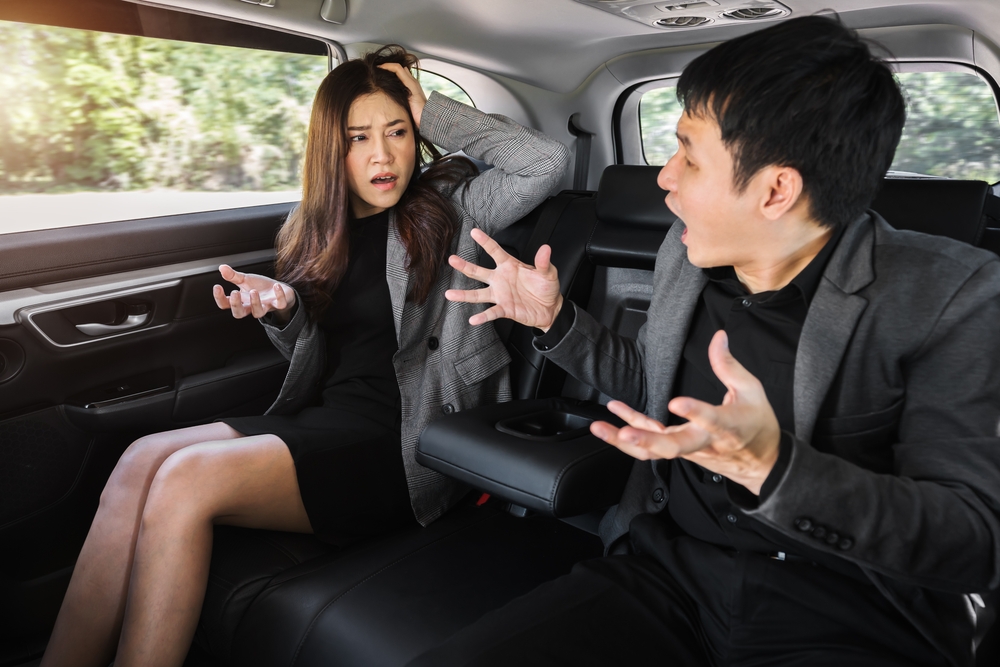

It started like one of those runs an Uber driver can do on autopilot: late afternoon, a short pickup in front of a tired-looking apartment complex, the kind of place with a busted buzzer and two different food delivery bags abandoned in the lobby. The driver had the windows cracked because the car still smelled faintly like someone’s extra-garlicky lunch from the previous ride. He pulled up to the curb, clicked “arrived,” and watched a couple hurry out like they were already mid-argument.
They weren’t yelling yet. They had that tight, clipped energy—faces set, words coming out fast but low, like they were trying not to do it in public. One of them had a bulky diaper bag slung over their shoulder, the kind with insulated pockets and a little dangling pacifier clip, and the other had a phone in hand, thumb stabbing the screen like it was the phone’s fault they were late.
The driver did the usual polite greeting, glanced in the mirror to make sure everyone was buckled, and pulled away. That’s when he noticed the baby carrier base in the back seat, but no baby. Just the empty plastic seat and that heavy-looking baby bag between them like a third passenger nobody wanted to claim.
The argument that wouldn’t stay quiet
For the first few minutes, it was just the kind of tense bickering you hear all the time through a rearview mirror: half sentences, accusations without context, that exhausted tone people get when they’ve been mad since breakfast. The driver could only catch fragments—something about “you said you’d be ready,” and “I told you I can’t do everything.” It wasn’t loud enough to feel unsafe, just uncomfortable, like being stuck in an elevator with strangers who hate each other.
But then the volume started creeping up in a way that felt less like a disagreement and more like a dam cracking. The passenger with the diaper bag snapped a little too sharply, and the other one fired back instantly, like they’d been waiting for permission to let it rip. The driver could see their hands moving in the mirror—palms up, finger pointing, that aggressive pantomime people do when they’re trying to win a fight instead of solve anything.
He turned the music down a notch, mostly out of instinct. It wasn’t his job to referee, but you can’t help listening when it’s happening three feet behind your head.
“Pull over” becomes a threat instead of a request
They hit a stretch of road with a couple long lights, and that’s when the argument turned into something different. One of them suddenly said, louder, “Just pull over. I’m not doing this.” The driver, still trying to be calm, asked where they wanted to stop, because “pull over” in a busy lane can mean anything from “next safe spot” to “right now, I don’t care.”
The reply came back fast: “No, like right now. Let me out.” The other passenger jumped in immediately—“Don’t be dramatic,” “We’re almost there,” “You always do this”—and that’s when the screaming started. Not raised voices. Actual yelling, the kind that makes your shoulders tighten even if it’s not aimed at you.
The driver tried the standard de-escalation move: steady voice, eyes on the road, “Hey, I can pull over at the next safe area if you’d like.” He didn’t want to slam brakes or stop in the middle of traffic, and he definitely didn’t want a fight to spill out of his car in front of random pedestrians. But he also didn’t like where this was headed, because the intensity in the back seat was ramping up faster than normal couple drama.
The baby bag becomes the prize in a tug-of-war
It would’ve been one thing if they were just angry. The weird part—the part that made the driver’s stomach drop—was how the diaper bag suddenly became central to the fight. The passenger nearest the door grabbed it and yanked it toward them, like they were collecting their things before storming out. The other one grabbed the strap back with a sharp “No,” like the bag was contraband.
For a second, it was just a ridiculous-looking tug-of-war in the corner of the driver’s mirror: two adults hauling on a bag meant for bottles and wipes. But then the yelling shifted into something that sounded more serious, more personal. The driver couldn’t hear every word, but he caught enough to understand the subtext: this wasn’t about directions or being late anymore. This was about access and control—who gets to leave, who gets to keep what, who gets to decide what happens next.
The driver asked, a little firmer now, if everything was okay back there. Nobody answered him. They were both focused on the bag, voices overlapping, each one trying to talk louder than the other.
The red light and the sudden lunge
Then they hit a red light at a busy intersection. The driver slowed to a stop, foot on the brake, and in that split second of stillness, it was like the passenger by the door decided the car being stationary was an opportunity. The driver saw the movement in the mirror first: a shoulder twist, a hand shooting down to the door handle, the diaper bag clutched tight.
They tried to jump out at the light—half standing, half lunging—like they thought they could just bail into the crosswalk and make a clean escape. But the timing was sloppy. Traffic was still rolling through the intersection in the other lanes, and the door didn’t swing wide the way they expected. Either it was locked or they didn’t pull the handle cleanly, but it was enough of a jolt that the driver snapped, “Hey! Do NOT open the door!”
The other passenger grabbed at them immediately, not gently, trying to yank them back by the bag strap or their sleeve. That’s when it turned into a full-on back-seat scramble: one person trying to get the door open while holding the diaper bag, the other trying to keep them in the car, and the driver stuck in the front seat with his pulse hammering because this is exactly how someone gets hurt—by a passing car, by a stumble into traffic, by a door clipping a cyclist.
Getting control without making it worse
The driver did what a lot of rideshare drivers say they do when things go sideways: he made the car boring and immovable. Hazards on, brake held, voice firm but controlled. He told them he was ending the ride if they couldn’t sit down and keep the door closed, and he said it like a policy, not a threat—because he didn’t want to add fuel to an already flaming argument.
That got their attention just enough for the moment to wobble. The would-be door-opener froze with their hand on the handle, breathing hard, diaper bag still clutched to their chest. The other passenger immediately shifted tactics, suddenly pleading instead of yelling, saying something like, “Stop, please, we’re almost there,” which only made the first one look angrier, like now they were being painted as the problem.
The driver didn’t keep driving. He asked them, again, where they wanted to be dropped off—right here, around the corner, anywhere safe. He offered to pull into a nearby gas station lot so nobody was stepping into traffic. His voice was steady, but his hands were tight on the wheel, because there’s a particular kind of fear that comes with realizing you might be the only adult in the situation who’s thinking about the physics of a car door and moving vehicles.
Eventually, they agreed to the lot, but “agreed” is generous. It was more like the screaming ran out of oxygen for a minute, and they defaulted to the next available option. The driver crept forward when the light turned, made the turn slowly, and pulled into a spot under harsh fluorescent lights where everything feels more exposed and less dramatic.
They got out still arguing, still yanking the bag back and forth, but now it was on pavement instead of inside the car. The driver stayed seated, doors locked, ride ended on the app, watching them pace in tight circles like they couldn’t decide whether to separate or keep fighting. The diaper bag never touched the ground, and the empty car seat base in the back made the whole scene feel unfinished in a way that stuck with him long after he drove off—like whatever they were really battling over wasn’t even in the car, but it was heavy enough to make someone try to leap into traffic to claim it.
More from Steel Horse Rides: