
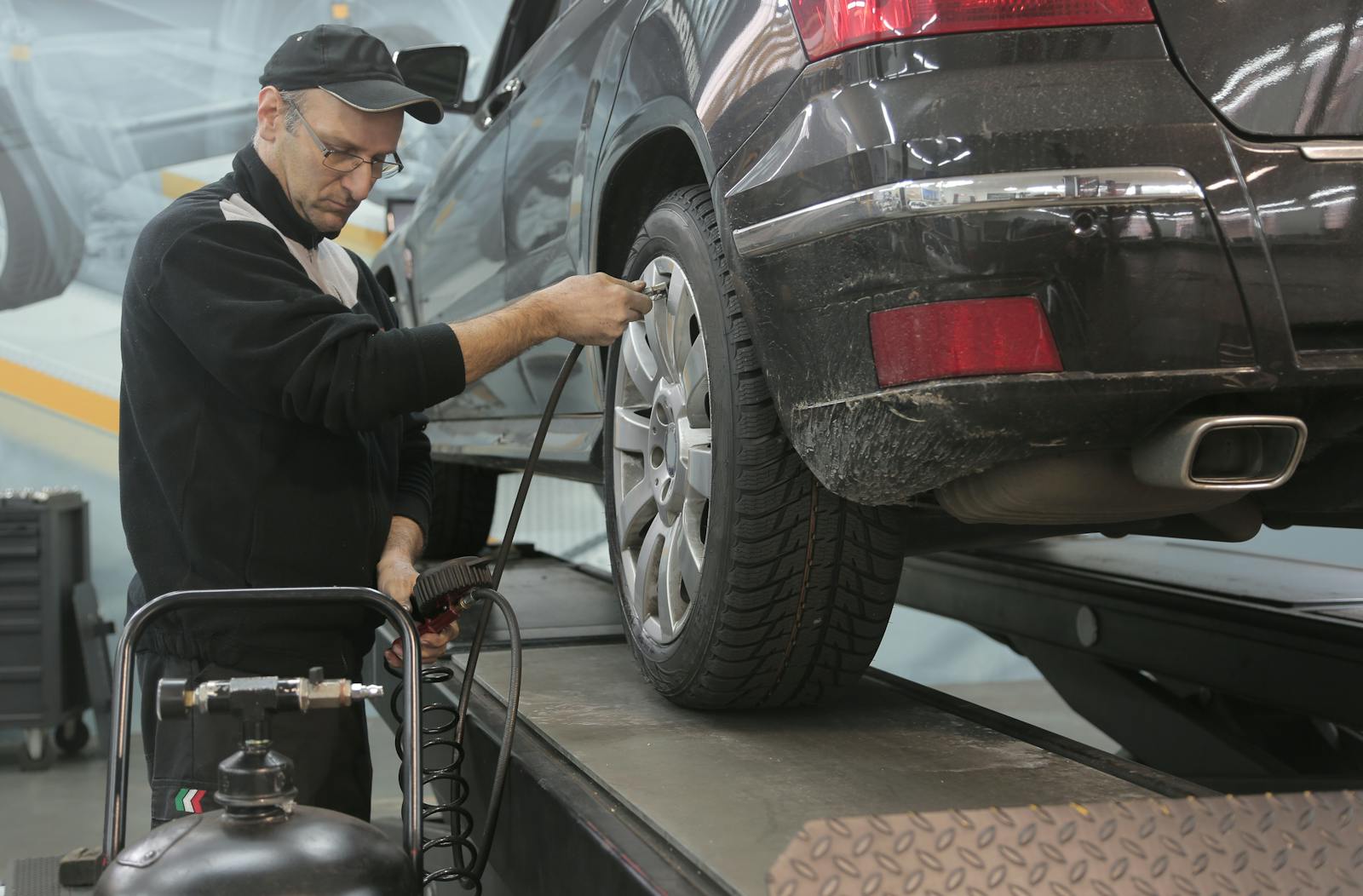

It started the way a lot of car stories start: somebody trying to do the responsible thing on a random weekday, knocking out an errand before life got busy again. The wife had the vehicle, a regular commuter SUV, and she stopped at a tire shop that promised quick service. Nothing fancy—just a rotation and a check on a tire that had been losing air.
When she pulled back out onto the highway, she wasn’t thinking about lug nuts or torque specs. She was thinking about merging, keeping pace with traffic, and whether she had time to swing by the grocery store. And then the steering started to feel… wrong, like the car had suddenly developed a wobble that didn’t match the speed.
Her husband didn’t learn any of that until later, when he watched the dash cam footage and realized he was seeing the moment a routine errand almost turned into something irreversible. The video wasn’t cinematic. That’s what made it hard to watch—just a normal drive where the car gradually starts to betray the person inside it.
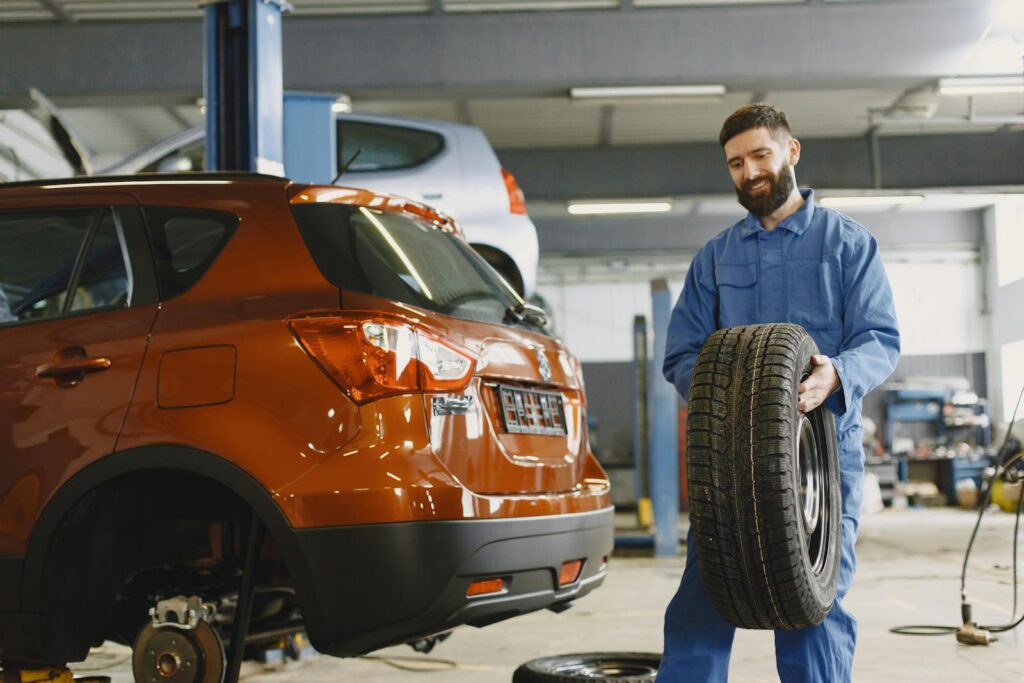
The “quick stop” that didn’t feel quick
According to him, the tire shop was one of those places with a big, confident sign and a waiting area that smells like coffee that’s been on the burner too long. His wife dropped the keys off, explained the slow leak, and waited while techs moved cars in and out like a pit crew. They told her they’d check everything and get her back on the road fast.
She noticed little things that felt off, but nothing she could prove in the moment. The car came down off the lift, someone waved her forward, and the whole exchange had that rushed rhythm where you’re half-paying attention because you assume the professionals are doing their part. She paid, got a receipt, and drove away.
On the dash cam, the first few minutes look totally normal. She’s leaving the lot, turning onto surface streets, stopping at lights. If you didn’t know what was coming, you’d assume it was just another boring clip destined to be overwritten by the next drive.
The highway wobble that turned into panic
The change hits in a way that’s almost subtle at first. Once she’s up to speed, the steering wheel starts vibrating like the road surface suddenly turned to gravel. She corrects slightly, then slightly more, and you can see the car’s nose wander in the lane like it’s searching for stability it can’t find.
She does what most people do when something feels wrong at highway speed: she tries to diagnose it in real time without making any sudden moves. The dash cam catches her easing off the accelerator, letting faster cars pass, and hugging the right side of the lane. It’s not dramatic swerving—it’s that controlled, tense kind of driving where you’re pretending everything is fine because you don’t want to trigger the thing you’re afraid is happening.
Then the sound starts. The footage picks up a rhythmic clunk, like something heavy tapping metal, and the vibration goes from “bad alignment” to “something is coming apart.” She says something short—more a reflex than a sentence—and her shoulders rise as she grips the wheel harder.
What makes the clip so nasty to sit through is that you can feel how long those seconds are. Cars are still flying by on the left. She’s trying to pick a safe moment to move onto the shoulder, but the car is shaking like it’s actively resisting the idea of being controlled.
“Pull over, now” and the moment she gets it stopped
By the time she gets a gap, she’s not gently steering anymore. She’s guiding the car like you’d guide a shopping cart with a busted wheel—firm, deliberate, trying to keep it from veering. The shoulder appears, and she coasts onto it like she’s afraid the slightest input might finish whatever mechanical failure has already started.
Once she’s stopped, the dash cam audio catches the kind of breathing you don’t notice until you’re not moving anymore. She stays in the car for a beat, like she’s waiting to see if the shaking continues even at rest. Then she gets out, and the angle doesn’t show everything, but it shows enough: the vehicle sitting with one wheel looking wrong in a way that makes your stomach drop.
When she walks around, she finds the lug nuts aren’t just loose—they’re barely on. The wheel has play, and it’s the kind of play you only see when a car is seconds away from losing the wheel completely. She calls her husband, and the first thing she says isn’t a full explanation; it’s that clipped, urgent tone that tells you not to argue and not to ask questions yet.
He later described the call as his brain trying to catch up with the words. She’s telling him she’s on the shoulder, she thinks the shop didn’t tighten the wheel, and she’s scared to move the car even a foot. He tells her to stay put and not try to “just get it home,” because the shoulder is safer than rolling the dice with traffic.
The tire shop conversation that went sideways fast
He shows up and sees it for himself. The wheel hardware is visibly not seated the way it should be, and the car looks like it’s been chewing on the studs. He’s angry, but it’s not the performative kind—more like the tight, quiet anger of someone imagining how close this came to becoming a phone call that changes your life.
They call the shop from the shoulder first. The person who answers doesn’t immediately jump to apology; the vibe is defensive, like they’re trying to slow-walk responsibility until they know how bad it is. “Did you hit something?” comes up early, which lands like gasoline on a fire when you’re staring at a wheel that’s clearly been wobbling itself loose.
When they finally get the car back to the shop—carefully, slowly, with hazards on—the husband is filming, not to be dramatic, but because he’s already sensing the coming argument. The manager meets them with that half-concerned, half-annoyed look people get when they think they’re about to be blamed for something messy. The husband points to the wheel and says, in plain language, this doesn’t happen if the lug nuts are torqued properly.
The shop’s response, according to him, keeps drifting between “we’ll take care of it” and “we can’t be sure it was us,” like they’re trying to fix the car without admitting the thing that made it dangerous. The wife, who’s usually not confrontational, goes quiet in that way people do when adrenaline burns off and leaves embarrassment behind. She keeps replaying the wobble in her head, like her body can’t let it go yet.
The footage becomes the center of the fight
Once they’re home, he pulls the dash cam clip. What he expects is proof that something was wrong; what he gets is a front-row view of his wife driving a vehicle that’s actively trying to shed a wheel at highway speed. It’s the kind of video where you catch yourself leaning back from the screen, like distance will make it less real.
He sends the footage to the shop, thinking it will cut through the hedging. But now the video isn’t just evidence—it’s leverage, and everyone starts acting like it. The shop wants the car back to inspect it “properly,” but he doesn’t trust them to be the only people touching it again.
He starts asking for specifics: which tech worked on the car, whether they logged torque checks, whether the shop has internal cameras, and how they plan to cover any damage to the wheel studs or hub. The answers aren’t clean. The manager’s tone reportedly shifts into that corporate-sounding calm, where each sentence is designed to be non-committal in case lawyers get involved.
Meanwhile, the wife is dealing with a different kind of aftermath. She’s fine, technically, but she’s jumpy in the passenger seat on the next few drives. She flinches at new noises, and she keeps asking, “Do you feel that?” even when the car is running perfectly.
The husband’s frustration isn’t just about the mechanical failure; it’s about how easily it could be minimized. “We’ll look into it” feels insulting when the dash cam shows a clear, escalating wobble and the desperate move onto the shoulder. The video doesn’t show a collision, doesn’t show reckless driving, doesn’t show anything that conveniently shifts the blame—just a car leaving a tire shop and heading straight into danger.
What hangs over the whole thing is that there’s no satisfying end point baked into the story. A shop can replace studs and apologize, but it doesn’t erase the seconds on the highway where one more bump could’ve sent the wheel off and the vehicle into traffic. And the hardest part, the thing that keeps the tension simmering, is how normal the day was supposed to be—how easily a routine “quick stop” turned into footage they can’t unsee and a trust they can’t stitch back together with a repair order.
More from Steel Horse Rides: