
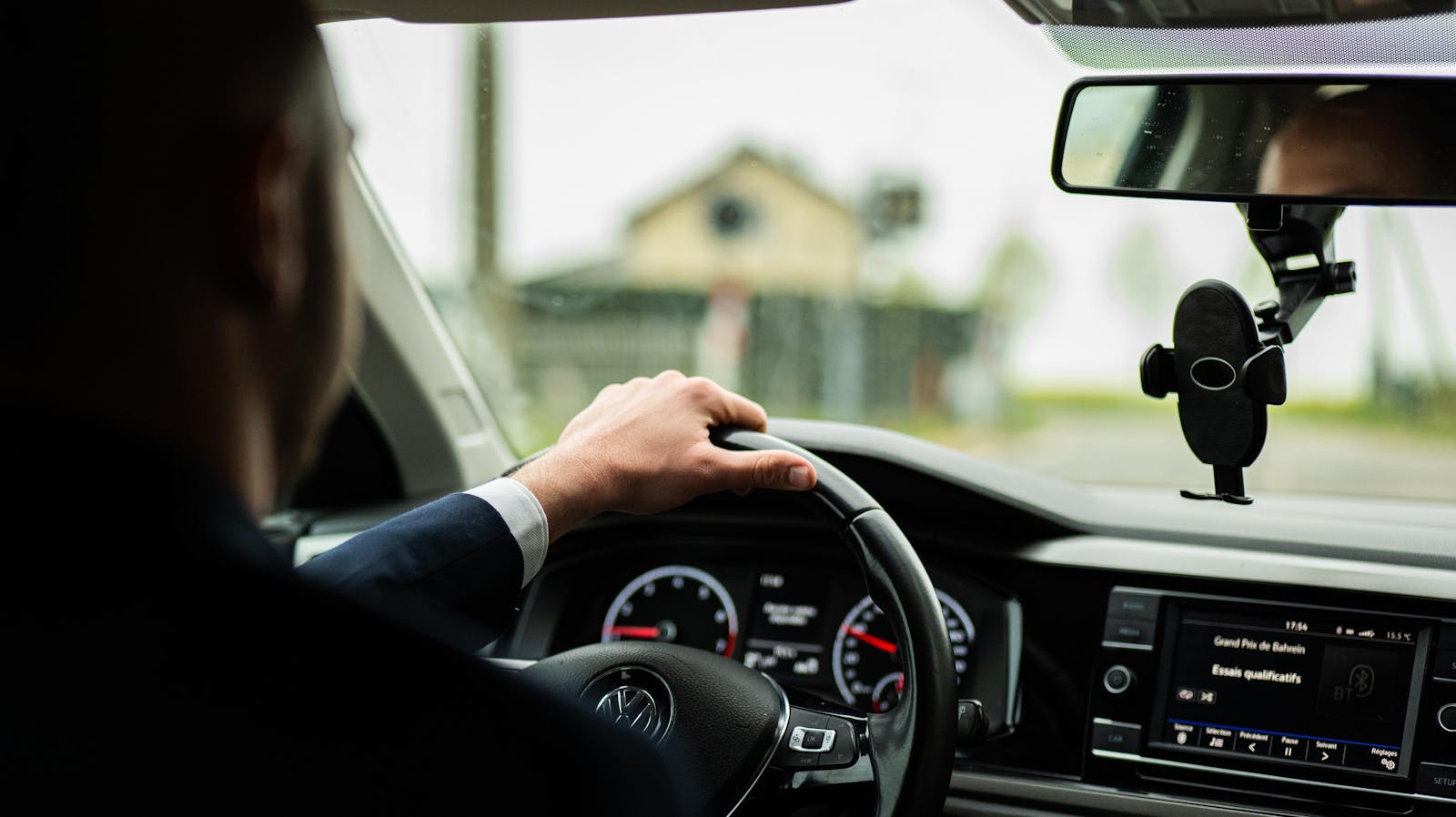

It started the way so many driving stories start: a normal commute, a lane that suddenly disappears, and two people who both think they’re the one being reasonable. The driver at the center of this one—let’s call him Matt—was heading home in late-afternoon traffic, doing that slow shuffle where everyone’s watching turn signals like they’re poker tells.
There was road construction ahead, cones squeezing three lanes into two, and the usual mix of “zipper merge like adults” and “I will die before I let you in.” Matt said he signaled early, checked his mirror, and eased over with enough space that nobody had to slam brakes. He also said the guy behind him acted like Matt had just keyed his car.
The first hint this wasn’t normal irritation was how fast it got personal. The other driver—big pickup, dark windows, the whole vibe—immediately rode Matt’s bumper so close Matt couldn’t see the truck’s headlights. Then came the horn: not a quick tap, but a long, angry blast that seemed less like communication and more like a declaration.
The merge that “started it”
Matt described the merge as boring, which is almost the funniest part. He wasn’t cutting in at the last cone or forcing his way into a gap that didn’t exist; he was just trying to get into the lane that kept moving. The pickup driver apparently disagreed, because as soon as Matt got over, the truck surged forward, then braked hard, like it was trying to jolt Matt into rear-ending it.
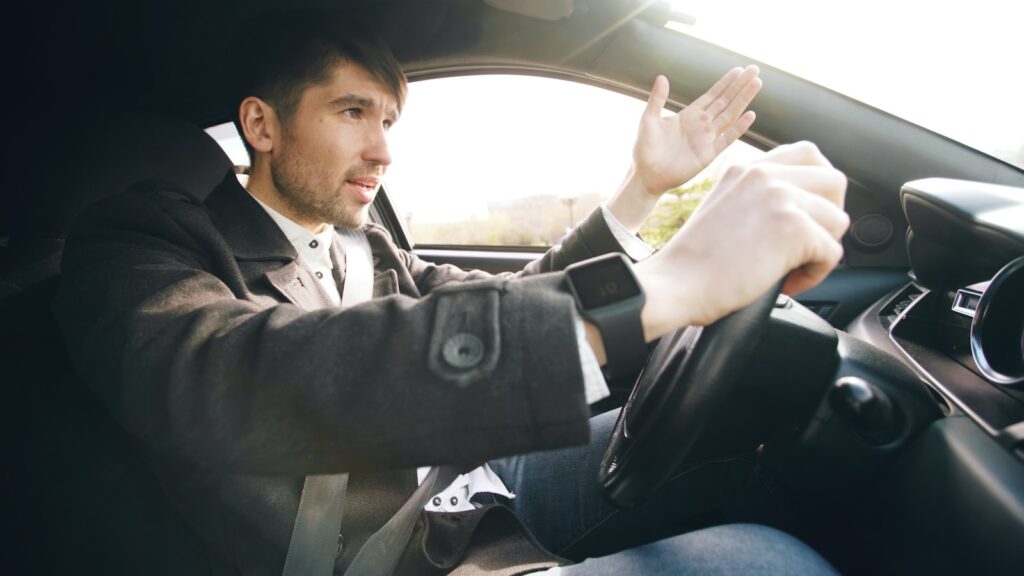
At the next light, the truck pulled up beside him and paced him for a few seconds. Matt said he didn’t look over at first, the way you avoid eye contact with someone who’s clearly auditioning for a confrontation. But the truck kept creeping and creeping until Matt finally glanced over and saw the driver gesturing wildly with one hand off the wheel, mouth moving like he was delivering a speech through the glass.
That’s when Matt did the thing people do when they sense someone’s unstable: he tried to disengage. He left more space, stopped responding to the truck’s speed changes, and focused on the road ahead. The problem was the other driver wasn’t looking for resolution; he was looking for a target that would acknowledge him.
The tail that wouldn’t break
Once the construction ended, traffic opened up enough that a normal person would either pass, turn off, or get bored. This guy didn’t. Matt switched lanes to let him go around, and the pickup switched lanes too, sitting behind him again like it was on a rail.
Matt took a right turn he didn’t need, figuring he’d shake the truck by going off the main route. The pickup followed without hesitation. He made another turn, then another—nothing dramatic, just the kind of zig-zag that should confuse anybody who’s actually on their way somewhere—and the truck stayed locked in, matching every move.
That’s when it clicked for Matt that this wasn’t just posturing. People get mad in traffic all the time, but they don’t usually donate their whole evening to it. Matt said he felt his stomach drop in that very specific way you feel when you realize you’re not dealing with “annoying,” you’re dealing with “unpredictable.”
The worst possible confirmation: it’s your neighborhood
He didn’t want to drive straight home, but he also didn’t want to do the obvious “let’s head to the police station” move and potentially escalate a guy who already seemed keyed up. So he tried the middle ground: keep driving, stay in populated areas, and see if the truck eventually peeled off. It didn’t.
Eventually, Matt found himself on the familiar roads near his neighborhood, and he hated it immediately. The closer he got, the more it felt like he was leading trouble right to his own front door. He made one last attempt to break the tail by circling a small commercial strip—gas station, pharmacy, the kind of place with cameras—and the pickup looped right along with him.
At that point, Matt’s choices narrowed down to two bad options: keep driving forever, or go home and hope the guy got bored. He chose home, but not because he thought it was smart—more because he’d run out of ideas that didn’t involve stopping somewhere and risking a face-to-face confrontation in a parking lot.
Pulling into the driveway with a stranger right behind you
Matt pulled into his driveway and didn’t get out. He said he sat there for a second with the engine running, watching his rearview mirror like it was a live feed of a horror movie. The pickup rolled past just a little… and then stopped in the street directly in front of his house.
There’s a special kind of dread in watching someone park outside your home, because now it isn’t abstract. It isn’t two cars on a road with exits and options; it’s your address, your mailbox, the place your family sleeps. Matt texted his partner inside something like, “Don’t come out. Someone followed me,” which is a sentence nobody sends unless they mean it.
He said the truck’s driver didn’t get out at first. Instead, the guy just sat there, idling, windows dark, like he wanted Matt to wonder what was going to happen next. And then he started revving the engine—big, deliberate bursts that made the whole scene feel less like a tantrum and more like intimidation.
The engine revs, the staring contest, and the fear of “what if”
Matt stayed in his car, doors locked, phone in hand. He didn’t want to step out and invite a confrontation, but he also didn’t want to sit there forever while a stranger performed a threat ritual in front of his house. He said he could feel his pulse in his ears, the way it happens when your body decides you’re in danger and refuses to listen to logic.
Inside the house, his partner killed the lights in the front rooms and watched from a side window. They didn’t want the guy to know exactly where they were or how many people were inside. Matt said that detail messed with him afterward—the idea that they were quietly moving around their own home like they were hiding from a storm.
He finally called the non-emergency line, then second-guessed it and switched to emergency, because the revving wasn’t stopping and the truck wasn’t leaving. He described the vehicle, the position, and the fact that the driver had followed him from a merge several miles back. He also admitted he felt silly saying it out loud, which is the scary part: people talk themselves into downplaying danger because they don’t want to be “dramatic.”
While he was on the phone, the pickup revved again—louder this time, the kind of sound that carries down the street and makes you wonder if neighbors are peeking through blinds. The driver still didn’t exit, which somehow made it worse. A person who gets out and yells is at least predictable; a person who just sits there with an idling engine can be thinking anything.
Matt said he considered backing out and driving away, but he didn’t want to play cat-and-mouse on a residential street. He also didn’t want to leave his partner alone in the house with the truck out front. So he stayed put, locked in place by the simplest logic of fear: if you move, you might trigger the next step.
Eventually—after what felt like forever but was probably minutes—the pickup rolled forward a few feet, stopped again, and revved one more time. Then it slowly drove off, not peeling out, not speeding, just gliding away like it had accomplished whatever point it came to make. Matt didn’t follow, didn’t chase, didn’t even pull out of the driveway until the taillights were completely gone.
Afterward, there wasn’t a clean sense of relief, more like a rattling quiet. The house looked the same, the street looked the same, but now Matt knew how thin the wall is between “annoying driver” and “stranger who knows where you live.” The worst part wasn’t even the merge anymore—it was the lingering question sitting in the driveway with him: if someone can turn a minor lane change into a personal mission, what else do they decide is worth coming back for?
More from Steel Horse Rides: