
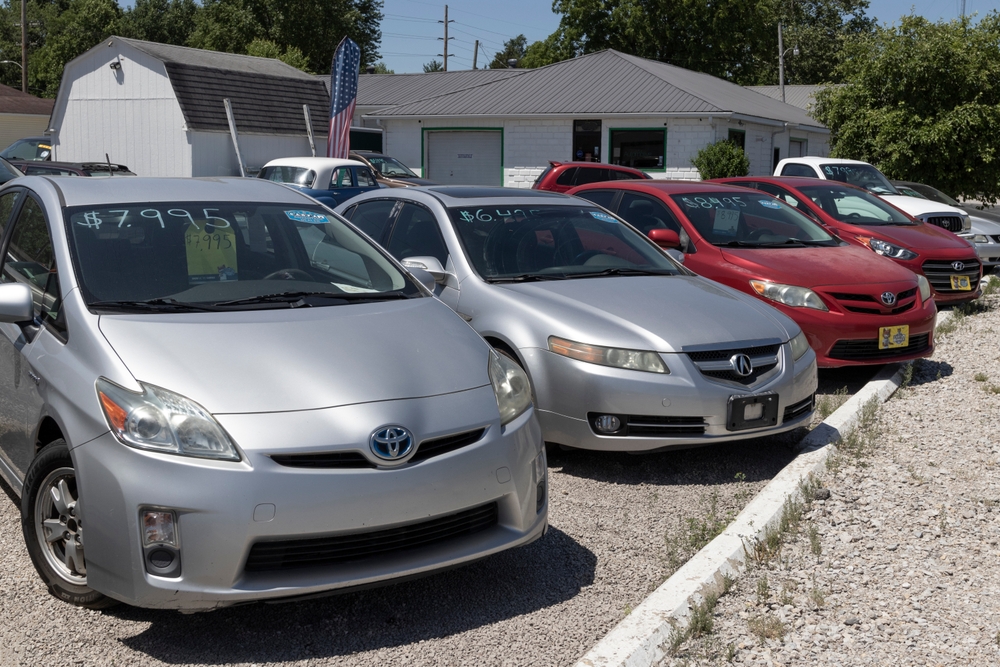

He’d only meant to “look.” That was the line the buyer kept repeating to himself while he pulled into the tiny used car lot wedged between a tire shop and a payday loan place. He’d been hunting for something reliable and boring—commuter car, clean title, no surprises—and the listing had looked almost suspiciously normal.
The dealer met him at the edge of the asphalt like he’d been waiting there all morning, smiling wide and holding a key fob already pinched between two fingers. Friendly, talkative, the kind of guy who calls everyone “boss” and says “no pressure” while applying pressure in ways that don’t feel like pressure until later. The buyer noticed right away how smoothly he narrated everything: the car’s “solid history,” how it “just came in,” how they’d “priced it to move.”
They walked around the vehicle together, and it all looked fine in that used-car-lot way—tires not bald, paint not terrible, interior cleaned just enough to smell like lemon and desperation. The buyer did what he always did: tried to stay calm, asked a few questions, didn’t let himself get pulled into the dealer’s upbeat momentum. The dealer kept smiling anyway, like he’d already decided this was going to be an easy sale.

The test drive started out too smooth
Once they got inside, the dealer slid into the passenger seat like it was his car and he was letting the buyer have a turn. He buckled up with a little theatrical snap, then launched into small talk—where the buyer worked, whether he lived nearby, what he was hoping to pay. The buyer answered but kept his eyes on the dash, watching the lights cycle like a paranoid ritual.
No warning lights stayed on. The engine sounded fine. The steering wasn’t pulling. For the first ten minutes, it was almost annoyingly normal, which is exactly how people end up buying cars they shouldn’t.
The dealer pointed out features like a tour guide, tapping buttons without asking. “See? Cold A/C. Bluetooth connects easy. This is a good one,” he said, smiling like he’d rehearsed the whole thing in front of a mirror. Every time the buyer slowed down to listen for a clunk or a rattle, the dealer filled the silence with another reassurance.
Then the check engine light blinked on like a punchline
It happened at a red light, the kind of moment where you’re trapped with your thoughts because there’s nothing to do but stare forward. The buyer looked down and saw it: the check engine light, bright and steady, like it had been waiting for the most inconvenient time to introduce itself. He didn’t even say anything right away, just blinked and looked again to make sure his eyes weren’t playing tricks.
“Hey,” he finally said, pointing with one finger, trying to keep his voice casual. “That wasn’t on earlier.”
The dealer’s smile didn’t disappear, which somehow made it worse. It tightened, like a mask being adjusted. “Oh, that? Probably just the gas cap,” he said quickly, too quickly, as if he’d been assigned that line on day one.
The buyer didn’t argue, but he did what any cautious person would do: he asked if they could pull into a nearby auto parts store and scan it. It was a reasonable request, and for a half-second the dealer looked like he was weighing how fast he could get away with saying no. Then he gave a little shrug that said, sure, if you insist, and told the buyer where to turn.
The scan didn’t match the dealer’s vibe
The parking lot scan had the bleak, fluorescent honesty of those stores—half the people inside were already having a bad day. An employee came out with the handheld reader and plugged it in while the dealer stood a few feet away, phone in hand, pretending to be relaxed. The buyer could feel the dealer’s energy shift from “buddy” to “babysitter” in real time.
The code popped up and it wasn’t a gas cap. It was something emissions-related, plus a note about a catalyst efficiency issue that made the buyer’s stomach tighten. The employee did the polite retail thing—explained it could be a sensor, could be the catalytic converter, could be a few hundred dollars, could be a few thousand—and then handed the buyer the little printout like a receipt for dread.
The buyer looked at the dealer, waiting for him to do the normal, grown-up business response: acknowledge it, offer to fix it, negotiate, at least pretend this was new information. The dealer stayed smiling, but now it had a brittle edge, like he was forcing his teeth to stay out. “Those scanners freak people out,” he said, waving a hand like the device was just being dramatic.
The buyer asked if they could take the car to a mechanic for a pre-purchase inspection, even if he paid for it. The dealer’s eyes flicked away for a second, quick and sharp, like he’d just spotted an exit. “We don’t really do that,” he said, still in the same upbeat tone, as if refusing was just another friendly policy like free coffee.
The ride back felt like two different conversations
On the way back to the lot, the buyer drove more slowly, listening harder. Now that the light was on, every tiny vibration felt suspicious, every hesitation in the acceleration felt like a clue. The dealer kept talking, but his words had changed shape—less “this car is great” and more “you won’t find a deal like this,” as if the buyer’s concern was actually him getting cold feet about spending money.
The buyer tried to keep it simple. He said he liked the way it drove, but he wasn’t comfortable moving forward unless the issue was addressed, either with a repair or a price adjustment that actually reflected the risk. The dealer nodded along, smiling, saying “totally” and “I get it,” but not offering anything concrete.
Back at the lot, the dealer hopped out first and walked faster than he had earlier, already angling toward the office. The buyer followed, still holding that printout, feeling like he was carrying evidence in a place that didn’t recognize evidence. Inside, the dealer gestured toward a chair but didn’t sit down himself, like he didn’t want to settle into a real negotiation.
When the buyer asked again—straight up—whether they’d fix it or let him take it to a mechanic, the dealer finally let the smile drop a notch. “Man, it’s a used car,” he said, suddenly tired. “They all got something.”
The block happened so fast it felt rehearsed
The buyer didn’t blow up. He didn’t accuse. He just said he wasn’t going to buy it under those conditions and thanked the dealer for the time. That’s what made what happened next feel so weirdly aggressive, like the dealer took the polite refusal as an insult he had to punish.
As the buyer walked back to his own car, the dealer called after him, voice sweet again: “If you change your mind, hit me up. I’ll make it work for you.” The buyer nodded, got in, and drove off with that drained feeling you get after spending an hour trying not to be manipulated.
Later that evening, the buyer decided to text anyway, mostly to see if there was any real willingness to fix the issue. He kept it neutral: said he’d be interested if they repaired the problem and provided paperwork, or if they adjusted the price to account for it. The message showed “delivered” and then sat there, silent.
The next day he tried calling. Straight to voicemail. He tried again from the same number, then from a different app number, and got the same immediate dead-end. He checked his texts and noticed something subtle but telling—no more “delivered,” no read receipts, nothing. The dealer hadn’t just ignored him; the dealer had blocked him, the minute the check engine light turned the test drive into an actual negotiation.
What stuck with the buyer wasn’t even the mechanical issue—used cars have issues, that’s life—it was the speed and cheerfulness with which the dealer switched from “no pressure, boss” to disappearing act. The smile during the test drive suddenly felt like part of the product, another detail polished up for curb appeal, right along with the lemon-cleaner interior. And now the buyer was left with a printout of a code he didn’t want to own, a dealership number that went nowhere, and the nagging question of how many other people had driven that same route, watched that same light click on, and realized the real test wasn’t the car—it was whether the guy in the passenger seat would still be smiling when the dashboard told the truth.
More from Steel Horse Rides: