


It started the way neighborhood problems usually start: not with sirens, but with noise. The guy across the street—mid-30s, always in a black hoodie no matter the weather—had turned his driveway into a rotating car exhibit. Different vehicles showed up at weird hours, some looking freshly washed, others looking like they’d lost a fight with a guardrail.
The neighbor who eventually told the story wasn’t the type to pearl-clutch over a loud muffler. He’d lived on that block long enough to expect the usual: someone’s cousin crashing on a couch, a teenager learning drums, the occasional “project car” that never gets finished. But this wasn’t a project car. This was three different “projects” a week, all mysteriously disappearing by Monday like nothing had happened.
At first, the block tried to be politely blind about it, the way people do when they don’t want to be the one who “starts drama.” But the driveway operation didn’t just exist—it expanded. And once the neighbor started noticing the patterns, he couldn’t unsee them.
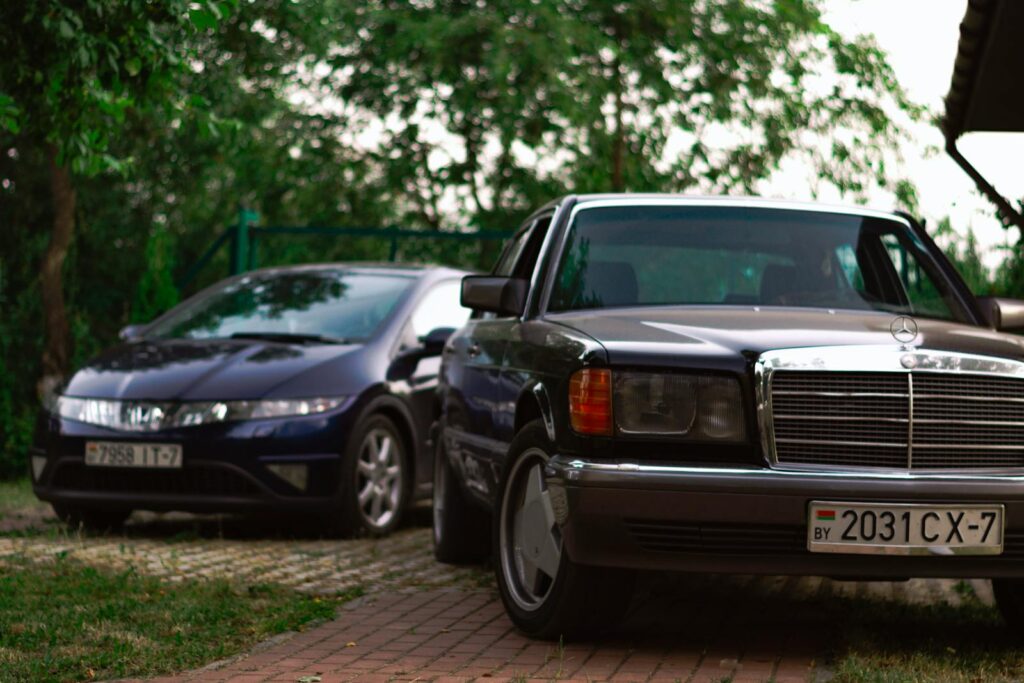
The Driveway That Never Slept
The first clue was the rhythm. A tow truck would creep in around 10 p.m., lights off until the last second, and drop something that didn’t belong there—an SUV with no plates, a pickup with paper tags that looked freshly printed, a sedan with a busted window taped up like an afterthought. By morning, the hood would be up and the guy would be out there with two or three buddies, all moving fast like they had a timer running.
It wasn’t just the cars. It was the way parts migrated. Wheels stacked by the fence for a day, then gone. A tailgate leaning against the garage, then suddenly the truck it came from wasn’t even there anymore. The neighbor would take the trash out and catch little flashes of it: a pile of lug nuts in the gutter, a ripped-up registration envelope by the curb, a glove compartment dumped like someone was checking for something specific.
The block started developing a shared language for it. People didn’t say “chop shop” out loud at first; they said stuff like, “You see what he’s working on now?” or “Another late-night delivery.” The neighbor’s wife started double-checking that her car was locked even in the driveway, which she’d never done in years.
The guy running the driveway operation played it like he was just a car hobbyist with hustle. He’d wave if someone looked too long, even throw out a casual “Morning” while he was ankle-deep in someone else’s bumper. If anyone asked directly, he’d give a story about flipping salvaged vehicles, rebuilding for auctions, helping friends out.
Trying to Be Normal About Something That Isn’t
The neighbor didn’t want to be the paranoid busybody calling cops over “vibes.” He also didn’t want to be the idiot who watched obvious criminal activity for months and then acted surprised when something bad happened. So he did what a lot of people do: he documented quietly and tested the reality of it through small conversations.
He started asking other neighbors if they’d noticed the traffic. They had—everyone had. The retired guy two houses down mentioned he’d seen a different set of men every few days, none of them living there, all of them arriving in beat-up cars and leaving in nicer ones.
Someone else brought up the smell, which the neighbor hadn’t even clocked at first. Not just gasoline, but that hot-metal, burnt-plastic smell that hangs in the air after someone’s been grinding or cutting. On still nights, it drifted into people’s open windows, the kind of smell that makes you sit up and realize you’re breathing somebody else’s bad decision.
One neighbor did try the friendly approach—more of a “Hey man, you doing all that work in the driveway? HOA’s been sniffing around” kind of thing, even though there wasn’t an HOA. The guy just laughed and said he was “staying busy,” then turned up the radio like the conversation had ended itself.
When the Block Started Feeling Watched
Then came the part that flipped it from “annoying” to “unsettling.” The neighbor began noticing that cars would slow down in front of multiple houses, not just the driveway shop. People would roll by, pause a little too long, then continue, like they were checking addresses. A couple times, someone parked down the street and just sat there with the engine running.
The neighbor told himself there could be innocent explanations—DoorDash drivers, lost GPS, someone waiting on a friend. But the timing always lined up with the driveway activity. When a new vehicle got dropped off, the street got busier. When something seemed to be getting stripped, unfamiliar faces showed up, and the vibe turned sharp.
It got personal when one night the neighbor heard shouting. Not the usual “pass me the wrench” stuff, but real anger, the kind that carries through closed windows. He peeked through the blinds and saw two guys leaning into the open bed of a truck, arguing while a third kept looking up and down the street like he was on lookout.
By morning, that truck was gone. In its place was a different one, parked at a slight angle like it had been dumped in a hurry. The neighbor’s stomach did that slow drop where you realize the story is heading somewhere bad and you’re already in it.
The Stolen Truck That Blew the Whole Thing Open
The stolen truck arrived on a weekday afternoon, which was unusual. It wasn’t dragged in quietly after dark; it came rumbling up under its own power, loud, lifted, and too clean to be living on that block. It parked in the driveway like it belonged there, and for a second it almost worked—until the neighbor noticed the detail that didn’t fit.
There was a company logo on the door, the kind you’d see on a contractor’s fleet vehicle. The phone number was partially peeled off, like someone had tried to scrape it away in a hurry and gave up. And the license plate looked… wrong. Not just missing—swapped. The screws were shiny like they’d been put on recently.
The neighbor stood at his window longer than he meant to, doing that mental dance: Do I call? Am I overreacting? What if it’s legit? Then he heard it—a faint chirp-chirp from inside the truck, like an electronic ping, followed by the distant sound of a car door slamming down the street.
Less than ten minutes later, a vehicle he didn’t recognize rolled slowly past, then stopped with a clean, deliberate confidence. A man got out and walked like he knew exactly where he was going, head pivoting toward that contractor truck. He didn’t knock on the chop shop guy’s door. He didn’t look lost. He just stood there for a second, staring at the truck like he was checking whether it was real.
The neighbor didn’t hear the call, but he felt the shift. The street went quiet in that unnatural way it does when people are suddenly paying attention behind curtains. And then, like the neighborhood had been holding its breath, the first police cruiser turned onto the block.
Sirens, Floodlights, and Everybody Pretending They Weren’t Watching
Once the police arrived, they didn’t arrive like it was a noise complaint. Two cruisers became five. An unmarked SUV rolled in, then another. Officers stepped out fast, and they weren’t strolling—they were scanning, hands near their belts, spreading out like they’d done this exact thing before.
The chop shop guy came out looking confused in that exaggerated way people do when they’re trying to manufacture innocence. He raised his hands halfway, palms out, like he was about to start a calm conversation. It didn’t land.
One officer went straight to the contractor truck, peering through the window and shining a light across the dashboard. Another walked the perimeter of the driveway, eyes catching on the scattered parts like they were bullet points on a checklist. The neighbor could see into the open garage now and realized the mess wasn’t random—it was organized chaos, shelves of parts, bins, and a couple of doors leaning in the corner like trophies.
Then the floodlights came. Not metaphorical—actual bright, harsh lights that turned the driveway into a stage. The neighbor watched the chop shop guy’s shoulders tighten as an officer guided him to the curb, while another officer spoke into a radio and kept glancing toward the back fence.
At least three neighbors “happened” to be outside during this, taking trash out in the middle of the afternoon, checking mail that didn’t need checking. Nobody wanted to be the one openly staring, but nobody could look away. The whole block had spent months swallowing discomfort, and now it was being dragged into daylight.
As the police started photographing vehicles and running numbers, the driveway guy’s friends melted away. One slipped out the side gate like he suddenly remembered an appointment. Another climbed into a car parked down the street and drove off slow, trying not to look like he was fleeing while still absolutely fleeing.
The neighbor expected a clean ending—handcuffs, tow trucks, a big obvious conclusion. What he got was messier. The police towed at least one vehicle, maybe two, and spent a long time inside the garage. The driveway guy wasn’t hauled away immediately, at least not in front of everyone, but the officers didn’t treat him like an innocent man caught in a misunderstanding either.
By evening, the street looked almost normal again, which was the weirdest part. The lights were gone, the cruisers had left, and there was just an empty patch of driveway where the contractor truck had been, like a missing tooth. The neighbor stood on his porch and realized he didn’t feel relieved so much as… exposed, like the block had finally admitted what was happening, and now they had to live with what came next.
Because the chop shop guy still lived there. His house was still right across the street. And even if the police had taken the truck, even if they’d taken photos and notes and maybe more than that, the neighbor couldn’t shake the feeling that the real tension hadn’t been the cars at all—it was the fact that everyone on that block had been quietly forced into the orbit of somebody else’s illegal life, and now they were all wondering whether the fallout would be official… or personal.
More from Steel Horse Rides: