
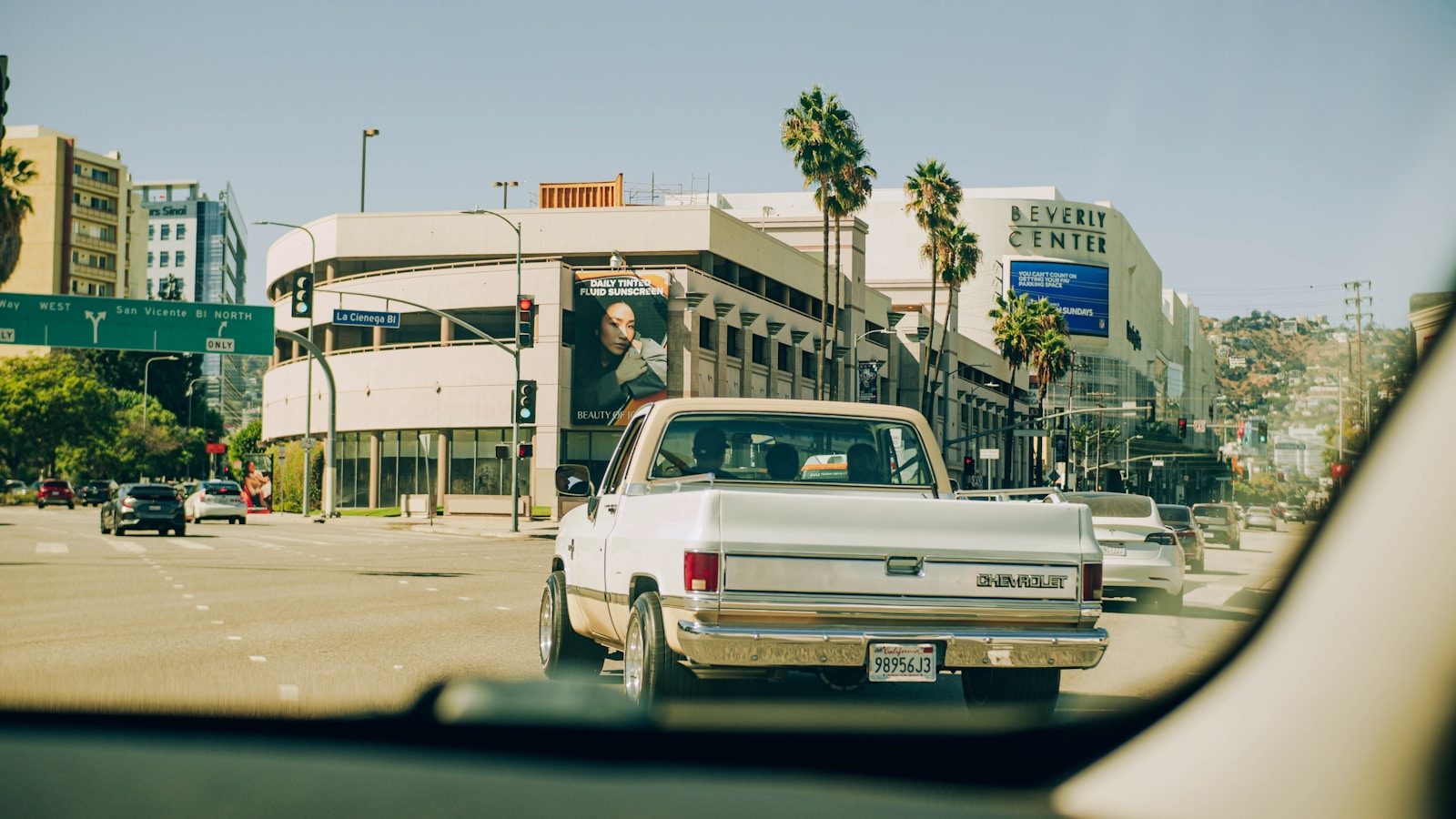

It started as one of those tiny, forgettable traffic moments: a light that turned green, a driver who didn’t move, and the polite little “hey, heads up” horn tap you do when you’re trying not to be a jerk. The guy in the sedan behind the wheel of a boring commuter car—let’s call him Mark—didn’t even lean into it. Just a quick beep, the kind that barely counts as a honk.
The pickup in front of him did move, but not like someone who simply realized the light had changed. It lurched forward and then immediately slowed again, like the driver wanted to make sure Mark knew the beep had been received, processed, and filed under “unforgivable.” Mark’s first thought was, fine, whatever, people get touchy. His second thought, a few seconds later, was: oh no, this guy’s not touchy. He’s hunting.
Because the pickup didn’t just roll along at its own pace. It started doing that thing where it drifts just a little, brakes just a little, lines up so you can’t comfortably pass, and generally makes sure you’re aware you’re being managed. Mark backed off and gave space, figuring the easiest way to “win” was to not play. The pickup driver apparently interpreted that as an invitation to escalate.
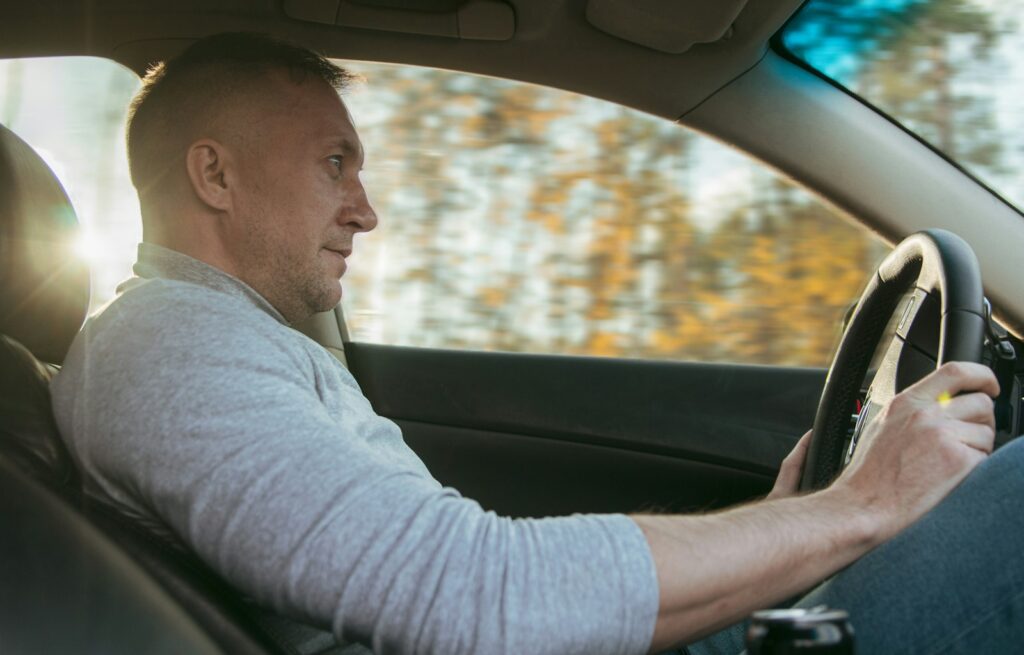
The horn tap that apparently meant war
The road Mark was on was a two-lane stretch that acted like a funnel out of town: a mix of strip-mall driveways, gas stations, and then suddenly it turns into semi-rural pavement with ditches and long sightlines. It’s the kind of road where people either cruise calmly or drive like every other car is personally insulting them. Mark had been on it a thousand times, which is why the pickup’s behavior stood out so quickly.
At the next light, the pickup stopped with this exaggerated, perfect stillness, dead center in the lane. Mark rolled up behind him, leaving a longer gap than usual, like he was trying to de-escalate through geometry. When the light turned green, the pickup didn’t go for a full beat, and Mark could feel the pressure building behind him from other cars.
He didn’t honk again. He didn’t even inch forward. But someone behind Mark did—one of those longer, irritated blasts that’s less “heads up” and more “move your life.” The pickup driver snapped his head around anyway, like the sound had come out of Mark’s hands personally, and then he finally took off with a little burst of speed.
Mark figured, okay, that’s that. You get a grumpy driver, you survive it, you forget about it. Except the pickup slowed down again as soon as the road opened up, and when Mark tried to change lanes to pass—because there was a safe passing zone and an obvious opening—the pickup drifted left too, perfectly mirroring him.
The pickup starts playing goalie
Once Mark realized the driver wasn’t just distracted or inconsiderate but actively blocking, his stomach did that drop it does when you know you’re in someone else’s bad mood. He backed off again, giving the pickup a whole car length, then two. The pickup slowed down to match, like it wanted Mark close enough to be trapped but not close enough for Mark to feel justified.
Mark tried a different tactic: turn off. There was a side road coming up, so he put on his blinker early, nice and obvious, and started easing over. The pickup driver saw the signal and—no joke—sped up just enough to keep pace with the gap, then drifted to make the turn awkward. Mark didn’t take it; he stayed straight, because the whole vibe was suddenly “this guy is looking for an excuse.”
Now the pickup was doing the full routine: brake checks that weren’t hard enough to be clearly criminal but sharp enough to make Mark tap his brakes, sudden accelerations like a taunt, and that steady weaving that says, “I can take up any space I want.” Mark kept thinking, if I just stay calm, he’ll get bored. But it wasn’t boredom this guy was chasing.
At one point, Mark said later, he actually laughed out loud—not because it was funny, but because it was so absurdly disproportionate. A horn tap at a green light and now he’s in a live-action ego contest with a stranger in a lifted pickup. The laugh didn’t help; it just made him feel a little less in control, like his body was trying to burn off adrenaline however it could.
From petty to dangerous in about ten seconds
The moment everything tipped from “annoying” to “we’re going to crash” happened near a gentle bend where the shoulder narrows and the ditch gets deeper. Mark’s lane had a few patched spots, and he moved slightly right to avoid a rough patch. The pickup, still ahead but not by much, slowed again—then suddenly swung right, as if trying to occupy the exact space Mark needed.
Mark hit his brakes hard. He didn’t rear-end the truck, but he felt his tires skid just enough to make his heart jump. He laid on the horn this time, not a tap—an actual “what are you doing” blast, the kind you don’t do unless you’re scared.
The pickup driver responded by slowing down even more, then drifting left, then right again, like he was swatting at Mark’s car with the whole vehicle. Mark looked for an escape: oncoming lane was occupied, the shoulder was narrow, and behind him there were now at least two cars that had gotten roped into the mess. It wasn’t just him anymore; other people were trapped in the same moving hazard.
Mark did the only thing he could think of: he pulled further back, trying to create distance and wait for a clean moment to either pass safely or turn off. The pickup didn’t let him. It slowed to almost nothing, forcing Mark to slow, too—and then, when Mark was nearly stopped, the pickup gunned it and swerved right again, aiming for Mark’s front quarter like it was a warning shot.
The ditch moment nobody planned for
Mark jerked his wheel right to avoid getting clipped. That’s how he ended up flirting with the shoulder, where the pavement crumbles into gravel and then into nothing. He felt the right-side tires drop off the edge, that sickening lurch that tells you you’ve left the road, and he tried to correct gently—because overcorrecting is how you roll.
But the pickup was still crowding him. Mark couldn’t just drift back left without risking contact, and he couldn’t stay right because the shoulder wasn’t real shoulder anymore. The car bounced once, then twice, and then the front end dipped and the whole vehicle slid sideways into the ditch like it had been greased.
From Mark’s description, it was both fast and strangely quiet. Dirt sprayed up, the seatbelt locked, and his brain did that instant inventory: arms okay, legs okay, windshield intact. The engine sputtered and died, and for a second all he could hear was the ticking of hot metal and his own breath going shallow.
He expected the pickup to take off. That’s what guys like this do in your head—they terrorize you and vanish. Instead, the pickup stopped up the road, reversed a few feet, and the driver got out.
Handcuffs, but not on who you’d expect
The pickup driver marched back toward the ditch with that stiff, pumped-up posture people get when they’ve convinced themselves they’re the wronged party. Mark stayed in the car, hands on the wheel, because the guy’s body language screamed “I want you out here.” The driver was yelling, but Mark couldn’t even make out the words at first through the glass and the ringing in his ears.
Mark did manage to get his phone and call 911, and he said the operator’s calm voice felt surreal against the scene: a pickup idling on the road, a guy gesturing aggressively at a car stuck at an angle in a ditch, and other drivers slowing down to rubberneck. The pickup driver kept pointing at Mark’s car like he was presenting evidence to an invisible jury, pacing and waving his arms like the ditch was Mark’s fault for existing.
When a sheriff’s deputy showed up, it didn’t instantly calm down. The pickup driver launched into a story with big, emphatic gestures—talking over the deputy, interrupting, trying to control the narrative. Mark, still seated and shaking, stuck to short sentences: horn tap at the light, truck started brake checking, truck swerved, he ended up forced off the road.
The deputy separated them, spoke to the other drivers who’d stopped, and walked the stretch where the tire marks cut off the pavement. Mark said you could literally see where his right tires dropped off and where the pickup had moved laterally right before it happened. Whatever story the pickup driver thought he was selling started to collapse in real time as the deputy’s questions got narrower and more specific.
The handcuffs came out after the deputy asked the pickup driver, calmly, to sit on the bumper and stop yelling. The guy didn’t sit. He puffed up, stepped toward the deputy, and kept arguing as if volume was a legal defense. The deputy’s tone changed—still controlled, but sharper—and within seconds the pickup driver’s wrists were behind his back, his whole body suddenly stiff with that shock people get when consequences show up faster than they expected.
Mark didn’t celebrate. He didn’t feel triumphant. He just sat there in the ditch, staring at the pickup driver, thinking about how close the whole thing came to being much worse—oncoming traffic, a rollover, a passenger, a kid in the backseat. And the weirdest part was that the pickup driver kept trying to twist his head around in the cuffs to look at Mark, like he still wanted the last word, even with the metal on his wrists and a deputy guiding him toward the cruiser.
By the time the tow truck showed up, Mark’s adrenaline had faded into that heavy, embarrassed exhaustion you get after you’ve been forced into a scene you never asked for. His car was a mess, his day was wrecked, and he was going to be dealing with insurance and repairs and a statement. But what stuck with him wasn’t the ditch—it was the look on that guy’s face in the handcuffs, still furious over a tiny horn tap, still trying to win an argument that had already driven both of them right off the road.
More from Steel Horse Rides: