
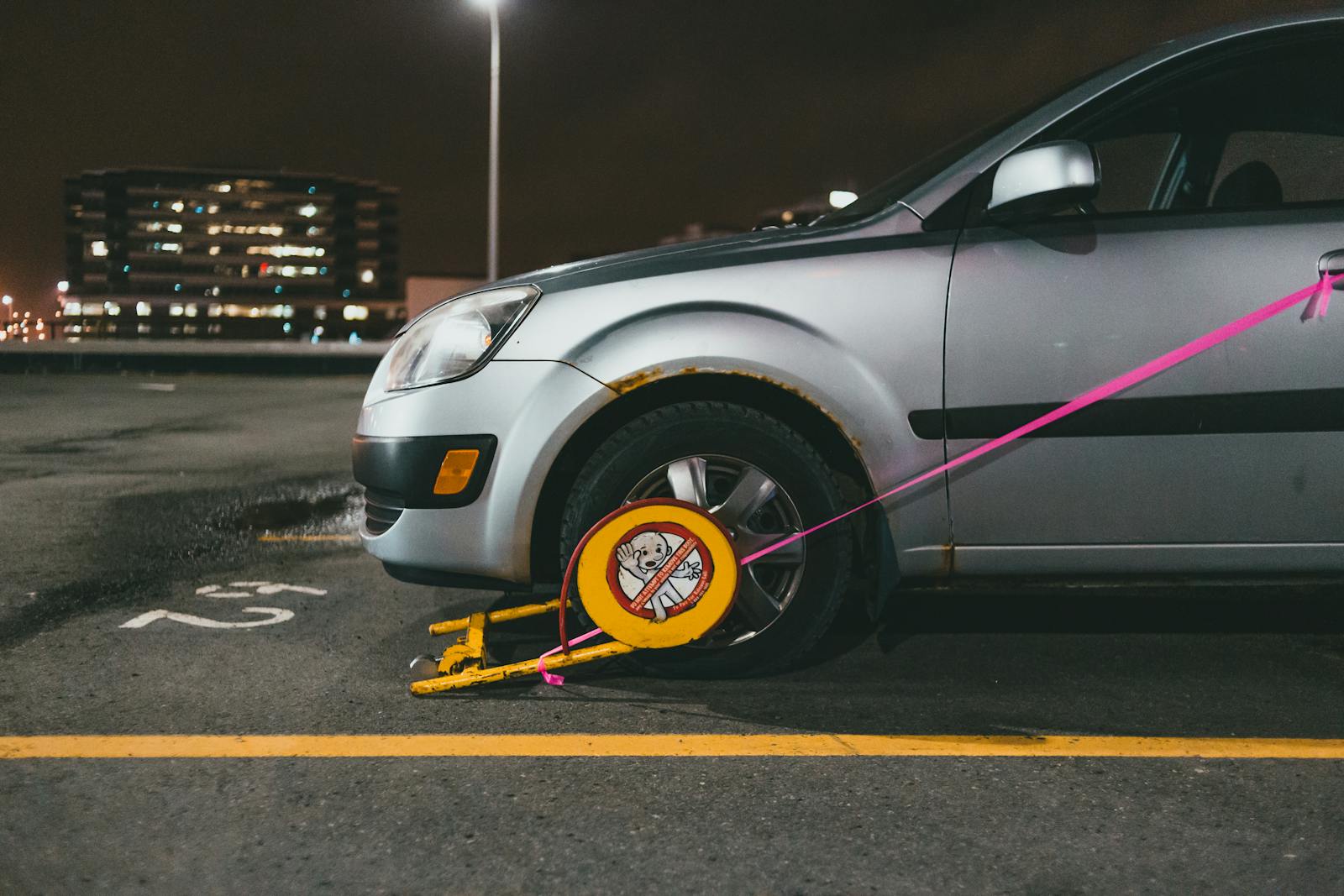

She’d kept the SUV mostly out of stubborn practicality. It was paid off, it hauled groceries, it handled winter roads, and it was one of the few things in her life that didn’t come with a complicated backstory. The complicated backstory was her ex, who still had a way of sliding into her day-to-day like he hadn’t been downgraded to “former.”
When he texted asking to borrow the SUV “for one quick errand,” it didn’t ping as an emergency. It pinged as annoying-but-manageable, the kind of request that came with a promise to return it in an hour and a little guilt sprinkled on top. She hesitated, asked what errand, got a vague answer, and then watched herself say yes anyway because she didn’t want to start a whole argument over a car.
He picked it up with that breezy familiarity that makes you feel weird in your own driveway. He was all casual gratitude and “I’ll top off the gas,” like he was borrowing a hoodie. She handed over the keys, told him to be quick, and went back inside thinking the worst-case scenario was he’d return it late and slightly smug.
The “one quick errand” that kept stretching
An hour passed with nothing. Then another half hour, and she did that thing where you try not to look needy by checking your phone too often, but you’re checking it anyway. She finally texted, “You almost done?” and got a reply that sounded like he’d been interrupted: “Yeah, almost. Just finishing up.”
It wasn’t just the time. It was the vagueness, the way he never said where he was, the way the conversation felt like a door being held half-closed. She called once, got sent to voicemail, and tried to talk herself down with logic: maybe he hit traffic, maybe he forgot his wallet, maybe the errand turned into two stops.
Then her mind went to the stuff she knew about him. He’d had a history of “quick” plans that mysteriously ballooned—one drink that became an all-night disappearance, one stop that turned into a detour to see a friend he “ran into.” Even after the breakup, he still treated other people’s time like a suggestion, and she could feel herself getting irritated enough to start rehearsing what she’d say when he finally showed up.
The call that didn’t sound like him
She didn’t get the satisfaction of confronting him at her door. Instead, her phone rang with an unfamiliar number and the kind of professional tone that makes your stomach drop before you even process the words. The person on the line asked if she was the registered owner of a particular SUV and confirmed the license plate.
When she said yes, the next sentence didn’t connect at first. The SUV had been impounded. There’d been a hit-and-run reported, and her vehicle matched the description, and it was now sitting behind a fence waiting on paperwork and fees and whatever else came with a police report.
She had that blank, floating feeling—like someone else was being told this and she just happened to be holding the phone. She asked where the car was, if it had damage, if anyone was hurt. The person didn’t give her much beyond what they were allowed to say, which somehow made it worse, because the gaps filled themselves with every bad possibility.
Her first instinct was to call her ex immediately. This time he answered, but not with his usual too-casual voice. He sounded tight and defensive before she even got a full sentence out, like he already knew the topic and was bracing for impact.
His story starts wobbling immediately
She told him, flatly, that she’d just been informed her SUV was impounded after a hit-and-run. There was a beat of silence that was almost a confession, and then he launched into a string of half-explanations. He didn’t say “I’m sorry.” He said things like, “It’s not what it sounds like,” and “I didn’t even hit anyone,” and “I was trying to handle it.”
She asked the simplest question: where was he, and why hadn’t he told her the second something went wrong? He said he “panicked,” that he was “freaked out,” that things “got out of control fast.” Each phrase felt like a way of talking around the part where he’d been driving her car and ended up connected to a hit-and-run.
When she pushed for specifics, the details started shifting. At first it was “someone cut me off.” Then it was “I think I clipped something.” Then it was “I didn’t even notice until later.” The way the story kept adjusting made her feel like she was chasing something slippery, and she could hear herself getting sharper, more controlled, the way people get when they’re trying not to scream.
He tried pivoting into reassurance—he was “on it,” he’d “talk to the tow yard,” he’d “figure it out.” That was the part that really set her off, because none of it was his to “figure out.” Her name was the one attached to the registration, her insurance, her liability, her money, and now her problem.
The impound lot reality check
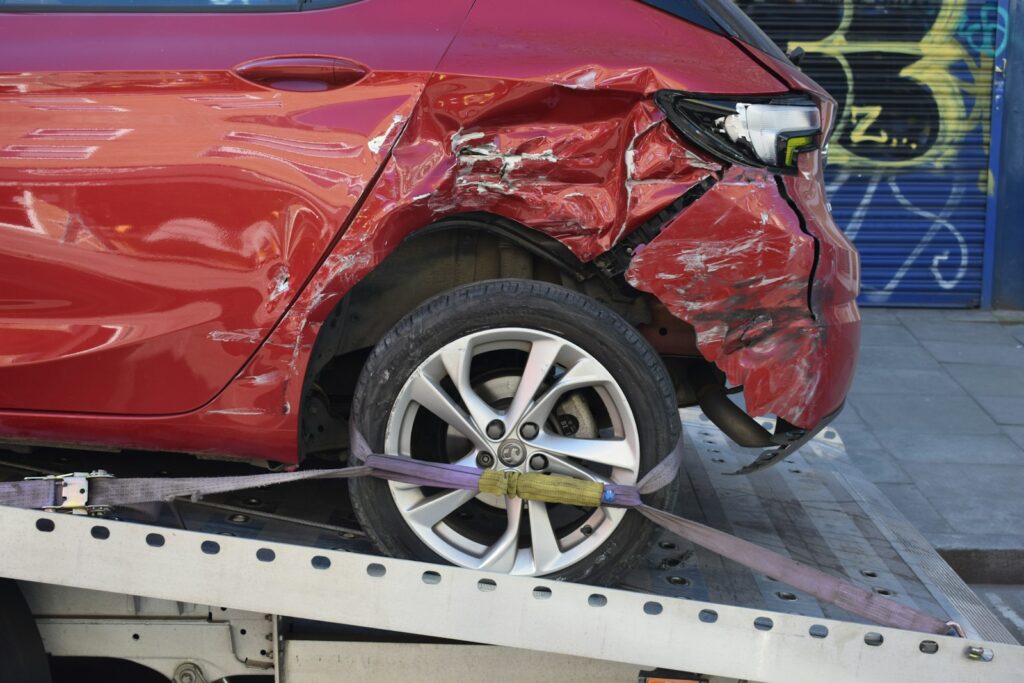
She went to the impound lot with a mix of dread and anger that made everything feel too bright. The SUV was there, and it didn’t look like a minor oops. There was visible damage—maybe a dent, maybe a scrape, maybe worse depending on where it hit—enough that she couldn’t pretend this was a misunderstanding that would evaporate with a phone call.
The paperwork didn’t care about her relationship status. It cared about fees, dates, and signatures. She had to show ID, confirm she was the owner, and get hit with the cost of simply retrieving her own vehicle, like she’d done something wrong by existing in the same orbit as the person who borrowed it.
There was also the quiet humiliation of being that person at the counter, asking careful questions while other people pretended not to listen. She asked what the vehicle had been brought in for, whether there was an active investigation, whether law enforcement had contacted the lot. The answers were cautious and procedural, which made her feel even more alone with the mess.
As she stood there, she kept thinking about the moment she handed over the keys. It had felt so normal, so routine, like lending someone a favor. Now she was standing under fluorescent lights paying to retrieve the consequence of his “one errand.”
He tries to turn it into a shared problem
Her ex reappeared in her texts like he was an equal party in a joint inconvenience, not the source of the disaster. He asked what the fees were, said he’d “pay her back,” suggested they “deal with it together.” The language was slippery—always future tense, always vague, always just out of reach of accountability.
When she told him she needed him to tell her exactly what happened, he got irritated. He complained about how she was “coming at him,” how she didn’t understand how stressful it had been, how he’d been “scared.” He seemed more focused on managing her tone than explaining why her SUV had been tied to a hit-and-run.
She told him she was going to need information for insurance and possibly the police, and that’s when he started hedging. He asked if she “had to” involve insurance. He asked what would happen if she “just paid the lot and fixed it.” He kept circling the idea of keeping it quiet, and every time he did, it made the situation feel less like an accident and more like a choice.
It turned into that ugly kind of argument where one person is talking about consequences and the other is talking about feelings. She was thinking: my rates, my record, my legal exposure. He was thinking: don’t ruin my life, don’t make this official, don’t make me face what I did.
The fallout she can’t just block
Once she had the SUV back, it didn’t feel like relief. It felt like evidence parked in her driveway. Every scrape and dent was now her responsibility to explain to an insurance adjuster, a police officer, maybe even a lawyer, depending on how serious the hit-and-run actually was.
She started gathering everything the way people do when they realize they might need to prove reality later—screenshots of his texts, call logs, dates and times, the impound paperwork. It felt cold and transactional, but the alternative was trusting him to “handle it,” and she’d already seen where that led. Trust was how she ended up paying impound fees for a car she hadn’t driven.
He kept trying to talk his way back into being the main character in the story, suggesting meetups to “discuss,” pushing for phone calls instead of texts, nudging the conversation into emotional territory where he could muddy the facts. She didn’t take the bait. The more she replayed everything, the more she understood that the real problem wasn’t just the hit-and-run—it was how quickly he’d defaulted to self-protection at her expense.
By the end, she wasn’t even arguing with him anymore. She was staring at a situation where the SUV was home but the consequences were still moving toward her, slow and heavy. And the worst part was the lingering question she couldn’t shake: if the call hadn’t come when it did, how long would he have let her believe he was just “finishing up,” while her name sat at the center of a mess he was quietly trying to outrun?
More from Steel Horse Rides: