
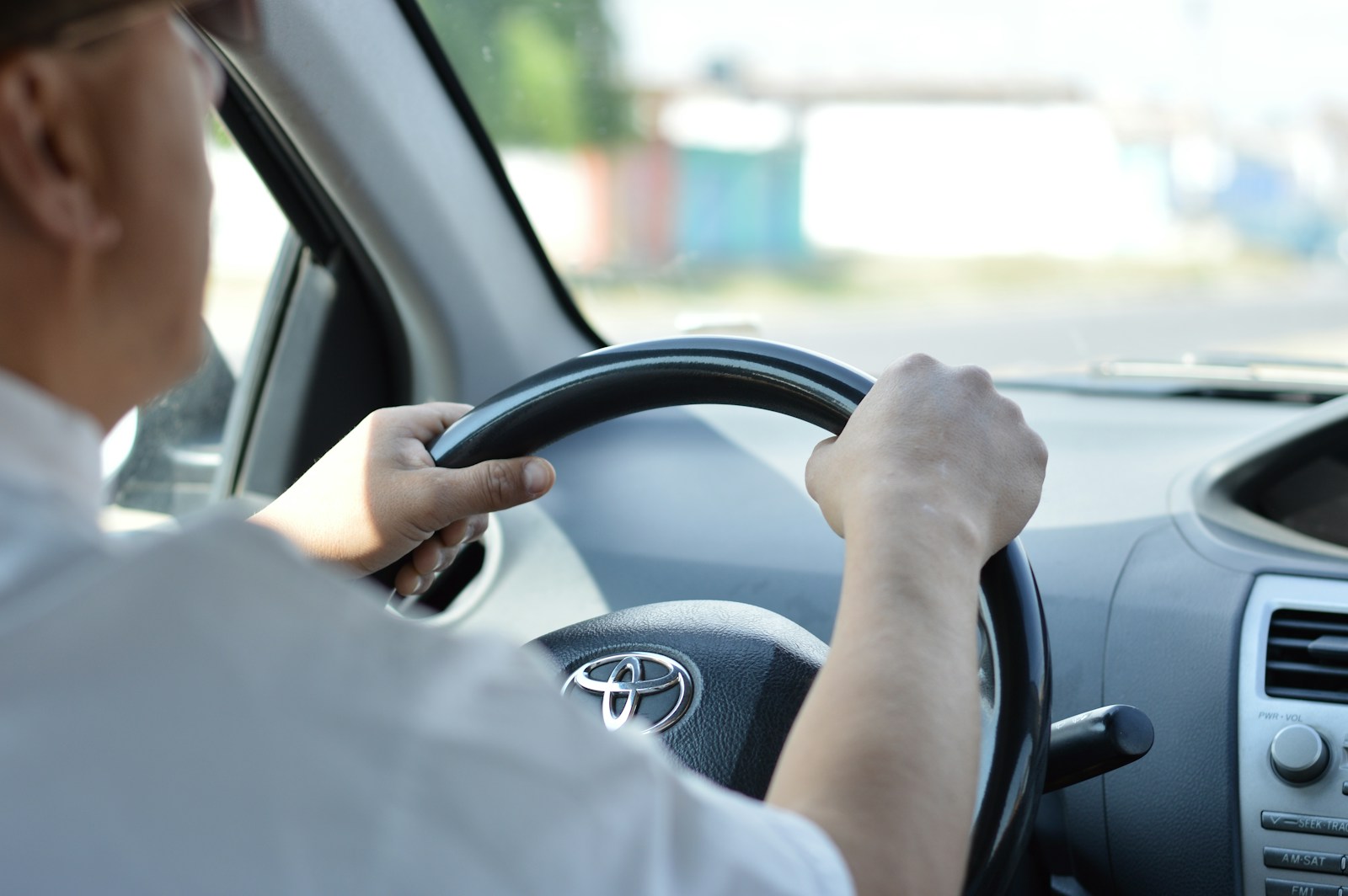

It started the way most ugly road interactions start: with a completely normal merge and one person deciding it was a personal attack. The driver in the smaller car—an early-30s guy headed home after a late shift—had that half-awake highway focus where you’re just trying to get from Point A to “couch” without drama.
The stretch of road was one of those ugly interchange funnels where two lanes get squeezed into one and everyone pretends there’s a secret rule that their lane has “right of way.” He signaled early, matched speed, and slipped into the gap like a person who has done this a thousand times. The pickup behind him, though, didn’t read it as “merge.” It read it as “you took something from me.”
At first it was just the usual tantrum stuff—flashing high beams, riding the bumper, the kind of tailgating that makes you feel your rearview mirror is about to get swallowed. But within about thirty seconds, it became clear the pickup driver wasn’t trying to make a point. He was trying to start a problem.
The Merge That Wasn’t Actually a Cut-Off
The smaller car had merged in front of the pickup with at least a couple car lengths to spare, which is why the whole thing felt so insane. There was no brake-check, no dramatic last-second swoop, no “oops my bad” moment. The pickup driver still leaned on the horn like the merge had personally embarrassed him in front of his ancestors.
And then he did the thing that instantly changes the vibe: he pulled out of his lane, accelerated hard, and came up alongside the car. Not passing. Not leaving. Just matching speed in that aggressive, hovering way that makes you feel like you’re being sized up.
The car’s driver kept his eyes forward and tried to do the boring adult move—stay steady, don’t engage, let the other guy get bored. He even eased off the gas a little to create distance. The pickup matched that too, stubbornly sticking near the driver’s side rear quarter panel, like he was trying to force eye contact through sheet metal.
When It Turned Into a Game of Chicken
The next part is where it stopped being “guy is mad” and started being “guy is dangerous.” The pickup drifted toward the lane line, close enough that the smaller car’s driver could see the truck’s tires flirting with it. The message was clear: move, or I’ll move you.
There was a shoulder to the right—narrow, dusty, and uneven, the kind you don’t want to touch at speed unless you’re okay with a blown tire and a long night. The pickup driver used that like a threat. He edged over again, pushing air and intimidation into the car’s space, trying to crowd him toward the white line like he was herding cattle.
Inside the car, the driver had that split-second mental debate everyone hates: do you hit the brakes and risk getting rear-ended, or do you speed up and risk escalating, or do you ride the shoulder and hope you don’t lose control? He chose the least theatrical option—he slowed down gradually, put more space in front of him, and let the pickup creep ahead instead of letting it pin him.
That should’ve been the end. The pickup could’ve “won” in his head, sped off, found another lane to terrorize. Instead, he slowed too, hanging back like he couldn’t stand the idea of the other driver not reacting properly.
The Pickup Starts Trying to Control the Road
Now the pickup was doing that thing where it surged forward, hit the brakes, surged forward again—little bursts of dominance, like the road was his living room and everyone else needed permission to exist in it. The smaller car’s driver stayed steady and didn’t take the bait, but you can only be calm for so long when someone’s two tons of metal is playing games a few feet away.
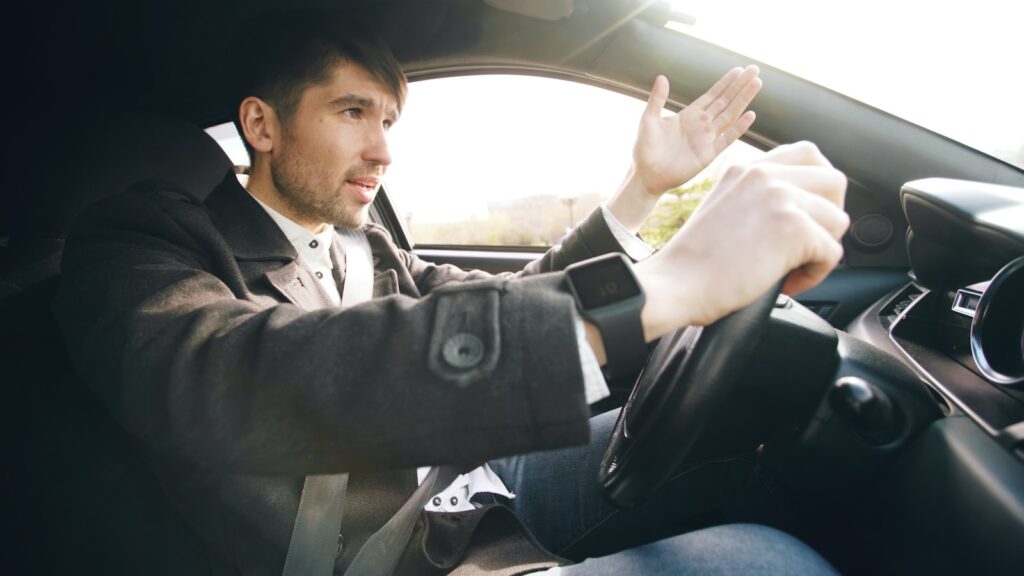
At a stoplight, the pickup pulled up close enough that the car’s driver could see the guy’s face clearly in the side mirror. Middle-aged, ball cap, jaw clenched so hard it looked like it hurt. He gestured wildly—palms up, chopping motions, that universal “what the hell is wrong with you?” pantomime—except he was the one who had turned a merge into a blood feud.
The car’s driver didn’t flip him off. He didn’t mouth anything back. He just stared forward and kept both hands visible on the wheel, because instinct kicks in when you realize you might be dealing with someone who’s not stable tonight.
When the light turned green, the pickup didn’t go right away. He waited half a beat, like he wanted the car to move first so he could respond to it. Then he punched it and swerved right back into position—beside the car again—like the goal was to keep the confrontation alive as long as possible.
The 911 Call and the Slow Realization
The car’s driver finally did what a lot of people hesitate to do because it feels dramatic: he called 911. Not because he wanted some revenge fantasy, but because the pickup had tried to crowd him into the shoulder twice and was now actively pacing him. He gave the dispatcher the location, the direction of travel, the truck’s color, and the plate number he’d managed to catch at the stoplight.
While he was on the phone, the dispatcher did that calm-but-serious questioning that makes your stomach sink. “Is he still beside you?” Yes. “Has he made contact with your vehicle?” Not yet. “Do you see any weapons?” No, but he’s acting like he wants to hit me. The driver kept talking while keeping his voice low, like he didn’t want the pickup guy to see his lips moving and take it as another insult.
Then came the part that always feels surreal: the dispatcher told him not to drive home. Don’t lead the guy to your address. Stay on main roads. If you can, head toward a well-lit public area. The driver took the next exit and aimed for a big gas station near a shopping strip, the kind with bright lights and multiple entrances.
The pickup followed, of course. It stayed glued behind him through the exit ramp like this was now the pickup driver’s evening plan, like he’d decided this stranger needed to be punished for existing in front of him.
The Shoulder Move Becomes an Arrest
At the gas station entrance, the pickup made one last aggressive move—swinging wide and then cutting in sharply, trying to block the car’s path like he was going to force a face-to-face. The smaller car slid into a spot near the front of the building, right under the brightest lights, and stayed inside with the doors locked. He could feel his heart thumping in his throat, because the pickup had just parked diagonally a few spaces away like it owned the place.
The pickup driver got out fast, posture rigid, walking with that performative anger people put on when they want an audience. He was pointing at the car, yelling things that didn’t really have words in them—more like noises wrapped around accusations. The car’s driver cracked the window maybe an inch and said, very plainly, “I’m on the phone with the police. Please step back.”
That line didn’t calm him down. It made him look around like he was suddenly aware of where he was, as if the bright lights and security cameras had just entered the conversation. He took a couple more steps forward anyway, until a siren chirped somewhere nearby and he froze like someone had hit pause.
A patrol car rolled in quicker than the driver expected, lights flashing but not full-on chaos mode. Another one followed. The pickup driver tried to switch gears instantly—hands out, face rearranged into “reasonable guy,” pointing back at the smaller car like he was about to give a lecture on “reckless driving.”
The officers didn’t treat it like a debate club. One of them separated the pickup driver and started asking questions while another went to the car to get the driver’s side of it. The pickup guy talked fast, gesturing a lot, acting like if he could just explain the merge correctly, everyone would realize he was the victim.
Then the tone changed. The officer’s posture stiffened, like he’d heard something he didn’t like, and he told the pickup driver to turn around. The guy’s face did that confused outrage thing—mouth open, eyebrows up—because people like that always seem genuinely shocked when consequences show up.
In about five seconds, the pickup driver was in handcuffs, still talking, still trying to litigate the merge. The officer guided him toward the cruiser while the man kept twisting his head back, as if eye contact would somehow force the other driver to admit he’d “started it.” The smaller car’s driver sat there, hands still on the wheel, watching a grown man get arrested because he couldn’t emotionally survive being behind someone for thirty seconds.
Later, after statements and a lot of adrenaline shaking out of his arms, the driver admitted the weirdest part wasn’t even the shoulder shove or the yelling—it was how the pickup guy seemed to need a reaction like oxygen. Even in cuffs, he kept trying to explain himself, like if he could just find the perfect phrasing, the night would rewind and he’d get to be the righteous hero instead of the guy who turned a merge into an arrest under gas station lights.
More from Steel Horse Rides: