
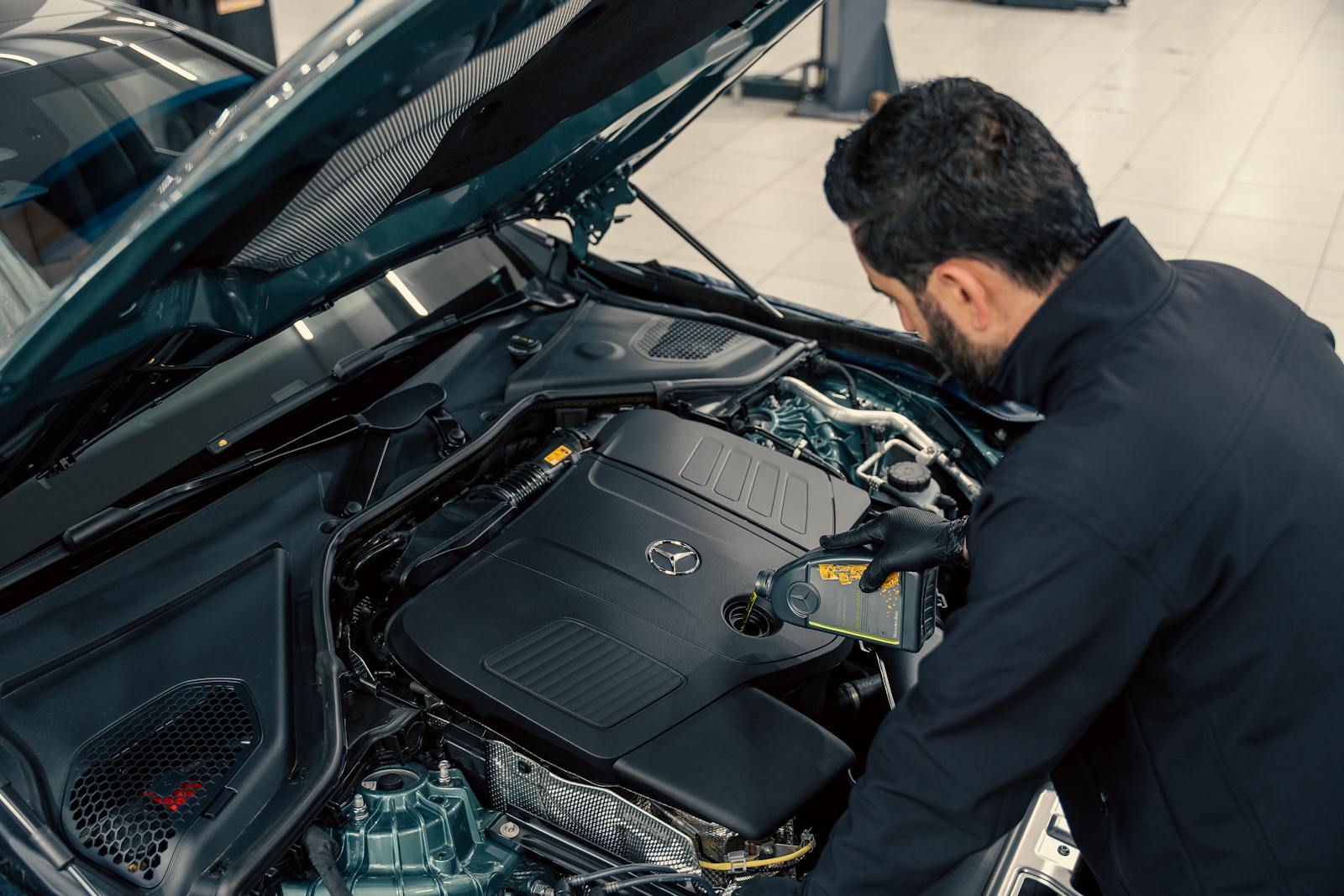

It started the way these things always start: a driver trying to be responsible on a random weekday, squeezing a routine oil change into a lunch break. He’d had the car long enough to know its rhythms—no warning lights, no weird knocks, nothing that said “today’s the day you’ll be pricing out engines.” So he pulled into a familiar quick-lube place, the kind with big windows where you can watch someone in a polo shirt hustle around your car like it’s a pit stop.
The staff did the usual spiel about mileage, filters, and “recommended services,” and he did the usual polite decline. He watched them through the glass, scrolling his phone, clocking how fast they moved and how little time any single person spent under the hood. When they handed the keys back, everything looked normal: a receipt, a mileage sticker, and the little reassurance that he was “good to go.”
He didn’t even make it home before the story turned. The car started feeling wrong—first subtle, like a slight hesitation, then a harsh, dry-sounding clatter he’d never heard before. Within minutes, the engine note went from “maybe I’m imagining it” to “this is expensive,” and then it just quit on him like somebody flipped a switch.

The drive that lasted long enough to ruin everything
He pulled to the shoulder and tried the basics: hazards, restart, listen. The starter cranked like it wanted to comply, but the engine sounded tight and unhappy, and then it stopped turning entirely. When he popped the hood, there wasn’t much to see—no smoke, no dramatic puddle, just an engine bay that looked offensively normal for something that had just died.
The first tow was pure disbelief logistics. He called the shop because it was the only recent change in the car’s life, and the person on the phone did that calm, scripted thing—“bring it back in and we’ll take a look.” He had to explain, twice, that it wasn’t “drivable back in,” it was “immobile on the side of the road.” They agreed to have it towed to them, but there was already a tiny shift in tone, like the moment a routine customer becomes a potential problem.
When the tow truck dropped it off, the driver stayed because he didn’t trust what would happen once he left. He watched them pull the dipstick, wipe it, reinsert it, pull it again, and pause. There was this brief, awkward silence where the tech looked at the stick like it had personally insulted him, and then the manager got called over.
The first denial: “We did everything right”
The shop’s story came out fast and confident: they’d done the service correctly, the oil was “right there,” and the engine failure had to be “pre-existing.” The manager said it the way people say “no” without saying “no”—lots of little phrases like “these things happen” and “we can’t control mechanical issues.” The driver asked a simple question: if it “just happened,” why did it happen within a handful of miles of leaving their bay?
They offered to pull the paperwork and “double-check” the service record, which sounded reasonable until he realized they were basically investigating themselves. He asked if they’d keep everything as-is and not touch the car further until an independent mechanic could look at it. The manager said they wouldn’t do any further work without authorization, but also kept circling back to how “older engines” can fail, which was a neat rhetorical trick: making it sound like the car was already on life support.
Then came the first detail that made the driver’s stomach drop. The receipt didn’t list the exact oil weight he’d always used, and the line item for the filter looked like a generic part number instead of the specific one his model takes. It wasn’t proof of anything yet, but it was enough to make the whole “trust us” vibe feel flimsy.
The seized engine and the uncomfortable questions
He had it towed again, this time to a local independent mechanic because he wanted somebody with no stake in the outcome. The mechanic did the basics first, and it went from “mystery” to “oh no” pretty quickly. The engine was seized—locked up hard—like it had run without lubrication long enough to weld its internals to itself.
When the mechanic checked oil level, the driver expected at least one definitive thing: either it was full and something else happened, or it was empty and the story was basically written. What they found was weirdly in-between and somehow worse. There was oil on the dipstick, but not enough for a fresh change, and it looked aerated and dirty in a way that didn’t match “just serviced.”
The mechanic asked a question that sounded casual but landed like a brick: “Did they replace the drain plug gasket?” The driver didn’t know. Most people don’t know. The mechanic pointed out faint evidence of oil residue around the plug area and along the underside, not a dramatic leak, but the kind that could drain a pan quickly if it was left loose or cross-threaded.
There was also the filter, which looked like it had been installed with a little too much enthusiasm—tightened hard, the housing scuffed. The mechanic didn’t accuse anyone outright, but he explained the two classic oil-change disasters: leaving the old filter gasket stuck to the engine so the new one doesn’t seal, or forgetting to tighten the drain plug properly. Either one can bleed oil out fast, and either one can cook an engine before the driver realizes what’s happening.
The paper trail starts to unravel
Armed with the mechanic’s notes, the driver went back to the shop expecting them to at least switch from denial to damage control. Instead, the shop dug in. They asked for proof the independent mechanic didn’t “tamper with anything,” which is a wild thing to say when the car arrived at the second shop dead on a tow truck.
Then the paperwork got weird. The original receipt had one timestamp; the shop’s internal record—shown on a screen, not printed—had a slightly different time and a different tech ID attached. When the driver asked why the records didn’t match, the manager shrugged and blamed their system, saying sometimes it “updates later.” It was the kind of excuse that might fly if the stakes were a coupon dispute, not an engine that now needed replacement.
He asked for a copy of the camera footage from the bay. The shop said they “don’t keep it that long,” which would’ve been believable if he wasn’t asking the same day. Then it became “we can’t release it without corporate approval,” which is basically a polite way of saying “good luck.” He requested the service checklist—if they have one—showing oil weight, quantity, and torque checks, and the manager said their process is “standard” and “doesn’t require” a signed checklist.
The driver did the thing people do when they feel themselves being boxed out: he started documenting everything like he was building a case. Names, times, what was said, who refused what. He took photos of the underside, the dipstick, the warning lights, the mileage sticker, the receipt, the tow invoice—anything that could anchor the timeline.
Corporate layers, shifting stories, and a car that’s still dead
When he escalated to corporate, it didn’t instantly become a fair fight; it became a slower one. Corporate customer service spoke in apology-shaped language without admitting fault: they were “sorry this happened,” they were “reviewing the situation,” they were “opening a claim.” The shop, meanwhile, acted like corporate was a distant planet and the driver was trying to summon it with ritual chants.
Corporate asked for the independent mechanic’s written findings, so the driver sent them. The mechanic was careful—no grand accusations, just observations consistent with oil starvation. Corporate then asked for permission to have their own inspector look at the car, which sounded like progress until the driver realized it also meant more waiting while his car sat, seized, like a monument to inertia.
And the shop’s story kept subtly shifting, which is what made the driver feel like he was chasing smoke. One day it was “oil level was correct when it left.” Another day it was “we can’t verify what happened after.” Then it was “we recommend customers check oil levels regularly,” which is an insane pivot when the entire point of an oil change is you’re paying someone else to handle the oil level.
The weirdest part was how normal everything looked on the surface. The shop was still open, still doing quick services for a line of people who had no idea an engine dispute was unfolding behind a counter display of air fresheners. The driver would stand there holding a folder of receipts and mechanic notes while someone else bought wiper blades like the world was uncomplicated.
By the time the dust settled into a stalemate, he was staring at the real consequences: the independent mechanic wasn’t talking about a cheap fix. A seized engine isn’t a “top off the oil and go.” It’s tear-down territory, replacement territory, “you might as well consider the car totaled” territory, depending on mileage and model.
What kept eating at him wasn’t just the money, though. It was the feeling of being spoken to like he was trying to run a scam when all he did was get an oil change and then immediately lose his car. The more he asked for clear documentation, the more the documentation got fuzzy, and the more the shop acted like the absence of records was somehow proof of their competence.
He ended up with a dead car, a claim number, and a stack of paperwork that somehow told the same story in three different ways. The most frustrating part wasn’t even the denial—it was the way the facts seemed to evaporate right where they should’ve been solid, inside the shop that touched the engine last. And until somebody decides to actually own a mistake on paper, he’s stuck in that miserable limbo where the engine is seized, the shop insists it didn’t happen there, and every missing detail feels like it’s missing on purpose.
More from Steel Horse Rides: