
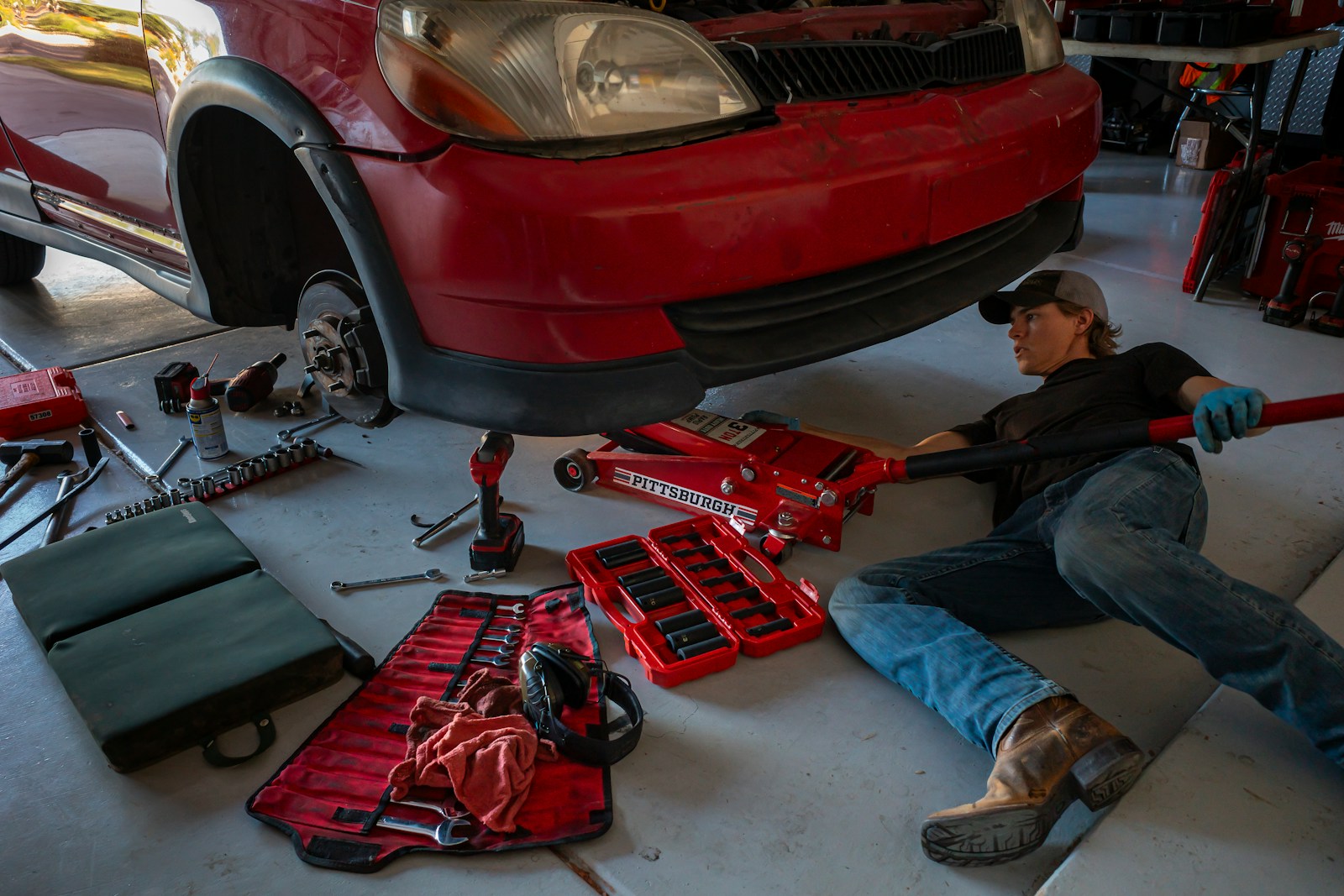

When her boyfriend dragged the shell of a car into his buddy’s garage, she thought it was a phase. Not a midlife-crisis Corvette thing—more like a twenty-something “I’m finally going to build something with my hands” thing. He was grinning so hard he could barely talk, repeating, “This is the one,” like he’d rescued a stray dog.
It was his dream car: an older model he’d loved since he was a kid, the kind you still see in grainy photos on bedroom walls and in old magazine ads. The body looked decent from ten feet away, but up close it was a patchwork of sun-faded paint, mismatched panels, and an interior that smelled like stale coolant and mouse nest. He didn’t care. He was already describing the wheels he wanted, the exhaust note, the exact shade of paint he’d never be able to find in a rattle can.
She cared about one thing: the paperwork. The seller had been weirdly casual about it—“I’ve got the title somewhere,” “it’s in my cousin’s name but it’s fine,” “everyone does it like this.” Her boyfriend waved her off, saying they’d sort it out later. Later, for him, meant after it ran.
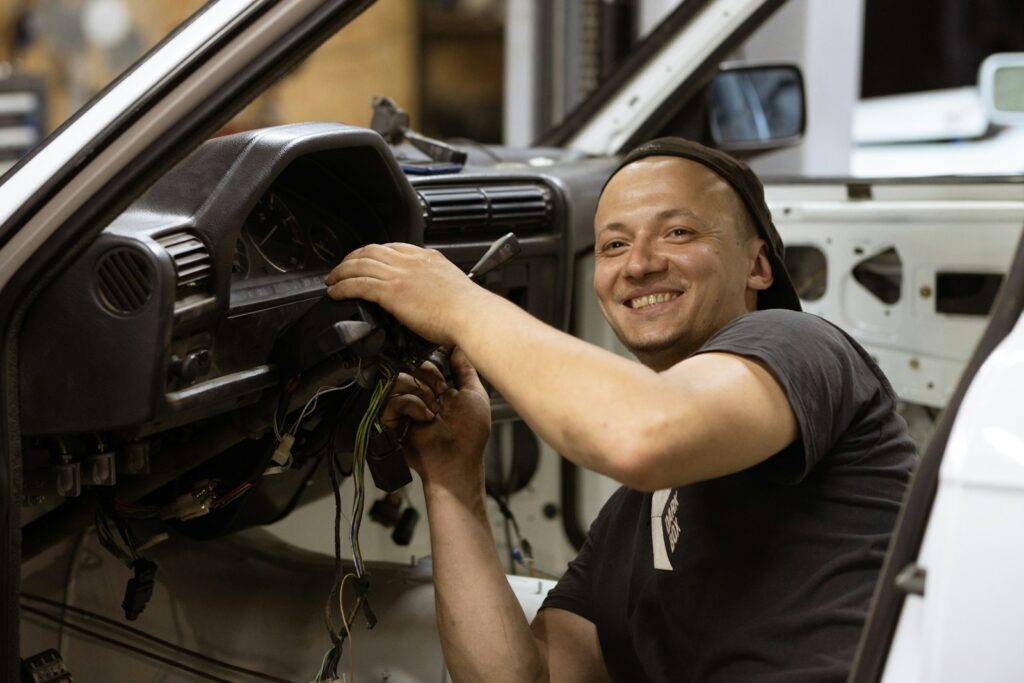
The car becomes the third person in the relationship
For the next few months, their lives revolved around that car in a way that didn’t feel cute after week three. He’d get home from work, eat half a dinner, then disappear to the garage with a headlamp and a YouTube playlist. Weekends became “parts runs,” which sounded like errands but were actually pilgrimages to scrapyards and a specialty shop an hour away where the staff acted like gatekeepers to salvation.
Money started bleeding out in little bursts: a set of tools “he needed,” a lift rental, a new radiator, then the radiator again because the first one didn’t fit. He made spreadsheets, posted photos in group chats, and talked about “progress” the way people talk about training for a marathon. She watched the savings account get nibbled down and told herself it was still better than him spending it on something worse.
And to be fair, he was working. The car slowly changed from sad lawn ornament to something that looked like it might, in the right light, be able to move. He rebuilt parts on the kitchen table, leaving little metal shavings in the grout, and he started calling it “our” project when he wanted her to be enthusiastic about another $300 order. If she hesitated, he’d get quiet and wounded, like she didn’t understand what this meant to him.
Small red flags in a glovebox full of paperwork
The title thing didn’t go away; it just lived in the background like a bad smell nobody wanted to name. Every so often she’d ask, gently at first, “Did you ever get the title?” and he’d give her a confident shrug. The seller was “waiting on the DMV,” the seller was “out of town,” the seller was “dealing with family stuff.”
Eventually she pushed harder, because the car was getting close to running and she could already hear the next argument: he’d want to insure it, register it, take it for a celebratory drive, and then suddenly the paperwork would matter. He promised he’d handle it “this week,” which became “when I have a day off,” which became “after I get it inspected.” The words kept changing, but the title never appeared.
One night she found the folder he kept in the glovebox—receipts, a handwritten parts list, a few documents that looked official until you actually read them. The bill of sale was vague and scribbled, and the VIN on it looked like it had been corrected mid-stroke. There were photocopies of someone else’s ID that weren’t his and weren’t the seller’s either.
The first trip to the DMV turns into a slow-motion disaster
He finally went to the DMV because he wanted plates before a local meet-up, like the car was going to debut. He came back looking pale in a way she hadn’t seen since a family funeral. He didn’t even do the usual thing where he pretended it was fine for a few hours and then admitted the problem later; he walked in, sat down, and stared at his hands.
The story, according to him, was that the clerk took one look at the VIN and frowned. Not a “you forgot to sign here” frown—more like a “hold on” frown. The title number didn’t match their records, the name on the old paperwork didn’t match the seller’s story, and the VIN had some kind of flag that made the clerk disappear into the back for ten minutes.
When the clerk returned, she told him they couldn’t process anything because the title chain was broken. Not just missing one signature, but missing entire owners. There were liens at some point that were never properly released, and the car had been bounced around in a way that looked like either fraud or a junked vehicle getting resurrected on paper. He kept saying, “But I bought it,” and she kept saying, “I’m not saying you didn’t hand someone money. I’m saying this isn’t legally yours to register.”
He left with a printed sheet of “next steps” that sounded doable until you read it: contact prior titled owners, provide lien releases, possibly get a court-ordered title, and verify the VIN through inspections that required, ironically, a legal owner. It was the kind of problem that didn’t have a simple fix, just a long hallway of offices and people who would tell you no.
He tries to brute-force reality, and it gets ugly
For a while he went into problem-solving mode like he could wrench his way out of bureaucracy. He called the seller, who suddenly stopped answering. He texted, left voicemails, then started trying different numbers like someone chasing a ghost. The seller replied once—something vague about “it’ll work out”—and then went silent again.
His mood got sharp. He snapped at her for “bringing negativity” whenever she asked what the plan was, and he started treating her questions like accusations. The garage became a stress bunker where he could feel competent again, even though the one thing he needed wasn’t mechanical at all.
At some point he decided he’d just drive it anyway once it ran, like plates were optional if you were confident enough. She told him that was a terrible idea, not because she was trying to kill the dream, but because the dream was now a magnet for tickets, impounds, and the kind of trouble that would wreck his finances. He called her paranoid. She asked if he was really willing to risk losing the car completely the first time a cop ran the VIN.
That was the fight that made the relationship feel different. Not loud, exactly, but tense and personal. He said she didn’t support him. She said support didn’t mean pretending paperwork didn’t exist. He accused her of acting like his mom, and she shot back that someone had to be an adult because he was spending their future on a car he might not even legally own.
The cruelest part: the car is “finished” but still undriveable
By the time it actually started reliably, it was almost comical how wrong the timing was. The engine turned over clean, the lights worked, the interior was no longer a biohazard, and he’d even gotten the paint to a point where it looked good in photos. He could rev it in the driveway and feel like a hero, and the neighbors would peek out like something exciting was happening.
But it couldn’t go anywhere. No registration, no insurance, no inspection sticker. A trailer would be required for anything beyond his own driveway, and even then he was hauling around a question mark that might get seized the moment someone official decided to look too closely.
He started talking about finding a “title service” online, the kind with sketchy websites and promises that sounded like loopholes. She told him those services were basically a gamble—best case, you waste money; worst case, you add actual fraud to the pile. He accused her of not wanting him to be happy, which was such an unfair, childish line that it left her quiet for a full minute before she said, “I want you to be happy. I also want you to be legal.”
Meanwhile, the costs didn’t stop. Storage fees, another inspection attempt, a locksmith for a key issue, a mechanic friend paid in cash and beer. Every time she thought, “Okay, this is where he’ll accept it,” he found a new angle to chase, like persistence itself would convince the DMV to bless the mess.
What made her angriest wasn’t even the money, though the money hurt. It was the way he rewrote the story in his head so he could stay mad at her instead of mad at the seller or mad at himself for ignoring the title in the beginning. The car became proof of his dedication, and the paperwork became an enemy he could blame, and she became the person standing too close to the truth.
Now it sits there: a freshly fixed dream car that can’t legally touch the road, taking up space in the garage and space in their conversations. He still talks about “when it’s sorted,” but the phrase has started to sound like a superstition, something you say so you don’t have to admit you might have built a beautiful, expensive monument to a mistake. And she’s stuck watching him orbit that monument, wondering whether he’ll ever put the wrench down long enough to look at what it’s doing to them.
More from Steel Horse Rides: