
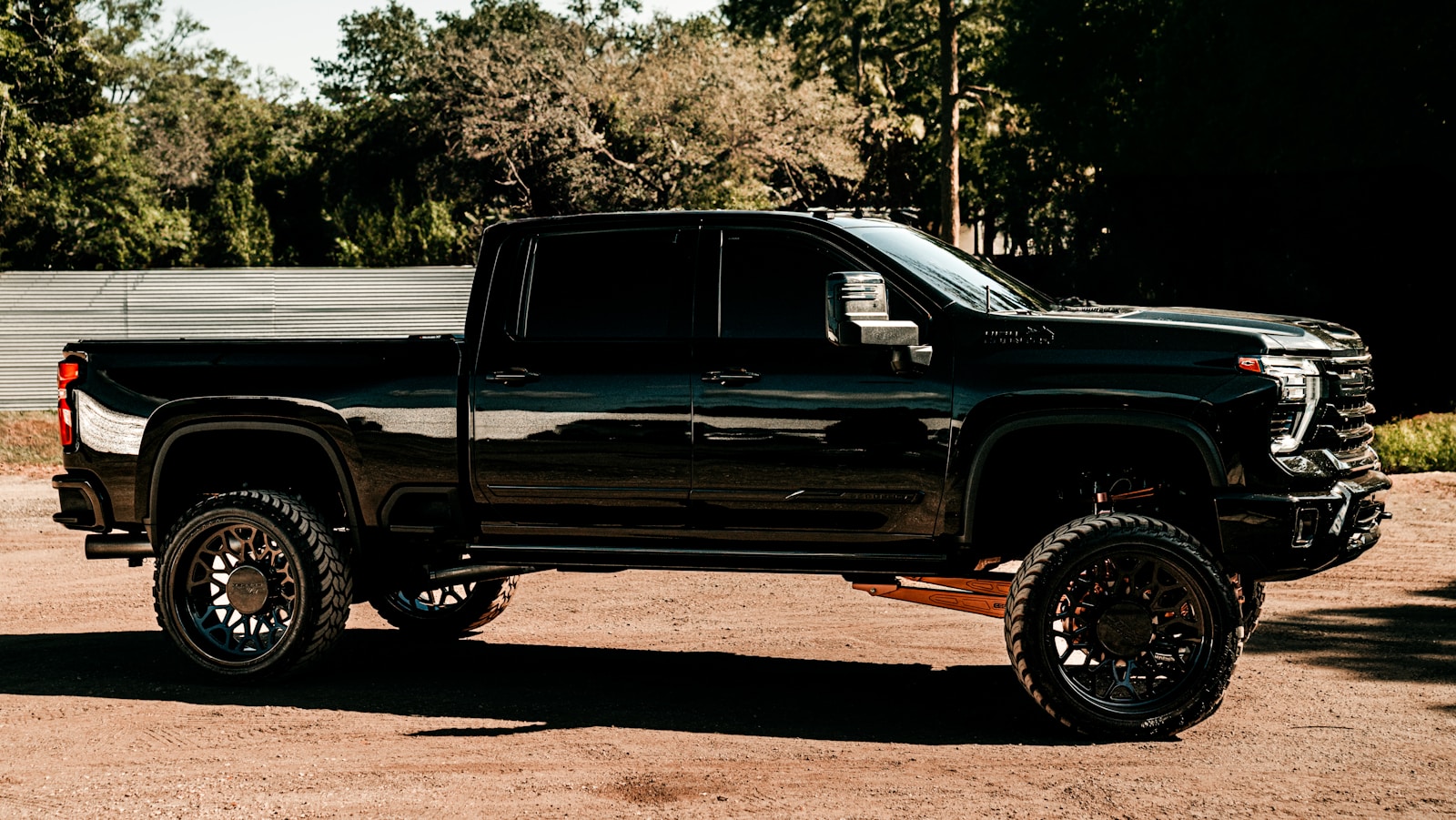

It started the way a lot of expensive problems start: as a “haha, wouldn’t it be funny if…” kind of joke between spouses who thought they were on the same team. She’d always teased him about being a grown man with the taste of a teenager—monster trucks, mud tires, the kind of vehicles that look like they should come with an energy drink sponsorship. He laughed, swore he’d never be that guy, and then—slowly, quietly—became exactly that guy.
At first it was harmless. He’d point out lifted trucks on the road like they were rare birds, rating the height, the wheel stance, the “cleanliness” of the build. She didn’t mind the gawking, because it was just one of his little obsessions, like grills or fantasy football. And because their own life felt stable: steady jobs, a mortgage that didn’t choke them, weekend errands, the ordinary rhythm of a marriage that had never been flashy but had always felt solid.
Then one Saturday he came home with a used truck he didn’t need, didn’t fully explain, and had apparently already fallen in love with. Not a work truck. Not a sensible truck. A “project.” He called it an “investment,” which was the first time she felt something cold creep into the conversation, like he was arguing with a banker instead of talking to his wife.
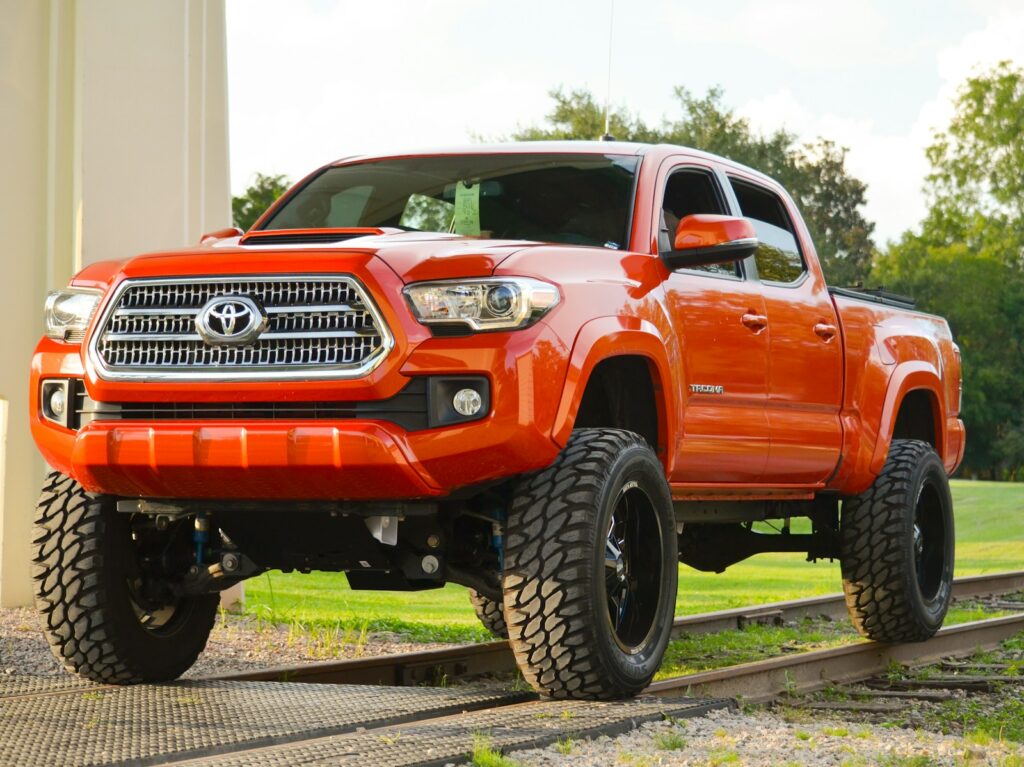
The “project truck” phase (aka the part where it still sounds cute)
He pitched it like a hobby that would keep him out of trouble. He’d fix it up slowly, he said, learn things, do it the smart way—used parts, DIY labor, nothing crazy. She remembers the exact energy he had in the driveway that day: sleeves pushed up, eyes bright, talking fast, already imagining the before-and-after photos. He hugged her from behind and told her it’d be “our” truck, the way people say “our” dog when they already know who’s doing the walking.
The first purchases were small enough to shrug off. A new set of floor mats. A fancy detail kit. Some lights he insisted were for “safety.” He’d spend late nights in the garage watching videos about suspension geometry like he was cramming for an exam, and she’d be in bed hearing the click of tools and the occasional frustrated curse.
But then the language shifted. He stopped saying “I’m thinking about…” and started saying “I already ordered…” He began referring to things by brand names like they were family friends—Fox shocks, BDS lift, Fuel wheels. It was less “project” and more “identity,” and she noticed how he got touchy if she asked basic questions like, “How much was that?”
When the lift became the point, and the point became the lift
The first time he mentioned an actual lift kit, she laughed because she assumed he was still joking. He didn’t laugh back. He launched into a speech about ground clearance and ride quality and how “stock height is basically useless,” and it wasn’t the content that rattled her—it was how practiced he sounded, like he’d been rehearsing it in his head for days.
She asked what it would cost, and he gave her a number that felt suspiciously rounded. It was one of those figures that’s supposed to sound manageable until you remember installation, alignment, tires, the inevitable “while we’re at it” extras. When she pushed back, he said she didn’t understand because she wasn’t into trucks, which was a new tactic: turning her lack of interest into a reason she didn’t get a vote.
Still, she tried to compromise. “One big thing,” she said, “and then we pause.” He agreed, swore he wouldn’t go wild, even acted relieved like she’d saved him from himself. Two weeks later, she came home to the truck sitting higher in the driveway, looking like it had grown legs while she was at work.
The moment should’ve been funny. It wasn’t. His grin had a weird edge to it, like he was daring her to ruin the mood, and when she asked—careful, polite—what the final total was, he started talking about how hard it was to find a shop with openings and how she should’ve seen the guy’s build in the parking lot. He never answered the question.
The money fog: small lies, then larger ones, then the “why are we fighting about money” fight
They had always been the kind of couple who shared passwords, used the same grocery app, and knew roughly what was in the checking account. Suddenly she couldn’t get into the credit card portal because the password “wasn’t working.” He said the bank must’ve updated something. The next week, a statement came in the mail that looked thicker than usual, and he got to it before she did.
When she asked to see it, he acted offended. Not guilty—offended. He accused her of not trusting him, of “keeping score,” of treating him like a child. She remembers standing in the kitchen with a dish towel in her hands, realizing that if she backed down now, she’d be backing down forever.
So she checked anyway. She didn’t hack anything; she just called the bank the way adults do when something feels wrong, and she asked for account access because her name was on it too. The representative wasn’t dramatic, just efficient, and that’s what made it worse: the calm voice listing balances and minimum payments like this was normal. Several cards, multiple payments behind, and a balance that didn’t match the “rounded” numbers he’d been feeding her.
He hadn’t just bought a lift kit. He’d bought wheels, tires, aftermarket exhaust, a tuner, a light bar, a new stereo, “recovery gear,” and some kind of bed rack he swore was for camping even though they never camped. And it wasn’t paid for. It was spread across credit lines like confetti, with interest rates quietly multiplying in the background.
The double life in the driveway
Once she had the numbers, the arguments changed flavor. Now it wasn’t “you don’t understand trucks,” it was “you’re overreacting” and “it’ll be fine once I sell some parts” and “I can pick up overtime.” He started speaking in future tense like the future was a magic eraser. He promised he’d stop, and then he’d come home with another box on the porch.
She began noticing how much time he spent on his phone, angling the screen away from her like a teenager. He’d smile at messages and then quickly clear the app. If she walked into the garage, he’d close his laptop or minimize a window, and she’d catch glimpses of marketplaces, forums, private chats about trades.
The truck became a private club she wasn’t allowed into, even though she was paying for the membership. He went to “meetups,” which sounded innocent until she realized he was leaving for four or five hours, coming back wired and weirdly defensive, smelling like energy drinks and exhaust. Their weekends, which used to be chores and brunch and maybe a movie, turned into him circling the truck with a microfiber towel like it was an altar.
And he started lying about things that didn’t even need lies. He’d say he got a part for free because “a buddy owed him.” She’d find the receipt crumpled in the cup holder. He’d claim he sold the old tires to “a guy from work.” They’d still be sitting behind the shed.
The day the truck turned into proof he didn’t need her
The blowup didn’t happen on some dramatic holiday or anniversary. It happened on a random weeknight when she saw a charge she didn’t recognize—another shop, another thousand dollars—and she walked into the garage holding her phone like evidence. He was under the truck, legs sticking out, music blasting, and when she said his name, he didn’t slide out right away. He took his time, like she was interrupting something important.
She asked him directly if he’d opened a new line of credit. He didn’t answer, just stared at her phone and then at her, jaw tight. She asked again, and he said, “Why are you spying on me?” like the problem was her noticing, not him doing it.
That’s when she said the thing she hadn’t let herself say out loud: that she didn’t recognize their marriage anymore. That their life felt like it was orbiting a vehicle, and she was the only one worried about the gravity. He snapped back that the truck was “the only thing” that made him feel like himself lately, which landed like a confession and an accusation at the same time.
She tried to pull him back into reality—mortgage, bills, the fact that they were one unexpected expense away from disaster. He told her she was “always negative” and that she wanted him to be boring. Then he said, casually, like it was obvious, that if she couldn’t support what made him happy, maybe she should “think about what she actually wants.”
He didn’t say “divorce.” He didn’t have to. The truck sat there behind him, lifted high, spotless, expensive, towering over the garage floor like a third person in the conversation.
After that, the fights got quieter, which somehow felt worse. He started sleeping on the couch “because he fell asleep watching TV,” then stopped pretending it was accidental. She started moving money into an account he couldn’t touch, not as revenge but as a life raft. And the weirdest part was that he acted almost relieved, like the tension proved he was the misunderstood hero in his own story.
By the time she realized how deep the debt went, it wasn’t just about a truck anymore. It was about a man who’d learned to lie with a straight face, who’d rather argue semantics than face consequences, who’d turned “just a joke” into a lifestyle and then into a shield. The truck was still in the driveway, sitting higher than ever, and she couldn’t decide what was more unsettling: that it looked finished, or that she knew he was already thinking about what to do next.
More from Steel Horse Rides: