
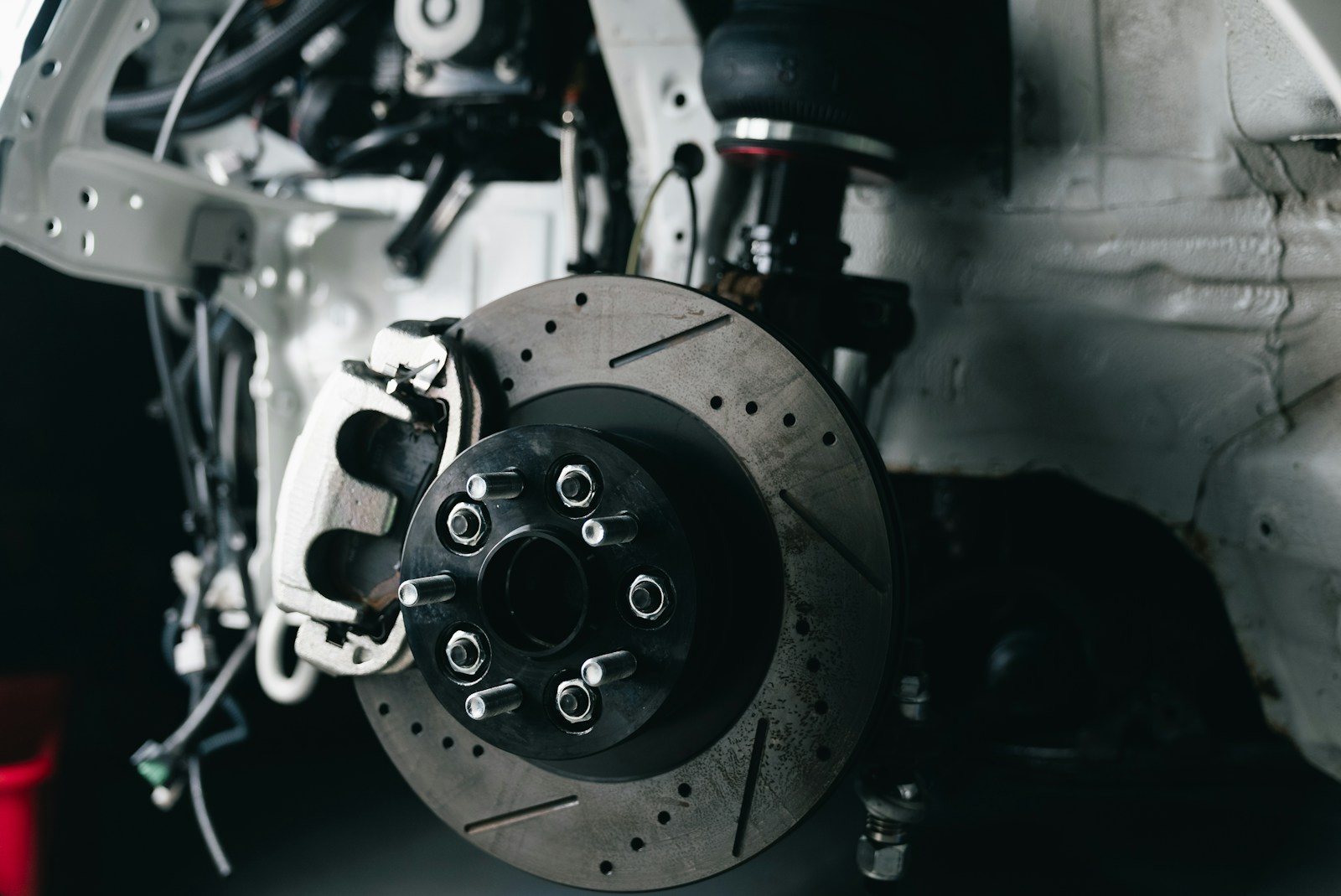

He’d blocked off his Saturday for what he kept calling a “quick brake job.” Pads and rotors on the front, maybe a caliper slide pin cleanup if he was feeling responsible, and done before lunch. The car had been making that classic gritty, embarrassed squeal every time it rolled up to a stop sign, and he was tired of feeling like the neighborhood menace.
So he did what a lot of people do when they’re trying to be sensible: he ordered parts ahead of time, laid out his tools, and even parked the car so the sun wouldn’t roast him in the driveway. Everything was staged like a little DIY surgery. The only unknown was the one thing he didn’t think about—whoever had worked on the car last, and what kind of chaos they’d left hiding in the threads.
It started normal enough. Jack stands under the pinch welds, wheel off, a quick look at the rotor lip that practically had its own zip code. He reached for the first caliper bracket bolt, leaned in with a breaker bar, and felt that moment where a bolt finally gives… except it didn’t feel like a clean “break free.” It felt like a slow, gritty surrender, like the threads were turning into sand.
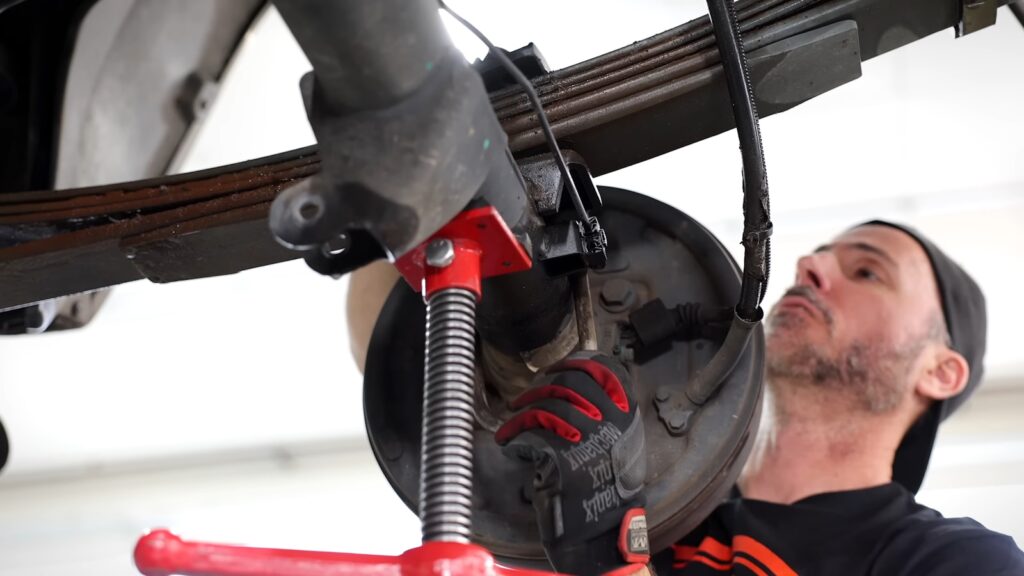
“Okay, that’s… not great.”
He told himself it was just tight. Maybe it had some thread locker, maybe it had been torqued by somebody who thinks “tight” is a personality trait. He backed the bolt out, and instead of the satisfying sight of clean threads, it came out wearing a little metal slinky—tiny curls of aluminum and steel that shouldn’t be there.
He stared at it long enough to feel his mood shift. Not full panic yet, just that hot irritation where you realize this isn’t a one-hour job anymore. He ran the bolt back in gently by hand, the way every half-competent person does when they’re trying not to ruin something, and it immediately felt wrong—catching, binding, then suddenly going too easy like it had nothing to bite into.
The second bolt did the same thing. Not stripped exactly, but mangled, like someone had forced it in at an angle and then “fixed” the problem by applying more torque and denial. He pulled out his phone and checked the service history he had—tires last year, a “brake inspection” at a chain shop, and a note that made his eye twitch: “recommend brakes soon.”
The bolt that didn’t want to be a bolt anymore
By the time he got the caliper off, he was already in that mode where every step is a cautious test of whether the next thing is going to snap. He tried to remove the rotor retaining screw—one of those little fasteners that’s either finger-loose or fused to the hub by ancient curses. It rounded instantly, because of course it did, and the head looked like someone had previously attacked it with a Phillips that didn’t fit.
He did the usual escalation: penetrating oil, a proper bit, then a manual impact driver with a hammer that made the whole car shudder. It turned about a quarter inch and then stopped dead, like it had hit a wall. When he finally got it out, the screw threads looked chewed up, the kind of damage you don’t get from normal use—you get it from someone starting it crooked and sending it home anyway.
At this point, he hadn’t even touched the new parts. He was still stuck dismantling the old stuff without destroying the hub, and the clock was doing that cruel thing where it moves normally but feels personal. The “before lunch” plan was gone, replaced with a growing pile of hardware he didn’t trust and a car sitting there with one wheel off like it had been abandoned mid-heist.
When you realize it’s not one bad bolt
He decided to treat the first side as the sacrificial learning experience. New rotor on, new pads ready, he went to reinstall the caliper bracket bolts and felt it immediately: the threads in the knuckle were no longer threads. They were an idea of threads. The bolt would start, then wobble, then tighten in a way that didn’t feel like tightening so much as grinding.
He backed it out and checked the hole with a flashlight. The first few threads were flattened and shiny, like they’d been re-cut by brute force. Whoever was in there last didn’t just cross-thread one bolt and stop; they apparently cross-threaded, then doubled down, then did the same thing to the other one, and somehow drove off thinking that was acceptable.
He tried to chase the threads with a tap, the careful, slow way. The tap didn’t bite cleanly, which is when the dread becomes real dread. This wasn’t just “clean up the hole and move on.” This was either a heli-coil job or a replacement knuckle, and both options meant he was not putting this car back on the road in an hour.
He called a friend who’d done more suspension work, hoping for the kind of reassurance that makes the problem smaller. The friend listened, asked two questions, and then did the opposite of reassuring: “Stop forcing anything. If that caliper bracket comes loose while you’re driving, you’re gonna have a way worse day.”
Parts store purgatory and the quiet shame of buying tools mid-job
He loaded the destroyed bolts into his pocket and went to the parts store like a guy walking in with evidence. He wanted new hardware, a thread repair kit, and maybe—if the universe was feeling merciful—a single employee who wouldn’t treat “caliper bracket bolt size” like an unsolvable riddle. The first kid at the counter tried, but kept pulling bolts that were close enough to be dangerous.
He ended up digging through drawers himself, comparing thread pitch by eye like a caveman. Another employee finally recognized the look on his face and asked what happened, and the moment he said “cross-threaded,” the guy nodded like he’d heard the same confession a thousand times. They sold him a kit that was more expensive than he expected, plus a tap handle because his at home was “somewhere,” which is the same as not having one.
Back in the driveway, he drilled the hole, tapped new threads, and installed the insert as carefully as he could. It was one of those tasks that shouldn’t be hard, but feels hard because you know a mistake means towing the car and explaining to a shop why the front end is in pieces. When it finally went in straight, he exhaled like he’d been holding his breath for an hour.
He got one bracket bolt to torque properly. The second hole, though, fought him even after chasing and cleaning. It would tighten, then loosen, then tighten again in a way that made the torque wrench feel pointless. That was the moment he realized the nightmare wasn’t a single cross-threaded bolt—it was a pattern, and he hadn’t even checked the other side yet.
The other side was worse, because it always is
He pulled the second wheel and felt his stomach drop before he even touched anything. The caliper bracket bolt head was already slightly rounded, the kind of wear you get from someone using the wrong socket and not caring. It didn’t want to come out, and when it did, it brought threads with it like a trophy.
He found more little signs of “professional” work: a missing clip on the pad hardware, grease smeared where it shouldn’t be, and an anti-rattle spring that looked like it had been bent and re-bent until it gave up. The worst part wasn’t even the extra work—it was the realization that the car had been driven like this, with critical fasteners holding on by hope and friction.
He considered stopping and calling for a tow right then. But the car was already half disassembled, and he had that stubborn DIY brain that says, “If I can just get it back together safely, I’ll deal with the bigger fix later.” The problem was he couldn’t tell where “later” ended and “unsafe” began.
By late afternoon, he had the second side patched with another insert, but he didn’t feel good about it. Everything was assembled, torqued to spec as best as the repaired threads would allow, and the wheels were back on. He pumped the brake pedal, checked for leaks, and did that cautious roll forward and back in the driveway like he was testing a bomb.
The argument he couldn’t have, and the receipt he couldn’t find
Somewhere in the middle of all this, the question kept circling back: who did the last brake work? The chain shop “inspection” was the only clue, but an inspection doesn’t usually involve removing caliper bracket bolts—unless they were upselling, or half-doing the job, or “checking” things with an impact gun because it’s faster. He wanted someone to blame, but blame is slippery when you don’t have a clear paper trail.
He dug through his email for the old invoices and found a faded work order that didn’t list any hardware replacement, just a generic note about brake condition. No names, no details, nothing to point to except the feeling that someone had been inside those threads with zero patience. He pictured a tech starting a bolt with a gun, feeling it bind, and deciding the solution was more trigger time.
That night, after he washed the grease off his hands and took a shower that didn’t fully fix the smell, he sat there with a list of things he still didn’t trust. The inserts might hold, but he knew he’d be listening for every new noise, feeling every vibration, wondering if he’d fixed the problem or just postponed it. And the worst part was the quiet, simmering anger of it: he hadn’t signed up for a full-day ordeal—he’d signed up for a brake job, and somebody else’s shortcuts were still charging interest.
More from Steel Horse Rides: