

She didn’t even want a minivan. She wanted a boring, predictable family car that wouldn’t make her think too hard—something she could load with groceries, a stroller, and two car seats without playing Tetris every time. But her old SUV was on its last legs, her second kid was about to outgrow the infant seat, and her partner had started using words like “sliding doors” and “kid friendly” like they were dealbreakers.
So when she found a listing that practically screamed “mom car,” she clicked. The photos were bright, the interior looked clean, and the ad leaned hard on the safety angle: “KID SAFE,” “family-ready,” “no issues,” “well maintained.” The seller was a small used-car lot owner who had that warm, chatty vibe—calling her “hon,” asking her kids’ ages, pointing out cupholders like they were luxury features.
She brought the kids along for the test drive, because that’s real life. They climbed into the second row, kicked the seatbacks immediately, and argued over which window was “their” window. The seller laughed and told her, like he’d said it a thousand times, that this one was “the minivan for parents who don’t want surprises.”
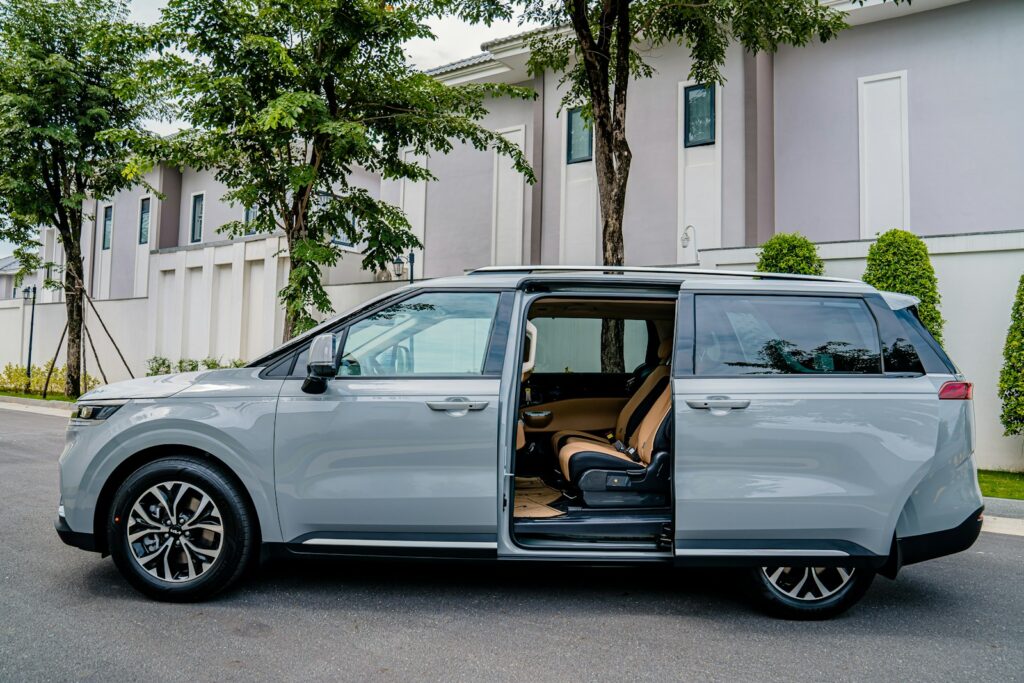
The “Kid Safe” Pitch
The pitch was pretty straightforward: the van had been “checked over,” it was “solid,” and it was “safe enough that I’d put my own grandkids back there.” He pointed to the car seat anchors, showed her how the seats folded, and made a big deal about the side airbags. He even leaned in and said something like, “A lot of vans out there have stuff going on you can’t see. This one’s clean.”
She did a short drive around the block with him in the passenger seat, trying to focus while her toddler narrated everything he saw out the window. The steering felt fine, brakes didn’t squeal, and nothing clunked when she hit a pothole. When she asked if there were any warning lights, he gave a quick head shake and did that little laugh that sounds like, “C’mon.”
But she swore she saw a light flicker when she turned the key—like a little cluster blinked on and then off. He moved fast after that, making conversation, talking payments, telling her another family was “coming later” to look at it. The vibe wasn’t hostile, just… hurried, like he didn’t want her staring at the dashboard too long.
The First Weird Sign: A Light That Shouldn’t Be There
She bought it anyway. The paperwork took forever, the kids melted down, and by the time she drove off the lot she was mostly relieved it was over. The van felt like a win for about twenty-four hours, right up until she buckled her older kid in and noticed the seatbelt didn’t retract smoothly.
At first she thought it was just sticky from a spilled juice situation. But when she pulled it out and let it go, it didn’t snap back the way seatbelts are supposed to—it kind of… sighed back in, slowly, and sometimes not at all. She tried it three times and got three different results, which is not what you want from something meant to keep a child from becoming a projectile.
Then the airbag warning came on. Not immediately, not in a way that made it obvious during a test drive, but after a couple of stops when she restarted the van. A bright little icon she couldn’t unsee once she’d noticed it, sitting there like a quiet threat while she drove to daycare.
She did the responsible thing and called the lot. The seller kept his voice friendly, but his answers got slippery fast: “That light? Sometimes those sensors are finicky.” He suggested she “drive it a bit” and see if it “settles.” When she brought up the seatbelt, he said, “Belts get stiff with age,” like it was a cosmetic issue.
A Mechanic, A Scan Tool, and a Bad Feeling
She took it to a local mechanic instead of waiting for the van to “settle.” The mechanic plugged in a scanner, and the mood shifted from casual to careful. He didn’t do the dramatic thing where someone goes silent for effect—he just got quieter and more precise, the way people do when they’re trying not to freak you out.
The airbag system was throwing codes. Not “a loose connector” codes either—codes that suggested the system wasn’t communicating properly and might not deploy the way it should. And the seatbelt? The mechanic said the retractor was compromised, and the belt assembly should be replaced, full stop.
She asked the question everyone asks: could the car have passed inspection like this? The mechanic did that noncommittal shrug that means, “I’m not accusing anyone, but also… yeah.” He told her some sellers clear codes temporarily, disconnect batteries, or do quick fixes that last just long enough to get a car off the lot.
That’s when her stomach dropped. Because it wasn’t just “ugh, used cars.” It was the specific irony of being sold a “kid safe” vehicle with a problem in the exact systems meant to protect kids in a crash. Cupholders don’t matter when airbags and seatbelts are questionable.
The Quiet Cover-Up Starts Looking Less Quiet
She went back to the lot with printouts from the mechanic and the kind of calm anger that makes your voice steady. The seller listened, nodded, and said all the right surface-level things: “Let me take a look,” “We’ll make this right,” “Safety is important to us.” Then he asked for the paperwork from the mechanic like he was building a case file.
He offered to “run it through their shop,” which sounded generous until she asked whether they’d reimburse her mechanic’s diagnostic fee. He dodged that question twice, then acted like it was a misunderstanding. He also kept saying “if” about the airbag issue, like her dashboard light and the codes were just opinions.
She didn’t want their shop touching it. She’d already started imagining the van going into a back bay and coming out with the light magically gone and no paper trail of what was done. When she said she wanted the repairs done at her mechanic or a dealership, the seller’s smile flattened.
That’s when he pivoted into the quiet cover-up mode: calm voice, firm boundary, lots of “policy.” He said they couldn’t authorize outside work, and if she wanted to return it, there would be “restocking fees” and “paperwork fees” and a “mileage deduction.” He spoke like the fees were laws of physics, not choices.
Escalation: Receipts, Records, and the “You Drove It” Line
She asked for the inspection report they claimed to have done before selling it. He told her it was “internal.” She asked for the codes they saw prior to sale, if they’d scanned it at all. He said they “look at lights” and “do a road test,” which wasn’t the same thing and everyone in the conversation knew it.
Then he hit her with the line that made it personal: “You drove it off the lot.” Not said loudly, not said cruelly, but said with that finality that implies you’re naïve for thinking otherwise. Like purchasing a car meant signing away the right to be upset when safety systems don’t work.
She asked him directly whether they cleared the airbag light before she test drove it. He didn’t answer the question; he just repeated that it “wasn’t on when it left.” She said the seatbelt had clearly been struggling before she bought it. He said seatbelts “wear out” and that she should’ve checked everything.
That’s when the mask slipped a little. Not into yelling, but into irritation—tight lips, glancing away, suddenly too busy. He told her he’d “see what he could do,” then tried to usher her toward signing something that would let them take the van for “evaluation.” She refused and said she wanted everything in writing.
She left with the van, her kids, and a feeling that she was now in a fight with someone who knew exactly how to make a problem feel like your fault.
Where It Lands: Not a Refund, Not a Fix, Just a Van She Doesn’t Trust
Over the next few days, she made calls the way parents do when they’re running on anger and caffeine: the manufacturer’s customer line, a dealership service department, the state inspection office, and a consumer protection hotline. Every person she spoke to had a different version of what “should” happen, and none of them were the seller who took her money while saying “kid safe.”
The seller kept things polite, which somehow made it worse. He’d respond slowly, ask her to “bring it in,” and keep hinting that she was being unreasonable. He never outright admitted anything, never put a promise in writing, never said the words “airbag system defect” like naming it would make it real.
Meanwhile she was driving a minivan she didn’t trust, listening for clicks, watching the seatbelt like it might betray her again, and staring at that warning light like it was a countdown. The whole point of the purchase was to feel safer with her kids in the car, and instead she’d bought a rolling argument—one where the scariest part wasn’t the repair bill, it was the possibility that someone had kept a safety issue quiet just long enough to close a sale.
And the most maddening part was how ordinary the cover-up looked. No dramatic sabotage, no cartoon villain moment—just a friendly “kid safe” promise, a rushed test drive, a warning light that waited to reappear, and a seller who acted like her concern was the inconvenience. She wasn’t left with closure or a clean solution, just a minivan in her driveway that felt less like transportation and more like evidence.
More from Steel Horse Rides: