
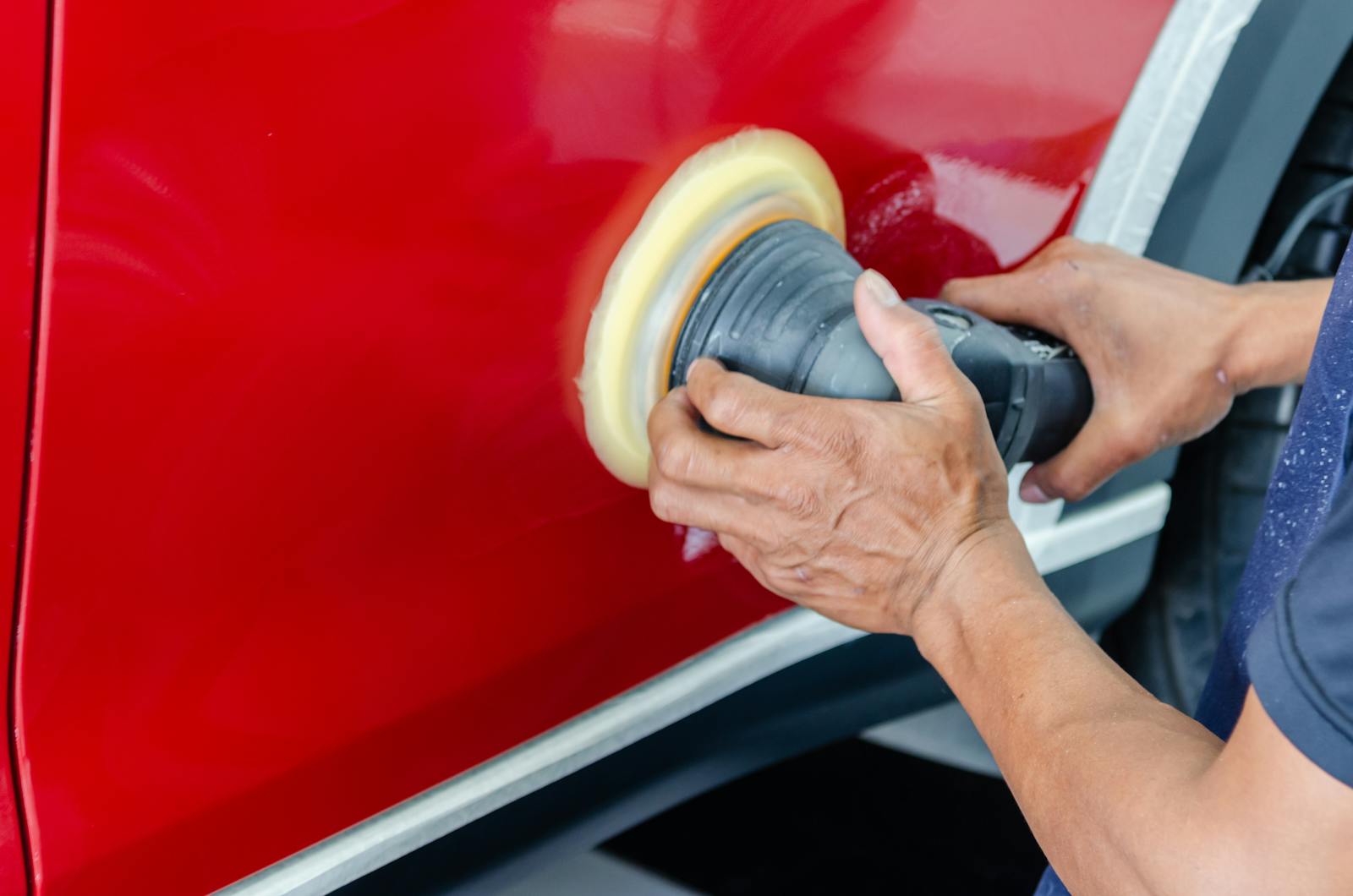

She didn’t go to the body shop because she was picky. She went because her car had become that kind of embarrassing you can’t unsee: a clean, well-maintained vehicle with one ugly, crumpled panel that made it look like it had survived a low-budget action scene.
The damage itself wasn’t even dramatic. A slow-speed sideswipe in a parking lot, the kind where everybody’s fine but your stomach still drops when you see the dented metal and the scraped paint. She got the other driver’s insurance, took photos, did the whole responsible-adult thing, and figured she’d be back to normal in a week or two.
What she didn’t expect was to end up driving a two-tone car that made strangers ask her, with genuine concern, what happened.
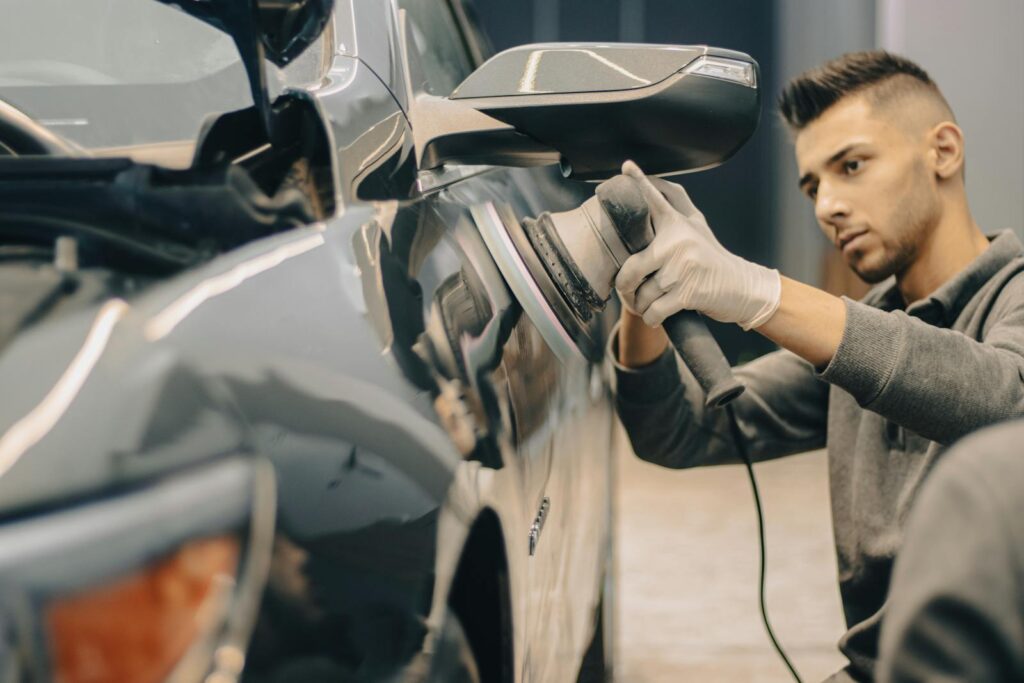
The promise: “You won’t even be able to tell”
When she first walked into the shop, she came in with the usual wish list: fix the dent, fix the scrape, make it look like it never happened. The estimator did that confident, practiced body-shop nod and told her they’d “blend it perfectly” and that it would look new again. He wasn’t casual about it, either—he said it like he was selling a guarantee, not a possibility.
She asked about paint matching because her car was one of those deceptively simple colors: a light metallic gray that changes depending on the sun. The estimator said they had the paint code, they’d use the right system, and they’d blend into adjacent panels so it wouldn’t stand out. She left feeling like it was annoying, sure, but handled.
They kept the car for more than a week. Every time she checked in, she got variations of “We’re just waiting on it to cure” and “We’re finishing up details,” the kind of phrases that sound reassuring until you hear them three times.
Pickup day, and the color that didn’t belong
On pickup day she showed up expecting that small wave of relief you get when something expensive and stressful is finally done. From the office window she could see her car parked out front, cleaned up and shiny. Then she stepped outside, and her brain did that lagging double-take where you can’t immediately accept what you’re seeing.
The repaired area wasn’t “slightly off.” It was a different shade of reality. Where the rest of the car was a cool metallic gray, the new paint read warmer—almost beige under the sun, like someone had tried to match it from memory instead of a formula.
Worse, it didn’t just look different on the one panel. The blending they’d promised looked like a faint gradient, like the car was transitioning into another color. Up close, the metallic flake caught the light differently, so even if you squinted, it still screamed “repaint.”
She did the polite thing first: walked around it slowly, pointed at the panel, and asked if it needed time to settle or if it would look better in different light. The guy who brought the keys out did the classic body-shop move—he stared at it, tilted his head, and said it looked “within normal variance.” Then he added, like it was a favor, that paint is “never a perfect match.”
The first argument: normal variance vs. obvious mismatch
She pushed back, because this wasn’t about being fussy. If you were standing ten feet away, you could still tell which part got painted. She reminded them of the promise: “You said it would look new again. You said I wouldn’t be able to tell.”
The shop shifted from confident to defensive fast. Now they were talking about lighting conditions, how metallics are tricky, how factory paint fades over time, how customers “always think it’s off at first.” It was like they had a script for this exact moment, and she wasn’t the first person to stand there feeling crazy.
Someone offered to “take it back in” and look at it, but the tone wasn’t apologetic. It felt like they were offering to humor her. She asked what, specifically, they would do—repaint the panel, re-blend, redo it—and they got vague again, saying they’d “see what they could do.”
And then came the part that made her feel trapped: they wanted her to sign pickup paperwork. She didn’t want to sign anything that implied she accepted the work. They didn’t say she had to accept it, exactly, but they kept sliding the pen closer, acting like this was a simple formality and she was the one complicating it.
Driving it anyway, and the strangers who noticed
She ended up taking the car because she needed it. She also figured, maybe against her better judgment, that she could document it properly and come back with more leverage. The second she pulled into a gas station, the experience got worse in a way she didn’t see coming.
A guy at the next pump looked at the side of her car and said, “Hey—what happened there?” Not in a rude way, more like the concerned-curious tone people use when they think you’ve been in a serious accident. She gave a tight little laugh and said it had been repaired.
“They repaired it like that?” he asked, and then he actually walked closer and squinted at the panel like he couldn’t believe it. That’s when it hit her that she wasn’t imagining anything. This wasn’t a lighting issue. This was an obvious mismatch that random people could clock in the time it takes to swipe a credit card.
Over the next few days, it kept happening. A neighbor asked if she’d gotten hit again. A coworker asked why that door was “a different color.” Somebody in a parking lot assumed she’d replaced the door with one from a salvage yard. Each time she explained, she felt that same hot embarrassment, like she was wearing a visible mistake she’d paid to avoid.
The return visit: “We can try, but…”
When she went back, she brought photos in different lighting and a short list of what had been promised. In the shop’s fluorescent lights, the mismatch looked less severe, which she knew they’d try to use against her. So she insisted they come outside, where the color difference reappeared instantly, like it had been waiting to prove a point.
This time, the manager came out. He did the same slow walk around the car, hands on hips, and said the dreaded words: “It’s not that bad.” She told him strangers had been asking what happened, and that seemed to annoy him more than concern him, like she was building a case instead of simply expressing a problem.
He pointed out the paint code, explained how they mixed it, and said they’d blended according to procedure. Then he offered a redo, but with a catch: if they repainted and “it still looks the same,” she’d have to accept it. The offer didn’t feel like accountability; it felt like a gamble they wanted her to take while they kept control of the definition of “acceptable.”
She asked if they could repaint more of the car to make it match—like extend the blend further or respray adjacent panels properly. He made a face that said “absolutely not” before he even spoke, and told her that would be unnecessary and that insurance “won’t pay for perfection.” Which was funny, because perfection wasn’t what she’d asked for. She’d asked for “look new again,” their words, not hers.
The paperwork spiral and the not-quite-resolution
Then came the paperwork, the part where normal people get exhausted and businesses quietly win. The shop wanted her to authorize additional work, but the authorization language was broad and didn’t say what standard they were aiming for. She asked them to put in writing that they would match the color to factory appearance, and they hesitated like she’d asked for their social security numbers.
She contacted the insurance adjuster, assuming that would snap everything into place. The adjuster was sympathetic in that detached, procedural way, but also kept circling back to “industry tolerance” and “reasonable match.” He offered to send out an inspector, which sounded helpful until she realized it also meant more days of driving around in the world’s most awkward gradient paint job.
The shop, meanwhile, started talking to her like she was a problem customer. They weren’t openly hostile, but they were clipped, impatient, and overly technical, as if throwing enough jargon at her would make her stop insisting her eyes worked. Every conversation ended with them wanting her to either accept the work as-is or leave the car and hope their next attempt didn’t make it worse.
She did leave it for a redo—partly because she couldn’t stand the stares anymore, partly because she didn’t know what else to do. When she got it back, it was better, but still not “new again.” The panel wasn’t beige anymore, but the metallic still caught the light differently, like a slightly different fabric sewn into the same outfit.
And that’s where it stuck: not disastrous enough for an easy victory, not good enough to stop thinking about it every time she walked up to the car. She could keep fighting, keep escalating, keep asking for written guarantees no one wanted to give. Or she could accept that she’d paid to remove a dent and somehow ended up with a car that now carried a story on its skin—one that strangers felt comfortable asking about, because the paint mismatch practically invited the question.
More from Steel Horse Rides: