

It started the way a lot of ugly breakups start: two people trying to untangle a life that’s been braided together for years, both of them convinced they’re the one getting screwed. He was staying at a buddy’s place “for a few days,” she was still at the house, and every conversation sounded like it was happening through clenched teeth.
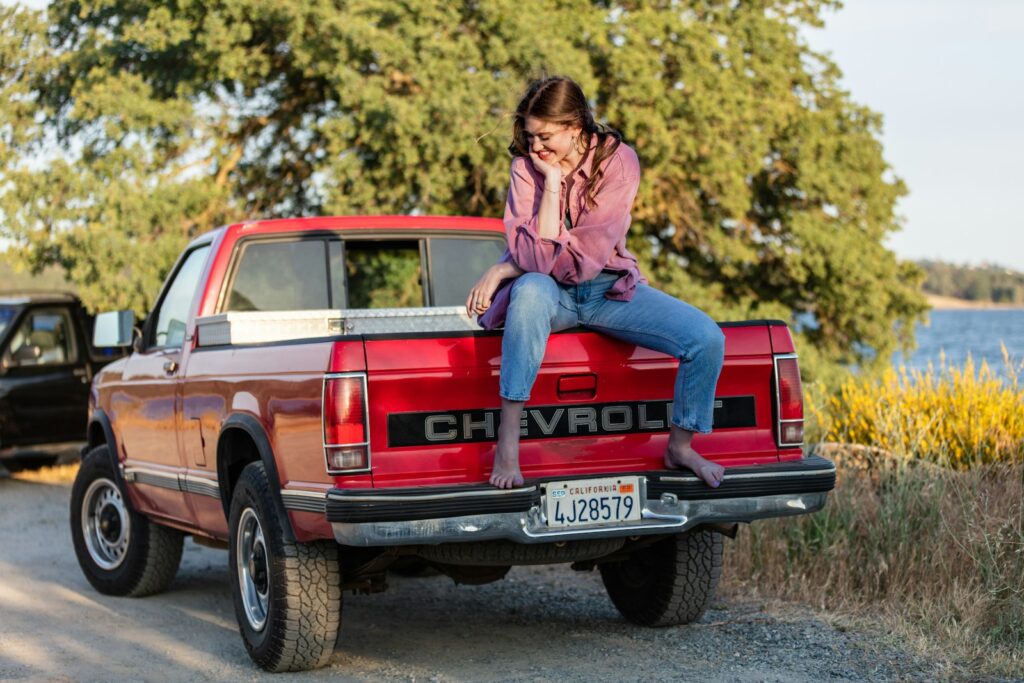
The truck was the first real flashpoint. Not a symbolic thing, not “our car” the way couples talk about a shared vehicle—his truck, titled in his name, the thing he babied and bragged about and used for side jobs. He woke up one morning to a text from his ex that read like a dare: she’d taken it, she was “just borrowing it,” and if he wanted it back he could “stop being dramatic.”
He did what a lot of people do when they’re trying to look reasonable: he waited a few hours, then another few, then he drove past the house like a creep and saw the empty spot where the truck usually sat. By late afternoon, he wasn’t trying to win the breakup anymore. He just wanted his property back, and he wanted a paper trail in case the whole thing got even messier.
The “Borrowed” Truck Turns Into a Missing Vehicle
When he called her, she didn’t answer. When she finally did, she talked fast and slippery, like she’d rehearsed a script: she needed it to run errands, she’d bring it back “tonight,” he needed to calm down, and anyway she’d “helped pay for stuff.” It wasn’t a confession so much as a flood of justifications, the kind that make you feel like you’re negotiating with someone who’s already decided the rules don’t apply.
He went to the local police station expecting the usual brush-off. Relationship drama is the sort of thing officers can’t fix and don’t like getting stuck in, and he knew it. But he had the title, insurance, registration—everything in his name—and he wasn’t asking them to mediate feelings, just to document that the truck had been taken without permission.
They asked the obvious questions: did she have a key, did she ever drive it, was it possible this was just a misunderstanding. He explained that yes, she had a key, and yes, she’d driven it before, but that didn’t mean she could keep it during a breakup like it was a bargaining chip. The officer took the information with that neutral face people get when they’re trying not to show what they think, then filed it as an unauthorized use situation and told him they’d put out a notice.
The First Hint Something Else Was Going On
Here’s the part where it shifts from petty and spiteful into genuinely weird. Within a day, he got a call asking him to come back in—not to pick up the truck, but to answer a few more questions. The tone wasn’t “good news,” it was “we need to clarify something before this becomes your problem.”
Apparently, an officer had spotted the truck parked in a grocery store lot late that night. It wasn’t driving recklessly or anything, just sitting there with someone inside, engine off, like they were waiting for something. When the officer pulled up behind it to run the plates, the person in the driver’s seat—his ex—stiffened, then tried to play it casual, like she was just taking a break.
The officer approached, asked for license and registration, and she handed over her ID with an attitude that probably worked on people who didn’t have a badge. She said she was borrowing her “partner’s” truck and they were “in a disagreement,” which is a phrase that makes everything sound smaller than it is. But the plates came back attached to a report, and that changed the temperature immediately.
Then came the reason the officer didn’t just shrug and send her on her way. There was a smell—strong enough to make the officer pause at the window and ask if there was anything in the vehicle they needed to know about. She said no, too quickly, and started rummaging around for paperwork that wasn’t there.
The Search That Blew the Breakup Wide Open
Depending on where you live, the details of a vehicle search can get complicated, and people love arguing about it afterward. But in this case, the story wasn’t “they tore the truck apart for no reason.” It was more like a series of small red flags that kept stacking: the smell, the nervousness, the way she kept trying to redirect the conversation, and the fact the truck was flagged as unauthorized.
Once they had a basis to look inside, they found the kind of stuff that doesn’t belong in anyone’s “errands” narrative. Not just a stray baggie tucked into a cupholder, but enough items to make the officer step back and call for another unit. A backpack on the passenger floor had smaller baggies, a digital scale, and cash folded in that too-neat way that never looks like normal wallet money.
In the back seat, half covered by a blanket like she’d tried to make it invisible, there was more: a couple of pill bottles with labels that didn’t match the contents, and a gun case. The gun itself wasn’t sitting out in the open, but it wasn’t exactly secured the way a responsible owner would secure it either. When the officer asked if she owned it, she started telling a story that changed mid-sentence.
At that point, nobody cared about the breakup. The truck was a scene now, and she was trying to hold her face together while officers photographed and catalogued what they were pulling out of someone else’s vehicle. The whole “I’m just borrowing it” thing collapsed under the weight of what was sitting inches from her knees.
His Phone Starts Ringing for All the Wrong Reasons
He found out in fragments, the way people always do when law enforcement is involved. First he got a call to confirm the truck’s VIN and to verify again that he hadn’t given her permission to use it. Then he got another call asking if he knew about “items” that had been found inside. The officer didn’t specify over the phone, but the careful tone was enough to make his stomach drop.
When he showed up, they walked him through what they could. Yes, they had recovered his truck. No, he couldn’t just drive it home right away, because it was potentially involved in a criminal investigation. And yes, they needed him to understand something very clearly: because the truck was his, there was a world where someone could try to argue he was connected to what was found.
He reacted the way you’d expect someone to react when their life suddenly sprouts a second, darker plotline. He got loud, then got quiet, then started over-explaining, offering up every detail he could think of to separate himself from her choices. He told them he hadn’t seen her in days, that she’d been acting “off” for weeks, that she’d been secretive with her phone and disappearing for “drives” that never made sense.
They asked him if she’d ever stored anything in the truck before, if he’d noticed missing compartments, if he’d ever seen her with a weapon. He kept saying no and then catching himself—well, she liked keeping bags in the back, she’d tossed a backpack in there once, she’d asked him not to look in it because it had “work stuff.” It’s the kind of hindsight that makes you feel stupid and furious at the same time.
When “Property Drama” Becomes Leverage and Liability
His ex didn’t just lose the truck as a bargaining chip. She lost control of the story she’d been telling, and she panicked in a way that made everything worse. From what he relayed later, she started texting him like she could talk her way out of it: asking him to tell police she had permission, saying it was “all a misunderstanding,” suddenly calling him “babe” like they weren’t actively breaking up.
He didn’t respond with empathy. He responded like someone who realizes they almost got dragged into a case they never signed up for. He forwarded messages to the officer handling it, screenshot everything, and stopped taking her calls, because every new message sounded less like love and more like someone trying to build a defense out of his silence.
There were other little humiliations too. Friends who’d been gently supporting him through the breakup started asking pointed questions: had he really not known, had he ever seen her with those people, had he ever used the truck for anything shady. The truck, the thing he’d been proud of, turned into a rolling accusation just because it had his name on the paperwork.
And the ex, meanwhile, was dealing with a reality where the police weren’t interested in her relationship grievances. She’d apparently been banking on the idea that “it’s complicated” would buy her time, but “it’s complicated” doesn’t help when there’s contraband and a weapon involved. The breakup stopped being two people arguing over who gets what, and became one person trying not to get charged more heavily and another trying not to get blamed at all.
By the time the truck was finally released, it didn’t feel like getting something back. It felt like getting an object that had been contaminated by someone else’s chaos. He still had to scrub it out, replace a couple of small things that had gone missing, and sit with the ugly knowledge that while he’d been arguing about fairness and respect, she’d been using his vehicle like a hiding place.
And that’s the part that stuck: not the stolen-truck drama, but the aftertaste of it. Even with the title in his name and the messages proving he didn’t consent, he couldn’t fully relax, because cases like that don’t resolve on the same timeline as feelings. His relationship ended with a door slam, but the consequences kept echoing—every time his phone buzzed, every time he saw a police car behind him, every time he remembered how close “my ex took my truck” came to turning into “why were those things in your truck?”
More from Steel Horse Rides: