
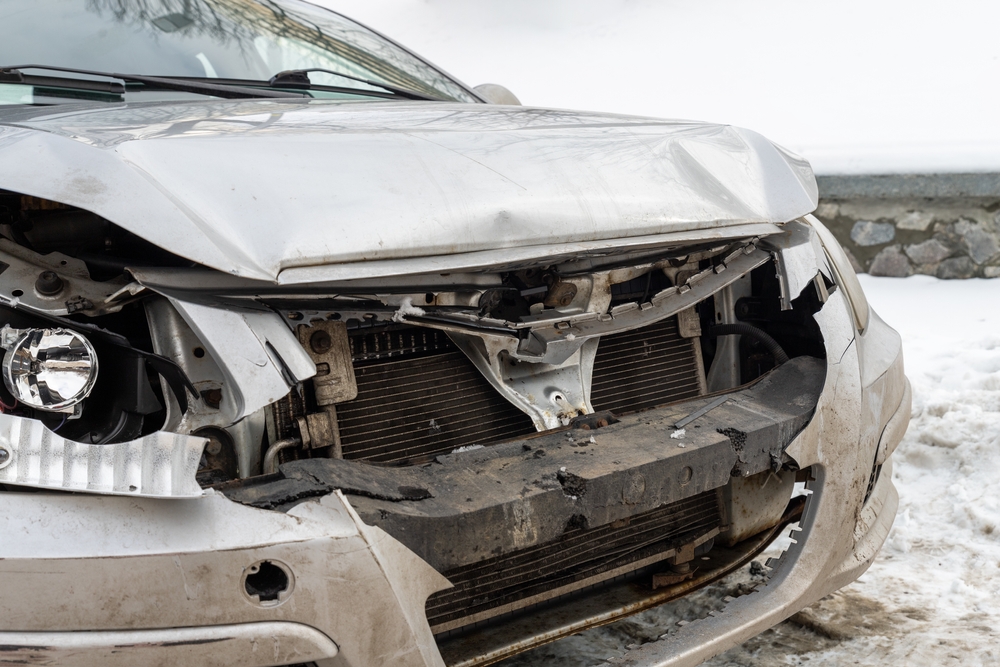

He thought it was going to be one of those boring adult errands that eats your afternoon and then fades from memory: exchange info, take a couple photos, go home irritated. It was late morning, clear roads, and he was crawling through a strip-mall exit where everyone’s half-looking for pedestrians and half-looking for gaps in traffic.
The other driver—a guy in a dark sedan—rolled a little too far, he rolled a little too far, and the two bumpers kissed with that soft, stupid plastic-on-plastic thud. No airbags, no glass, no spinning drama. Just a minor fender bender in a parking lot lane with maybe a scuff and a dent, the kind of thing you swear you’ll handle “off insurance” until you remember how people get.
He got out already rehearsing his calm voice, phone in hand, doing that quick mental inventory: damage, plate numbers, whether anyone’s hurt. The sedan’s driver stepped out slowly and looked at the cars like he was trying to decide what story this would become. For about thirty seconds, it still felt normal—until the “witnesses” showed up like they’d been waiting for their cue.
The part that seemed straightforward
The driver who got hit—or claimed he got hit, depending on which version you believe—started with the usual: “You came out of nowhere.” The narrator didn’t bite, just pointed out they were both moving at about five miles an hour and asked if everyone was okay. The other guy rubbed his neck once, not like he was in pain, more like he was reminding himself a neck existed.
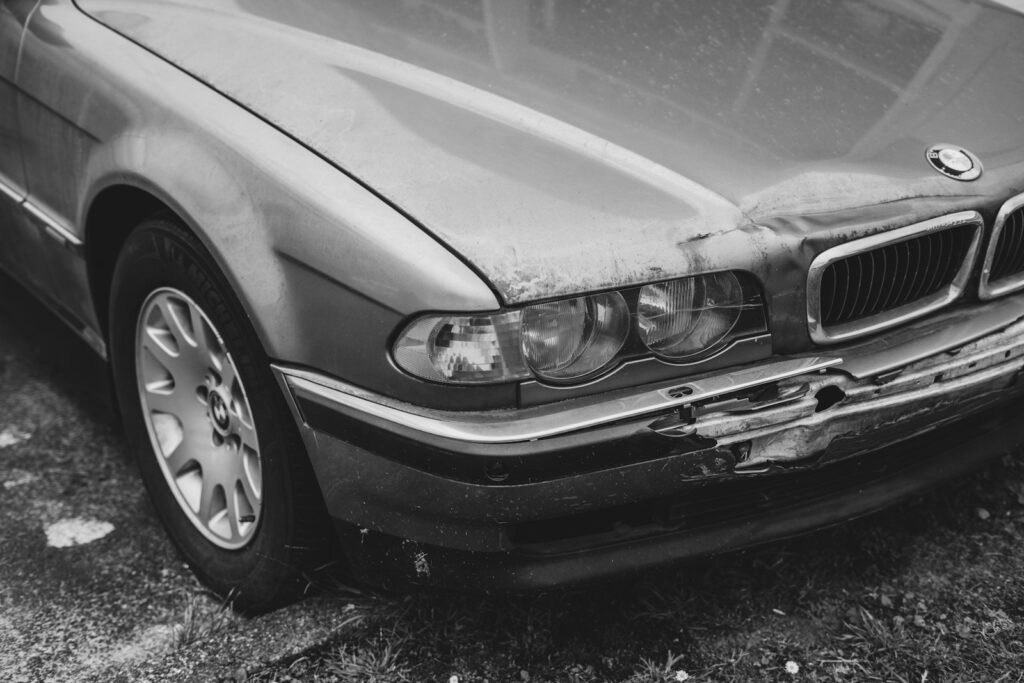
They stood by the bumpers, both phones out, and the narrator started taking pictures from every angle: close-ups of the scuff, wide shots that included the parking-lot markings, and a shot of both cars with license plates visible. That’s when the other driver’s body language changed—shoulders squared, eyes flicking around, like he was waiting for reinforcements.
“Let’s just exchange insurance,” the narrator said, keeping it neutral. The other guy hesitated and asked, weirdly, if the narrator “really wanted to get the cops involved for something this small.” It didn’t sound like a plea to keep things easy; it sounded like someone checking if the plan needed to escalate.
Three “witnesses” materialize
First came a woman pushing a cart with two cases of bottled water, slowing down as she approached like she’d been curious from a distance. Then a guy in a hoodie drifted over from between parked cars, hands in pockets, already shaking his head. Then, somehow, a third person—older, business-casual—appeared from the direction of the store entrance and stopped just close enough to be part of the conversation.
The narrator hadn’t even called anyone yet. He hadn’t raised his voice, hadn’t accused, hadn’t done anything except photograph the scene. But the second those three strangers formed a loose half-circle behind the sedan driver, the vibe shifted from “two adults handling paperwork” to “you’re outnumbered, watch your tone.”
The sedan driver turned slightly so he could talk with them in his peripheral vision, and suddenly he had a script. “You all saw him fly out, right?” he asked, loudly enough that the narrator could hear it clearly. The hoodie guy answered immediately—too immediately—“Yeah, man, you didn’t even have a chance.”
That was the first real jolt of panic: not because the narrator thought he’d lose a court case over a parking-lot tap, but because it didn’t feel like mistaken perception. It felt rehearsed. The three strangers weren’t describing what they saw; they were validating whatever the sedan driver needed them to say.
The story changes in real time
At first the sedan driver talked about bumper damage. Then, in front of his new audience, it became “my back,” and then it was “my neck’s starting to tighten up.” He started doing that slow, exaggerated roll of his shoulders, like he was performing discomfort for people who had already agreed to believe him.
The narrator kept calm and asked for insurance information again. The sedan driver didn’t reach for his wallet; he reached for his phone and held it up like a threat. “I’m calling my attorney,” he announced, which is not a normal sentence after a minor tap in a strip-mall exit.
One of the witnesses—business-casual—stepped closer and told the narrator, “You should just admit you were speeding.” Speeding. In a cramped parking-lot lane with cars idling for a turn. The narrator looked past them at the painted arrows on the asphalt, at the stop sign, at the storefronts, like reality itself could testify.
It got weirder when the woman with the cart started chiming in with oddly specific details. She said the narrator had been “on his phone,” then immediately corrected herself to “or maybe messing with the radio,” like she was trying on accusations until one fit. The narrator, still holding his own phone, just angled it slightly and said, “I’m recording now, for my safety.”
Pressure tactics and the subtle intimidation
The witnesses didn’t like that. Hoodie guy told him, “You can’t record people,” with the confidence of someone who says wrong things a lot and relies on volume to make them true. The sedan driver took a half-step toward the narrator’s car door, blocking the clean path back to the driver’s seat.
Nobody swung, nobody screamed, but the space tightened. They kept talking over each other, each sentence designed to push the narrator toward doing something sloppy—admitting fault, agreeing not to call police, handing over cash, leaving without documentation. The sedan driver even suggested, casually, “You can just Venmo me for the bumper and we’ll forget the rest.”
That’s when it clicked for the narrator that this wasn’t just a guy trying his luck; it was a whole routine. The witnesses weren’t there to describe an accident. They were there to make sure the narrator felt watched, blamed, and cornered.
He didn’t argue. He didn’t debate physics or point out that three people somehow “saw” the same three-second bumper tap from three different directions. He walked a few steps away, called the police non-emergency line, and stated plainly that he’d been in a minor collision and now felt unsafe because multiple strangers had inserted themselves and were obstructing him.
When the plan hits a wall
The sedan driver’s tone changed again the moment he heard “police.” His chest deflated a little, like someone unplugged a speaker. One witness muttered that they “didn’t have time for this,” and the woman with the cart suddenly remembered she had groceries to buy.
But they didn’t leave completely. They hovered at the edges, still within earshot, still trying to influence the narrative. The sedan driver kept repeating, “He admitted it,” even though the narrator hadn’t admitted anything, hadn’t even apologized beyond the initial “Are you okay?” that everyone says on autopilot.
While waiting, the narrator did what people wish they’d done after the fact: he filmed the cars, the lot layout, the positions, the sedan driver’s plate, and the three witnesses standing nearby. He narrated quietly as he moved—time, location, what was being said—keeping it factual. The sedan driver’s eyes tracked the phone the entire time, like he knew exactly which parts of the performance didn’t hold up under a camera lens.
When an officer finally arrived, the witnesses tried to snap back into certainty. The hoodie guy started his “he came flying out” line again, only now he had to answer follow-up questions. Where were you standing? Which direction was each car traveling? How fast is “flying” in a parking lot? His story got softer with every detail request, the way lies do when they’re asked to wear shoes and walk.
The officer listened, looked at the damage, and asked the narrator for his documentation. The narrator handed over his license and insurance and mentioned the recording. The sedan driver interrupted—twice—to reframe the incident as “reckless driving,” but the officer didn’t match the drama.
No cinematic takedown happened. The officer didn’t slap cuffs on anyone for “insurance fraud.” He just took statements, made notes, and gave them the standard next steps. Still, the narrator said the moment that stuck with him was the quiet retreat: the witnesses drifting away one by one as soon as it became clear there would be paperwork and questions instead of instant intimidation.
Later, when the adrenaline wore off, the narrator couldn’t stop replaying how fast it changed. One second it was a scuffed bumper; the next it was a little swarm of strangers trying to manufacture fault and injuries out of thin air. He’d always heard about staged accidents and shady claims, but this felt creepier—less like a con with a mask, more like a con that assumes nobody will challenge it.
He ended up filing his claim the normal way, uploading photos and the video, and letting the insurance companies do what they do. The unresolved part isn’t whether the scratch gets fixed; it’s the lingering question of how often that little trio gets summoned from nowhere, and how many people—tired, flustered, just trying to get through their day—hand over a confession or a payment just to make them disappear.
More from Steel Horse Rides: