

The mechanic noticed her the second she walked in, mostly because she didn’t walk in like someone with a car problem. She drifted through the front door like she was entering a boutique, sunglasses still on, phone in hand, scanning the shop with that tight little smile people use when they’re bracing to be disappointed. The service writer gave the standard “What can we do for you today?” and she answered like it was a personal inconvenience that the universe had forced her to speak.
Her car had been towed in the night before—nothing dramatic, just dead on the side of the road—and the shop had finally gotten a look at it that morning. It wasn’t a mystery, either: the alternator was shot, the battery had been cooked, and the belt looked like it had been hanging on through sheer optimism. They’d put together an estimate that was fair, boring, and very much not the number she had in her head.
When the service writer slid the printout across the counter, her expression changed in a way that every shop employee recognizes instantly. It wasn’t confusion, exactly. It was the look of someone about to negotiate by force of personality.
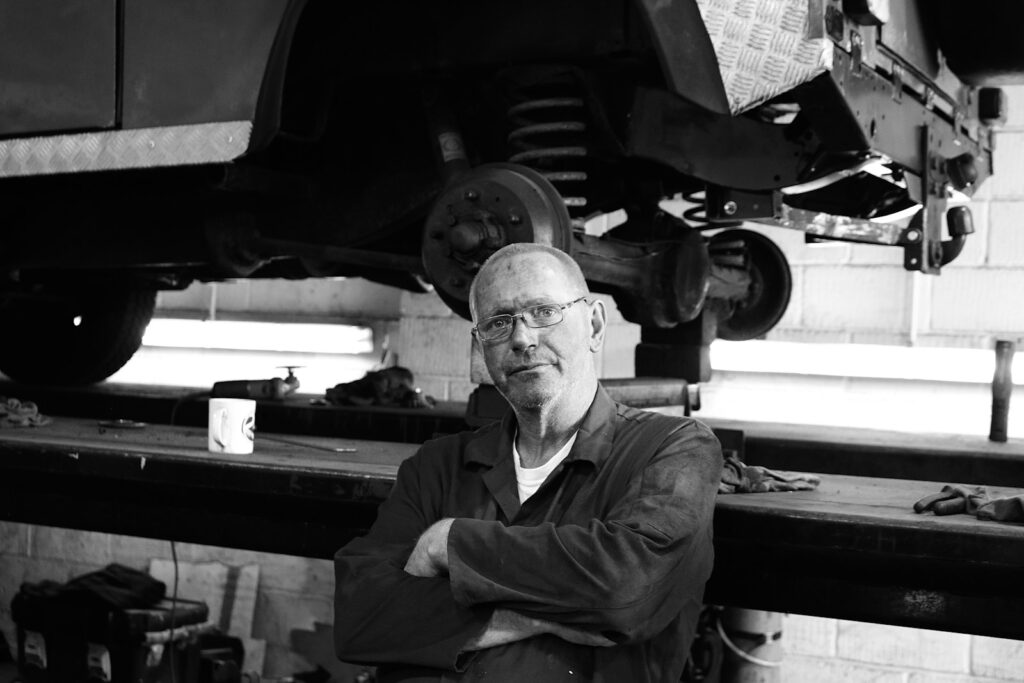
The estimate hits the counter, and the vibe shifts
She stared at the total, then looked up at the mechanic who’d come out from the bay to explain it. The mechanic was there because sometimes it helps when the person who actually touched the car says, “Here’s what’s wrong,” instead of it sounding like a sales pitch. He pointed out the alternator, the frayed belt, the battery reading low, the way the voltage dropped under load—simple, concrete stuff.
She listened with this exaggerated patience, nodding like she was doing him a favor by allowing him to speak. Then she started with the questions that aren’t really questions: “Are you sure?” and “Is that really necessary?” and “Can’t you just… do something?” The mechanic kept his tone steady and walked her through what happens when an alternator dies, how it can strand you again, and why throwing a new battery in without fixing the charging system is basically a prank.
That’s when she tried to change the conversation. She leaned forward over the counter, dropped her voice a notch, and said something along the lines of, “Maybe we can work something out.” Not “Can you discount labor?” Not “Do you have a payment plan?” Just that vague, loaded sentence people use when they want you to fill in the blank yourself.
Flirting as a payment plan
The mechanic didn’t even pretend not to understand the implication; he just didn’t accept it. He gave a tight smile and said the shop doesn’t “work things out” like that, but he could see if there were any coupons available or if they could do a small labor break. She laughed like he’d made a cute joke, then tried again, heavier this time—compliments, eye contact held a second too long, little comments about how he “must get hit on all the time.”
It wasn’t movie flirting. It was awkward, persistent, and slightly aggressive, like she was testing which lever would move him. The service writer stood there pretending to organize paperwork, clearly listening, clearly wanting no part of it, while the mechanic kept steering the conversation back to the estimate and the options: full repair, partial repair, or tow it elsewhere.
She tried the next tactic: the wounded routine. She sighed, looked down at her manicure, and said she was having “the worst week,” that her ex had “left her dealing with everything,” that she “didn’t deserve this,” and that maybe the mechanic could “help a girl out.” The mechanic didn’t bite, and that seemed to annoy her more than the bill itself.
When the flirting didn’t land and the pity didn’t land, she did what people do when they’re losing control of a situation: she got loud. Not screaming, but voice up, arms moving, making sure the other customers in the waiting area could hear the injustice. The shop was trying to “rip her off,” apparently, and she “knew how these places worked.”
She pays… but not before making it weird
In the end, she agreed to the repair, but she did it like someone signing a ceasefire treaty. The service writer went over the authorization, she snapped a photo of the estimate “for her records,” and she made a point to say she wanted all the old parts back. That’s not unheard of—some people do it because they don’t trust shops, some do it because they’ve been burned, and some just like the feeling of a receipt that includes physical evidence.
While the car was in the bay, she lingered. She didn’t wait quietly; she drifted toward the shop door that leads into the work area, peeking in every time someone walked through like she expected to catch a secret. A tech had to ask her—politely but firmly—to stay in the lobby because of insurance and safety, and she rolled her eyes like he’d just invented safety rules to ruin her day.
The mechanic finished the job, test-drove it, verified charging voltage, the whole standard routine. When it came time to settle up, she swiped her card hard enough to make a statement and asked, “So is this when you tell me I look pretty and you’ll refund me half?” The mechanic just handed her the receipt and told her to have a good afternoon.
She left with her keys, her copy of the invoice, and her old alternator in a box like a trophy. The shop thought that was the end of it, which is always the moment in these stories when it’s never the end of it.
She comes back with a new accusation
Two days later, she came back in like she’d been practicing the entrance. Same sunglasses, same clipped stride, but this time the smile was gone. She slapped her purse onto the counter and announced that someone at the shop had stolen her diamond ring.
The service writer blinked and asked the obvious questions: When did she last see it? Was it left in the car? Was it possibly at home? She was ready for that. She said she’d been wearing it the day the car was dropped off, and after she picked the car up, she “noticed it was gone.”
But she didn’t just say it was missing. She said she was certain it happened there, in that building, and she said it loud enough for the waiting room to hear. It wasn’t a worried customer looking for help. It was a customer making sure everyone understood she had been wronged.
The mechanic got pulled out from the bay again, and he asked her where she’d left the ring. She pointed at the car as if that should be explanation enough, then added this detail: she’d taken it off and put it “somewhere safe” because she didn’t want to scratch it. She couldn’t—or wouldn’t—say where “somewhere safe” was.
The shop pulls the receipts—literally and figuratively
At this point, the shop went into that mode businesses go into when a situation feels like it could turn into a police report. The manager came up front, got her name, pulled up the work order, and asked again for specifics. She repeated that it was a “large diamond,” that it was “valuable,” and that she expected the shop to “make it right.”
The manager asked to see the car, because if she’d left it in a cupholder or the center console, it might have slipped into a crack, and a quick search could end the whole thing. She hesitated—just a beat too long—then said she didn’t want “anyone touching anything” because it was a “crime scene.” That was the word she used, and the lobby got quiet in that way where people pretend to look at a magazine while listening harder.
The manager, not taking the bait, said they could check their security cameras for the front office and the parking lot, but the bays weren’t fully covered. He also said, plainly, that no employee would be searching her purse or her person, and they wouldn’t be handing out money without evidence. If she believed a theft occurred, she was welcome to file a police report, and the shop would cooperate.
That’s when she tried to shift back into charm, like flipping a switch. Her tone softened and she said she “didn’t want to get anyone in trouble,” she just wanted it back, and she was sure it was “a misunderstanding.” It was an interesting pivot—less like someone desperate to find a ring and more like someone trying to get the shop to panic into a payout.
The mechanic stood there, arms crossed, watching her face like he was trying to spot the moment she realized the tactic wasn’t working. He told the manager quietly that during the repair he hadn’t touched any personal items and that the ring wasn’t on the seat or console when he got in. The service writer, who’d dealt with her the first time, looked like he was mentally replaying every second she’d been in the lobby.
The standoff ends without a neat conclusion
She finally demanded the manager “check the employees,” which is the kind of request that makes everyone’s spine straighten. The manager told her, again, that accusations are serious, and if she wanted to pursue it, the police should be involved. He offered to print her another copy of the invoice, provide the names of who worked on the car, and preserve whatever camera footage was available.
For a second it seemed like she might actually call the police right there, just to keep the pressure up. Instead, she did something subtler: she threatened reviews, lawsuits, “calling corporate” even though it was an independent shop, the whole greatest-hits album of customer revenge. Then she picked up her purse and said, “Fine. I’ll handle it myself,” like the shop had refused to help her find a lost pet instead of asking for basic details.
She walked out with the same purposeful stride she’d come in with, only now it had a shake of anger to it. The shop staff stood there in the aftermath, half expecting her to whirl back around and fling one more accusation for good measure. No one said much until the door closed and the waiting room exhaled.
The weirdest part wasn’t even the ring claim—it was how neatly it seemed to slot into the earlier scene, like a second attempt at leverage when the first attempt didn’t work. The shop couldn’t prove a negative, and she didn’t bring proof of a theft, just certainty and volume. And the whole thing hung there, unresolved and uncomfortable, like the real bill she wanted to dodge wasn’t the repair invoice at all, but the idea that sometimes you don’t get to charm your way out of consequences.
More from Steel Horse Rides: