

The mechanic had already had one of those days where every car on the schedule felt like it came with a side of drama. A comeback for a mystery rattle, a guy insisting his check engine light “must be wrong,” and a parts delivery that showed up late enough to wreck the afternoon. So when the tow truck rolled in with a late-model SUV and a woman climbed out looking like she’d been personally betrayed by the concept of brakes, the whole shop sort of braced itself.
She didn’t ease into it, either. She pointed at the front end like it had offended her. Her opening line was basically: “You people worked on my brakes and now I crashed. So what are we doing about it?”
The mechanic—let’s call him Ray, because every shop has a Ray—pulled up the invoice while she talked over him. The SUV had been in less than two weeks earlier for pads and rotors, a pretty routine job, and it left with a clean road test. She was saying the pedal went “straight to the floor,” she had to “stand on it,” and she still rolled right into another car at a low-speed intersection.
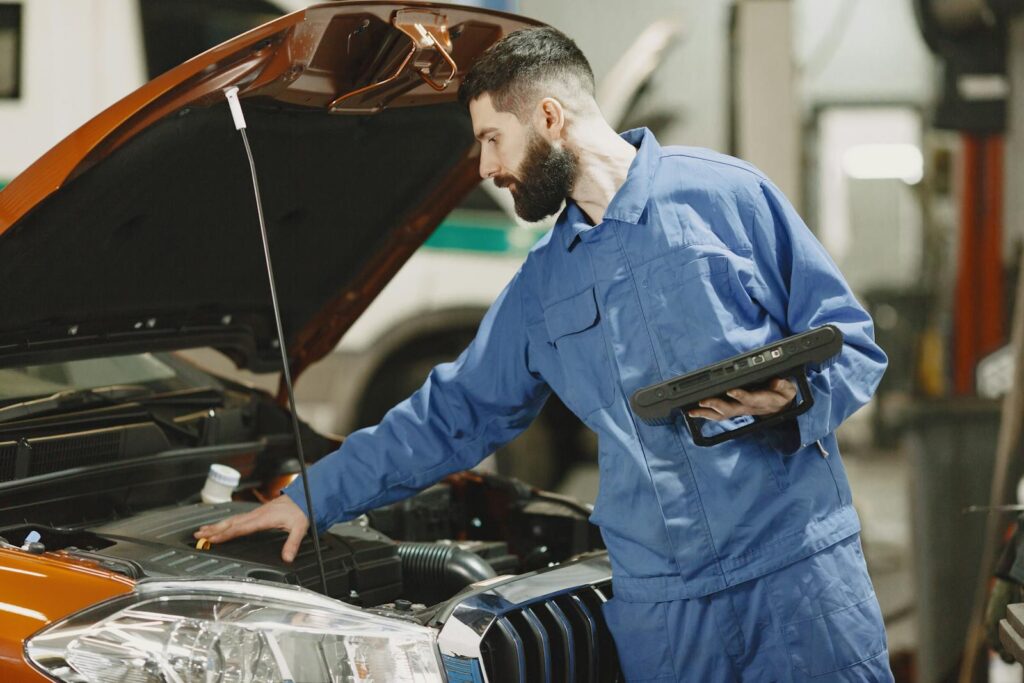
The drop-off that turned into an accusation
In the waiting area, she put on the kind of performance that’s aimed at an audience, even when the only audience is a receptionist and a couple of guys flipping through old magazines. She kept repeating “brake failure” like it was a legal term she’d just learned. Between that and the fact the SUV arrived on a flatbed, it was hard not to feel the accusation hanging in the air.
Ray did what mechanics always do when someone comes in hot: he went quiet and started collecting facts. When exactly did it happen, what speed, what did the pedal feel like, was there any warning light, any noise, any smell. She insisted it was sudden, completely out of nowhere, and the shop needed to make it right “before she took it further.”
It would’ve been easy for the shop to go defensive, but Ray didn’t. He asked if she’d touched anything under the hood since the brake job—fluid, battery, anything. She rolled her eyes and said she didn’t “mess with car stuff,” which somehow came out sounding like another way of saying: this is absolutely your fault.
Ray checks the basics and finds a weird clue
Once the SUV was in a bay, Ray popped the wheels off and started with the obvious. Pads were seated correctly, hardware looked right, rotors weren’t scored or blue from overheating, and nothing was dripping. Then he checked the brake fluid reservoir, and that’s where the first odd detail showed up.
The cap wasn’t sitting right. Not like “someone forgot to tighten it,” but like it had been cross-threaded and jammed down at an angle, the way it looks when somebody fights it instead of lining it up. Ray called another tech over, because accusing a customer of tampering is a great way to start a war if you’re wrong.
They pulled the cap and the reservoir looked… off. The fluid didn’t have that clear amber look it should. It was cloudy, with a faint swirl to it, the way oil looks when it’s mixed with something it shouldn’t be. Ray sniffed it and made a face, because brake fluid has a sharp, chemical smell, and this had a sweet, almost fruity note that did not belong anywhere near a master cylinder.
He told the service manager to bring the customer into the bay, not to confront her, but to ask the question again, slower. “Are you sure you didn’t add anything?” he said, keeping his voice careful. Her posture stiffened, and she repeated the same line: she doesn’t do car stuff, she just drives, and she wants the shop to fix what they broke.
The security footage becomes the deciding factor
Here’s the thing about modern shops: they’ve got cameras everywhere. Not because they’re spying on customers, but because tools disappear, cars get blamed on them for dents they didn’t make, and people say wild things when money’s involved. Ray remembered the SUV’s last visit—he remembered it because it was a clean, textbook brake job—and he also remembered the customer had asked to “just wait with the car” for a while after it was finished.
Most people hang out in the lobby. She’d asked if she could sit in her vehicle while she “took a call,” which the shop allowed because it was a calm weekday and she wasn’t in anyone’s way. At the time it didn’t seem like anything. Now, with a reservoir cap that looked manhandled, it seemed like everything.
The manager pulled up the security video from the exterior bay camera. It didn’t show under the hood in crisp detail, but it showed enough: her SUV parked outside after service, her getting out, walking around to the front, and popping the hood. She stood there a while, leaning in and reaching down, then walked back inside holding something small in her hand.
The manager rewound and played it again, slower. She didn’t just look. She stayed under that hood for a couple of minutes, doing the same kind of reaching motion you’d do if you were twisting a cap or pouring something. Then she closed the hood like nothing happened and drove away.
They watched it a third time, because nobody wanted to believe their own eyes. Ray wasn’t even mad yet, just stunned, the way you get when reality suddenly becomes a lot weirder than the conversation you were having five minutes ago. The manager printed a still frame and set it on the counter like a receipt.
The confrontation shifts from “you broke my car” to “what did you put in there?”
When they brought her back up front, she came in ready to resume the speech. The manager didn’t let her. He pointed to the still frame and asked, flat: “Why did you open your hood in our lot right after we finished the brake service?”
For a second she did that thing people do when they’ve been caught and their face is deciding which emotion to wear. Then she tried to pivot into outrage. “Are you filming me?” she snapped, like the existence of security cameras was the offense, not what she’d been doing under the hood.
The manager kept it boring and procedural. The shop has cameras for liability. They’re not accusing her of anything yet, but they need to know why the reservoir cap looks tampered with and why the fluid doesn’t look like brake fluid anymore. That’s when her story changed from “I don’t touch car stuff” to “I just topped it off because the light came on.”
Ray asked what she topped it off with. She hesitated, then said she used “the brake stuff” she had at home. Ray asked to see it. She didn’t have it with her, and suddenly she was talking about how she was in a hurry, and it was in her garage, and she didn’t think it mattered.
They offered to test the fluid. She acted offended by the idea, then demanded a refund for the brake job, then demanded the shop pay for her accident damages. The manager’s voice got flatter with each demand. He told her they could refund nothing until the vehicle was inspected and the cause of the failure was determined, and right now it looked like the system had been contaminated.
What the shop found when they dug deeper
Ray pulled a sample and ran a quick check that confirmed what his nose already suspected: the brake fluid was compromised. Whether it was power steering fluid, some kind of cleaner, or an “all-purpose” bottle someone grabbed in a panic, it wasn’t DOT fluid anymore. And brake systems are not forgiving—wrong fluid can swell seals, damage the master cylinder, and turn a firm pedal into mush.
They also found the reservoir had been overfilled, which doesn’t automatically cause a crash, but it’s consistent with someone guessing instead of following a spec. The cap seal looked pinched, like it had been forced down wrong. Put it together with the video, and the timeline got ugly: the shop’s brake work had been fine when it left, and something happened after.
The manager explained the likely scenario as calmly as he could. If she had put the wrong fluid in, or even mixed fluids, it could lead to a soft pedal and reduced braking. If the cap wasn’t sealed, moisture could get in and make it worse. In other words, the “brake failure” she was describing could be real, but it didn’t automatically point back to the shop.
That’s when she started bargaining, like she could talk the evidence into being less inconvenient. She wanted the shop to “meet her halfway” because she’d “just assumed it was okay” and she’d “only added a little.” Ray didn’t argue, because you can’t un-swallow brake fluid seals with a heartfelt apology.
The shop offered a repair estimate: full brake fluid flush, likely replacement of affected hydraulic components depending on how contaminated it was, plus labor to re-bleed and road test. She stared at the number, then went back to the accident—how she’d been scared, how it could’ve been worse, how she trusted them. The manager pointed, again, to the still frame and said, quietly, “We need you to understand why we can’t accept responsibility here.”
She left without authorizing anything, angry in that tight, humiliated way, and threatened lawyers on her way out the door. The SUV stayed on the lot because it couldn’t be safely driven. Ray watched her go, then looked back at the camera monitor like it had just handed him the only alibi that mattered.
And that’s the part that stuck with everyone at the shop afterward: not the crash itself, but the way she showed up absolutely certain she could bulldoze a refund out of them—until the video made her own two hands the center of the story. There wasn’t a tidy ending, just a customer who wanted someone else to be the villain, and a shop that knew the next phone call might be from an attorney who’d never mention the security footage unless somebody forced the issue.
More from Steel Horse Rides: