
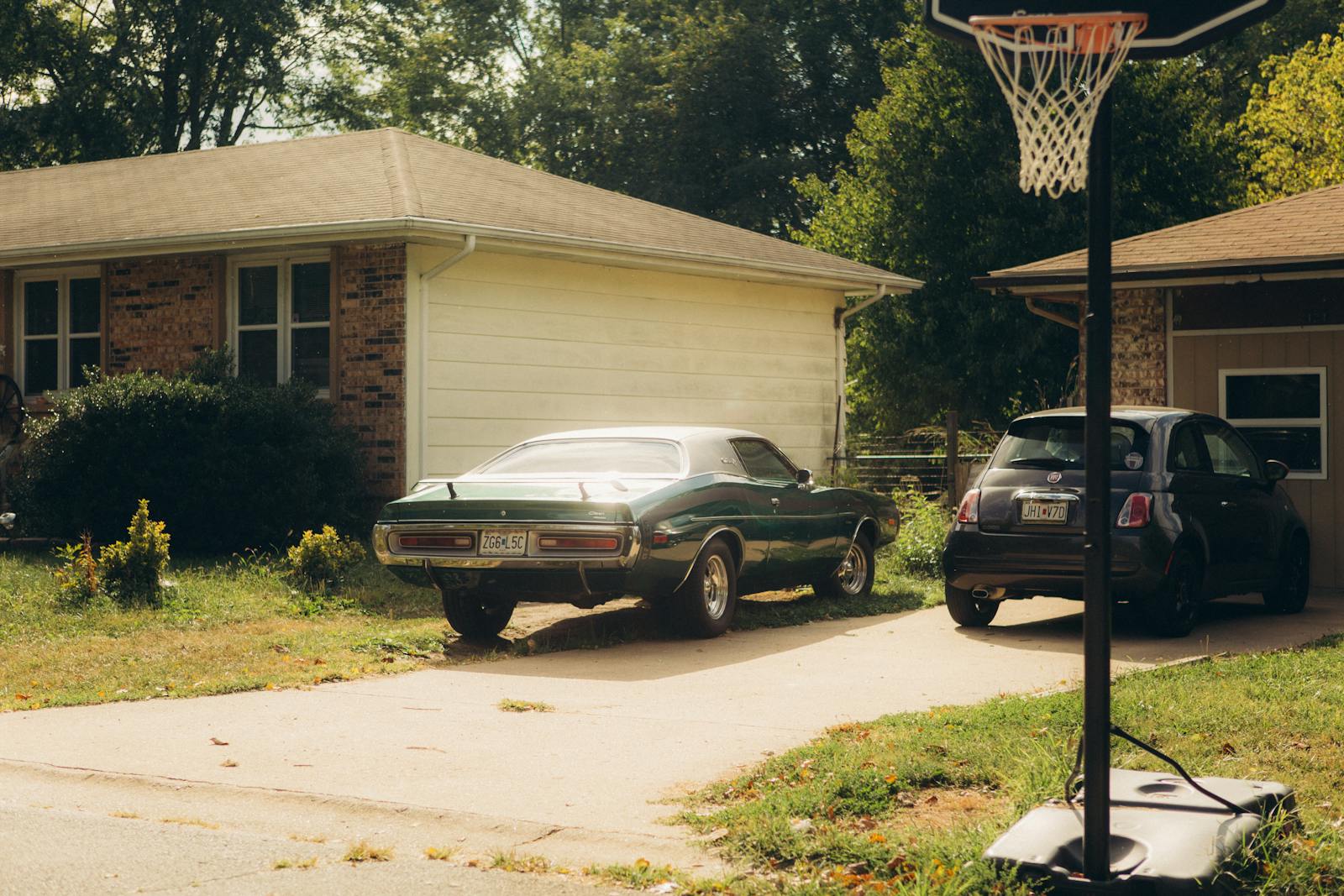

It started the way a lot of modern headaches start: a guy stepping out onto his front porch with a coffee in one hand and the vague sense that something’s… off. The driveway looked wrong. Not “did I forget to bring the trash cans in?” wrong, but the kind of wrong that makes your stomach drop before your brain catches up.
The car that was always there—his car, the one he’d parked nose-in the night before—was gone. In its place were a few damp tire marks and a little rectangle of broken glass glittering in the morning light like someone had sprinkled sand. For a split second, he thought, stolen, because what else do you think when your vehicle vanishes from your own property?
Then he noticed the giveaway: faint scuffs on the edge of the driveway where a metal dolly had scraped, and a couple of deep grooves in the soil next to the curb where something heavy had dragged. Somebody hadn’t stolen it quietly. Somebody had towed it.
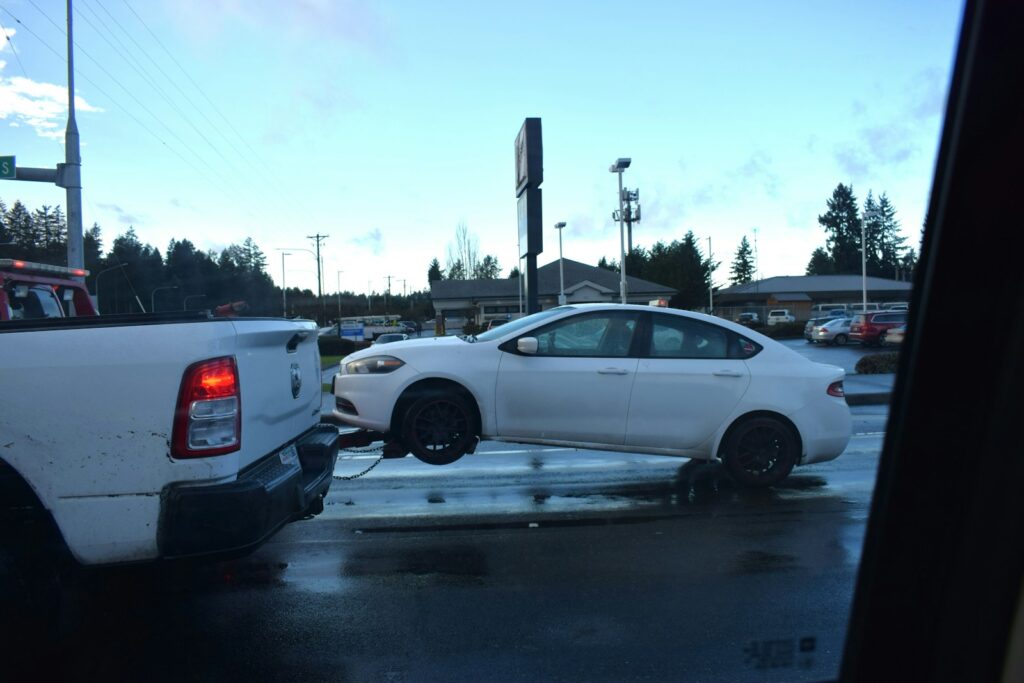
The “Are You Towing Me?” Phone Call
He did the frantic, half-rational checklist—walked around the house like the car might be hiding behind the shed, hit the lock button on the key fob like it could chirp back from another dimension. When that obviously didn’t work, he called the non-emergency police line, because that’s what people do when they’re trying to find out whether they’re being robbed or bureaucratically inconvenienced.
The dispatcher didn’t sound surprised. She asked for his address, asked for the make and model, and then said something along the lines of, “We’ve got a tow record for that location this morning.” Not stolen. Just… removed. Apparently, someone had called in a tow for an “unauthorized vehicle” parked in a driveway.
He kept repeating the same sentence like it might become true through sheer force: it was his driveway, his car, and he had no HOA. There wasn’t even shared parking, no apartment lot, no “resident permit” drama—just a normal house, a normal driveway, and a tow truck that had rolled up like it owned the place.
Tracking Down the Tow Yard
The tow company name came through next, and suddenly the morning turned into one of those “phone in one hand, keys in the other, pacing in circles” situations. The company’s line rang forever, then picked up with the kind of bored, clipped tone that makes you feel like you’re interrupting their day by asking where your property went.
They had it, yes. They had a car towed from his address, yes. No, they weren’t “sure” about the details because “dispatch handles that,” and dispatch “wasn’t in yet,” which is a wild thing to say when your business is actively moving people’s vehicles around at sunrise.
He drove to the yard anyway—because what else can you do?—and got the full experience: chain-link fencing, a handwritten sign about fees, the faint smell of hot oil and old cigarette smoke, and a counter window that felt designed for arguing. He told them his address again, his plate number, his VIN, all the information that should’ve ended the conversation.
The person behind the window blinked, typed, frowned, and then gave him a line that would’ve been funny if it weren’t about his car: “Huh. That’s weird.” They had a vehicle logged from his driveway, but the plate didn’t match what he was saying. The make was the same. The color was the same. The last few characters on the paperwork were off by just enough to make his neck go hot.
“Similar Car” Isn’t a Defense
This is where the story gets infuriatingly normal: the tow company’s first move wasn’t to fix it. Their first move was to imply he was mistaken. Maybe his car was somewhere else. Maybe a family member moved it. Maybe he had the wrong plate. Maybe, maybe, maybe—anything to keep the problem floating in the air rather than landing on their desk.
He pushed back, because he had to. He pulled up photos on his phone of the car parked in the driveway the night before. He showed them the registration card. He offered the key fob like a magic trick. He even asked them to just walk him through the yard until he found it himself.
That’s when one of the employees did that reluctant shift in posture—shoulders tightening, voice dropping—like they were about to say the quiet part out loud. “It might’ve been a similar car,” they said, as if “similar” is a category that matters when you’re hooking a two-ton object to a winch and dragging it out of private property.
And then, finally, the admission landed: they had towed the wrong one. The call had been for a different address nearby, or a different vehicle, or the paperwork was wrong—everyone’s story seemed to wobble depending on who was talking. But the core was the same: they’d rolled into his driveway and taken his car, and they weren’t supposed to.
By the Time They Said It, His Car Wasn’t His Car Anymore
Here’s the part that made it feel less like a clerical mistake and more like a small disaster. When he finally got eyes on the vehicle, it wasn’t sitting there like a harmless mix-up waiting to be corrected. It looked handled—like it had been treated as a problem to be moved quickly, not a piece of someone’s life with value attached.
There were fresh scrapes along the bumper and a gouge near the wheel well where the tow gear had bitten in at a bad angle. One rim had a raw, metallic scuff that wasn’t there before. The undercarriage had a shiny new scar where something had dragged.
Inside, it was worse in a different way. The way he described it, it wasn’t “totaled,” but it was violated—stuff in the center console shifted, loose change scattered, a charging cable yanked out like someone had been rough searching for a toll tag. The little glittering glass he’d seen in his driveway suddenly made sense, because one of the side windows had a crack spidering out from the corner, the kind you don’t notice until the light hits it just right.
The tow company had a response for that too, of course. They said it must’ve already been like that. They said it happens during transport. They said he needed to file a claim. They said a lot of things that all sounded like “not our fault” stretched out into full sentences.
The Paper Trail vs. the People Problem
He asked for the supervisor, because that’s the only card left when the person in front of you keeps shrugging. The supervisor didn’t come out with apologies; he came out with policy. There were forms. There was a process. There was that subtle vibe of, “You can yell, but it won’t change what I’m willing to do.”
They offered to release the car without the tow fee—like that was some generous compromise instead of the bare minimum when you take the wrong vehicle. But the damage wasn’t a fee problem. It was a “you just caused hundreds, maybe thousands of dollars of repairs” problem, plus the fact that the car was now flagged in their system like it had been legitimately impounded.
He wanted them to put in writing that they towed the wrong car. At first, they wouldn’t. Then they said they could “note” it on the paperwork but couldn’t “admit fault,” which is a neat trick where you acknowledge reality without letting it become useful to the person you harmed.
Meanwhile, his day was evaporating in real time: the car that was supposed to take him to work, to errands, to life, was sitting behind a fence. Even when they finally handed over the keys, he didn’t feel like he’d gotten anything back. He felt like he was being allowed to reclaim a thing that had been messed with, and now he was supposed to politely navigate the aftermath.
He left with a stack of documents that didn’t say what he needed them to say, photos on his phone of scratches he didn’t have yesterday, and that weird buzzing anger that comes from being treated like a nuisance when you’re the one who got hit. The company’s final stance wasn’t “we’re sorry”; it was “file a claim and wait.”
And that’s the lingering tension that makes the whole story stick: the tow company eventually admitted it was the wrong car, but only after the tow had already happened, the damage had already been done, and the burden had already shifted onto him to prove it—prove the condition before, prove the condition after, prove that “similar car” doesn’t magically erase responsibility. He got the car back, sure, but he drove away knowing the real fight hadn’t even started yet.
More from Steel Horse Rides: