
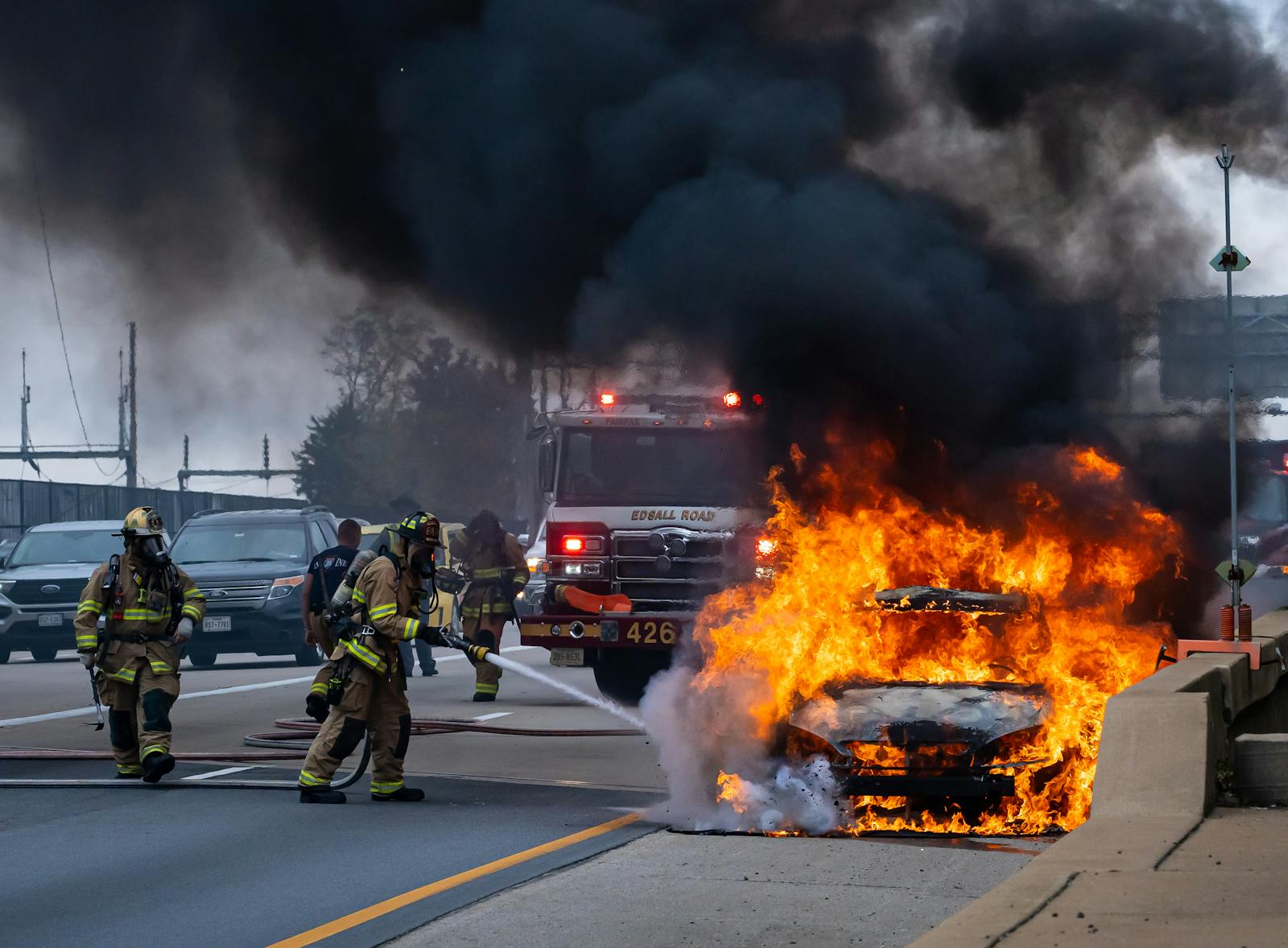

By the time the hazard lights were blinking on the shoulder, the kid already knew something was wrong. Not “new car jitters” wrong—more like that sour, hot smell that makes your stomach drop because your brain is doing the math before your eyes catch up. He’d only been driving his first car for twenty minutes, a used sedan his mom had spent weeks hunting down because it was supposedly “clean,” “reliable,” and most importantly, within their budget.
He called his mom with that thin, trying-not-to-panic voice teenagers get when they’re determined to sound like adults. He told her the temperature gauge spiked, then there was smoke slipping out from the edge of the hood like someone lit a cigarette under it. She was already grabbing her keys when he said the word that changes the whole conversation: flames.
And while she was racing toward the highway with her heart in her throat, the seller—the same guy who’d been all smiles in the parking lot an hour earlier—was sending messages that might as well have been copied and pasted from the world’s worst customer service script. According to him, the car was “running fine yesterday.”
The deal that felt “good enough”
The mom hadn’t gone into this expecting perfection. She’d gone into it expecting reality: her son needed something to get to school, to work, to practice, and she didn’t have new-car money. So she did what a lot of parents do—scrolled listings at night, cross-checked prices, asked friends, and tried to spot red flags in grainy photos.
The seller looked legit on the surface. Not a dealership, but not some obviously sketchy listing with three blurry pictures and “NO LOWBALLERS” in all caps. He had a decent pitch: it was his “commuter,” he’d “kept up on maintenance,” and he was only selling because he’d “upgraded.”
They met in a big parking lot because that’s what everyone does now—public place, daylight, safer. The car started without drama and didn’t make any immediate horror-movie noises. The mom asked about the basics, and the seller had answers ready, the kind you give when you’ve practiced them: oil changes “regular,” no accidents “that he knew of,” no major issues “at all.”
They did a short test drive around side streets, nothing that would really stress the engine, nothing long enough for the temperature gauge to tell the truth. The air conditioner worked. The brakes didn’t grind. The kid was beaming in that way that makes parents override the little skeptical voice in their head because they want the moment to be happy.
Twenty minutes into freedom, then smoke
They didn’t even get the celebratory photo with the keys before reality started to creep in. The mom drove her own car behind her son as he took the used sedan toward the main road, giving him space but staying close, like a training-wheel convoy. Everything looked normal until she noticed him tapping the brakes a few times, like he was trying to feel something out.
Then he pulled off sharply onto the shoulder. At first she thought it was nerves—maybe he needed a minute, maybe he stalled, maybe he forgot where the wipers were. But when she got closer she saw the hood shimmering with heat, and a thin gray line of smoke curling up like a warning flare.
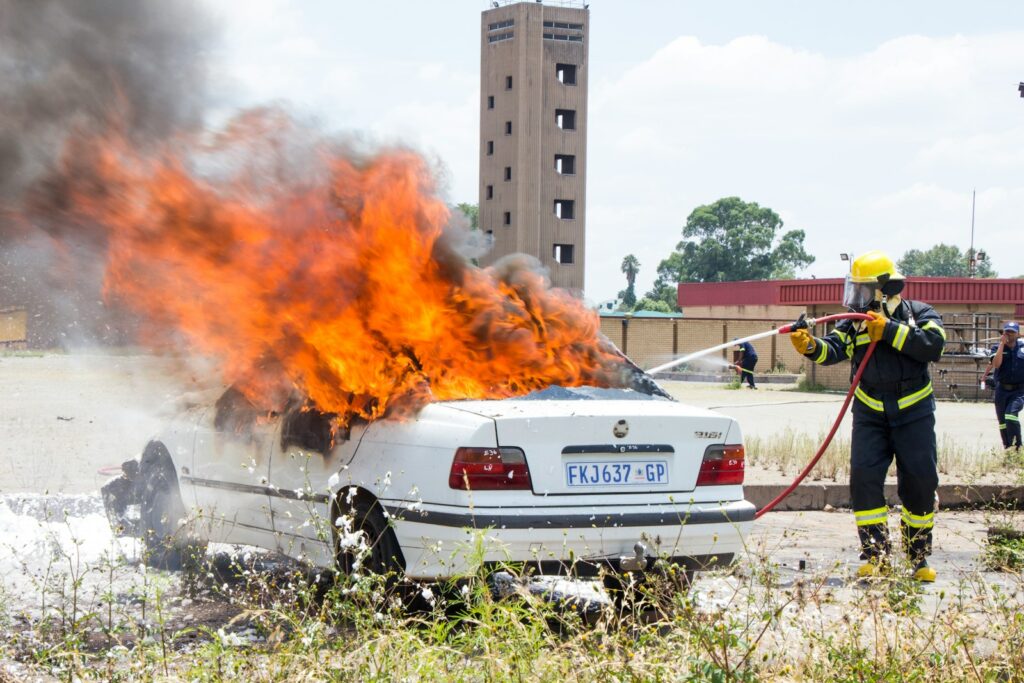
Her son popped the hood the way people do in movies, as if looking at it will help. What he got was a face full of hot air and the sight of something actively failing. The smoke thickened fast, and then, with the kind of casual cruelty only mechanical problems have, it turned into actual fire.
They did the frantic shoulder-of-the-highway dance: step back, step forward, is there an extinguisher, should we call 911, don’t open the hood too much because oxygen, no, get away from it. Another driver slowed down and shouted something through a window, and the mom remembers thinking how strange it was that her kid’s “first car memory” was going to be this.
The seller’s “running fine yesterday” routine
Once the fire was undeniable and they were waiting on help, the mom did what anyone would do—she called the seller. Not to scream, at first. More like, “Hey, something is seriously wrong, the car is on fire, what did you not tell us?”
The seller’s response wasn’t shock. It wasn’t “Oh my god, are you okay?” It was a calm insistence that sounded almost rehearsed: he’d driven it recently, it was fine, it had been “running fine yesterday.” He said it like those words were a shield that protected him from the reality of what was happening in a ditch off the highway.
She sent a photo. Then a video, because she could already feel the argument forming: him claiming exaggeration, her knowing she’d need proof. The flames flickered under the hood like a campfire built in the wrong place, and the seller’s next message still somehow managed to be defensive.
He asked if her son had “done something” to it. Did he “rev it hard,” did he “hit something,” did he “mess with the engine.” It was the classic pivot—if he could make it sound like user error, he could keep repeating “yesterday” like it was a magic date that erased today.
The awkward timeline nobody wants to talk about
That’s when the mom started replaying the earlier conversation in her head, like scrubbing back through security footage. The seller had been a little too quick about some answers. He’d mentioned the battery was “newish,” which can be normal, but also the kind of detail people drop in to make a car feel recently cared for.
She remembered how the hood looked when he opened it in the parking lot—cleaner than expected for an older car, almost like someone had wiped it down. There’s nothing illegal about a clean engine bay, but it’s also the sort of thing you do when you’re trying to hide leaks and grime that tell a story. She remembered a faint chemical smell that she’d chalked up to “old car” smell, because that’s what people do when they want a deal to be real.
The fire department arrived, and the firefighters treated it like it was just another Tuesday: quick, controlled, no drama. The mom watched the foam and water hit the engine area and felt the weird mix of relief and humiliation—relief that her son was okay, humiliation that she’d handed money over for this. The car didn’t burn to a husk, but it didn’t look like something you’d confidently drive home, either.
When she called the seller again, his tone shifted into something coldly polite, like he’d decided the best defense was to be boring. He kept circling back to the idea that it had been fine before they bought it, and that once they drove away, it was their problem. He didn’t say “sold as-is” like a cartoon villain, but he didn’t have to; the implication was thick.
Trying to get answers while the car sits dead
The tow truck driver was the first person to say out loud what the mom had been thinking: “Cars don’t usually just catch fire for no reason.” He didn’t diagnose it on the spot, but he mentioned the usual suspects—fuel leak, electrical short, overheating so severe something ignites. The mom nodded, absorbing each possibility like a new kind of dread.
Back at home, the kid was quiet in a way that made the mom angrier than if he’d been yelling. He kept apologizing, even though he hadn’t done anything wrong, because teenagers tend to take responsibility for disasters just because they were present when it happened. The mom was the one doing the adult version of spiraling—looking at their bank app, looking at the bill of sale, looking at the messages where the seller sounded increasingly like someone trying to create a paper trail of innocence.
She reached out again with a direct request: either help pay for a mechanic to inspect what failed, or unwind the deal. The seller didn’t blow up; he just stayed stubborn. “It was fine,” “I don’t know what you did,” “You saw it drive,” “I can’t be responsible once it’s sold.”
What made it sting wasn’t just the refusal. It was the way he refused—like the fire was an inconvenient rumor rather than a fact, like her son’s shaking hands on the roadside were an argument tactic. The mom couldn’t shake the feeling that the seller knew the car had an issue and was counting on it lasting just long enough to become someone else’s problem.
They hadn’t even gotten to the part where a mechanic confirmed what happened, or whether insurance would touch any of it, or whether there was any legal path that didn’t cost more than the car. All they had, for now, was a charred engine bay, a kid whose first taste of independence came with sirens, and a seller still hiding behind the same stubborn sentence—“running fine yesterday”—as if yesterday was the only day that mattered.
More from Steel Horse Rides: