

It started the way a lot of parking lot drama starts: with a sound so small you almost convince yourself you imagined it. A soft little tap—plastic on plastic—right as a guy in a dusty gray sedan eased out of a cramped spot near the front of a strip mall. He stopped immediately, the kind of stop that says, “Okay, let’s handle this,” not “I’m trying to get away with something.”
The other car was a white crossover wedged into the neighboring space at a slightly crooked angle, its front wheel turned like it had been parked in a hurry. The driver, a woman in big sunglasses, popped her door open before the sedan driver even had time to put his car in park. And before either of them said more than a couple words, she already had her phone out, held upright at chest level like a badge.
That’s the part that set the tone. Not the tap, not even the annoyance—just the immediate decision to film. The guy, who later told the story from his own side, said he could practically feel the moment shifting from “two adults trading insurance info” to “someone’s about to perform.”
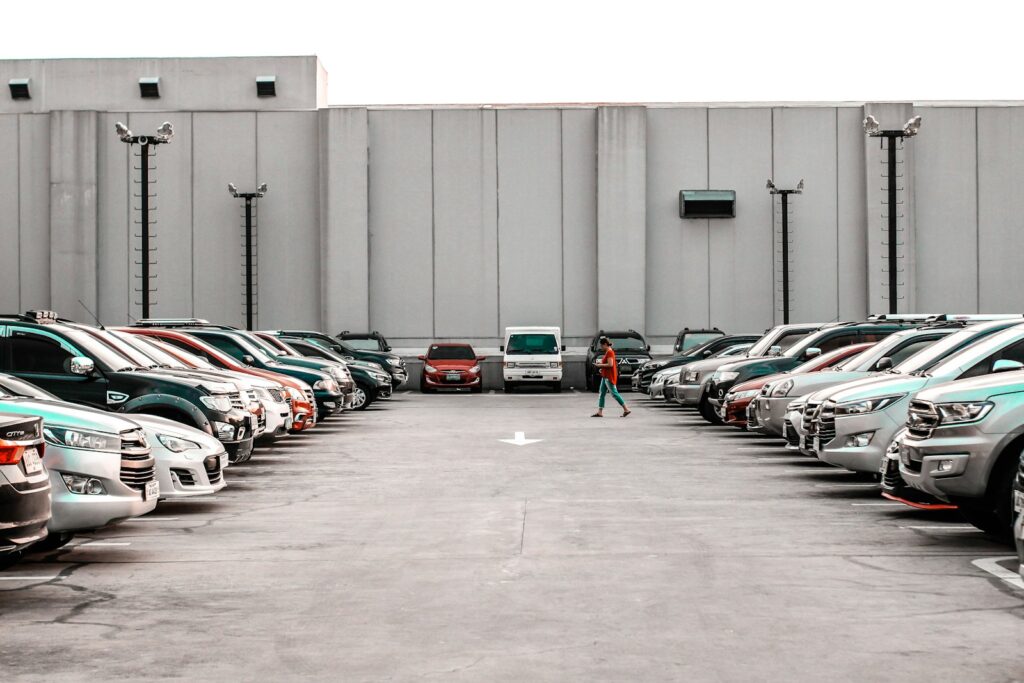
The tap that barely left a mark
The sedan driver—call him Mark, since that’s what he was called in the retelling—got out and did what most people do first: he looked for damage. He ran his fingers along his rear bumper, then crouched in front of the crossover’s front corner like he was checking a scuff on a rental. The “impact” was the kind you’d normally chalk up to a shopping cart, a kid’s bike handle, or somebody pushing a stroller too close.
Mark said he pointed out there wasn’t a dent, just a faint gray smear that looked like it would come off with a wet wipe. He offered to take pictures for both of them and said, calmly, that if she wanted to file a claim he’d give her his info. The woman didn’t move closer to inspect; she held the phone steady and kept it trained on his face, asking for his name and repeating, louder each time, “So you hit my car.”
Even in Mark’s version, he doesn’t pretend it was nothing—he admits the tap happened. What he insists on is that he didn’t try to leave and he didn’t deny it. He said he told her, “Yeah, I bumped it, I’m here, let’s exchange information,” and she answered by panning the camera over the cars as if she’d just found a crime scene.
When filming turns the conversation into a script
The woman—let’s call her Tessa—kept the phone up the whole time, narrating in that specific tone people use when they want the clip to make sense without context. She announced the make and color of Mark’s car, said the license plate out loud, and kept describing him as “this man,” even though he was standing three feet away. Mark said he asked her, twice, to stop filming his face, and she replied, “Then you shouldn’t hit people.”
They were still in that early stage of an argument where it could’ve fizzled out if either person had chosen boring. Mark went to his glove box for his insurance card, and Tessa’s camera followed, hovering near his open door. He told her to step back, and she said she was “gathering evidence,” like she’d watched enough courtroom clips to think that sentence was a magic spell.
That’s when the first real awkward moment hit: Mark’s hands started shaking while he dug for the card. Not from fear exactly—more from the fact that a normal, mundane exchange had turned into a recorded confrontation with an audience waiting somewhere. He kept trying to talk like a regular person, and she kept talking like she was reading captions.
The screaming match doesn’t start where the clip starts
The video that made the rounds later didn’t begin with the tap or the “I’ll give you my info” part. It started mid-escalation, right when voices were already sharp. In the clip, Tessa is loud, saying, “He’s refusing to give me his insurance,” and Mark is louder, saying, “I’m not refusing, I’m telling you to stop shoving a phone into my car.”
Mark’s point—at least in his telling—was that he did offer information, just not while being filmed two inches from his hands like he was about to swap plates. He said he tried to angle his wallet and card away from the camera, and Tessa leaned in to keep it in frame. To him, it wasn’t about being “caught,” it was about not wanting his address and policy number floating around on someone else’s account.
Their volume climbed in these jagged steps. Tessa kept repeating that he was “trying to leave,” and Mark kept repeating that he was literally standing there with his keys in his hand. A guy pushing a cart slowed down to stare, then pretended he didn’t. A couple near the storefront paused like they wanted to intervene, then remembered they were strangers and drifted away.
The screaming—actual screaming—started when Tessa stepped between Mark and his driver’s door as he tried to close it. Mark said he didn’t touch her, but he did raise his voice and tell her to move. In the clip, her phone wobbles and she yells, “Don’t intimidate me,” and he snaps back, “You’re the one blocking my car and filming me.”
What “not telling the whole truth” really meant
After the clip spread around, the simple story people latched onto was easy: man hits car, gets caught on camera, loses it. Mark’s frustration wasn’t just about being painted as the villain; it was about the missing first five minutes. He said the moment anyone hears “refusing to provide insurance,” they stop listening for nuance, even if the nuance is “I’m trying not to have my personal info recorded.”
He also claimed there was a second camera angle nobody saw because it wasn’t dramatic enough. A store employee had stepped outside after hearing the yelling and, according to Mark, asked both of them to calm down. Mark said he told the employee he’d give his info in writing and suggested they call non-emergency police to document it, but Tessa didn’t want that; she wanted him to say, on camera, that he “hit her car” and that he was “at fault.”
That part matters because it shifts the vibe from “woman protecting herself” to “someone building a narrative.” Mark said he refused to admit fault on the spot, not because he was denying the tap, but because every insurance company on earth tells you not to do that in a parking lot while adrenaline is spiking. Tessa, still filming, kept framing his refusal as guilt, like the clip needed a confession to land.
Then there was the damage question. In the video, Tessa points to her bumper and says it’s “cracked,” but Mark says the “crack” was already there—an old scrape line near the wheel well with dirt in it, not fresh plastic. He said he’d taken close-up pictures with timestamps and even suggested they both take photos right then, but her camera stayed focused on his face and her own voice.
The fallout is paperwork, not closure
Eventually, they did exchange information—but only after a third person stood close enough that Tessa backed off the door. Mark said he wrote his name and number on a receipt because he didn’t want to hand over his license on camera. Tessa complained, loudly, that it was “fake” and that she “needed his ID,” which made the bystander’s eyebrows shoot up like, that’s not how this works.
Mark left first, slowly, like he was worried any sudden movement would be interpreted as fleeing. Tessa stayed behind, still filming, narrating that she’d be “sending this to her lawyer.” Mark’s account makes it sound like he spent the rest of the day doing the most tedious kind of damage control—calling his insurer, uploading photos, writing down the time, the location, the weather, anything that might help if the story got stretched.
And that’s where the real tension sits: not in whether a parking lot tap happened, but in how fast a minor mistake can be turned into a character indictment when someone is filming with a goal. Mark wasn’t claiming innocence so much as pleading for context—because once a clip starts mid-yell, everyone assumes the yelling is the beginning. The last thing he said in his retelling wasn’t triumphant or neat; it was more like a tired warning to himself that next time, he’d call the police immediately, not because he needed protection from a tap, but because he needed protection from the story that comes after it.
More from Steel Horse Rides: