


It was supposed to be one of those “we’re doing fine” nights. Nice restaurant, anniversary reservations made weeks in advance, her hair done, his good button-down on. They’d been trading little jokes in the car about how they were officially “that couple” who could talk about paint colors and dental insurance without falling asleep.
Then the server came back with the card and that particular look—polite, practiced, and just a little too careful. “I’m so sorry,” she said, voice lowered like it was medical information, “but it looks like it was declined.” Her husband’s smile didn’t drop, but it tightened, like he’d suddenly remembered something important he’d meant to handle.
She laughed at first because she thought it was a fluke. Wrong card, weird fraud alert, maybe their bank being dramatic again. He asked to try it one more time, and when it didn’t go through, he reached for his wallet like a man trying to do surgery with oven mitts.
The decline that didn’t make sense
They weren’t rich, but they weren’t paycheck-to-paycheck either—or at least that’s what she believed. They had a joint account for bills and groceries, and separate cards for personal spending that they mostly didn’t police. Their system worked because it was boring: autopay, calendar reminders, and the occasional “hey, did you pay the water bill?” text.
So a decline at a restaurant that wasn’t even wildly expensive made no sense. He tried a second card, then a third, and now the server was hovering with that strained patience that says she’s seen every version of awkward. The wife could feel other tables getting quiet in that way people do when something embarrassing might turn into entertainment.
Finally she pulled out her own card and paid, acting breezier than she felt. He kept mumbling, “That’s weird,” and “I’ll call the bank,” but he wouldn’t make eye contact. In the car, the vibe was so off it was like the anniversary had been replaced with a dentist appointment.
The “bank issue” excuse starts to crack
At home, she watched him pace and jab at his phone, doing the performance of a person on hold with customer service. He said something about a “temporary freeze” and “probably fraud protection,” the kind of explanation that sounds plausible if you don’t listen too closely. She wanted to believe it, mostly because the alternative meant an argument on their anniversary.
But the next morning, her curiosity didn’t let go. She logged into their joint account to make sure the usual payments were going through and found something that made her stomach do a slow, careful flip. There were monthly transfers she didn’t recognize, always around the same amount, always labeled in that vague way banks do when they don’t want to tell you anything useful.
It wasn’t a single “oops” expense. It was a pattern. Fourteen months of it, like a metronome, and the totals were big enough that she suddenly understood how a card gets declined at dinner without either of them technically being “broke.”
Tracing the money to the thing he didn’t mention
She started doing what people do when their reality gets dented: she gathered facts so she wouldn’t feel crazy. She pulled up statements, searched the transaction descriptions, and cross-referenced the payment dates with their budget spreadsheet. Every month, right after his paycheck hit, the same chunk disappeared.
When she confronted him—calm voice, laptop open, screen turned toward him—he tried the soft dodge first. “It’s just some stuff I’ve been taking care of,” he said, like it was a surprise subscription box. She asked what “stuff” cost that much, every month, for more than a year.
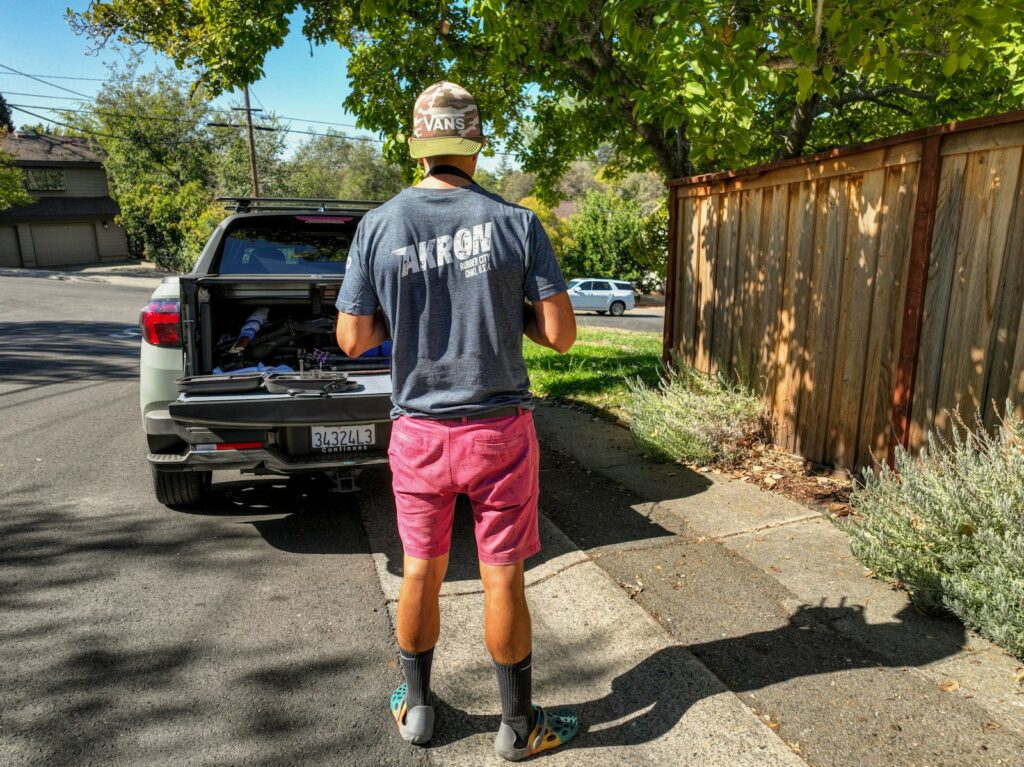
That’s when he finally said it: a truck. Not “a used truck” or “a work truck” or “something temporary.” A $90,000 truck, bought fourteen months ago, financed, and paid for in secret, with payments large enough to quietly eat their flexibility until the anniversary dinner exposed the lie.
She didn’t even have a clean emotional reaction at first—she just stared at him like he’d spoken a different language. They already had a functioning car. They didn’t need a luxury truck. And she definitely would’ve remembered agreeing to take on a six-figure purchase that could collapse their whole budget if anything went sideways.
How he pulled it off for 14 months
His explanation came out in pieces, like he’d been rehearsing the parts that made him look least terrible. He’d done the financing in his name, set the payments to autopay from an account he used for “personal expenses,” and told himself it wasn’t really impacting her because bills were still getting paid. He emphasized the word “still” like that was the standard to aim for in a marriage.
The truck, it turned out, wasn’t hidden in a storage unit or kept at a buddy’s house. He’d been parking it at work, telling her it was easier for his commute because parking was tight at home, and taking it out on weekends when she was busy. When he did bring it home, he framed it as a “borrowed” vehicle or a “work thing,” always with some quick story that evaporated if you asked a second question.
She realized how many small moments she’d shrugged off. The sudden defensiveness when she asked about gas. The way he’d volunteer to do errands alone. The times he came home smelling like new car plastic and acted like it was just “someone’s cologne at the office.” It wasn’t one big deception; it was dozens of tiny ones stitched together into something he could live inside.
And then there was the part he didn’t want to say out loud: he liked it. He liked the feeling of driving it, the compliments, the sense that he’d earned something big and shiny. He liked it enough to gamble their stability on it and hope the math never caught up.
The argument isn’t about the truck anymore
Once she got past the raw number—$90K, fourteen months, all of it hidden—the questions changed. She wanted to know what else he’d decided unilaterally. If he could keep a loan that massive secret, what did “transparency” even mean in their marriage?
He tried to make it about embarrassment. He said he didn’t tell her because he knew she’d say no, and he didn’t want to fight. He painted himself as someone who just wanted one thing for himself, as if “one thing” isn’t a rolling debt obligation that can derail home repairs, vacations, savings, and any emergency that shows up uninvited.
She pointed out the obvious: he didn’t avoid a fight. He delayed it and made it uglier. Now the fight wasn’t only about money; it was about trust, about being treated like a roommate who covers the check when his “bank issue” suddenly appears in public.
He offered the quick fixes first, because that’s what people do when they’re cornered. He said he could sell it. He said he could refinance. He said the payments were “manageable” if they “tightened up for a while,” like austerity was a cute couple’s challenge. She kept coming back to the same thing: he’d already decided they would tighten up, and he’d done it without telling her.
Even the restaurant moment replayed differently now. She remembered how fast he’d let her pay, how relieved he’d looked when the problem shifted to her card. It wasn’t just a declined payment; it was the first time his secret finally reached out and touched her, in front of a stranger holding a receipt folder.
By the end of the confrontation, they were stuck in that awful in-between where nothing is resolved but everything is changed. She didn’t know if he’d actually sell the truck or just say he would until the pressure faded. He didn’t know how to make her believe him when she’d just learned he was capable of living two financial lives at once.
And that’s the part that lingered most: not the truck itself, not even the money, but the image of him sitting across from her at a candlelit anniversary dinner while a quiet financial collapse was already in motion. She could handle a bad purchase or a dumb mistake, but what she couldn’t stop thinking about was how practiced his normal face had been—right up until the card reader finally refused to keep his secret for him.
More from Steel Horse Rides: