
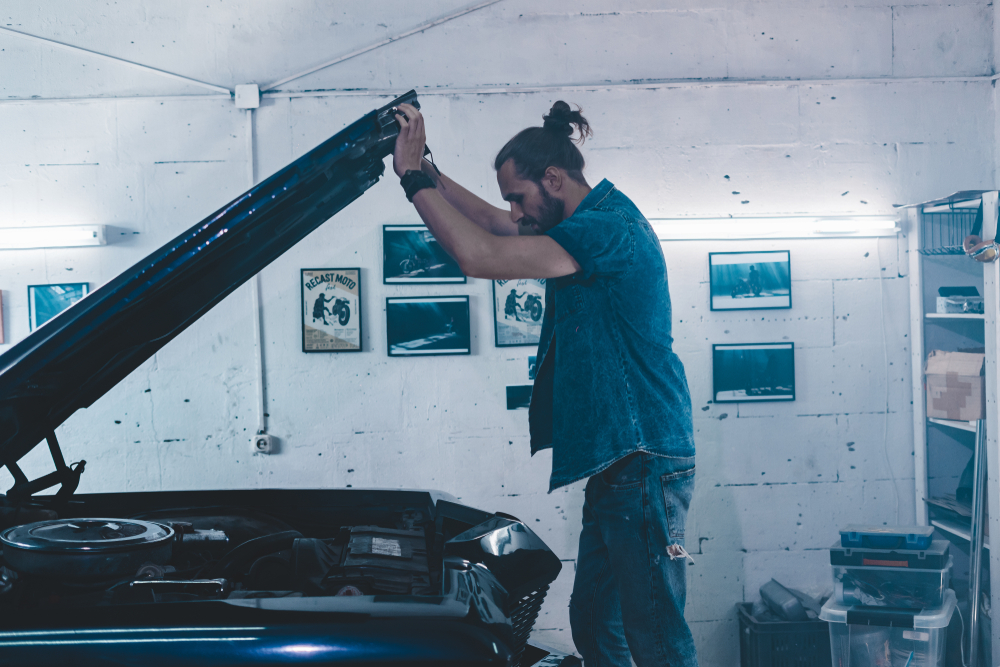

By the time the widow handed over her debit card, she’d already apologized three times. She apologized for asking too many questions, for not knowing the right words, for being “a bother.” The mechanic behind the counter did that calm, practiced thing where he sighed like the world was exhausting, then told her it was fine—he’d “take care of her” and get her late husband’s truck “back to factory.”
The number on the invoice was $3,800, stamped next to the phrase “REBUILD ENGINE.” It was the kind of amount that makes your stomach drop even when you were bracing for bad news. She paid anyway, because the truck was the last loud, stubborn piece of her husband still sitting in the driveway, and because she didn’t have the energy for a fight with a shop full of men who spoke fluent intimidation.
Two weeks later, the truck came back sounding… exactly like it did before it left. Same uneven idle, same shudder when it shifted, same reluctant cough on cold starts. The mechanic told her it “needed to relearn,” that rebuilt engines “run weird for a minute,” and that she should just drive it and “stop worrying.” She tried, because grief makes you second-guess your own ears.
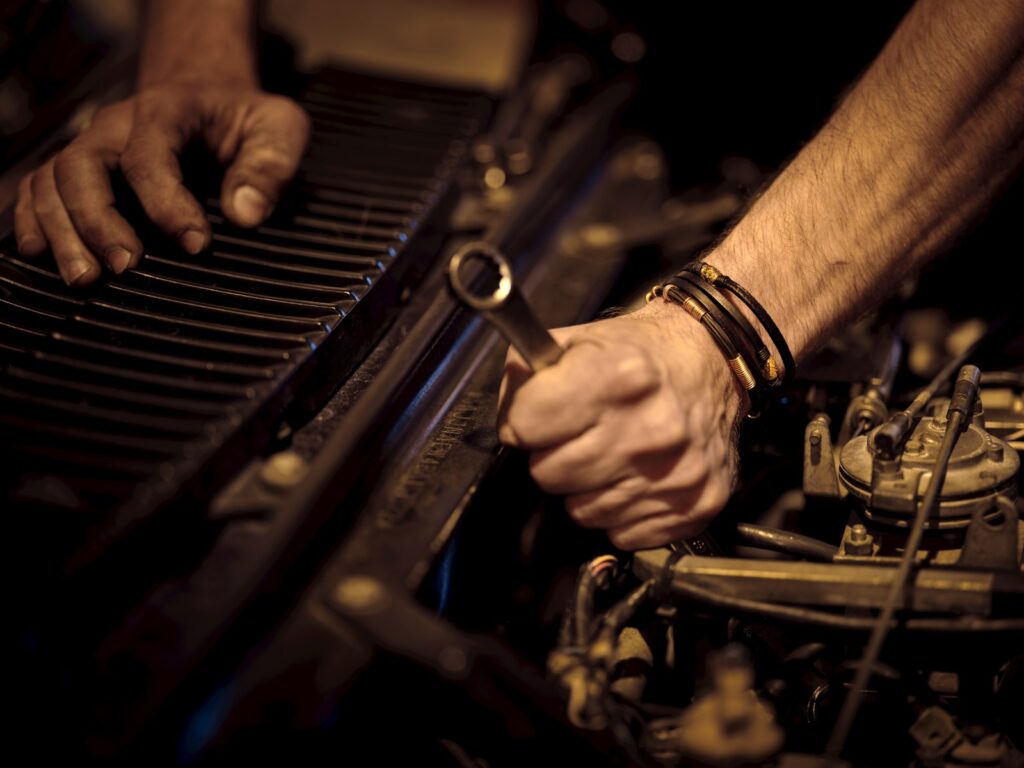
The truck that became a shrine
The truck wasn’t some showpiece; it was her husband’s daily driver, the one he used for hardware store runs and hauling yard debris. After he died, it turned into an awkward monument—always there, always in the way, always reminding her that time had moved on without permission. She didn’t even like driving it, but letting it rot felt like admitting something final.
When it started acting up last year, her husband had been the one to pop the hood, poke around, and mutter about “compression” and “that damn ticking.” He’d gotten as far as marking a few hoses with tape and leaving a set of sockets in a coffee can on the workbench. Then he got sick fast, and the truck sat while everything else took over.
So when it wouldn’t start reliably this spring, she did what a lot of people do when they’re overwhelmed and alone: she picked the closest shop with a clean waiting room and a friendly-sounding name. The mechanic was polite in that slippery way, calling her “ma’am,” speaking softly, and making sure she understood that modern engines were “complicated.” He mentioned internal damage, said it wasn’t safe to drive, and floated the phrase “rebuild” like it was the only responsible option.
The invoice that didn’t match reality
She didn’t argue when he started listing parts and labor like a doctor reading test results. “New rings, bearings, machining, gaskets, the whole nine,” he said, tapping his pen on the clipboard as if he could see inside the engine with X-ray vision. When she asked if there was a cheaper fix, he gave her a look that made her feel twelve years old and foolish.
The invoice itself was oddly vague, which should’ve been a red flag, but she was too tired to parse it. A couple of lines for parts, a big block for labor, and that bold “REBUILD ENGINE” that looked official enough. The shop kept the truck longer than promised, then called like they were doing her a favor squeezing it in.
When she picked it up, the mechanic didn’t walk her through what they’d done or show her anything old and replaced. He just tossed out a few warnings—“break-in period,” “don’t baby it,” “bring it back if it acts up”—and waved her toward the parking lot. She drove home gripping the steering wheel so hard her hands hurt, trying to convince herself the noise was less, the vibration was normal, that she wasn’t about to throw another chunk of money into a hole.
The nephew who couldn’t let it go
Her nephew got involved because he stopped by one evening and saw the invoice sitting on the kitchen table. He wasn’t a master tech or anything, but he’d grown up helping his uncle with projects and had that stubborn mechanical curiosity that makes people open things just to see what’s inside. When she told him the truck still sounded “off,” he asked the simplest question in the world: “Can I look?”
She hesitated like she was asking permission to disturb a grave. But she handed him the keys, and they went out to the driveway where the truck sat under a layer of pollen. He started it, listened for maybe ten seconds, and his face tightened in a way that wasn’t panic—it was recognition.
He didn’t say “you got scammed” right away. He asked her to pop the hood, and he leaned in carefully, like he expected to find proof of life. The engine bay looked untouched in that specific way old engines look when no one’s been in there: dust settled evenly, grime in all the same corners, a few leaves stuck near the cowl.
The cobwebs that shouldn’t exist
It wasn’t some dramatic cinematic reveal. It was a small, stupid detail that made the whole thing snap into focus: cobwebs stretched between the intake and a bracket near the firewall, thin and brittle like they’d been there through seasons. Not fresh little strands from a busy spider—old webs, the kind you only get when nothing’s moved for a long time.
The nephew pointed without touching them at first, like he didn’t want to disturb evidence. Then he checked the obvious stuff anyone would check if an engine had supposedly been rebuilt: tool marks on bolts, fresh sealant around mating surfaces, anything that looked recently opened. The bolts looked the same, the grime lines were unbroken, and the gaskets—at least what was visible—didn’t look new at all.
He found one of his uncle’s old bits of tape still wrapped around a hose, faded and slightly curled at the edges. That tape had been there since last year, back when his uncle was still marking things as a “for later” project. The nephew just stared at it for a second, then shut the hood gently, like slamming it would make it too real.
Inside, the widow kept trying to make it make sense. Maybe they rebuilt it without taking anything off the top? Maybe they did internal work from the bottom? She said these things out loud, half to him and half to herself, because $3,800 is a lot of money to accept you might’ve lit on fire. The nephew didn’t argue with her; he just pulled up the invoice again and started reading every line like it was a confession.
The confrontation that turned cold
They went back to the shop the next morning with the invoice and a folder of receipts she’d kept since her husband got sick. The widow dressed like she was going to court—neat blouse, hair pinned back, the same careful presentation people use when they think politeness will protect them. The nephew came along in work boots and kept his voice calm on purpose, which somehow made him feel more dangerous.
The mechanic listened with his arms crossed and that faint smirk people get when they think they’re dealing with someone easy. When the nephew mentioned the cobwebs, the mechanic laughed once, like it was a cute misunderstanding. He said they’d done the rebuild “internally,” that the engine bay looking dirty didn’t mean anything, and that the widow was “confusing cosmetic clean-up with mechanical work.”
Then the nephew asked for specifics: what machine shop did the block work, what parts brands were used, where were the old parts, and why didn’t the paperwork list serial numbers or detailed itemization. The mechanic’s tone changed right there—less friendly, more irritated—like he wasn’t used to being questioned in complete sentences. He said they didn’t keep old parts “for liability,” that suppliers were “none of their business,” and that if they were accusing him of fraud they could “talk to his lawyer.”
The widow went quiet in that way people do when they’re trying not to cry in public. She wasn’t yelling or causing a scene; she was shrinking, which somehow made the moment uglier. The nephew asked for the truck to be put back on a lift so he could see the underside and check for fresh work, and the mechanic refused, saying it wasn’t a “free inspection bay.”
They left with the truck still running like garbage and the invoice still feeling heavier than the keys. In the parking lot, the widow sat in the passenger seat and stared forward, blinking hard like she could physically stop the tears from happening. The nephew didn’t promise her it would be okay, because he didn’t know that yet; he just said, very evenly, “We’re not done.”
What made it sting wasn’t only the money, though the money mattered. It was the realization that someone heard “widow,” saw a person who didn’t want conflict, and decided the easiest payday was to sell her a story about work that never happened. And now she had to choose between spending more time and energy fighting a shop that clearly wasn’t afraid of confrontation, or swallowing the loss and watching her husband’s truck become a different kind of monument—one built out of shame, anger, and a set of cobwebs nobody was supposed to notice.
More from Steel Horse Rides: