


It started with a missing set of keys and that specific kind of silence you only get when someone’s done something they’re hoping you won’t notice. The wife had been looking for the Chevelle all week in that half-absent way you look for something you already assume is where you left it. The garage bay was empty, the oil-stained cardboard she’d kept under the engine was still there like a little joke, and her husband was suddenly very interested in reorganizing a toolbox he hadn’t touched in years.
The car wasn’t just “a car” in their house. It was a 1969 Chevelle SS that had belonged to her grandmother, the kind of family artifact people fight over when somebody dies. Grandma had driven it until her knees went bad, then it sat under a cover, then it became the thing the wife swore she’d restore “when life calms down,” which is another way of saying “never, but I like knowing it’s mine.”
So when the husband shrugged and said, way too casually, that he’d “handled it,” the temperature in the room changed. He didn’t say stolen, or towed, or moved. He said he sold it, like he’d sold an old couch off Marketplace, and then waited for her to either laugh or yell so he could pick which version of himself he needed to be next.
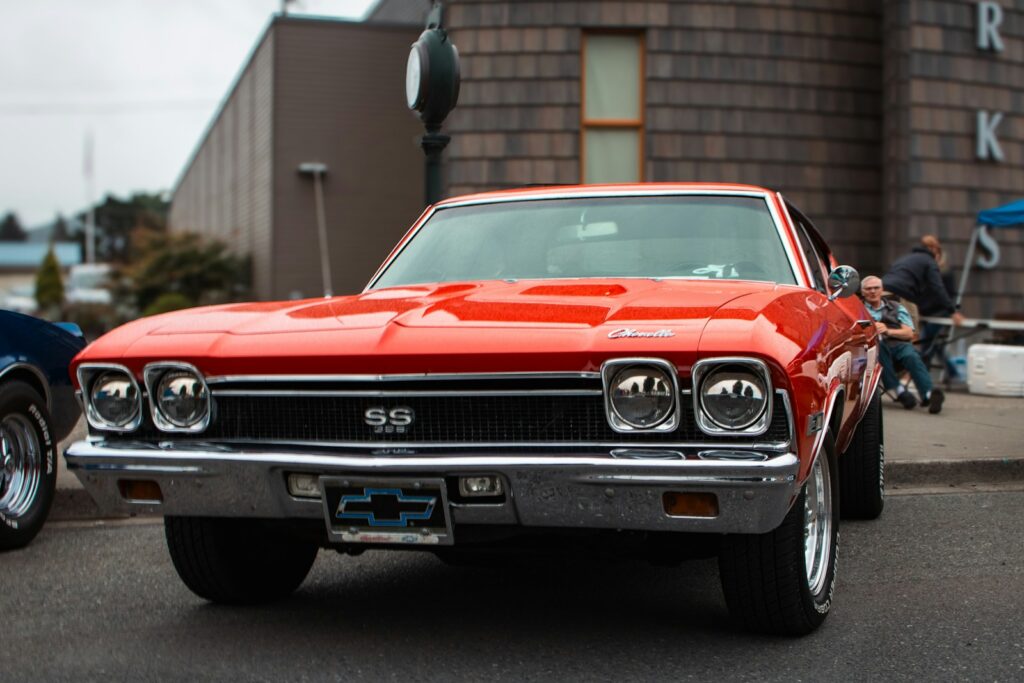
The Chevelle wasn’t his, and he knew it
The first part of the fight wasn’t even about the car. It was about the way he said it: like it was a chore he’d checked off. He told her the Chevelle was “just sitting there” and that they needed money, and how it was “ridiculous” to have a classic taking up space when their credit cards were creeping up and the water heater had been making noise for months.
She reminded him, repeatedly, that the Chevelle was inherited specifically by her. The paperwork had her grandmother’s name, and the wife had been the one paying to keep it registered and insured, even if it was mostly garage décor. He waved that off and leaned hard into the argument that marriage meant “ours,” not “yours,” and that he’d done what any responsible partner would do.
Then he finally dropped the detail that made it feel less like a misguided decision and more like something he’d been planning: the buyer wasn’t some stranger. It was a guy from his work—someone she’d heard about in passing, the coworker who was always flipping motorcycles and “knows classics.” The husband said it like it was a comfort, as if selling her family heirloom to his buddy should soften the blow.
“It’s already done” is the worst thing he could’ve said
He kept insisting it was finalized, that the money was already deposited, that there was no point “making a scene.” When she asked how he even transferred it, he got slippery with details, talking about a bill of sale and “paperwork stuff” like it was boring adult admin and not the entire question. He claimed the coworker didn’t care about the title right away because it was “a project,” and that they’d “sort it out” later.
That’s when she stopped arguing and started doing the quiet kind of frantic thinking that scares people more than shouting. She went to where they kept the car documents—an envelope she’d labeled in thick marker, the one she’d been protecting like it was a birth certificate. The title was still there, and it was still in her grandmother’s name, with the old address and everything.
She didn’t tell him she had it right away. She just asked for the buyer’s name, and he refused, suddenly wary, like he realized he’d handed her a loose thread. He tried to pivot into marital guilt—how she was “choosing a car over their future,” how she didn’t appreciate him trying to fix things—but he slipped and mentioned the coworker’s first name during one of his speeches.
Tracking down the buyer was the easy part
Between that first name, the husband’s workplace, and a little digging through social media, she found the guy in under an hour. The coworker had posted photos of cars before, lots of proud driveway shots and “new project” captions, which made it worse, not better. She messaged him politely at first, the way you do when you’re trying to give someone an exit ramp: “Hey, I think there’s been a misunderstanding about the Chevelle you bought.”
The coworker responded like someone who knew he was in murky water but didn’t want to admit it. He said the husband told him it was his wife’s car “but they agreed to sell,” and that he paid cash because that’s how these deals go. He claimed he had a bill of sale and keys, and that the car was already at his place, in his garage, “safe.”
She asked one question that changed the whole tone: “Do you have the title?” He didn’t, and you could practically hear the pause through the screen. He asked if she could “sign it over” so he could get it registered, like this was a minor inconvenience and not the core of legal ownership.
She showed up with the title in her grandmother’s name
The wife didn’t threaten him, and she didn’t bargain. She asked for his address and told him she was coming by with the original title to clear things up, and that he should have the car accessible. The coworker tried to slow the whole thing down—suggested they meet somewhere neutral, suggested they “get the husband there too”—but she was done negotiating about a car that wasn’t hers to lose in the first place.
When she pulled up, it wasn’t a dramatic movie moment; it was awkward in that intensely real way where nobody knows where to put their hands. The coworker came out looking nervous and a little annoyed, like he’d been dragged into somebody else’s marriage fight and resented it. The Chevelle was inside his garage, uncovered, and she could see the hood up like he’d already started poking around, claiming space.
She didn’t raise her voice. She held the title like it was evidence in a court case and pointed out the name printed on it—her grandmother’s, not her husband’s, not his. She told him she never signed anything, never authorized a sale, and that the only reason she wasn’t calling the police from his driveway was because she believed he’d been lied to too.
The coworker kept trying to make it about money. He wanted to know if she was going to “make him whole,” because he’d paid cash and now he was stuck. She told him that was between him and the man who sold something he didn’t own, and that she wasn’t paying to undo her husband’s decision to gamble with someone else’s property.
The husband’s story started collapsing in real time
What made it especially nasty is that the husband showed up mid-confrontation, because either the coworker texted him in a panic or he’d been tracking her location, or both. He arrived in that hot, defensive mode people get when they’ve been caught and need to rewrite the script immediately. Suddenly he wasn’t “handling it,” he was “trying to help,” and the coworker was “overreacting.”
The coworker asked him, right there, why he didn’t have the title. The husband muttered something about his wife “holding onto it” and how he planned to “get it later,” like the title was a formality and not the thing that makes a sale real. The wife didn’t even argue—she just held it up again, grandmother’s name bold at the top, and let both of them sit with the fact that he’d tried to sell a car he couldn’t legally transfer.
Then came the ugliest part: the husband tried to pressure her into signing it over anyway, in front of the buyer, like public embarrassment would force her into cooperation. He said they “needed the money,” that she was “ruining everything,” and that she was “making him look like a thief.” She didn’t yell; she just said, flatly, that he’d handled the looking-like-a-thief part all on his own.
The coworker looked like he wanted to disappear. He also looked like someone doing quick mental math—how much he’d paid, how much trouble this could turn into, how badly he wanted the car versus how little he wanted cops at his house. He didn’t want to give it back immediately, but he also didn’t want to be the guy caught with a classic he couldn’t title, bought from someone who never had the right to sell it.
They ended in this tense stalemate: the wife insisting the car was hers and the title proved it, the coworker insisting he was out cash, and the husband standing between them trying to turn it into a problem everyone should solve together. The wife left without the Chevelle that day, but she left with the one thing neither of them could manufacture—a clean paper trail that said her grandmother owned the car, and by extension, her husband never did.
Afterward, the real fallout wasn’t just about whether she’d get the Chevelle back. It was about the fact that her husband had looked at something that represented her family, her autonomy, her “mine,” and decided it was a resource he could liquidate the moment it became inconvenient. Even if the car returned to her garage, the marriage was now the thing sitting uncovered, hood up, with everyone staring at the damage and arguing over what it would take to make it roadworthy again.
More from Steel Horse Rides: