
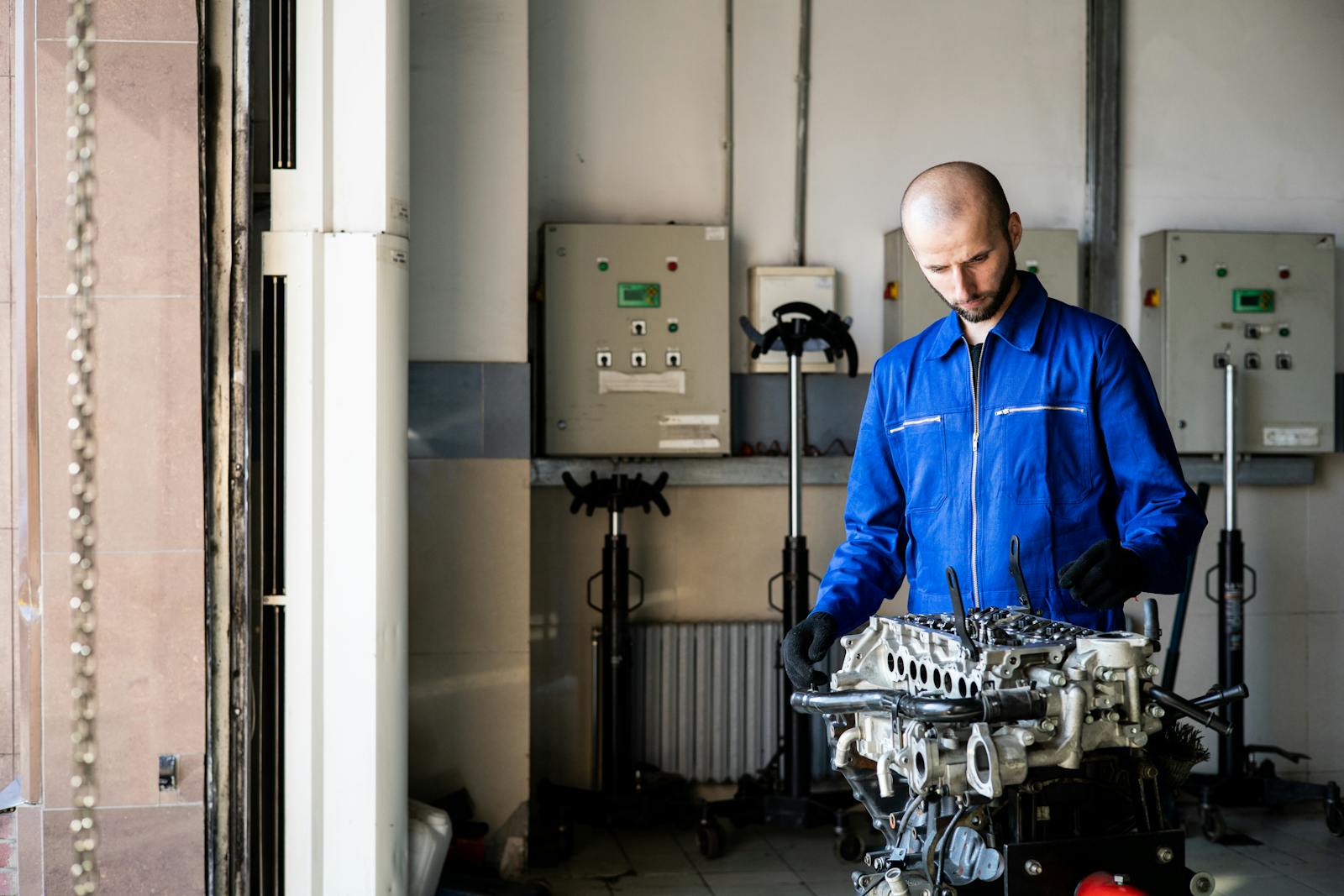

By the time they got to the shop, Marissa was already annoyed in that tired, practical way moms get when their day has been hijacked by someone else’s “it’s probably nothing.” Her husband, Joel, insisted the brakes were just squeaky from the rain. But their minivan had started doing that slight drift at stoplights, the kind you notice when you’ve got a kid in the back and a grocery cart memory still fresh in your mind.
Joel dropped the keys at the counter like he was late for a meeting, did the casual wave at the waiting room, and told Marissa he’d be back after he “ran to grab coffee.” She stayed because the toddler was asleep in the stroller and because, honestly, she didn’t trust him not to talk his way out of whatever the mechanic would say. The waiting room smelled like burnt coffee and rubber, and the TV in the corner was muted but still flashing a daytime talk show nobody was watching.
Twenty minutes in, a guy in a greasy blue shirt came out from the bay, scanned the waiting room like he was looking for someone specific, and then did this tiny head tilt at Marissa. Not a “ma’am, your car’s ready” tilt. More like a “can I talk to you without making a scene” tilt. Marissa stood up, already bracing for sticker shock, and that’s when he pulled her aside by the vending machine and quietly said, “Whoever did this brake job wanted your husband dead.”
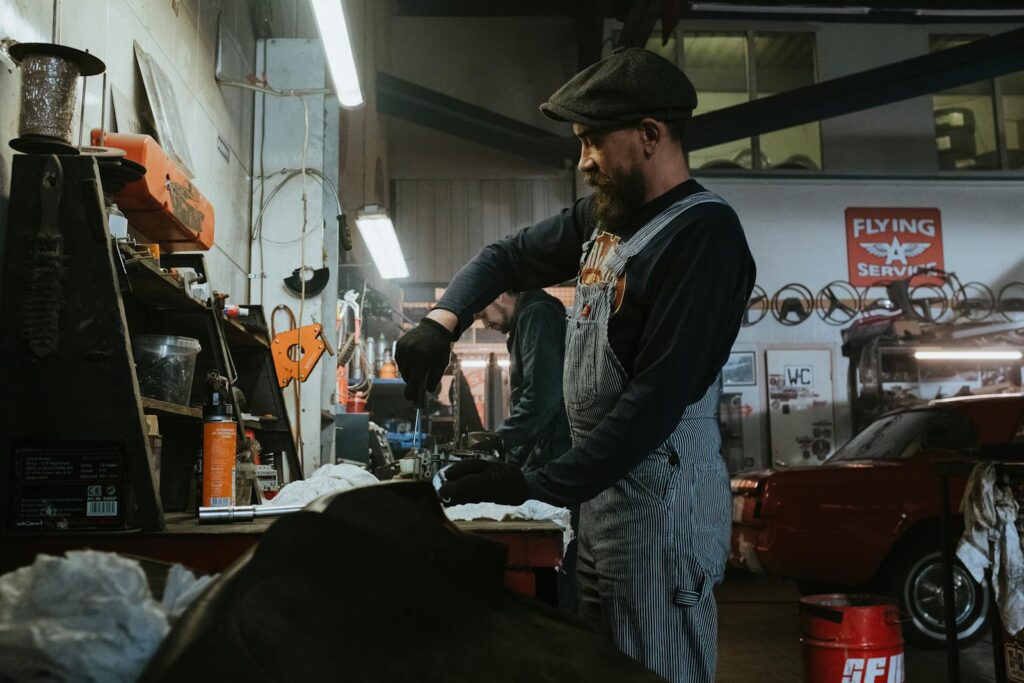
The Small Stuff That Didn’t Add Up
At first, Marissa thought it was some shop tactic—scare the customer, sell the big repair. She even got that flash of irritation, the one where you’re already rehearsing how you’re going to push back. But the mechanic’s face didn’t have that salesman shine; he looked flat, almost angry on her behalf.
He asked her when the brakes had last been worked on. Marissa said a couple months ago, maybe eight, and that Joel’s buddy “from work” had done it in his garage for cheap. The mechanic didn’t say “that’s why you don’t do that,” didn’t lecture. He just nodded like he’d already guessed and told her to come look.
In the bay, the van was up on the lift, wheels off, and there was a neat row of parts laid out on a piece of cardboard like a crime scene display. The mechanic pointed to a caliper bracket and then to the bolts. One bolt had threads stripped clean. Another wasn’t even the right length—too short, like it barely grabbed anything.
“This isn’t somebody being sloppy,” he said, keeping his voice low even though they were alone among the tool chests. “This is somebody making sure it fails.” Marissa felt that cold, delayed understanding spread through her chest, the kind that makes you suddenly aware of how many times you’ve gone 45 miles per hour with a car full of people you love.
The Whisper in the Waiting Room
Back by the vending machine, the mechanic kept it contained, like he didn’t want to terrify the whole lobby. He told her that the brake line had been routed wrong and had been rubbing—slowly—against something it shouldn’t. Not a clean cut. Not a dramatic snap. The kind of damage that would show up when you least expected it, like on a highway exit ramp or a downhill road.
He asked if the van had felt “mushy” when braking, and Marissa realized she’d been compensating without thinking. Pressing harder. Leaving more room. Blaming herself for overreacting. The mechanic said if they’d waited another week or two, she might not have been able to stop at all.
Marissa went back to her chair and sat down like her legs had opinions about gravity now. She stared at the water stains on the ceiling tile and tried to decide if she should call Joel immediately or wait until she could speak without her voice doing that shaky thing. Her toddler snored softly in the stroller, unaware, and that made it worse.
When Joel finally walked back in with a coffee, he was smiling, casual, like the world was still normal. Marissa watched him sip and chat with the receptionist, and she suddenly wondered how many men on earth would still be smiling if they knew their brakes had been rigged to fail. She stood up and said, “We need to talk,” and Joel’s smile did that slight falter people get when they hear a tone they don’t recognize.
“My Buddy Did It” Turns Into “What Do You Mean?”
Joel followed her outside, still holding his coffee like it was a prop to keep his hands busy. Marissa told him what the mechanic said, word for word, and watched his face go from disbelief to irritation—like his first instinct was to be offended on behalf of the guy who’d done the work. “That’s dramatic,” he said, and then, weaker, “Right?”
Marissa didn’t argue about the wording. She just told him about the wrong-length bolt and the brake line rubbing. She said, “This isn’t an opinion. It’s a fact. Somebody did this.” Joel’s throat bobbed when he swallowed, and he did that reflexive laugh some people do when they want to make it smaller than it is.
He called his buddy—Derek—right there in the parking lot, speakerphone on because Joel always did that, like transparency was the same thing as honesty. The phone rang a while, and then Derek picked up sounding annoyed, not concerned. Joel asked him straight up if he’d changed the brake pads and rotors like he said, and Derek said, “Yeah, man, why?”
Marissa expected denial or defensiveness. What she didn’t expect was Derek going quiet for a beat and then saying, “Are you seriously calling me about this right now?” in a tone that made Marissa’s stomach drop. Joel explained the mechanic’s claim, and Derek didn’t react like a guy being falsely accused. He reacted like a guy being inconvenienced by a problem he assumed wouldn’t be traced back to him.
The Other Story in the Background
Here’s the part Marissa hadn’t wanted to say out loud, even to herself: Derek wasn’t just “a buddy from work.” Derek was a guy Joel had been leaning on a lot lately, ever since Joel’s department got reorganized and everyone started acting weirdly territorial. And Derek had been over at their house enough times that Marissa knew his laugh, his favorite beer, his habit of talking just a little too long when Joel wasn’t in the room.
Marissa also knew Derek had a thing for Marissa’s sister, before her sister got married, and he’d never really gotten over it. He’d made remarks at a barbecue once—small, snide ones—about “women who marry safe” and “guys who don’t appreciate what they have.” Marissa remembered brushing it off because it sounded like generic bitter-guy talk, not a threat.
Now, with the phone on speaker, Derek asked Joel which shop he was at and who told him that. It was a weird question. Most innocent people start with “what happened?” or “let me see it.” Derek started with “who’s saying it,” like he was already thinking about the angle.
Joel, to his credit, finally sounded rattled. He asked Derek why the bolts were wrong. Derek said, “You probably tightened them wrong after,” which made no sense, because Joel hadn’t touched them. Then Derek said, “Dude, I’m at work,” and tried to end the call, like a conversation about potentially fatal sabotage was the same category as forgetting to bring lunch.
The Paper Trail and the Quiet Panic
The mechanic printed out a detailed report without Marissa even asking, including photos and notes, like he’d done this dance before. He told Marissa, gently, that if she thought someone did it on purpose, she should keep everything. He didn’t tell her to call the cops. He just said, “Don’t let anybody talk you out of taking it seriously.”
Joel wanted to drive the van home once it was fixed, but Marissa refused. She insisted on taking a rideshare and leaving it there until she could think, like the vehicle itself had become a hostile space. Joel argued—quietly, not angrily—but his arguments were flimsy, the kind people make when they’re scared and don’t want to admit it.
That night, in their kitchen, they replayed the last few months with that awful new lens. Joel remembered Derek offering to “handle” the brakes after Joel mentioned money was tight. Marissa remembered Derek insisting he didn’t need help, that he’d “done a million of these.” Joel admitted Derek had been acting off lately—quick to snap, weirdly curious about Joel’s schedule, too interested in whether Marissa was home during the day.
Then the practical questions started piling up, each one worse than the last. If Derek did it, was it meant for Joel specifically or for whoever drove the van? If he didn’t do it, who had access? Did Joel tell anyone else about the cheap brake job, like a brag? Did Derek have a reason beyond general resentment?
Joel texted Derek asking him to come talk in person. Derek replied with a thumbs-up and nothing else. No “are you okay,” no “what the hell,” no “let me make it right.” Just the most emotionally empty symbol possible, like he was agreeing to reschedule a meeting.
Marissa didn’t sleep. Every time she closed her eyes, she pictured the van rolling through an intersection, brakes dead, her toddler in the back, Joel’s hands panicking on the wheel. Around 3 a.m., she got up and opened their shared calendar and started looking for patterns like she was trying to solve a puzzle that might keep her family alive.
By morning, they hadn’t decided whether to file a report. Joel kept getting stuck on the idea that accusing Derek would blow up his job and make him look paranoid. Marissa kept getting stuck on the fact that someone had touched a thing meant to stop two tons of metal, and they’d done it wrong in a way that didn’t look accidental.
The mechanic’s words stayed in the air between them all day, heavy and unhelpful: “Whoever did this wanted your husband dead.” Not “could’ve caused a crash.” Not “wasn’t safe.” Wanted. Marissa watched Joel move around their house, making coffee, checking his phone, acting normal in short bursts, and she realized the worst part wasn’t even the fear—it was that normal life had become the mask, and she didn’t know who, in their circle, was wearing one too.
More from Steel Horse Rides: