
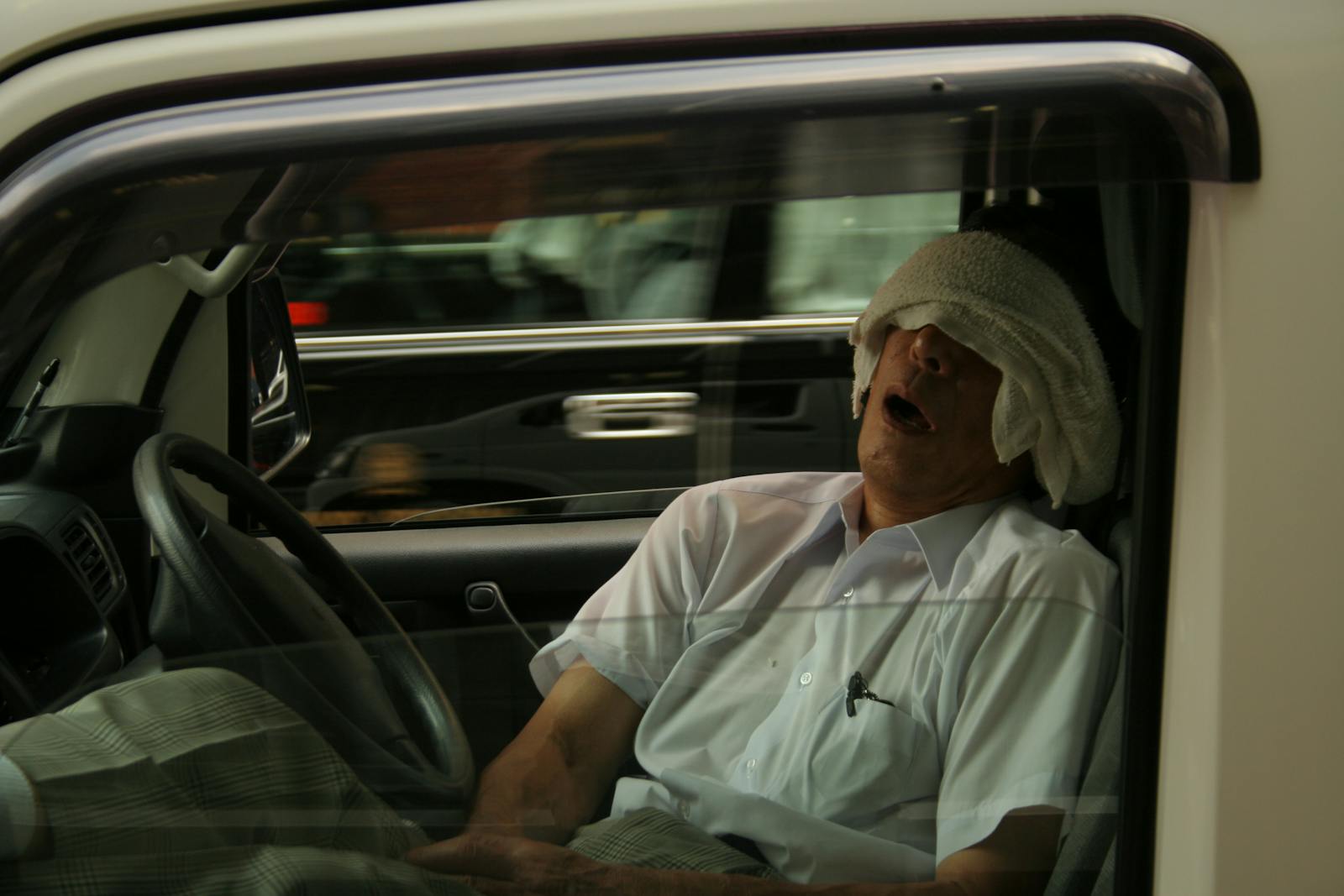

The mom thought the driveway was quiet. It was one of those early mornings where the neighborhood is still half-asleep, the air’s a little damp, and the only sound is a sprinkler ticking somewhere down the street. She was doing that quick glance out the front window thing—half habit, half checking if the trash cans got brought in—when her stomach did this weird drop.
Her old Honda Civic was sitting there like it always had, except it wasn’t supposed to be hers anymore. Three months earlier, she’d sold it to her teen daughter’s boyfriend, Caleb, on a very specific condition: he could drive it, he could fix it up, he could use it for work and school—but he could not live in it. And now, through the windshield, she could see a shape in the driver’s seat that looked an awful lot like a person sleeping.
At first she tried to tell herself it was nothing. Maybe he’d crashed there after dropping her daughter off late, or maybe he’d pulled in and conked out for a minute. Then she noticed the fogged-up windows, the blanket slumped over the center console, and the way the passenger seat was pushed back like someone had been trying to make room. The Civic didn’t just look parked; it looked occupied.

The sale that came with strings attached
The backstory mattered because this wasn’t some random car in the driveway. The Civic used to be her daily driver, the dependable little beater that survived grocery runs, school pickup, and years of coffee spills in the cupholder. When she upgraded, she figured she’d sell it privately and avoid the hassle of trading it in, and Caleb seemed like the perfect buyer—polite, handy, always talking about saving up.
He didn’t have much money, which was part of why she sold it to him cheap. She liked him well enough, and she liked the idea that her daughter was dating someone who worked and tried. But she’d also picked up on little things: how Caleb always wanted to be at their house, how he lingered in the kitchen, how he’d get quiet when someone asked where his parents were.
So she made the deal very clear. The title transfer, the payment plan, all of it was written down, and she added one extra sentence that felt blunt but necessary: no living in the car, and no parking it at their house like it was a second bedroom. She didn’t say it to be cruel; she said it because she didn’t want to wake up one day with a teenager essentially moved in by stealth.
Caleb agreed quickly—almost too quickly, the way people do when they’re saying yes because they need the yes. He promised it wouldn’t happen, thanked her a bunch, and for a while everything looked normal. The Civic disappeared from their driveway, her daughter still saw him, and life went on with the usual teen relationship drama: too many texts, too many rides, too many “we’re just friends” denials.
The morning she saw the blanket
That morning, she didn’t march out like some movie character flipping the porch light on and yelling. She stood at the window longer than she should’ve, trying to understand what she was seeing without letting her brain jump straight to the ugliest conclusion. The car’s interior looked cluttered in a way it never had when it was hers—plastic bags, a hoodie wedged near the shifter, something that might’ve been a backpack on the floor.
She stepped onto the porch, and the cold slapped her awake. The Civic’s windows were still fogged, which meant he’d been in there recently enough for his breath to do that. The mom walked down the steps slowly, not even sure what she planned to say, and that’s when she saw the little strip of cardboard tucked into the edge of the windshield—like a makeshift sunshade.
It wasn’t just that he was sleeping. It was the signs of routine. There was a water bottle in the cupholder, empty ramen cups in a small bag, and a phone charger snaked from the console like it lived there. The Civic didn’t look like a teen who nodded off after a late shift; it looked like a person who’d been trying to make a car into a room.
She knocked on the window with her knuckles, firm enough to be heard but not so hard it felt aggressive. Caleb jerked upright like he’d been shocked, blinking fast, wiping his face with the heel of his hand. For a second, he just stared at her, and the look on his face was pure panic—like he’d forgotten where he was and remembered all at once.
Awkward explanations and a door that didn’t open
She gestured for him to get out, and he fumbled with the lock and the handle. The door didn’t open right away, and that tiny mechanical delay made the moment worse—like the car itself was trying to trap them in the conversation. When he finally stepped out, he looked smaller than he usually did, shoulders hunched, hair smashed flat on one side.
He started talking before she could. Something about having a fight with his mom, something about not wanting to “cause problems,” something about only needing one night. He kept repeating “just tonight” in different forms, like if he said it enough, she’d believe it wasn’t what it looked like.
The mom didn’t yell, but she didn’t soften either. She asked him directly: how many nights has it been? Caleb looked at the driveway, then at the Civic, then back at her, and the pause told her more than any answer could. He mumbled something like “a couple,” then corrected it to “not many,” which was basically an admission with extra steps.
That’s when she brought up the clause. Not in a legalistic way, not waving papers around, but in that parental tone that says, I warned you because I saw this coming. Caleb’s jaw tightened, and he did this thing where he nodded while also looking like he wanted to bolt.
Dragging the daughter into it
The daughter came downstairs because she heard voices. She walked out in socks, squinting against the light, and immediately froze when she saw Caleb standing beside the Civic. Her first reaction wasn’t confusion; it was dread, like she already knew what the scene meant and had been hoping it wouldn’t happen in front of her mom.
The mom asked her if she knew he’d been sleeping in the car. The daughter didn’t answer right away, which was answer enough. She started with “It’s not like that,” then shifted to “He didn’t have anywhere else,” and then finally landed on “I didn’t know what to do,” which at least sounded honest.
Caleb got defensive in that quiet, controlled way teens sometimes do when they feel cornered. He said he wasn’t asking for money and he wasn’t “trying to move in,” like those were the only two offenses on the menu. The mom pointed at the blanket and the trash and asked him if he thought she was stupid.
The daughter tried to mediate—standing between them, touching Caleb’s arm, then pulling her hand back when he flinched. She kept looking at her mom like she wanted her to be compassionate, and at Caleb like she wanted him to stop talking. It was one of those moments where everyone is technically speaking English but nobody is actually communicating.
The part where it stops being about the car
Once the adrenaline wore off, the mom’s anger shifted into something else: the heavy, practical fear of a problem she couldn’t ignore. If Caleb was sleeping in the Civic, it meant his home life was worse than he let on or he’d been cut off completely. And if he was doing it in her driveway, it meant he’d decided her boundary wasn’t real, just inconvenient.
She told him he couldn’t stay there again, not even “for one night,” not even “just until things cool down.” She was careful with her words because she knew how it sounded—like she was kicking out a kid with nowhere to go—but she also knew what happens when you let a crisis become a pattern. She asked if there was a relative, a friend’s parent, anyone he could call, and he shrugged like every option had already been burned.
The daughter started crying, the frustrated kind where tears feel like betrayal. She accused her mom of not caring, of caring more about rules than people, and the mom snapped back that caring doesn’t mean letting someone camp in your driveway and lie about it. Caleb stood there silently, staring at the gravel, like he was waiting for the verdict.
Then the mom said the thing that made everyone go quiet: if he was truly living out of the car, they needed to involve an adult who could actually help, which might mean contacting his parents or a counselor at school. Caleb’s head lifted fast at that, eyes wide, and the fear on his face sharpened into something specific. It wasn’t just embarrassment; it was alarm.
Fallout, threats, and a driveway that suddenly feels different
The mom told him to leave the driveway immediately. Caleb didn’t argue, but he moved slowly, gathering his things like he was trying not to show how many things there were. When he started the Civic, the engine coughed like it always did, and the sound felt weirdly personal—like hearing your old pet respond to someone else’s voice.
After he drove off, the daughter exploded. She said her mom humiliated him, that she “made it worse,” that she didn’t understand what it’s like to be young and stuck. The mom told her she understood plenty, and that’s why she’d drawn the line three months ago, because this exact scenario was always the slippery slope.
Over the next day or two, the mom noticed things she hadn’t noticed before. How often Caleb’s name came up in her daughter’s texts, how her daughter got jumpy when a car slowed outside, how she suddenly insisted on taking out the trash at odd hours. It wasn’t hard to picture the Civic rolling back in after midnight, hoping nobody looked out the window.
The messiest part was that nobody could agree on what the real betrayal was. To the mom, it was the boundary-crossing and the deception, the sense that a teenager thought he could quietly move his hardship onto her property and make it her responsibility. To the daughter, it was her mom choosing enforcement over empathy, even if the “empathy” option was basically letting a kid sleep in a car where she used to keep grocery bags.
And Caleb—Caleb was the uncomfortable center of it all, a teenage boyfriend with adult-sized problems trying to shrink himself into the space of a Civic and hoping the people around him wouldn’t make him say it out loud. The driveway went back to looking normal, but the mom couldn’t unsee the fogged-up windows and the blanket on the console, or shake the feeling that the next time she looks out, the car might be back—only this time, her daughter might be in it too.
More from Steel Horse Rides: