

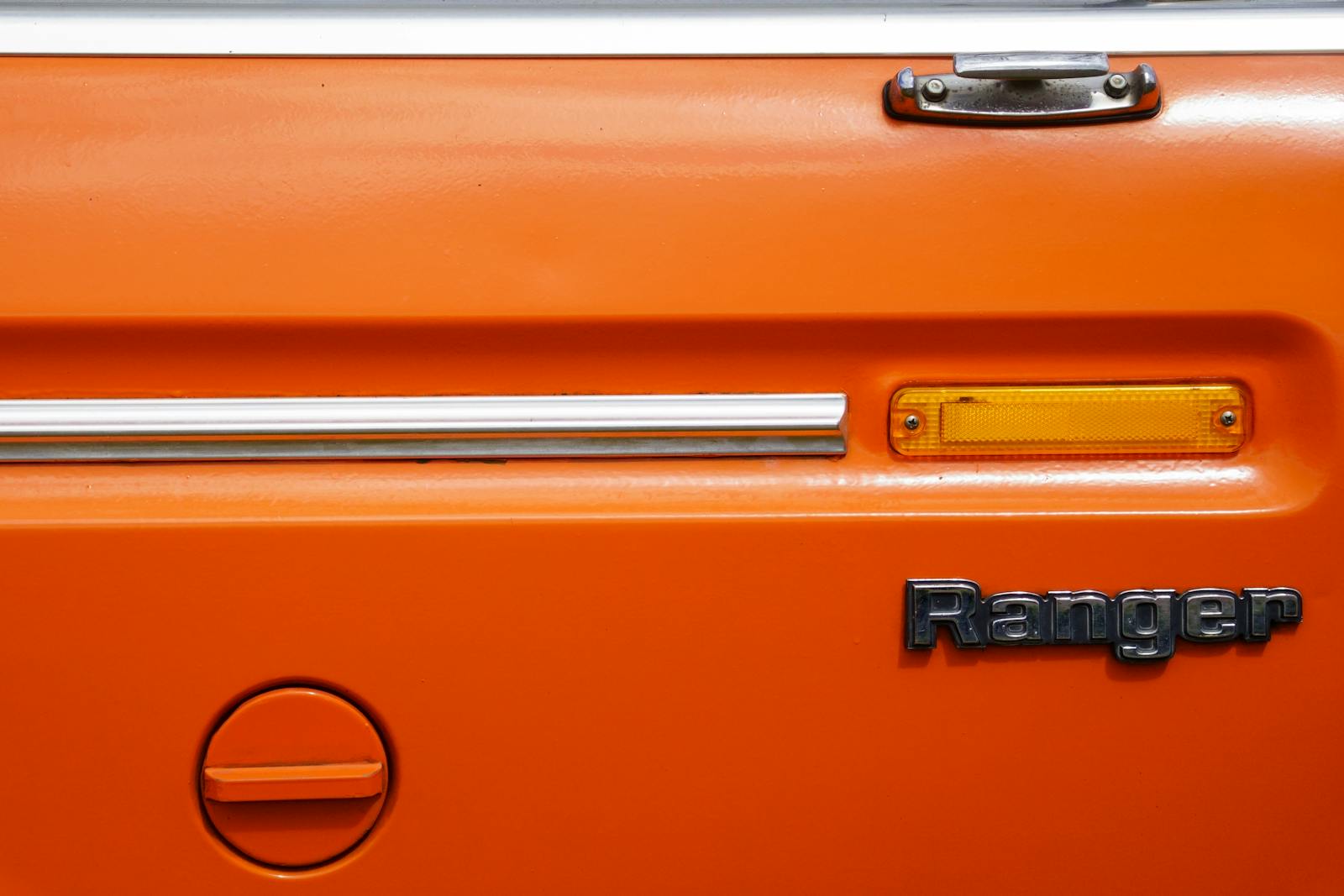
She didn’t treat the ’92 Ford Ranger like a museum piece, but she did treat it like something that still had a job to do. It was her “runs to the dump, picks up plywood, hauls plants” truck—sun-faded red paint, one stubborn window crank, and an engine that had that old-school, steady clatter when it idled. The kind of vehicle you forgive for its quirks because it always comes back home.
That afternoon, the house was busy in the way family gatherings always are: a couple coolers on the porch, kids orbiting the snack table, people drifting in and out of conversations. Her brother-in-law showed up with that restless energy of someone who can’t stand still, the guy who’s always tapping his foot, always looking for the next “fun” thing to do. He kept circling the Ranger like it was a toy he’d just remembered existed.
He asked if he could borrow it “for like 20 minutes” to run to his buddy’s place and pick up a tool. She hesitated, because she always hesitated with him—he had a history of “borrowing” things and returning them with some new mystery scrape or missing part. But it was family, everyone was right there, and his wife did that little eye-roll-smile like, “You know how he is.” So she tossed him the keys and told him, clearly, not to do anything stupid with it.
The “20 Minutes” Starts Stretching
Twenty minutes came and went without anyone freaking out, because time gets loose at gatherings. Someone needed ice, someone needed help with the grill, someone’s kid fell and started wailing like they’d been shot. But when it hit an hour, she started checking her phone and looking toward the driveway like the truck might materialize if she stared hard enough.
She texted him a quick, casual “hey where you at?” and got nothing. Then she called, and it went to voicemail, which somehow felt worse than him just ignoring her. His wife tried too, with that half-annoyed tone of someone used to him disappearing, and she got the same dead air.
By the third hour, the vibe had changed. Conversations had that clipped edge where people are trying to pretend they’re not worried, but they keep glancing toward the road anyway. She was doing the math in her head—where could he possibly be that takes this long to pick up a tool—and landing on the same answer every time: anywhere except where he said he was going.
The Ranger Comes Crawling Back
It was almost six hours later when they finally heard it—except it didn’t sound like her truck. Instead of that familiar idle, it came up the street with a ragged, uneven chug, like the engine couldn’t decide whether it wanted to keep running. When it turned into the driveway, the front end sat wrong, like the truck was leaning into a complaint it was about to file.
He rolled in slow, windows down, radio off, as if he understood silence was his only chance. The first thing she saw was the mud, thick and dried in plates along the wheel wells and packed under the bumper. The second thing was the way one tire wasn’t pointing the same direction as the others, that subtle but unmistakable angle that makes your stomach drop.
He got out smiling—actually smiling—and said, “All good,” in that bright, breezy voice people use when they’re trying to walk past a problem before it can grab them. Then she walked closer and saw the fresh dents underneath, the scraped skid marks, and a thin line of fluid dripping from somewhere it definitely shouldn’t be dripping. “What did you do?” she asked, and the smile faltered like a bad connection.
Confessions, Minimizing, and a Lot of Shrugging
He started with the classic: “It’s not that bad.” He said he took it down an old dirt trail because his buddy “wasn’t where he thought,” and then he “might’ve” hit a rut. Every detail was delivered like it was accidental, minor, and basically the truck’s fault for being old enough to have a CD player that skips.
She asked why he didn’t answer his phone, and he did that vague, lazy gesture—no service, battery died, didn’t hear it. None of the excuses matched the fact that he’d been gone half a day. When his wife pressed him, his story shifted just enough to reveal what he was trying not to say: he’d been off-roading.
Not “drove down a bumpy road” off-roading. Actual, deliberate off-roading, the kind where you’re aiming for mud and ruts because you want to feel like you’re in a commercial. The Ranger wasn’t built for whatever he’d tried to impress someone with, and the evidence was literally hanging underneath it.
She popped the hood, because she knew her truck, and her face changed immediately. The engine bay smelled hot in that sharp, metallic way that signals something got stressed past the point of forgiveness. There was a hairline crack in the block that looked like someone took a pen and drew a threat across it.
The Mechanic’s Verdict Lands Like a Brick
She didn’t want to argue in the driveway, so she did the practical thing first: she got it towed. The brother-in-law acted like the tow truck was an overreaction, like she was being dramatic, right up until the driver took one look and said, quietly, “Yeah, we’re not driving this.” The word “frame” came up in that professional tone mechanics use when they’re trying not to scare you but also need you to understand you’re cooked.
The shop called the next day with the kind of summary nobody wants. Bent frame. Cracked engine block. Front end damage that suggested it didn’t just “hit a rut” but slammed into something hard enough to shift the geometry of the truck. They started listing parts and labor like they were reading off a menu she couldn’t afford.
And the worst part wasn’t even the money at first—it was how final it sounded. This wasn’t a “replace a hose and you’re fine” situation. This was the truck being quietly demoted from reliable workhorse to expensive problem, all because someone needed a thrill and couldn’t stand being told no.
When she told him what the mechanic said, he didn’t apologize. He said, “That place is trying to rip you off,” and then suggested they “take it to a guy he knows,” like the issue was the shop’s attitude, not the cracked metal reality sitting in her driveway. His wife asked him—flat out—why he didn’t just admit what he was doing, and he answered with a shrug so casual it might as well have been a slap.
Family Lines Get Drawn Fast
Once the words “bent frame” and “cracked block” were out in the open, the gathering turned into something else entirely. The sister was mortified, caught between loyalty to her husband and the obvious fact that her husband had done something indefensible. She tried to smooth it over with, “He didn’t mean to,” and “It was an accident,” but those lines landed poorly when paired with six hours of silence.
Other relatives started doing that family thing where they pick sides without saying they’re picking sides. A couple of them told her, gently, that the truck was old anyway, like that made it less hers. Someone else muttered that she shouldn’t have loaned it out, which was technically true and also beside the point in the most infuriating way.
She asked him, directly, whether he was going to pay for the repairs or at least cover the tow and the diagnostic. He got defensive immediately, saying he didn’t have that kind of money and it wasn’t like he “totaled it.” He kept returning to the idea that because the truck still technically rolled, she was supposed to treat the situation like a minor inconvenience.
That’s when she snapped—not screaming, not theatrics, just that tight, furious calm that shows up when someone realizes they’re being treated like a doormat. She told him he’d taken something she relied on, lied about what he was doing, vanished for six hours, and came back acting like she owed him gratitude for returning it at all. She said she didn’t even care about the mud; she cared that he thought her boundaries were optional.
He left in a huff, of course, because people like that always leave in a huff. His wife stayed behind long enough to look exhausted and say, “I’m sorry,” in a voice that sounded like she’d been saying those same two words for years. And the truck sat there afterward, crooked and wounded, an ugly monument to how quickly “family” becomes a weapon when someone refuses to own what they did.
Now the real argument isn’t even about the Ranger’s blue-book value or whether it’s worth fixing. It’s about what happens next time he wants something, and whether anyone in that family is willing to say the hard no out loud. Because the most telling part of the whole mess wasn’t the bent frame or the cracked block—it was the way he walked back into the driveway after six hours and expected everyone to play along like nothing happened.