

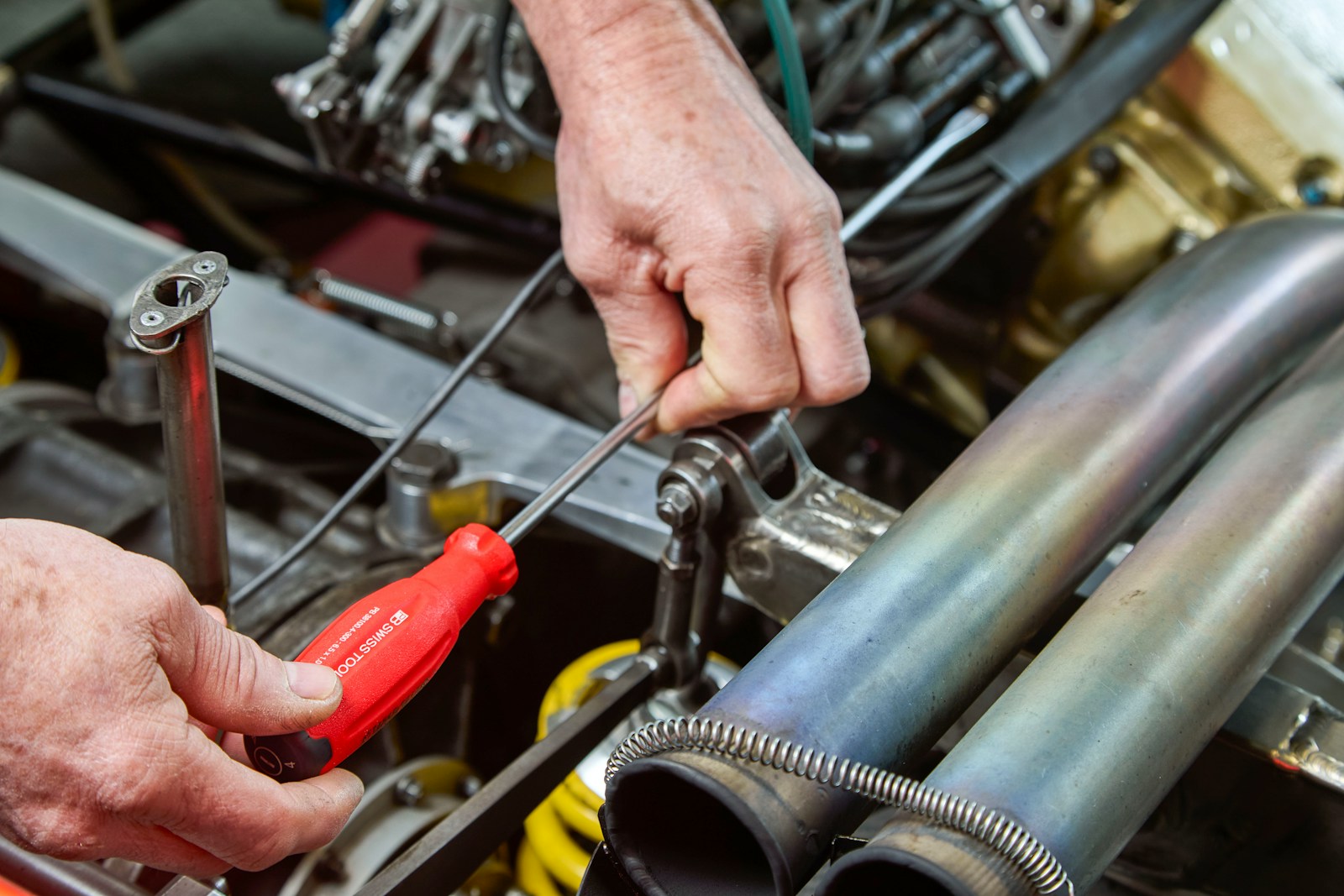
It started as one of those low-grade car problems that makes you feel vaguely dumb for not knowing what’s wrong. The customer—middle-aged guy, practical, the kind who keeps receipts in the glovebox—brought his sedan in because the shifter had started acting possessed. Sometimes it wouldn’t go into park on the first try, sometimes the indicator would say one thing while the car felt like it was doing another, and once it even rolled an inch when he swore it was in “P.”
He wasn’t panicked yet, just annoyed. He’d already done the usual routine: jiggling the shifter, stomping the brake harder, turning the key off and on like the car might “reset.” But after a week of it getting worse, he finally booked a slot at a local shop—one of those places with a cramped waiting room, a coffee pot that tastes like burnt pennies, and a couple of tired-looking cars always parked out front with their hoods up.
The mechanic took the keys, asked a few questions, and did that calm nod mechanics do when you’re describing a problem you can’t replicate on demand. Then, not long after, instead of calling him back with the usual “we found something” speech, the mechanic walked into the waiting area and said, “Hey. You need to come see this.”
The weird symptoms that didn’t add up
Before the bay tour, the customer had been trying to make sense of the timeline in his head. The car had been fine, then suddenly it wasn’t—and the shift problem didn’t feel like normal wear. It wasn’t a gradual grind or a slow leak; it was like something had physically changed overnight, like a hand had reached in and made the mechanism stubborn on purpose.
He’d mentioned, almost offhand, that a family member had driven it recently. His stepson had borrowed the car to run errands the previous weekend, brought it back with the tank slightly lower than it should’ve been, and handed over the keys without any explanation. At the time, that hadn’t seemed like a clue—just a familiar little irritation.
The mechanic, meanwhile, had done what mechanics do: tried to reproduce the issue, then got it up in the air to see what was happening underneath. Shifter problems can be bushings, cables, linkage alignment, or even something as simple as a broken clip. But the way the customer described it—intermittent, stubborn, almost “blocked”—made the mechanic curious enough to look closely instead of just swapping parts.
“You’re gonna want to look at this”
In the bay, the air was warm and smelled like rubber and old oil. The mechanic didn’t do a big dramatic pause; he just pointed under the car and told the customer to crouch down where he could see. The customer expected a dangling cable or a cracked mount, something that would make him sigh and swipe his card.
Instead, wedged up near the transmission linkage, there was a screwdriver. Not a tiny precision one that could fall out of a pocket—an actual full-sized driver with a chunky handle, jammed in like someone had placed it there with intention. It sat in the worst possible spot, interfering with the linkage’s movement like a doorstop shoved into a hinge.
The customer’s brain did that slow, disbelieving inventory. Screwdriver. In the linkage. That’s not road debris. That’s not “it fell out of the toolbox.” That’s a tool someone had to hold, angle, and push into place.
The mechanic was matter-of-fact about it in a way that made it even more unsettling. He said something along the lines of, “This didn’t happen by accident,” and then—because mechanics see a lot of weird, petty sabotage—he added, “Has anybody been mad at you lately? Anybody else drive the car?”
The moment it turned from car trouble into family trouble
The customer didn’t answer right away. You could practically see him rehearsing possible explanations that didn’t involve what he was thinking. Maybe it was left there during a previous repair? Maybe someone at a quick-lube place dropped it and never noticed? Maybe it bounced up from the road in the one-in-a-billion way it would need to.
But then he did that thing people do when the obvious explanation feels too ugly to say out loud. He exhaled, rubbed his forehead, and said the name. His stepson. The last person to drive it, the only person besides him and his wife who’d had the keys that week.
The mechanic didn’t accuse anyone, but he didn’t soften it either. He pointed out that the screwdriver wasn’t just sitting there; it was lodged in a way that would keep the linkage from traveling fully. If the car couldn’t go properly into park, or if it could slip out, that wasn’t just an annoyance—it was a safety problem.
That was when the customer’s face changed from confusion to something tighter. Not explosive anger, not yet. More like the kind of hurt that comes with the realization that this wasn’t a random mechanical failure; it was personal.
The quiet ride home and the inevitable confrontation
He drove home with the screwdriver sitting in a plastic bag on the passenger seat like evidence, because that’s what it felt like. The car shifted fine now, which somehow made him angrier; it had never been “a bad transmission,” it had been a deliberate obstruction. Every stoplight gave him too much time to replay the last few weeks in his head, looking for missing pieces.
When he got home, he didn’t storm in yelling. He did that calmer, more dangerous thing: he asked his wife if they could talk, then asked where her son was. The stepson was in his room, door half closed, the posture of someone who already expects to be blamed for something.
At first, the stepson denied it. He said he didn’t know anything about any screwdriver, that the car was already “weird,” that the shop was probably trying to upsell them. The customer didn’t take the bait; he just set the bag down on the table and said the mechanic had pulled it out of the linkage and asked again.
And then the stepson’s story started changing in little ways. He hadn’t been under the car. Well, okay, he’d dropped something and bent down. Okay, he’d noticed it was hard to shift and maybe tried to “fix it.” He said it with the exact tone of someone trying to make sabotage sound like troubleshooting.
What the screwdriver was really doing there
The customer wasn’t a transmission expert, but he understood intent. You don’t “accidentally” wedge a tool into a moving linkage. The stepson’s explanations were thin, and the more he talked, the more it sounded like he’d gotten mad—maybe at being told to bring the car back at a certain time, maybe over a rule he didn’t like—and decided to cause a problem that would be irritating but not immediately traceable.
The ugliest part wasn’t even the repair bill. It was the implication that the stepson was comfortable creating a safety hazard to make a point. If the car rolled in a parking lot and hit someone, if it slipped and pinned somebody, if it just smashed into their own garage door—what then?
The wife got pulled in, of course, because that’s how it always goes. She didn’t want to believe her kid would do something like that, but she also couldn’t unsee the screwdriver in the bag. There was a lot of that tense, circular arguing where everybody’s talking about “trust” and “respect” but what they really mean is, “Do you think I’m lying?” and “Are you picking him over me?”
The stepson, cornered, flipped between sulking and indignation. At one point he tried to make it about being “treated like a child,” which—given the literal childishness of the act—didn’t land the way he seemed to think it would. The customer didn’t yell much, but he got very clear that the keys were no longer available, and that if anything else happened to the car, it wouldn’t be handled as a family squabble.
By the end of the night, nobody felt like they’d won. The car was fixed, but the house had that sour, echoey quiet of people staying in separate rooms on purpose. And the screwdriver—cheap, common, nothing special—had turned into this loaded little object that sat in everyone’s mind: proof that someone in the family could look at a vehicle, something that carries people at speed, and decide to mess with it anyway.
The next day, the customer looked at the car in the driveway like it was slightly unfamiliar. It wasn’t the transmission he didn’t trust now; it was the idea that “home” meant safe. The unresolved part wasn’t whether the stepson did it—no one could fully un-know what they’d seen—but what it meant going forward, living with someone who’d turn a moment of anger into a hidden, dangerous prank and then try to talk his way out of it.