

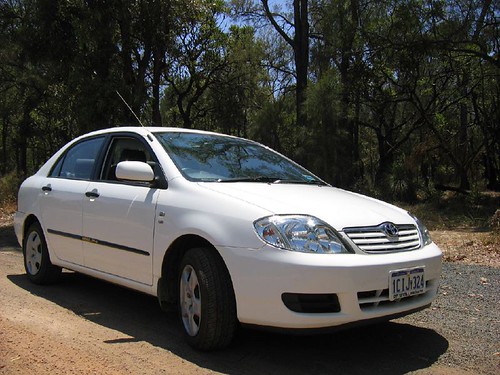
It started the way a lot of cheap car sales start: a tired old Corolla, a mom who wanted it gone, and a teenager who’d been hunting for something—anything—he could afford before school started back up. The car wasn’t pretty, but it ran. The price was simple and firm: $2,400 cash.
She wasn’t a dealer, just a woman clearing space in her driveway and her head. The Corolla had been her “get to work, get groceries, haul kids” car for years, and she’d finally replaced it with something newer. This one had dents, sun-faded paint, and that general look of a vehicle that’s spent a decade being asked to do one more errand.
The kid showed up alone, which already set the tone. Not alone like “suspicious,” more like “eager and slightly overwhelmed,” the way teenagers are when they’re trying to act like adults without the adult backup. He walked around the car with his phone flashlight like he’d learned the inspection ritual from videos, asked a few earnest questions, then nodded like he’d made peace with the dents and the mileage.
The meet-up in the driveway
She had the listing up for a week, fielding the usual circus of messages. People offering half, people asking if she’d take payments, people who wanted her to deliver it two towns over “because my ride fell through.” When the teenager texted that he had cash and could come that evening, she felt the kind of relief you get when an annoying chore finally moves toward done.
He arrived right before dusk, hoodie sleeves pulled over his hands even though it wasn’t cold, and he tried to sound casual as he asked if he could take it around the block. She rode shotgun, mostly because she didn’t love the idea of a brand-new driver taking off in her car alone. The Corolla started on the first turn, idled a little rough, and made that familiar older-car rattle that isn’t exactly a problem, just a personality.
He seemed happy. He did the whole checklist—lights, horn, windows, heat—and when he popped the trunk, he wrinkled his nose for a second but didn’t say anything. She noticed it, filed it away, and kept answering questions in that neutral, careful tone people use when they don’t want to accidentally promise anything.
When they got back, he counted out the cash on the hood like he’d rehearsed it. She handed over the signed title and a short handwritten bill of sale with “sold as-is” right on it, the way her brother had told her to do. The kid grinned, thanked her about five times, and drove off like he’d just won something.
What “the smell” actually was
The smell wasn’t a secret, exactly—it was just… there. If you stood outside the car, you didn’t notice much beyond old upholstery and maybe a hint of fast food that had seeped into the seats. But inside, especially after the car had been closed up in the sun, there was a weird, stale funk that clung to the fabric and the vents.
She had her own explanation for it, because of course she did. Years ago, one of her kids had gotten carsick in the backseat during a road trip, and despite multiple cleanings, the interior never went back to “neutral.” On top of that, the Corolla had spent one humid summer parked under a tree, and the cabin had picked up that faint mildew undertone that older cars sometimes get when the seals aren’t perfect.
She wasn’t trying to hide it. She just didn’t think of it as a disclosure issue, the way you’d disclose “the brakes are shot” or “the transmission slips.” In her mind, it was like the paint being faded—unfortunate, obvious, and priced in.
And to be fair, the kid had been sitting in the car with her during the test drive. The vents were blowing. The doors had closed. If the smell was strong enough to be a dealbreaker, this was the moment to say so.
The father shows up with a different energy
The next day, around lunchtime, she heard a car pull into her driveway and stop with a little too much purpose. Not the gentle roll of someone turning around or checking an address, but the kind of stop that says, “I’m here for something.” When she looked out the window, there was a man getting out—middle-aged, broad-shouldered, already wearing that tight-faced irritation like he’d been rehearsing a speech in the car.
He didn’t start with hello. He started with, “You sold my son a car that reeks,” like the smell was a mechanical defect she’d concealed with black tape. She stood on her porch, confused for a beat, then asked who he was, even though she already knew.
He told her he was the kid’s father, and he wanted the money back. He said his son “didn’t know what he was doing,” that he’d bought it without supervision, and that once they got it home and closed the doors, the interior smell was “unbearable.” The way he said it made it sound like she’d sold them a rolling landfill.
She asked, calmly, if the car had broken down. He snapped back that it ran “fine,” but the smell was “not disclosed,” and therefore she had tricked a teenager. It wasn’t a negotiation tone; it was an accusation, like he expected her to fold immediately out of guilt.
Refund demands and the bill of sale
She told him no, and that’s when the conversation really curdled. He wanted to frame it like a moral issue—how could she take a kid’s money, how could she sleep at night, how was this fair. She kept trying to keep it anchored in reality: her price reflected the condition, the kid test drove it, and the bill of sale said as-is.
He asked to see the paperwork like he thought “as-is” was something she’d scribbled to intimidate a teenager. She didn’t hand him anything—she wasn’t about to invite this guy into her house to debate contract language at her kitchen table. She just told him what it said, and reminded him that his son had signed it.
That’s when he pivoted into a different tactic: he claimed the smell could be dangerous. Mold, he said. Spores. Health risk. He said he’d take it to a mechanic and “have it documented,” as if the presence of a stale odor would retroactively turn a private sale into a consumer protection case.
She asked him a simple question: if it’s unsafe, why are you here arguing instead of getting your son out of it and calling someone official? He didn’t like that. He kept stepping forward as he talked, inching toward her porch, like proximity could win the argument.
The teenager stuck in the middle
Then the kid got out of the car. He’d been sitting there the whole time, which made the whole scene feel worse—like his dad had insisted on driving over and staging a confrontation, and the kid had no choice but to watch. He looked mortified, eyes bouncing between his father and the woman on the porch, shoulders tight like he wanted to disappear into the Corolla’s questionable headliner.
He mumbled that he hadn’t noticed the smell during the test drive. Or maybe he did notice it, but he’d told himself it was just “old car” and that he could fix it with air fresheners. The father cut him off mid-sentence and told him not to talk, which didn’t help the “my son is a capable buyer” argument he was trying to make.
She didn’t rub it in, but she did point out—again—that the kid had been inside the car before buying it. She said she hadn’t sprayed anything, hadn’t tried to mask it, hadn’t done the whole “leave the doors open so it airs out” trick. The father just kept repeating that she “didn’t disclose” and therefore owed a refund.
The vibe wasn’t “let’s solve this.” It was “I’m going to pressure you until you give me cash.” And she could feel that line where a bad conversation turns into something uglier, where people start saying, “I’ll come back,” or “You’ll regret it,” and it stops being about a car.
How it ends, and why it doesn’t feel over
She told him one last time she wasn’t refunding anything and asked him to leave her property. She didn’t yell, but she made her voice flat, the way you do when you want someone to understand that you’re done negotiating. The father stood there for a second like he couldn’t believe she wasn’t intimidated, then spun around and stomped back to the car.
As they backed out, he leaned out the window and tossed out a final line about “getting authorities involved,” the classic vague threat that’s supposed to hang in the air. The teenager didn’t look at her. He stared straight ahead, jaw clenched, hands folded in his lap like he was trying not to be part of his own life.
After they left, she went back inside and did that nervous post-conflict inventory people do—checking her door lock, replaying the conversation, wondering if she should’ve recorded it, wondering if the guy would actually come back. The Corolla was gone, the money was in her account, and technically the transaction was done. But the way the father said “you didn’t disclose the smell” stuck with her, not because it made her doubt herself, but because it made her realize the argument was never about odor—it was about control, and how far someone would go to claw back a decision they didn’t get to make.