

They left before sunrise, the kind of early that makes coffee taste like survival and the highway feel like it belongs to truckers and people with regrets. The buyer—mid-twenties, practical, the type who keeps a running note on her phone called “Car Stuff”—had been watching listings for weeks. A clean older Civic popped up at a price that made her suspicious and hopeful at the same time, and after two days of polite texting with the seller, they agreed on a Saturday pickup.
Her dad came along because he’s that dad: the one who says he’s “just there to look,” but already has a flashlight in his glove box and a little magnet to check for body filler. Six hours is a long drive for a maybe, but the seller sounded normal, had sent extra photos when asked, and even volunteered the VIN without being prompted. They packed a folder with a bill of sale template, called their bank to pull cash, and hit the road with the kind of cautious optimism that only exists before meeting a stranger from the internet.
By the time they turned into the neighborhood, the buyer was rehearsing her checklist—cold start, fluids, tire wear, test drive route—while her dad did that thing where he stops talking altogether and just scans. The house looked ordinary enough, two cars in the driveway, kid’s bike tipped over in the grass. They were still adjusting their posture from six hours in a seat when the front door opened and a woman stepped out like she’d been waiting for them to appear.
The driveway greeting that didn’t match the messages
The wife walked down the driveway fast, not quite running but with purpose, and she didn’t do the usual “Hi, you must be here for the car!” thing. She looked past them, like she was checking windows, and then she leaned in close enough that the buyer could smell laundry detergent. In a voice so low it barely counted as sound, she said, “Please take cash. He doesn’t know I’m selling it.”
The buyer blinked, because there are only so many ways to process a sentence like that. Her dad’s expression went from neutral to locked-in, the way it does when he hears a noise in the house at night. The buyer managed a half-whispered, “Wait—what?” but the wife was already straightening up, smoothing her shirt, and pasting on a normal smile like she’d just asked about the weather.
Behind her, the garage door was closed, and the Civic wasn’t visible. The seller—the husband, apparently—still hadn’t appeared, and that gap felt suddenly loud. The wife kept her voice bright and normal now, gesturing toward the side of the house. “The car’s back here,” she said, like she was giving a tour, except her eyes kept darting toward the front door.
Seeing the Civic and realizing it’s not just about a car
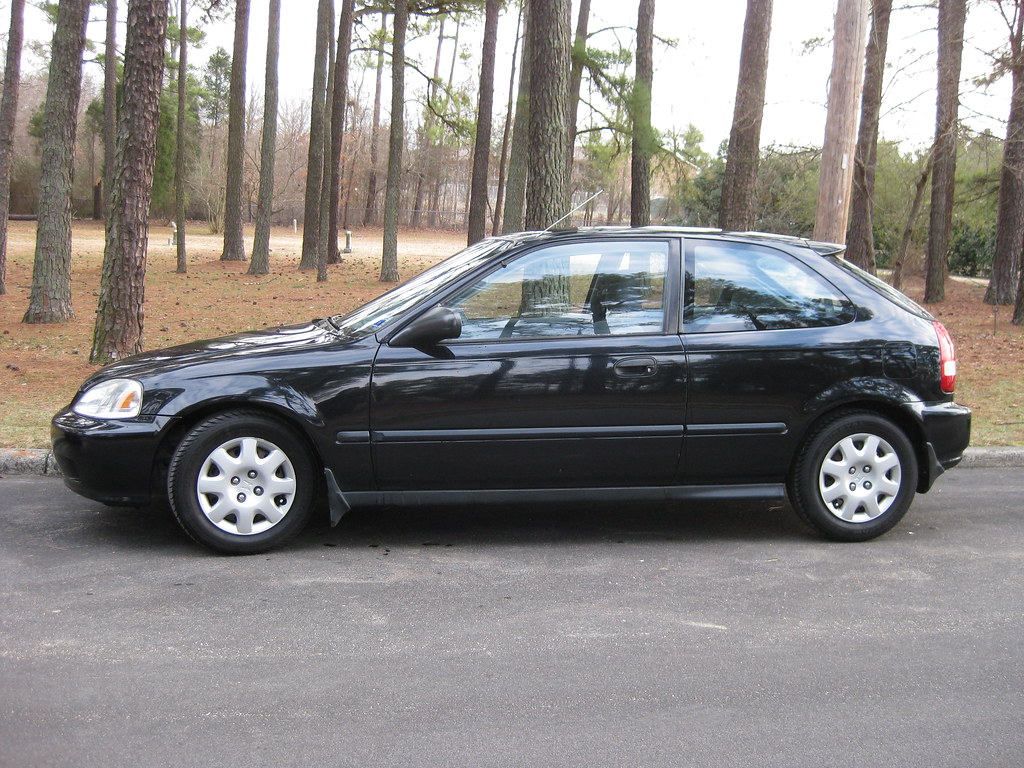
The Civic was parked behind a fence, tucked in a way that made it look like it had been deliberately hidden from the street. It was cleaner than most cars that age, and for a second the buyer’s brain tried to cling to the original plan: inspect the car, negotiate, do paperwork, go home. Her dad walked around it slowly, checking panels, peering at the tires, doing the ritual like it could bring normalcy back.
The wife hovered a few feet away, arms crossed tight, and kept talking too fast. She pointed out recent maintenance, mentioned a new battery, said it “runs great,” and then, without being asked, explained that the title was inside. The buyer asked for the keys, and the wife produced them from her pocket immediately, like she’d been holding them all morning.
The buyer popped the hood and checked the fluids while her dad crouched to look for rust. Everything looked… fine. Not perfect, but fine enough to justify the drive, which made the weirdness even harder to interpret because it wasn’t a classic scam setup with a wrecked car and a fake story. It felt more like stepping into the middle of somebody else’s argument and realizing neither side had invited you on purpose.
When the buyer asked if they could take it for a quick spin around the block, the wife hesitated for a fraction of a second. “Yeah,” she said, then added quickly, “Just—keep it short.” She glanced toward the house again, and that’s when the buyer noticed the front curtains shift slightly, like someone had moved behind them.
The husband appears, and the tone flips in seconds
They’d barely returned from the test drive when the back door opened hard. The husband stepped out, and he didn’t look confused in a curious way; he looked confused in a threatened way. His eyes went straight to the buyer holding the keys, then to his wife, then back to the car, like he was trying to solve a problem with too few clues.
“What’s going on?” he asked, loud enough that it carried. The wife answered too quickly, like she’d rehearsed it and still didn’t trust herself to get through it. “They’re here for the Civic. I told you. The listing.”
The husband’s face did this subtle shift—eyebrows up, jaw tightening—like a person trying to pretend they’re not angry. “What listing?” he said. And then he looked directly at the buyer and her dad, like they were accomplices. “Who are you? How did you get here?”
The buyer tried to keep it straightforward. “We messaged about the car yesterday. We drove up this morning. You said noon was fine,” she said, pulling up the message thread on her phone like receipts could calm a stranger down. The husband didn’t take the phone, didn’t even look at it long. He stared at his wife instead, and the air between them tightened into something private and sharp.
The wife’s voice dropped again, not whispering now but smaller. “We need the money,” she said. Not to the buyer—to him. “You said we can’t keep paying for both cars. You said—”
Cash in hand, paperwork on the hood, and everyone pretending this is normal
The buyer’s dad stepped slightly in front of her without making a big show of it, the way dads do when they don’t like the energy. He asked, calm but firm, “Is the title in your name, sir?” It was a simple question that carried a warning: if this isn’t clean, we’re leaving.
The husband looked offended at the question, which wasn’t a good sign. He walked over, snatched the keys from the buyer’s hand with a quick, irritated motion, and opened the driver’s door like he needed to reassert ownership in the most literal way. He rummaged in the center console, then slammed the door and said, “This is ridiculous.”
The wife, meanwhile, moved closer to the buyer with that same urgent energy from the driveway. “Please,” she mouthed, barely moving her lips. Then, louder, she said, “We already agreed on a price. They’ve driven all this way.” She kept glancing at the buyer’s dad, like she could sense he was the one who would call it and end the whole thing.
The buyer pulled the envelope of cash partway out of her bag, not waving it, just letting it be visible. The husband’s eyes flicked to it, and the change was immediate: still angry, but now calculating. He asked the price again, even though it was in the messages, and when the buyer repeated it, he laughed once—short, disbelieving—then said, “That’s not enough,” like he could bully the universe into giving him a better deal.
The wife cut in fast. “It is enough. It’s what you said last week,” she snapped, and then seemed to remember there were strangers watching. She softened her tone in the same sentence, trying to patch over the slip. “We can do it today. Quick.”
The moment it turns from awkward to unsafe
What made the buyer’s stomach drop wasn’t the argument itself; it was how quickly the husband’s attention snapped back to the strangers. He took a step toward the buyer, not close enough to touch, but close enough to make space feel contested. “You drove six hours without talking to me,” he said, like the buyer had done something unethical by believing the person who posted the listing.
The buyer’s dad didn’t raise his voice, but his tone changed into something flat and final. “We’re not doing this unless you both agree, the title is clean, and we can sign it properly,” he said. He glanced at the buyer without moving his head much, that dad-signal that means, We can leave right now. The buyer felt her own excitement drain out of her like air from a tire.
The wife looked panicked, and for a second it seemed like she might cry. She started talking about bills, about needing to catch up, about how the car “just sits,” but the husband cut her off with a sharp “Stop.” The word landed hard in the driveway, and the buyer realized she didn’t want to be standing there when the conversation moved indoors.
The buyer quietly put the cash back in her bag. She asked for the keys she’d been handed earlier—small, polite, trying to keep the temperature down—and the husband tossed them into her palm like he couldn’t decide if he wanted to end the deal or punish her for showing up. Her dad said, “We’re leaving,” not as a threat, just a statement, and started walking back toward their car.
The wife followed them a few steps, lowering her voice again. “If you can wait ten minutes—” she began, but the buyer shook her head. Waiting meant lingering on someone’s property while a couple fought about money and control, and that’s how bad decisions happen. The buyer said, quietly, “I’m sorry,” and she meant it in the useless way you mean it when you’re apologizing for being a witness.
As they backed out of the driveway, the buyer looked in the side mirror and saw the wife standing near the hidden Civic with her arms wrapped around herself. The husband was already walking back toward the house without looking at her, like the car was the least important thing that had just been exposed. Six hours there and six hours back, and the Civic was still sitting behind a fence, unsold—not because nobody wanted it, but because the real transaction wasn’t about a car at all, and nobody in that driveway had the authority to make it simple.