

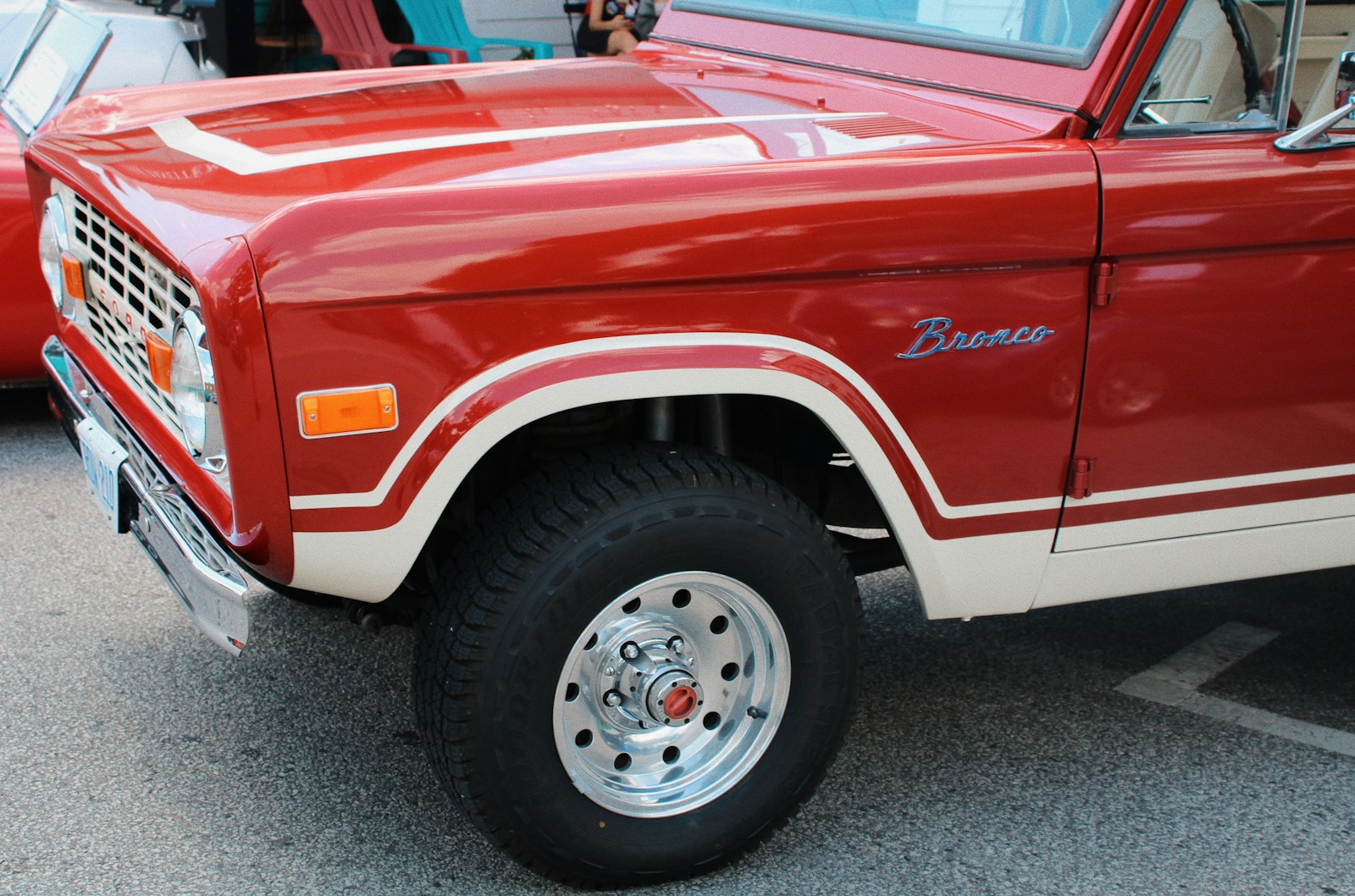
He didn’t even ask in a way that sounded like a request. The stepson just hovered in the doorway while his stepdad was rinsing off a paintbrush in the sink and said, “I’m gonna take the Bronco to show the guys.” Not can I, not is it cool—more like he’d already decided and was waiting for someone to stop him.
The stepdad—mid-40s, the kind of guy who keeps receipts in a little envelope in the glove box—looked at him like he’d misheard. The Bronco wasn’t some disposable beater. It was an ’85, boxy and loud and lovingly maintained, the sort of truck that had been in the family longer than some friendships, and it still smelled like rubber mats and old vinyl when you opened the door.
What made it extra touchy was that the Bronco wasn’t just transportation. It was the one thing the stepdad still felt entirely in control of in a house where “blended family” mostly meant walking on eggshells. So when the kid grabbed the keys off the hook anyway, tossed out a quick “Back tonight,” and rolled out, the stepdad watched through the front window longer than he wanted to admit.
The keys were easy. The boundaries weren’t.
The stepson was 19, old enough to think he was grown and young enough to treat consequences like a rumor. His mom had remarried two years earlier, and the stepdad had tried hard to be the reasonable adult: not overstepping, not playing authoritarian, but also not letting a teenager run the house like a hostel. The kid had a pattern—small lies, “forgotten” chores, weird gaps in his stories that only showed up when you asked one more question.
The Bronco was the one line the stepdad had said out loud more than once: don’t take it without permission, don’t let anyone else drive it, and don’t take it “just to cruise.” It wasn’t even about the truck being precious. It was about the truck being old, heavy, and difficult to replace if something went wrong.
But the stepdad hesitated because the kid’s mom was sitting on the couch scrolling her phone, and there was always that calculation. If he clamped down too hard, he’d be “picking fights.” If he let things slide, he’d be “enabling.” So he did that thing people do when they’re trying to keep peace: he didn’t chase him, he didn’t yell, and he told himself the kid would be back by midnight with a sheepish grin and the same gas level he left with.
Midnight came and went, and the driveway stayed empty. By 1 a.m., the stepdad was checking his phone like it had personally betrayed him, refreshing a thread of silence. The mom texted “u ok?” once, then set her phone down like her son’s unreachability was just part of the weather.
One night became two, and the explanations got flimsy.
The next morning, the stepdad drove his own car to work with a sour, buzzing feeling in his chest. He kept picturing the Bronco parked behind a convenience store with the windows down, some stranger flicking ashes into the cup holder. He called the kid twice on lunch break, got voicemail twice, and left one message that tried to sound calm but didn’t quite land there.
By evening, the mom started doing that half-defense, half-denial thing. “Maybe his phone died.” “Maybe he crashed at a friend’s.” “He probably didn’t want to drive late.” Each sentence was an excuse she tossed into the air like it would stick to something and become reality.
The stepdad asked the question she didn’t want to hear: should they report the Bronco stolen? He said it carefully—like he wasn’t accusing her son of stealing, just stating that legally, this is what it was turning into. She went rigid and said, “Don’t do that to him,” and suddenly the conversation wasn’t about a missing vehicle, it was about loyalty.
Two days is a long time to sit in uncertainty with someone else’s denial playing defense. The stepdad was sleeping in short bursts and waking up to check for headlights. He kept thinking about the insurance paperwork, about how old trucks don’t get treated kindly by adjusters, about the little dings he’d fixed himself. The mom kept saying, “He’ll come back,” but her tone had shifted from confident to pleading.
The Bronco returned… wearing someone else’s plate.
On the second night, it was after midnight again when the Bronco finally rumbled into the driveway. The engine sounded slightly different, like it was clearing its throat. The stepdad was already at the window before the tires stopped crunching the gravel.
The kid climbed out like he was stepping off a bus—stiff, irritated, acting like the world owed him a smooth landing. He didn’t look scared, exactly. He looked like someone who’d rehearsed being casual.
The stepdad’s eyes went straight to the back of the truck, and his stomach did that drop you get when you see something wrong before your brain has named it. The license plate wasn’t theirs. It was a totally different plate, bolted on crooked, the screws mismatched like whoever did it was in a hurry and didn’t care how it looked.
Then he saw the tailgate. The tailgate was broken in the way that suggests force—metal bent, latch mangled, the kind of damage you don’t get from a gentle bump. It looked like somebody had tried to pry it or slam it shut after it wouldn’t line up, and lost patience halfway through.
“It’s not a big deal” became the most infuriating phrase in the house.
The stepdad didn’t start with yelling. He did that quiet, controlled thing that actually scares people more, and asked, “Why is that not my plate?” The kid blinked a little too long and said, “Dude, chill. It’s not a big deal.”
His explanation came out in chunks, each one clearly designed to end the conversation. He said they were at a friend’s place and someone “took the plate” as a joke. He said they “found” another one and put it on so they wouldn’t get pulled over. When the stepdad asked where they found a random plate and why it happened at all, the kid got loud about being interrogated.
The mom stepped between them the way she always did when tension spiked, but it didn’t calm anything. She looked at the plate, then at her son, then at her husband, and tried to make her face say, Let’s all breathe. The stepdad’s face was saying something else entirely: This is criminal, not teenage.
And then there was the wallet. The stepdad asked for the keys and the kid patted his pockets like he’d just discovered his own body. “Uh. I don’t have my wallet,” he said, with the same tone someone uses to announce they’re out of ketchup. No wallet meant no license, no debit card, no ID—nothing that would help explain where he’d been or who he’d been with.
The kid claimed it was stolen. The stepdad asked if they’d filed a police report, and the kid scoffed like the idea was absurd. That scoff landed like gasoline. It wasn’t just irresponsibility; it was the assumption that problems evaporate as long as you act annoyed enough about them.
The questions that mattered didn’t have answers, and that’s what made it worse.
The stepdad walked around the Bronco with a flashlight, not even trusting the driveway lights. He checked the rear bumper, the bed, the lock cylinder, the seams around the tailgate. The kid hovered near the porch, arms crossed, looking offended that anyone would inspect anything.
There were scuffs along the side, not huge, but fresh. Inside, the cabin smelled different, like fast food and sweat and something sweet that didn’t belong. The glove box was open, and that neat little envelope of receipts was missing, the registration papers disturbed like somebody had been rummaging. The stepdad didn’t say anything right away, but his jaw was working like he was chewing nails.
He asked again: where did the plate come from? The kid’s story shifted to “a guy I know gave it to us” and then to “it was in a garage.” Each version made the previous one look worse. The mom tried to pin him down gently—“Sweetheart, just tell us what happened”—and he snapped at her too, which changed her expression from protective to hurt in real time.
At some point the stepdad said, “I’m calling the police,” and the kid suddenly cared a lot. He said that would “ruin his life,” that his friends would get in trouble, that it wasn’t like they stole the truck. The stepdad stared at the wrong license plate and said, “Then whose plate is this?” and nobody had an answer that didn’t sound like a confession.
The house got quiet in that heavy, post-fight way, except nobody had actually resolved anything. The Bronco was back, but it didn’t feel recovered; it felt compromised. The stepdad put the keys in his pocket and didn’t put them back on the hook.
What lingered wasn’t just the damage to the tailgate or the hassle of figuring out the plate situation. It was the look on the kid’s face—annoyance more than remorse—and the mom’s split-second hesitation every time accountability came up. Because once a vehicle comes home wearing someone else’s identity, it stops being “a kid made a dumb choice,” and starts looking like a doorway into whatever he’s been doing when nobody’s watching.