

She wasn’t snooping for sport. It started the way a lot of married-people mysteries start: with a boring, practical errand and a tiny detail that wouldn’t sit still in the back of her brain.
Her husband had been driving the same SUV for a year—commuting in it, hauling groceries in it, letting the kids smear fingerprints across the windows. It was “his” car in the way something becomes yours after enough oil changes and fast-food bags. The only problem was that every time she tried to add it to their insurance portal, the paperwork never quite matched what he said.
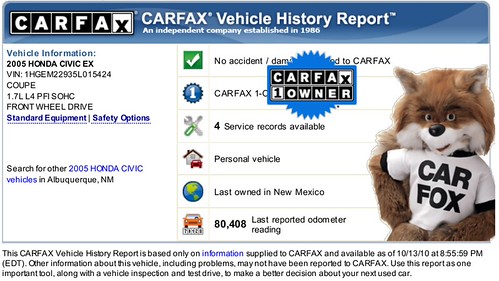
He’d wave it off with a shrug and a half-joke about how the dealership had “handled all that.” But then the registration renewal notice didn’t come to their house. Neither did anything that looked like official mail tied to that VIN. Eventually, on a random weeknight, she did what people do when the vibes are off: she paid for a CarFax.
The SUV That Never Quite Belonged to the House
On the surface, the setup looked normal. He’d traded in his old sedan after it started eating transmission fluid, and he came home one Saturday feeling weirdly triumphant, like he’d won a negotiation. The SUV was a couple years old, clean interior, decent tires—exactly the kind of “responsible” upgrade he’d been talking about.
He told her it was financed through a lender they’d used before, that the monthly payment was “basically the same,” and that the dealership had rolled everything together. When she asked for the loan documents to file away, he said he’d left them in his work bag, then forgot, then said it was all digital anyway. It wasn’t a screaming red flag, but it was the kind of repetitive, slippery answer that starts to collect interest.
Little glitches kept popping up. The insurance company asked for a copy of the registration, and he claimed it was “in the glovebox somewhere,” but it never appeared when she looked. The SUV had plates, it had tags, it didn’t look stolen—but the paper trail felt like a magic trick where you keep waiting for the reveal.
She Pulls the CarFax, Expecting Maintenance Records
When she bought the CarFax, she was expecting the usual: accident history, maintenance entries, maybe a note about being a previous lease. Something she could use to decide whether it needed new brakes soon, or whether they’d gotten a lemon. She was ready to be annoyed at spending money on something pointless, not ready for what popped up under “Vehicle History.”
The ownership section listed the registered owner not as her husband, not as either of their names, and not as any dealer. It was a woman she’d never heard of, registered in a city about two hours away. Not “previous owner,” either—current registration, active, recent.
At first she assumed she was reading it wrong. She refreshed the page. She checked the VIN again, comparing it to the dash and the driver’s door jamb, making sure she hadn’t typed a number wrong. Everything matched, and the report kept insisting: the SUV was tied to another woman’s name and address.
That’s the moment the story stops being about paperwork and starts being about trust. Because there are only so many benign reasons your spouse drives a car for a year that’s registered to some stranger in another city, and most of them involve a level of chaos he’d definitely mentioned by now.
He Laughs First, Then Gets Weird About Details
She didn’t come in screaming. She started small, like a person trying not to set off a bomb: “Hey, I pulled the CarFax. It says the car’s registered to someone else.” He laughed in that instant, performative way, like it was a dumb glitch and she was being adorably anxious.
But when she said the woman’s name out loud, his face did something quick and controlled—an expression people get when they’re trying to keep their features from betraying them. He asked to see the report. He scrolled too fast, then too slow, then set the phone down and said CarFax was “not always accurate,” like he’d rehearsed that sentence before.
She asked him the simplest question: “Who is she?” He said he didn’t know. Then he said it was probably the previous owner. Then he said maybe the DMV hadn’t updated it yet. When she pointed out it had been a year, he pivoted into irritation—why was she making this a thing, didn’t she trust him, could she stop acting like he was doing something shady.
That defensiveness didn’t soothe anything; it sharpened it. Because if the answer was actually boring, a boring person would’ve offered boring proof: the title, the registration card, the financing email. Instead he got up, paced, and told her he’d “handle it tomorrow,” which was exactly what he’d said for the last twelve months.
The Glovebox Search Turns Up Nothing Useful
That night, while he showered, she went straight to the SUV with a flashlight and the kind of focus you only get when your stomach is sinking. She checked the glovebox, the center console, the sun visor pocket, the little compartment in the trunk. Receipts, napkins, an old parking pass, and a manual—nothing with their names on it.
There was a registration card, but it wasn’t current. It looked like a temporary one from around when he first got the SUV, and it didn’t list their address. The name wasn’t theirs either; it was a different person than the woman from the CarFax, like the car had been passed around just enough to make it murky on purpose.
She found an insurance card, too, and that was when the practical became personal. The policy wasn’t their family policy. It was a separate policy under his name with a different mailing address—still in their state, but not theirs.
When he came out and saw her sitting in the driver’s seat with papers spread across her lap, he went still. Not confused-still. Caught-still. She asked him why there was a second insurance policy, and he said he’d done it because “it was easier,” which didn’t explain the address or why he’d never mentioned it.
Two Hours Away Starts Feeling Like a Map, Not a Coincidence
She opened her laptop and looked up the city on the CarFax. Two hours wasn’t “across the country,” it was “a reasonable drive for someone with a flexible schedule.” Her husband’s job included occasional travel days and a lot of vague phrases like “I’m on-site” and “late meeting.” He’d always had plausible reasons for not answering texts right away.
She checked their bank account next, because that’s what you do when the story stops adding up. There was the normal stuff—groceries, utilities, the kids’ expenses—and then a cluster of charges that looked like someone trying not to look like someone. Gas stations off the highway. A coffee shop she didn’t recognize. A parking garage with a name that matched the city two hours away.
When she showed him the charges, he didn’t deny them. He got angry about her “digging.” He told her she was acting paranoid, like she wanted him to be guilty of something. She asked him again, more quietly this time, who the woman was and why the car was registered to her.
This time his answer wasn’t a story; it was a stall. He said he “could explain,” just not right now. He said the car situation was “complicated.” He said if she let him talk to someone “tomorrow,” he’d straighten it out and she’d feel stupid for assuming the worst.
The Calls He Makes Don’t Sound Like Fixing Paperwork
The next morning, he took the SUV to work early, even though he usually left later. She watched him from the window like she didn’t recognize her own life. An hour later, he texted her a thumbs-up and “Working on it,” which somehow made it feel worse than silence.
Later that afternoon, she called the lender he’d claimed financed the SUV, using the customer service number on their old paperwork. They had no loan in his name for that VIN. She called their insurance agent, who confirmed the SUV was not on their family policy and hadn’t been for a year. Every practical avenue she followed ended in the same dead space: the car wasn’t officially theirs in any normal way.
When he got home, he was all surface calm, like he’d decided anger wasn’t playing well. He said the SUV was “kind of a lease arrangement” through someone he knew, that it was temporary, that he’d been meaning to transition it. But he still didn’t explain why he’d kept it secret, why the registration pointed to a specific woman, or why his “temporary” setup had lasted long enough for them to treat the car like part of the family.
She asked to see his phone. That’s when his calm cracked. He said absolutely not, that she was crossing a line, that marriage didn’t mean she got to police him. She told him marriage also didn’t mean he got to bring a whole second life into their driveway and call it an administrative hiccup.
By the end of that week, the SUV sat in their driveway like a dare—clean, ordinary, and suddenly radioactive. She didn’t have a neat reveal, just a growing pile of mismatched facts: a car registered to a woman two hours away, a separate insurance policy with a different address, a lender that didn’t know the vehicle existed, and a husband who kept saying “tomorrow” like it was a spell. The ugliest part wasn’t even the possibility of an affair or a scam—it was how easily he’d lived beside her for a year while the truth, whatever it was, rode shotgun the whole time.